
Intermittent fasting is having a real moment. Everyone seems to be talking about it, and plenty of people are giving it a go. But what exactly is it? We hear a lot about it, but what do we really know? And above all, is there any link between intermittent fasting and cellulite? We take a closer look at this “new” way of eating: its different forms, what is said about it and its limitations, what we do (and don’t) know about its link with cellulite, and the good habits to adopt day to day.
What is intermittent fasting?
Intermittent fasting is more of an eating pattern than a diet. It involves alternating periods of fasting, during which only calorie-free drinks are consumed (tea without sugar or milk, water, herbal infusions without sugar), with periods of normal eating.
The length of the fasting period can vary. There are several types of intermittent fasting:
- Complete fasting (or alternate-day fasting), which involves alternating one to two days of fasting (with fluid intake but no calories) and one to two days of normal eating.
- Intermittent energy restriction fasting, which involves alternating a near-fasting day — where energy intake must not exceed 600 kcal — with a day of normal eating. A popular variation is the 5:2 diet, which involves two days of caloric restriction per week and normal eating on the remaining five days.
- Time-restricted eating, which allows normal eating every day but within a limited time window. The best-known version is the 16:8 fast, which involves fasting for 16 hours and eating within the remaining 8. There are many variations, the most extreme being OMAD (“One Meal A Day”), a 23:1 fast — 23 hours of fasting and a 1-hour eating window.
What are the benefits of intermittent fasting?

There is still considerable debate around intermittent fasting. Numerous studies have been conducted on the subject since as far back as 1943 — so this is far from a new phenomenon. Throughout history, and often for spiritual reasons, people have fasted to atone for their sins. Today, the motivations are different, and people tend to try it as part of a wider approach to their lifestyle:
- Rethinking their lifestyle
- Exploring meal schedules in daily life
- Taking a break in meal timing
- Changing habits, such as meal timing or content
So it’s fair to ask: are there real benefits to practising intermittent fasting? The latest studies appear to confirm that:
- Alternate-day fasting has been studied for its effects on weight(1)
- This same type of fasting has been observed both in people who are overweight and in those of normal weight(2)
- Alternate-day fasting has been studied in relation to muscle mass and body fat over the long term, compared with restrictive diets(3)
- Intermittent fasting has also been studied in relation to certain markers such as cholesterol, triglycerides, insulin sensitivity and blood pressure(4)
On the other hand, it appears that:
- Alternate-day fasting and time-restricted eating have been compared in some studies
- Intermittent fasting, in general, tends to increase feelings of hunger, which can make it harder to stick to
- It may disrupt sleep cycles
- It could be harmful for children, underweight individuals, pregnant women and older adults
With these points in mind, one might wonder whether there is any link between intermittent fasting (and alternate-day fasting in particular) and cellulite.
Intermittent fasting for cellulite: a good idea?
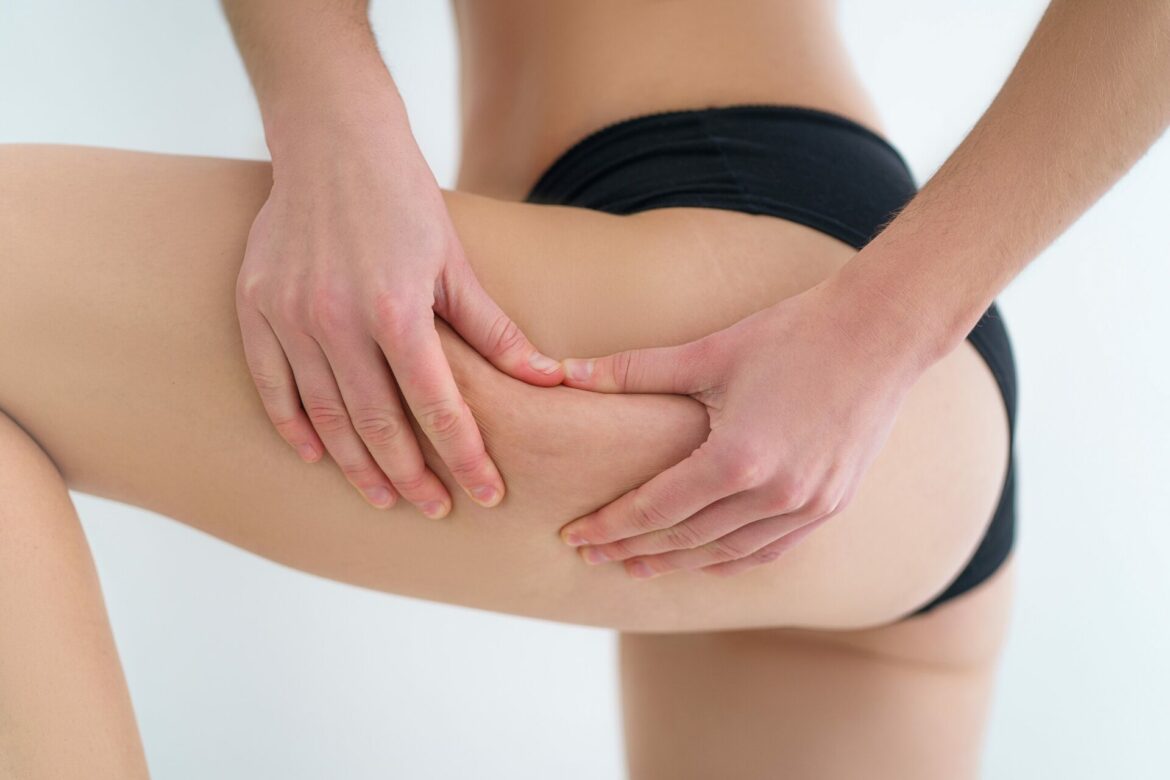
No formal study has yet been carried out on the effects of intermittent fasting on cellulite. At best, there are anecdotal accounts from isolated cases, and these often contradict one another. That said, a few points are worth noting, although none of them has been proven:
- Some studies look at intermittent fasting and body fat. Cellulite is partly due to an excess of fat stored in adipocytes (subcutaneous fat cells), a process that involves both the storage of fat and its breakdown, known as lipolysis. However, this research does not establish any link with cellulite, including the adipose type. No specific study has looked into this question to date.
- Intermittent fasting usually involves calorie-free drinks, which may prompt some people to drink more water. A link is sometimes mentioned with water retention cellulite, which is associated with water retention. However, no link between intermittent fasting and this type of cellulite has been established.
- Finally, intermittent fasting is sometimes part of a wider interest in good lifestyle habits. Some people who try it may also pay closer attention to nutrition, eating well and living well. A balanced lifestyle, with a varied diet and regular physical activity, is generally a good idea. That does not mean intermittent fasting itself has any specific effect.
Cellulite also has other causes, including hormonal fluctuations. There is currently a lack of data on the link between intermittent fasting and hormonal “balance”, or on any effect it may have on the natural fat storage linked to sex hormones (oestrogen and progesterone). The few studies on this topic are contradictory, or still at the experimental stage in rats (and we are not rats!). So it is difficult to say whether there is any link between intermittent fasting and cellulite. If you are thinking of trying it, speak to your GP or another medical professional first.
What can you do about cellulite?
One thing we are sure of: when it comes to cellulite, nothing beats good everyday habits overall.
- A varied, colourful, balanced diet that is low in salt, sugar and saturated fats. If you’re short of inspiration, there are some great guides out there, such as our 50 Slimming Recipes in Under 20 Minutes guide.
- Daily physical activity, such as walking, stretching or some light exercise.
- Regular exercise, 2 to 3 sessions a week: home workouts, running in the park, lengths at the pool or sessions at the gym…
- Staying well hydrated, with 1.5 to 2 litres a day.
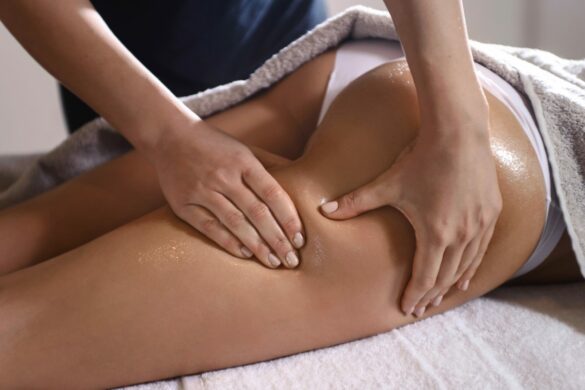
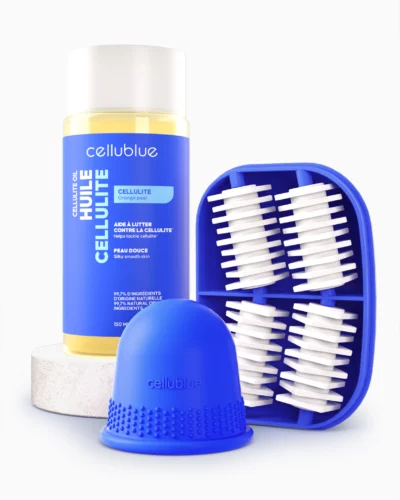
- Daily massage to care for your skin and work on dimpled areas. Our 21-Day Anti-Cellulite Pack is perfect for beginners! It includes coaching guides that walk you through everything and massage tools (a cupping cup and an orange peel skin massager). It also contains an oil and a scrub to prepare the skin. What more could you ask for?
References
(1) 2015, Davis, Clarke, Coulter, Rounsefell, Walker, Rauch, Huggins, Ryan, Intermittent energy restriction and weight loss: a systematic review
(2) 2015, Tinsley & La Bounty, Effects of intermittent fasting on body composition and clinical health markers in humans
(3) 2017, Anton, Moehl, Donahoo, Marosi, Lee, Mainous III, Leeuwenburgh, Mattson, Flipping the Metabolic Switch: Understanding and Applying the Health Benefits of Fasting
(4) 2017, Mattson, Longo, Harvie, Impact of intermittent fasting on health and disease processes
Related articles
- Foods and water retention: what you need to know
- Cellulite: my action plan
- Spirulina: What You Need to Know About This Microalga


The scrub that leaves skin smooth and skin texture refined*
*User test on 21 volunteers over 4 weeks, based on participants' feedback.
- Olive & apricot kernels: these natural grains gently sweep away dead skin cells
- Caffeine & monoi scent, so your shower instantly smells like a holiday
- In the shower, two to three times a week, massaging your thighs, bottom and stomach

The cupping tool that replicates pinching and rolling, 3 minutes per zone
- The professionals' technique, at home: you lift, glide, and release, and the tool grips the skin fold like a manual pinching and rolling
- Soft silicone that fits thighs, buttocks, stomach, and arms
- 3 minutes per zone, every day, always with a massage oil so the tool glides