
To choose the right care, it is important to know your cellulite type. There are three different types of cellulite, and they do not all call for the same approach. So, which type is yours? Take the quiz to find out and discover advice suited to your situation.
REMINDER: What are the 3 types of cellulite?

Adipose cellulite
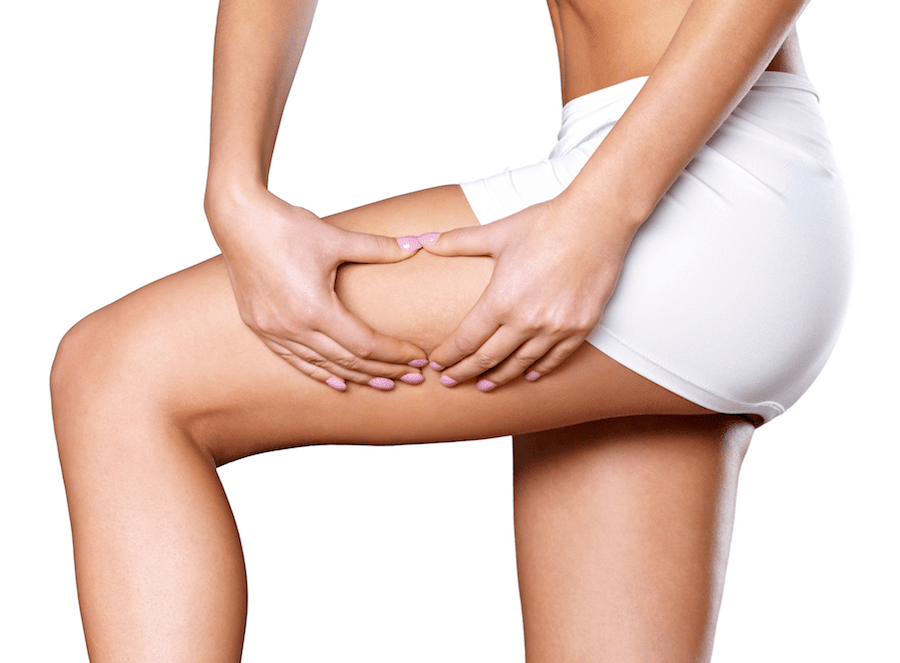
Also known as “lipodystrophy cellulite”, this type is painless, soft, and visible when you pinch the skin. It tends to appear on the stomach and hips, and is mainly linked to excess weight and a lack of exercise. Day to day, focus on a balanced diet, regular physical activity, and pinch-and-roll massage.
Aqueous cellulite
Also known as “hydrolipodystrophy cellulite”, this is THE type of cellulite linked to water retention. People affected often experience a sensation of heavy, swollen legs. This type of cellulite can be aggravated by a lack of exercise, and tends to appear on the thighs, calves, and inner arms. Day to day, focus on physical activity and regular pinch-and-roll massage.
Fibrous cellulite
Also known as “fibrolipodystrophy cellulite”, this type of cellulite is firm and painful to the touch, with a lumpy texture that is visible to the naked eye, and is often found on the thighs and buttocks. It is associated with a lack of exercise and excess weight. It is the most stubborn type. Day to day, focus on massage with anti-cellulite cupping cups, a healthy and varied diet, and getting back into exercise.
TEST: What is my cellulite type?
Question 1: You are…
- Under 30
- Between 30 and 50
- Over 50
Question 2: To the touch, your skin feels:
- Soft
- Supple
- Firm
Question 3: Your cellulite is mainly located…
- On the stomach, hips, and saddlebags
- On the legs
- On the buttocks and thighs
Question 4: When it comes to your diet, you tend to prefer…
- Sugary foods
- Fatty foods
- Salty foods
Question 5: Would you say your cellulite is painful?
- No
- A little
- Yes
Question 6: Does your skin have an orange-peel texture?
- Yes, but only when I pinch my skin
- Not really, it’s barely noticeable
- Yes, very visible
Question 7: Do you suffer from heavy leg sensations?
- Yes
- Sometimes
- No
Question 8: You have had cellulite…
- For one to five years
- For less than a year
- For more than five years
RESULTS

You answered mostly 1
Your cellulite is adipose. It is simply caused by excess fat storage in the cells of the adipose tissue (adipocytes).
Our everyday tips:
=> Rebalance your diet by eating lighter and cutting back on fast sugars and fats. Focus on vegetables and fruit, as well as legumes such as lentils, which provide protein and fibre.
=> Take up regular physical activity such as brisk walking, cycling, running, or swimming. Ideally, aim for three times a week, depending on your routine and what works for you.
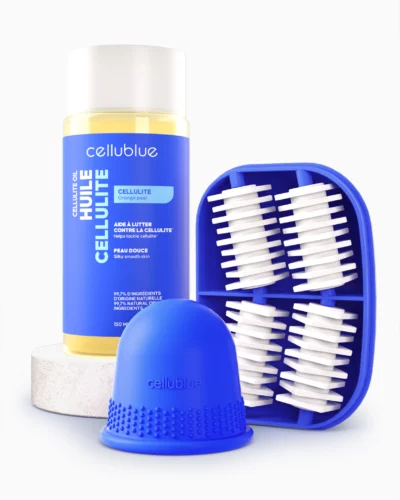
=> Try pinch-and-roll massage as part of your routine. Your best allies for this? The CelluBlue anti-cellulite cupping cups in medical-grade silicone.
You answered mostly 2
Your cellulite is aqueous. Aqueous cellulite can affect all women, and often appears in slimmer individuals. It is commonly found on the thighs, calves, ankles, and arms. This type of cellulite feels supple to the touch and is not painful. It is often accompanied by a sensation of heavy legs and swelling.
Our everyday tips:
=> As with adipose cellulite, physical activity is essential! However, if you prefer to steer clear of high-impact sports such as running, tennis, or step aerobics, opt instead for gentler endurance activities. Great options include swimming, elliptical training, brisk walking, or aqua cycling.
=> Drink up! If you don’t drink enough, try spreading your drinks more evenly throughout the day. As part of your routine, the answer is simple: drink regularly! Teas, herbal infusions… the choice is yours!
=> Adjust your diet! As part of your routine, it’s a good idea to follow a balanced diet that is low in salt and sugar. Fill your plate with fruits and vegetables, such as grapes, pineapple, asparagus, and berries. Also include lean proteins and wholegrains. To find out more about aqueous cellulite, read our dedicated article.
=> Massage regularly! By practising pinch-and-roll massages consistently, you care for the appearance of your skin session after session. To carry out these massages, reach for your CelluBlue Cups. Thanks to their suction effect, they make the pinch-and-roll movement easier on the areas concerned, such as the thighs, calves, and inner arms.
You answered mostly 3
Your cellulite is fibrous. It is easy to recognise: it has often been present for a long time, feels deeply embedded and firm, and may even be painful to the touch. It is generally found on the thighs, buttocks, and knees. It is associated with a hardening of collagen, which gives the tissues a more compact texture.
Our everyday tips:
=> Eat right! Fibrous cellulite can be associated with an unbalanced diet that is too high in fat, salt, and sugar. For a more balanced plate, go for the winning combination of vegetables (half the plate) – protein (a quarter of the plate) – wholegrains (the final quarter). Using this as the base for every meal helps you achieve a more balanced nutritional intake. Also try to limit foods that are too fatty, too salty, or too sugary. Remember to drink water regularly.
=> Exercise, of course! It can be part of a routine focused on the appearance of your skin. Ideally, alternate between cardio workouts and strength training sessions. Cardio activities (such as running, cycling, or aqua aerobics) can complement your routine. As for strength training, it can also have its place, depending on your habits.
=> Don’t forget CelluBlue cups! Alongside a balanced diet and regular physical activity, they can complement your massage routine for fibrous cellulite, even when it is deeply embedded.
So, ladies — what’s the verdict? Which type of cellulite is yours? Share your results and tips in the CelluBlue Community!
Frequently asked questions
Which type of cellulite do I have?
The quiz helps guide you based on your age, skin texture, the area concerned, your diet, sensitivity, orange-peel appearance and any sensation of heavy legs. You can then compare your answers with the three profiles presented in the section about the different types of cellulite.
What is cellulite?
Cellulite refers to an uneven skin texture, often described as orange-peel skin. In this article, it is presented in three forms: adipose, aqueous, and fibrous, each with different characteristics depending on how the skin feels and which areas of the body are affected.
How can you recognise the different types of cellulite?
Adipose cellulite is generally soft and visible when the skin is pinched. Aqueous cellulite feels supple and may be accompanied by a sensation of heavy legs. Fibrous cellulite feels firmer, is often long-standing, and may be painful to the touch.
What should I do if I have infectious cellulitis?
Infectious cellulitis, sometimes called suppurative cellulitis, is different from the cosmetic cellulite described in this quiz. If you think you may have it, ask a doctor or medical professional for advice.
What should I do if I have suppurative cellulitis?
Suppurative cellulitis is a medical concern and is different from the adipose, aqueous, or fibrous forms described here. If in doubt, ask a doctor or medical professional for advice.
Related articles
- Flaxseeds and cellulite: what to know about the infusion
- CelluBlue Cupping Cup: your must-have anti-cellulite tool for summer!
- Why Use Your CelluBlue Suction Cup Every Day?
Useful categories: All About Cellulite.

The cupping tool that replicates pinching and rolling, 3 minutes per zone
- The professionals' technique, at home: you lift, glide, and release, and the tool grips the skin fold like a manual pinching and rolling
- Soft silicone that fits thighs, buttocks, stomach, and arms
- 3 minutes per zone, every day, always with a massage oil so the tool glides

The scrub that leaves skin smooth and skin texture refined*
*User test on 21 volunteers over 4 weeks, based on participants' feedback.
- Olive & apricot kernels: these natural grains gently sweep away dead skin cells
- Caffeine & monoi scent, so your shower instantly smells like a holiday
- In the shower, two to three times a week, massaging your thighs, bottom and stomach