The growing interest in fitness has brought with it a wave of new accessories: smartwatches, dumbbells and weights, resistance bands… and foam rollers. This foam tube is fast becoming a staple in gyms everywhere. But what exactly is a foam roller, how do you use one, and where might it fit into an anti-cellulite routine? In this article, you’ll find its uses, its link to connective tissue, and three exercises to try at home.
What Is a Foam Roller?
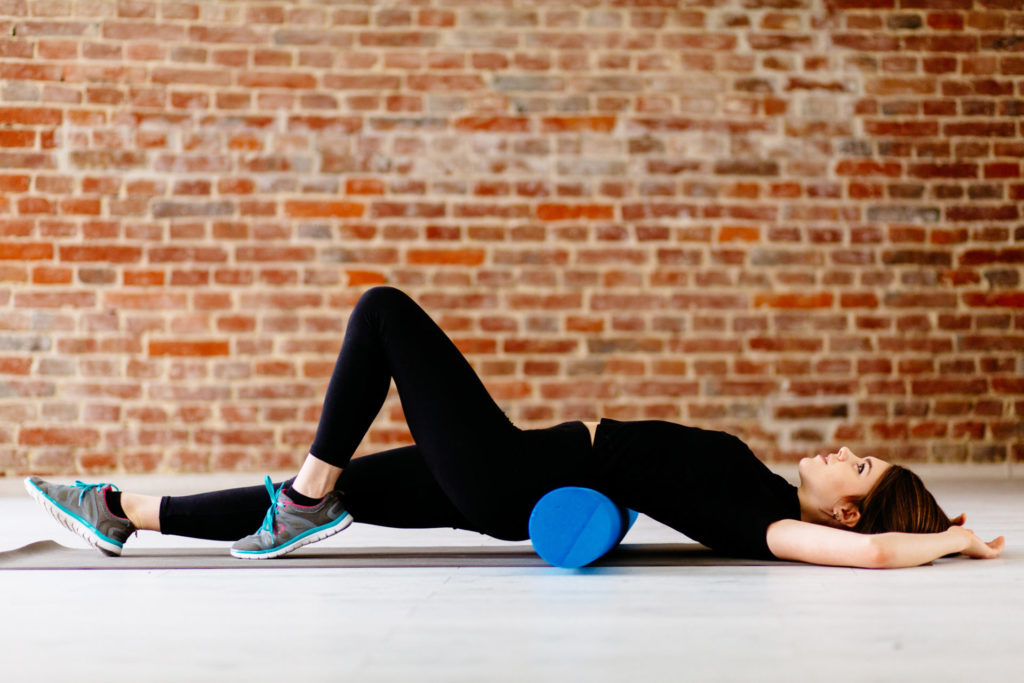
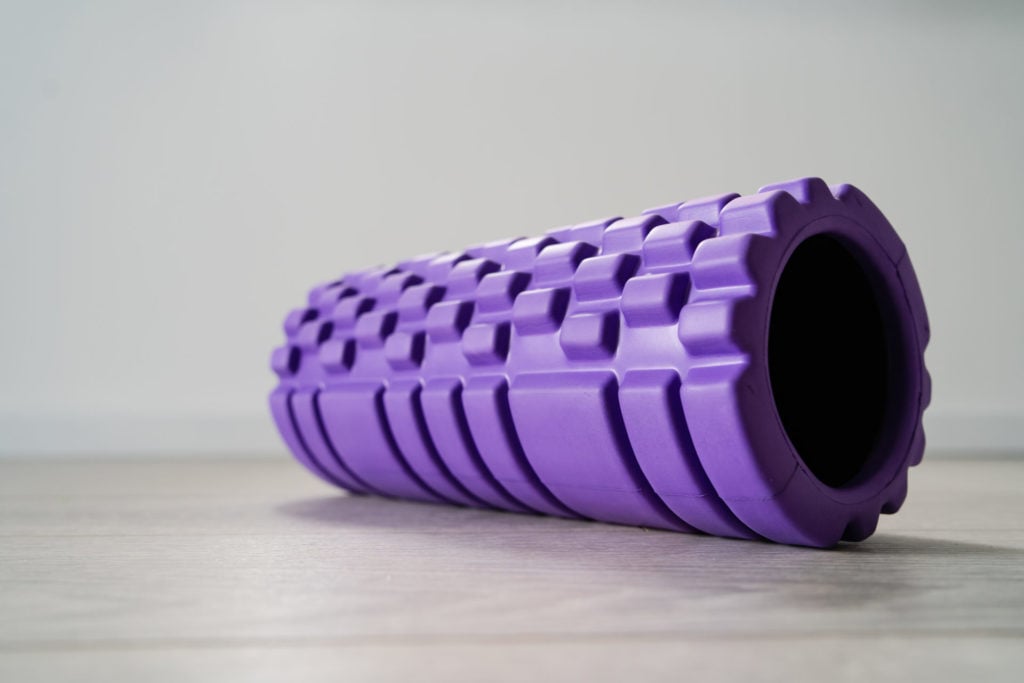
A foam roller is a massage tool — a tube made of compressed foam that can be used for a variety of purposes:
- Improving flexibility and range of motion
- Supporting muscle relaxation
- Massaging areas of muscle or tendon tension
- Complementing your warm-up and recovery
It allows for deep self-massage using your own body weight. The foam roller can also be used after each workout — particularly for high-impact sports such as running, boxing, certain athletics disciplines, and skiing.
The texture of the compressed foam can vary depending on the model:
- It can be smooth or feature ridges and nodules
- Density can vary — softer for beginners, firmer for more experienced users
Can a Foam Roller Help with Cellulite?
1- A Quick Anatomy Lesson
Originally, the foam roller was used for myofascial release. What does that mean? Fascia is a soft tissue that forms part of the connective tissue system, providing support to various parts of the body — including muscles, nerves, and skin. It is made up of collagen fibres, water-retaining proteins (proteoglycans), and elastin. Over time, fascia can tighten, stretch, or become irritated. These changes can be caused by:
- Infections
- Overuse (intense and repeated physical activity)
- Injury or trauma
- Physical inactivity or poor posture
- Ageing, which reduces water content in the tissues
- Poor lifestyle habits: chronic stress, poor sleep quality, unbalanced diet
When superficial fascia becomes damaged, the effects on the body can be uncomfortable.
- Tight, dehydrated fascia: pain and tension, increased risk of injury, muscle stiffness.
- Overstretched, damaged fascia: loss of skin suppleness and elasticity, muscle loss, and the appearance of cellulite
- Irritated fascia: localised inflammation which, if it becomes chronic, can lead to fibrosis (thickening of the connective tissue) and increased muscle tension.
2- How Does the Foam Roller Work?
The foam roller enables self-massage aimed at myofascial release. The rolling movements (somewhat similar to those of a pinch-and-roll massage) massage the fascia, the sheaths that surround the muscles. Many people enjoy the feeling of relaxation after exercise, and this massage fits naturally into a body-care routine.
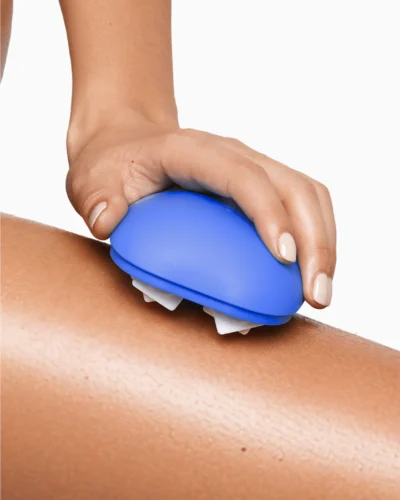
In short: the foam roller can be used as part of an anti-cellulite routine, whatever the type (adipose, aqueous, or fibrous), as it provides a gentle massage of the connective tissue. It can therefore complement a routine targeting the orange-peel effect, as part of a regular practice.
Foam rolling for cellulite: how to fit it into a routine
Foam rolling is simply the use of a foam roller in rolling movements over a given area. In an anti-cellulite routine, it’s used to massage the fascia and complement a manual massage. The key is consistency: a pass after your workout or as part of a massage routine, over the areas concerned (hips, thighs, back of the thighs).
The foam roller adds to the other steps of an anti-cellulite routine rather than replacing them. You can combine it with a manual massage or a cupping device, depending on what you already use.
How to Use a Foam Roller
You can incorporate the foam roller into your stretching routine, use it after each workout, or make it part of your daily massage ritual. For supporting an anti-cellulite routine, consistency is key. Users of the technique generally recommend 3 to 5 sets of 30 seconds, 3 to 5 times per week.
1- Exercise 1: The Hip Roll
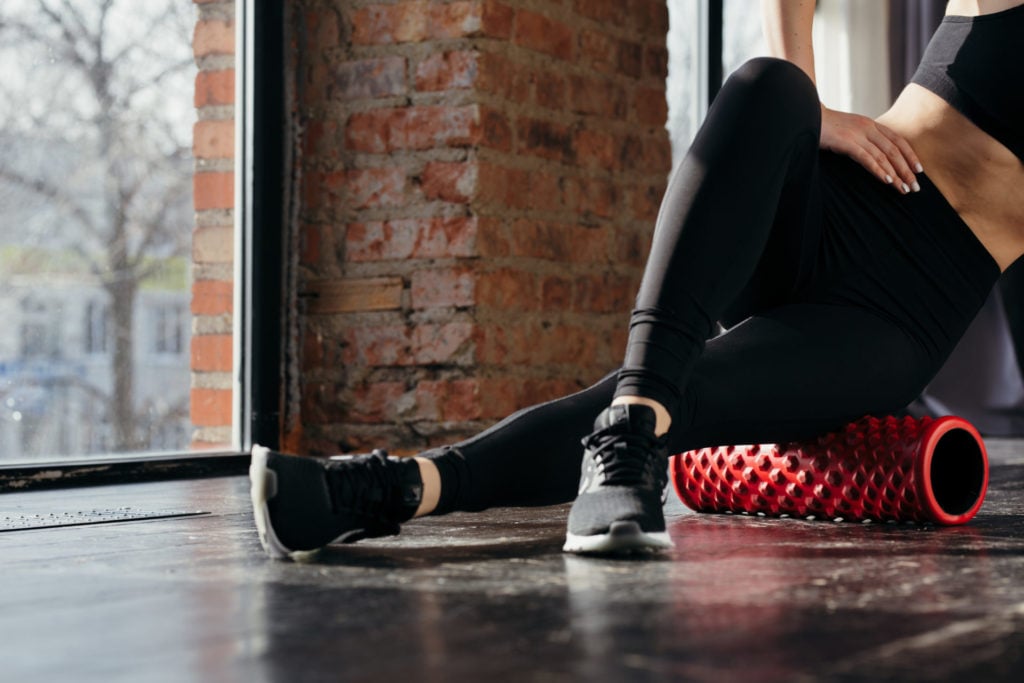
This exercise targets the hips, which can be massaged with rolling movements.
- Lie on your side, resting on your right elbow and forearm, with your left foot placed in front of you.
- Slide the foam roller under your right hip and keep your right leg straight.
- Perform gentle up-and-down movements, rolling your right hip over the foam roller.
- Repeat on the other side.
- To increase the challenge, keep both legs together and use only your arms to guide the rolling motion.
2- Exercise 2: Back of the Thighs
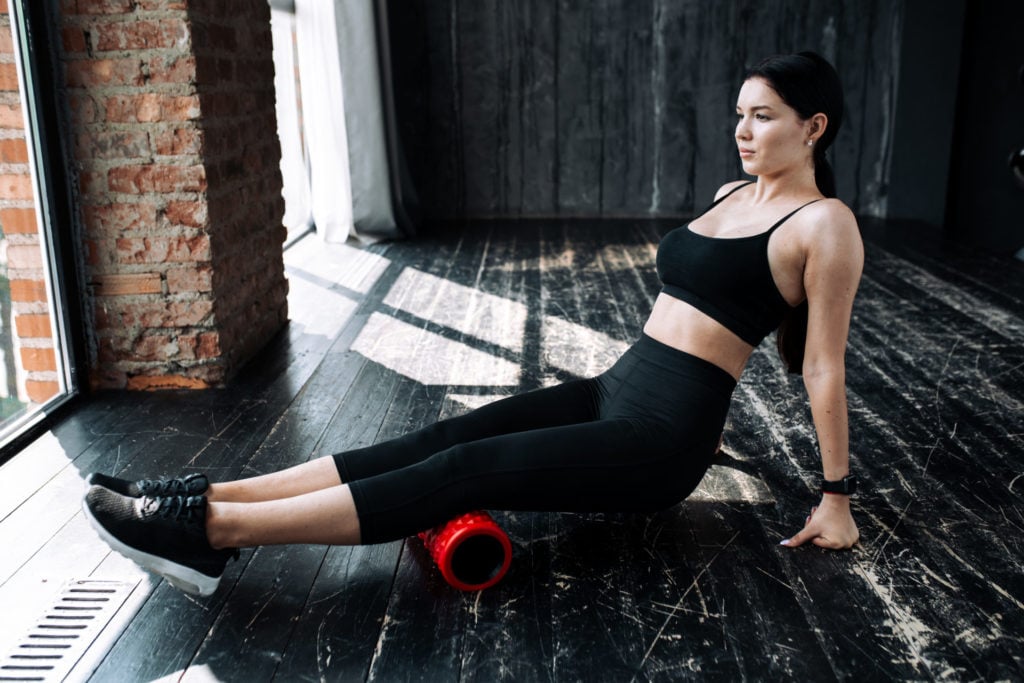
A massage exercise for the back of your thighs.
- Sit on the floor.
- Slide the foam roller under the back of your knees.
- Place your hands behind you on the floor, arms straight.
- Gently slide along the foam roller from the backs of your knees up to the base of your glutes, then return.
- Throughout the exercise, keep your torso upright to engage your core more effectively.
3- Exercise 3: The Thigh Roll, Plank Style
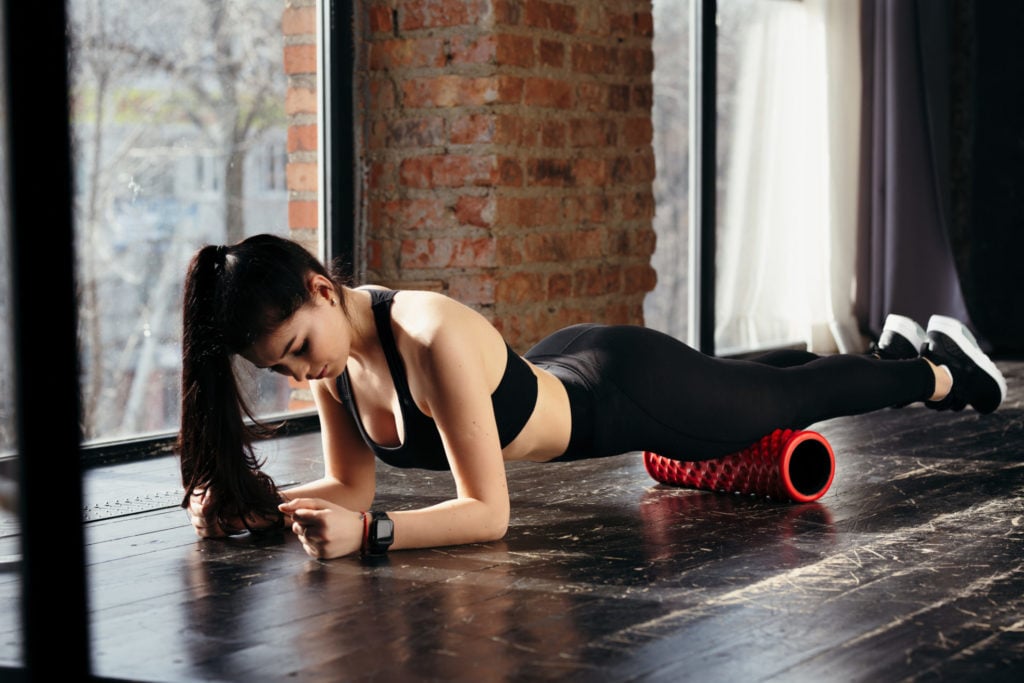
This final exercise works your quadriceps and complements the work on dimples on your thighs.
- Lie face down on the floor.
- Slide the foam roller under your thighs.
- Place your elbows on the floor as if in a plank position. Squeeze your glutes and engage your core.
- Once in position, walk your elbows forward and begin to “roll” over the foam roller so that it massages along your thighs.
Foam roller and saddlebags
Saddlebags correspond to the hip and upper-thigh areas, which can be massaged with the Hip Roll and Thigh Roll shown above. The foam roller allows you to self-massage these areas with rolling movements, alongside a regular massage routine.
For the detailed movements, see the two exercises described above. As always with the foam roller, consistency matters more than intensity.
Frequently asked questions
How do you use an anti-cellulite massage roller?
Place the foam roller under the area you want to massage, then perform gentle rolling movements from bottom to top, using your body weight. Users of the technique generally recommend 3 to 5 sets of 30 seconds, 3 to 5 times per week. You’ll find three example exercises in the “How to Use a Foam Roller” section.
What is a foam roller used for in an anti-cellulite routine?
A foam roller is used to self-massage the areas concerned, such as the hips, thighs or back of the thighs. It fits into an anti-cellulite routine alongside other steps, such as manual massage. Consistency matters more than intensity.
When should you use a foam roller?
You can use it in your stretching routine, after a workout, or as part of your daily massage routine. The main thing is to include it regularly in your routine, without forcing sensitive areas.
Does a foam roller replace other anti-cellulite treatments?
No, it complements them. You can combine it with a manual massage or a cupping device, depending on what you already use in your routine. If you experience pain or have a medical question, ask your doctor for advice.
Related articles
- 10 Vegetable Oils Against Cellulite and How to Use Them
- 7 exercises to tone your inner thighs
- CelluBlue Cupping Cup: your must-have anti-cellulite tool for summer!
Useful categories: Anti-Cellulite Solutions.
To go further, explore the Cellublue shop: our anti-cellulite products.

The scrub that leaves skin smooth and skin texture refined*
*User test on 21 volunteers over 4 weeks, based on participants' feedback.
- Olive & apricot kernels: these natural grains gently sweep away dead skin cells
- Caffeine & monoi scent, so your shower instantly smells like a holiday
- In the shower, two to three times a week, massaging your thighs, bottom and stomach


The cupping tool that replicates pinching and rolling, 3 minutes per zone
- The professionals' technique, at home: you lift, glide, and release, and the tool grips the skin fold like a manual pinching and rolling
- Soft silicone that fits thighs, buttocks, stomach, and arms
- 3 minutes per zone, every day, always with a massage oil so the tool glides