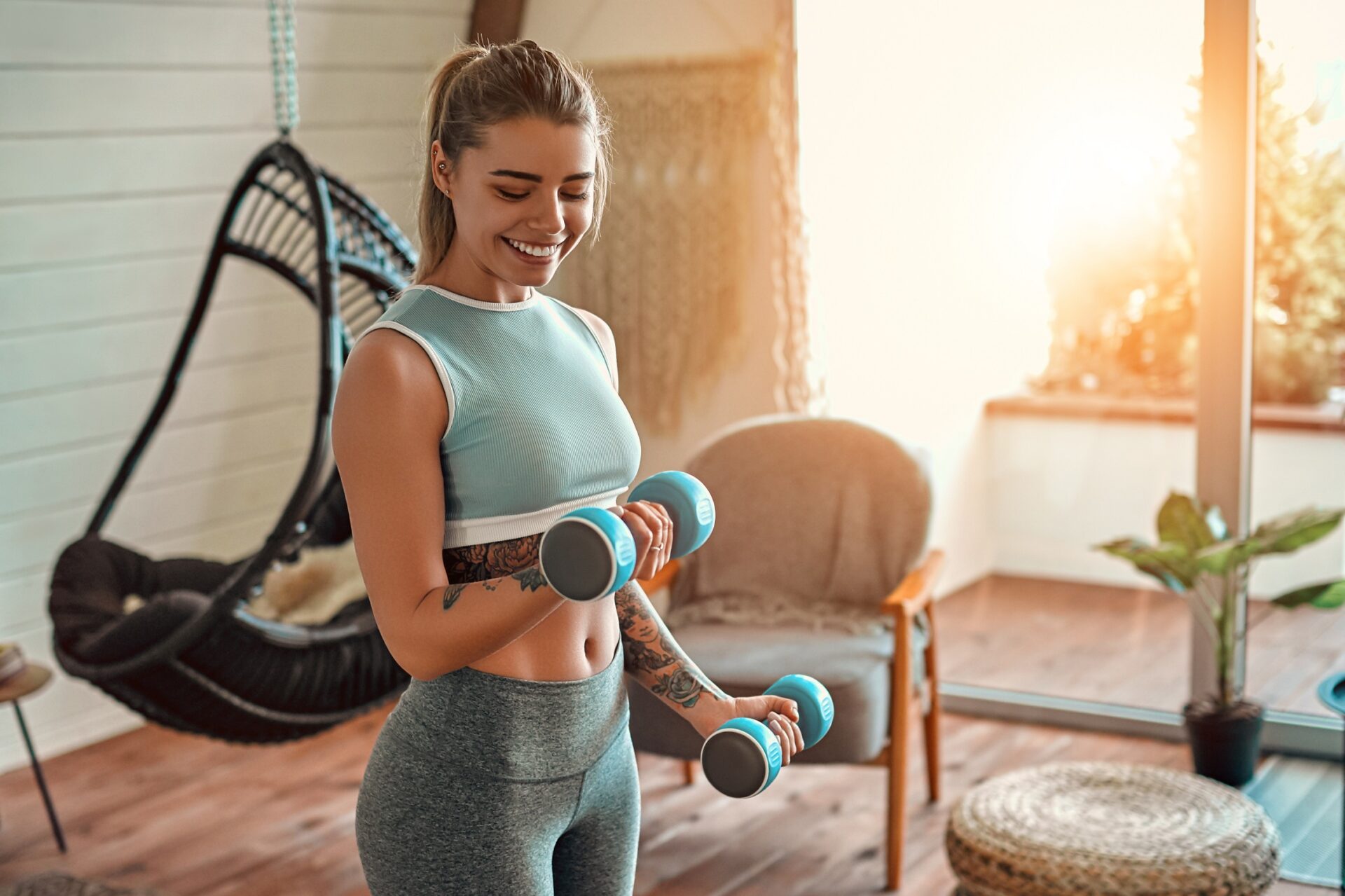
You dream of beautiful legs, both toned and shapely, but aren’t sure where to start. Here’s a sample workout routine you can do at home. All you need is one small accessory to take it to the next level: dumbbells! Follow the coach…
Exercise no1: Squats with dumbbells
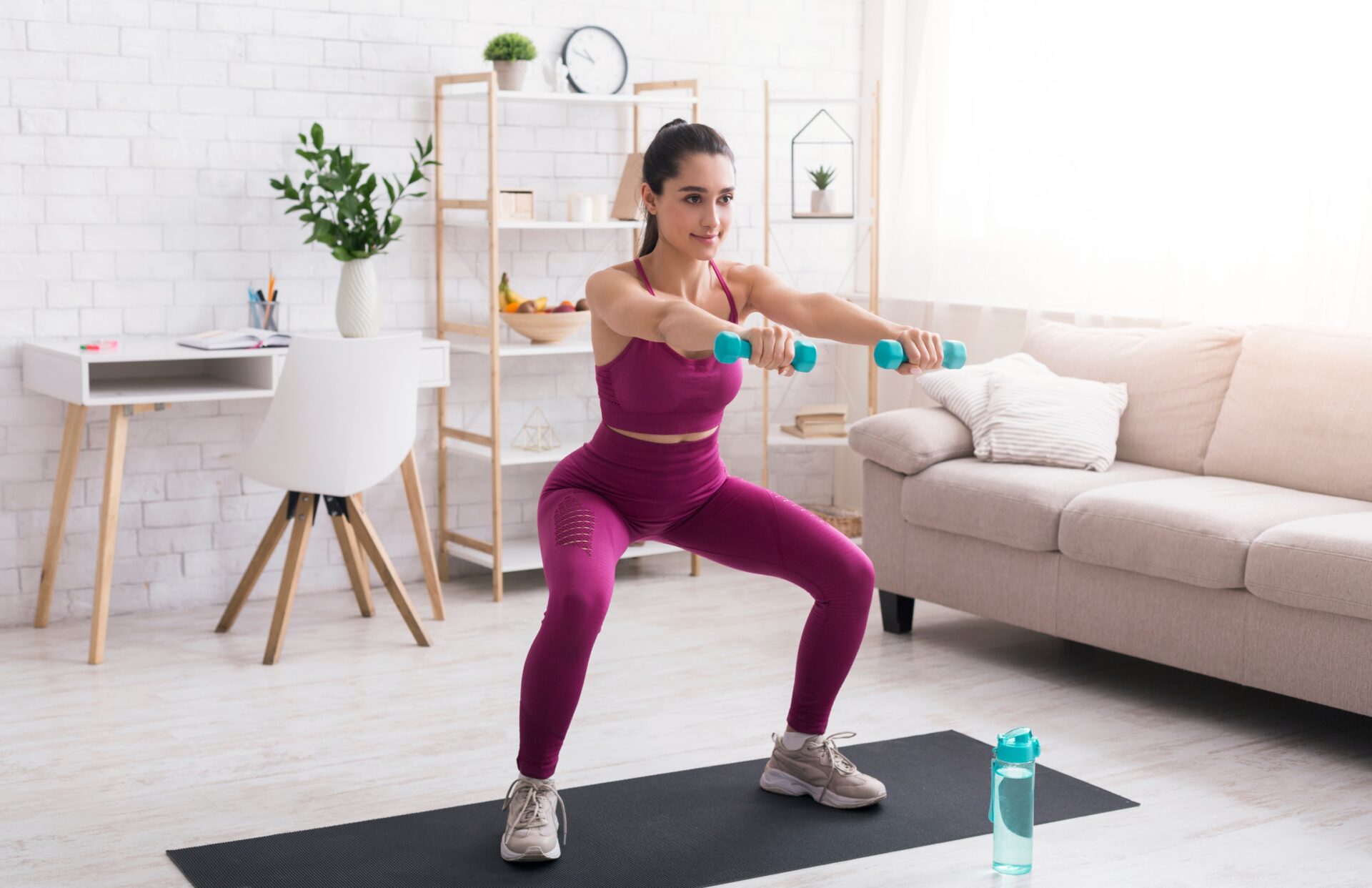
This strength-training exercise is great for the leg muscles, particularly the quadriceps (the muscles at the front of the thighs). It also helps tone the gluteal muscles, for rock-solid glutes. And it couldn’t be simpler to perform.
- Start standing with your feet shoulder-width apart, toes turned slightly outward.
- Hold a dumbbell in each hand, arms at your sides.
- On the inhale, bend your knees and lower down, pushing your hips slightly back as if you were about to sit. Keep your back straight and your core engaged. Your thighs should be parallel to the floor.
- At the same time, extend your arms forward with the dumbbells, raising them to eye level.
- On the exhale, push back up. Your legs do the work while your arms return to the starting position.
- Repeat 10 times to complete one set.
Aim for 2 to 3 sets of 10 squats in your routine to effectively tone your thighs and legs.
Exercise no2: Squats with overhead dumbbell raise

A second exercise fairly similar to the first in its execution — except it requires a greater range of motion.
- Take the same starting position as the previous exercise.
- As you lower down on the inhale, instead of extending your arms forward, raise them straight up overhead. This position will amplify the effort your legs make on the exhale.
- Push back up using your legs. At the same time, lower your arms.
- Repeat 10 times.
Here again, 2 to 3 sets should help you achieve beautifully sculpted legs.
Exercise no3: Sumo squats with dumbbell
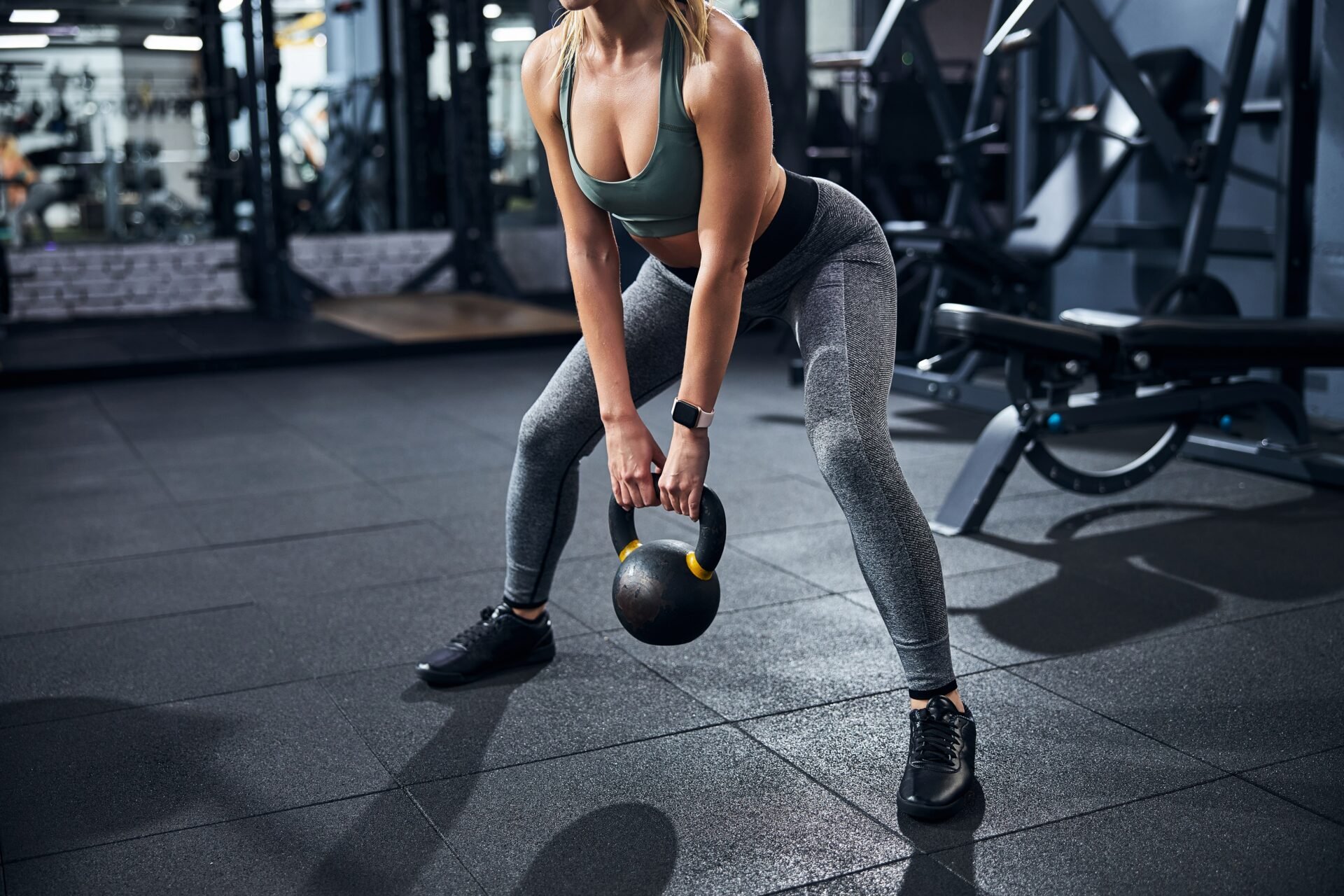
Thought you were done with squats? Not quite! For legs that look amazing and dream-worthy thighs, nothing beats sumo squats! You can perform them with a single heavy dumbbell, two lighter ones, or a kettlebell. It all depends on your equipment — the results will be just as good either way.
- Take the same starting position as described above, with one difference: your feet should be set slightly wider than shoulder-width apart.
- If using a kettlebell, hold it with both hands in front of you. If using two dumbbells, hold them in front of you at chest height.
- On the inhale, lower down as you would for a classic squat. Your thighs are open, with the muscular tension distributed across the thighs, abs and glutes. Your back should remain straight and pain-free.
- If using a kettlebell, set it down on the floor at the bottom of the movement. If using dumbbells, keep them at chest height without releasing the tension.
- On the exhale, rise back up slowly.
- Repeat 10 times.
Work in 2 to 3 sets of 10 reps as your schedule allows, as part of your leg-toning routine.
Exercise no4: Forward lunges with dumbbells
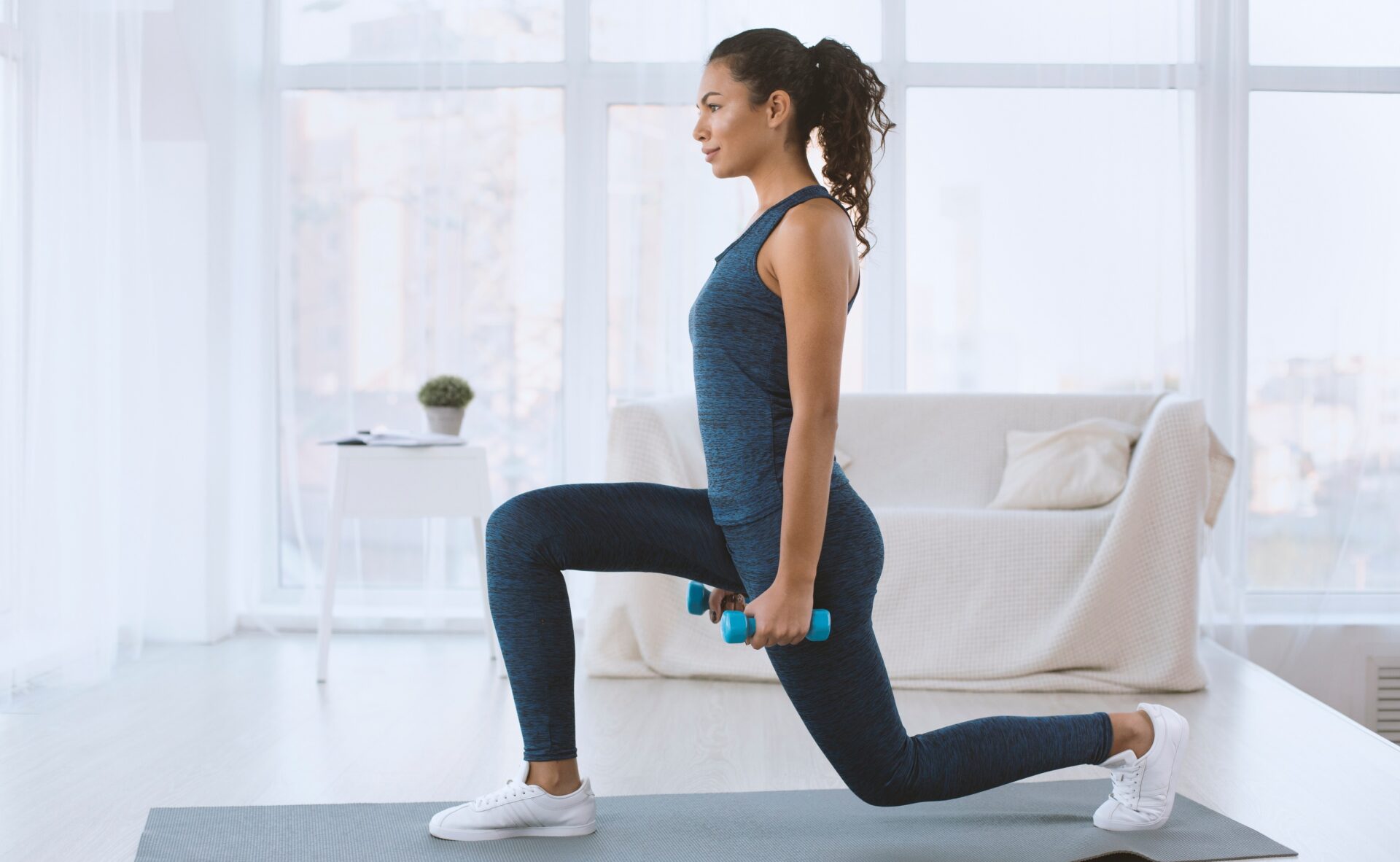
Another fitness classic! Its main benefit? It tones all the leg muscles, including the hip extensors and the hamstrings. Not bad, right?
- Start standing with your feet hip-width apart, head up.
- Hold a dumbbell in each hand, arms at your sides.
- On the inhale, step forward with your right leg. Shift your body weight onto that leg. Bend your right knee until your right thigh is parallel to the floor. Your left leg behind you is also bent, with your left knee nearly touching the floor. Keep your arms at your sides, dumbbells in hand.
- On the exhale, push back up through your right leg. Keep your back and head straight, aligned in the same axis.
- Repeat 10 times, then switch sides (left leg forward, right leg back).
The advantage of dumbbells? They add extra load to the body, increasing the muscular demand on the legs. They also prevent you from using your arms for momentum. Aim for 2 sets of 20 forward lunges.
Exercise no5: Reverse lunges with dumbbells

Time for a small variation! What if you performed your lunges in reverse, for seriously sculpted legs?
- Take the same starting position as for the lunge, as described above.
- On the inhale, take a large step back with your right leg. This will automatically cause your left leg to bend at the front. Bend your left knee until the left thigh at the front is parallel to the floor. Your right leg behind you is also bent, with your right knee close to the floor. Keep your arms extended at your sides, dumbbells in hand.
- On the exhale, push back up through the back leg (in this case, the right), keeping the rest of your body upright.
- Repeat 10 times, then switch sides.
A different take on lunges that targets the leg muscles from a new angle.
Exercise no6: Forward lunges with dumbbells and a step
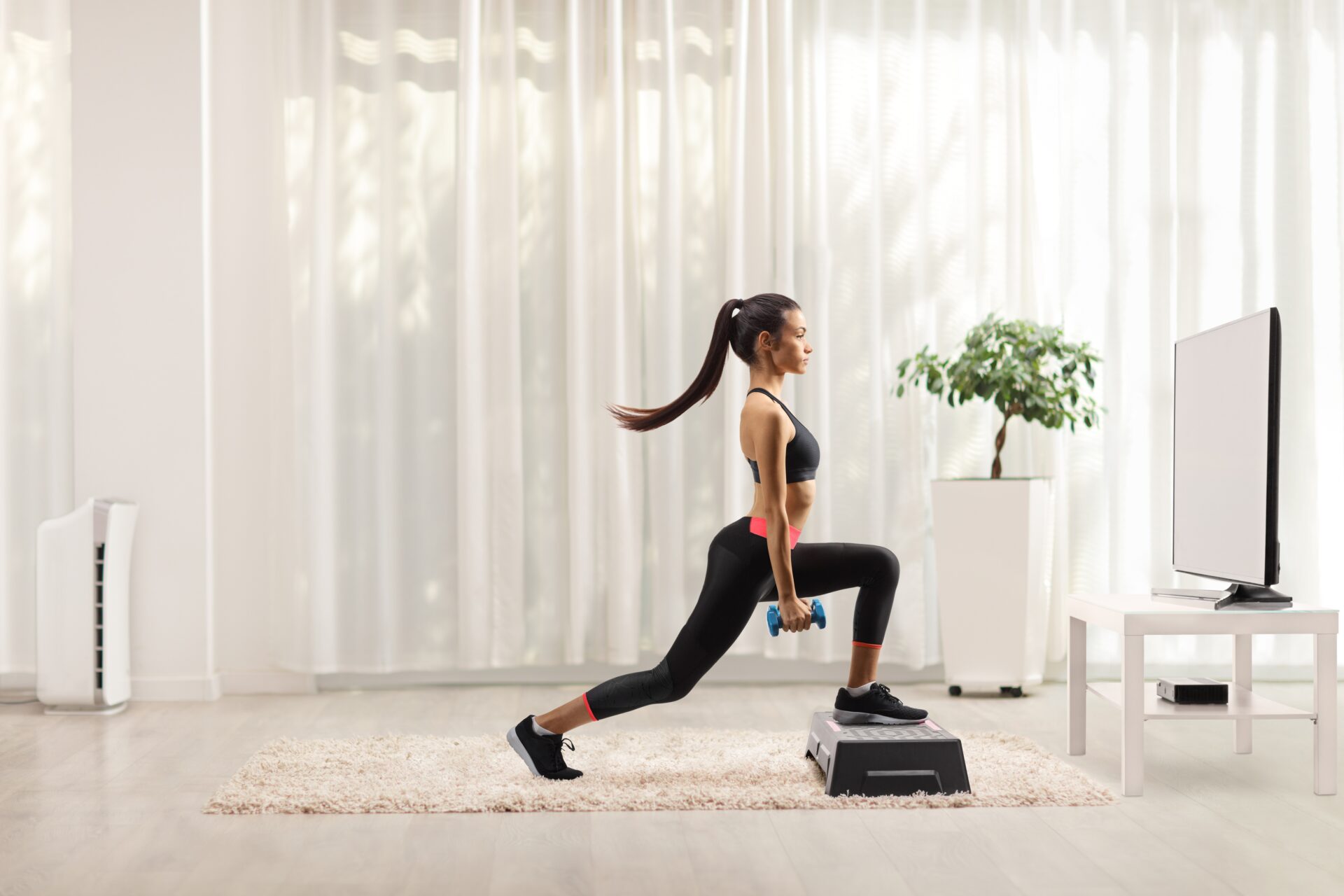
The final lunge variation, this time using a stepper. Don’t have one? No problem. You can use a stair step, or find any surface of a similar height. Your home is full of everyday objects you can repurpose for a fun and effective home workout!
- Take the starting lunge position, as described above.
- On the inhale, step forward with your right leg. Your right foot should land on the step (or stair). Lower down until your right thigh is parallel to the floor. Your left leg is extended behind you, knee close to the floor. Keep your arms at your sides, dumbbells in hand. Back straight, head aligned.
- On the exhale, push back up by driving through your right leg and engaging your core.
- Repeat 10 times, then switch legs.
The step-and-dumbbell combination increases the range of motion and intensifies the muscular work in your legs. Include 2 sets in your workout routine.
Why use dumbbells to strengthen your legs?
It’s easy to assume that dumbbells are mainly for working the arms. But that’s far from the whole story. Performing your fitness moves with weights offers a number of benefits:
- you need to put in extra effort to stabilise your positions, leading to more intense strengthening of the deep muscles, including those in the legs;
- dumbbells encourage each limb to work unilaterally, preventing any muscular compensation from one side to the other. Holding a dumbbell in each hand ensures each leg works equally hard on every exercise;
- using dumbbells also helps prevent poor posture and potential injuries. This is especially true for lunge exercises, where there’s a tendency to lose proper alignment;
- range of motion is often increased when working with weights.