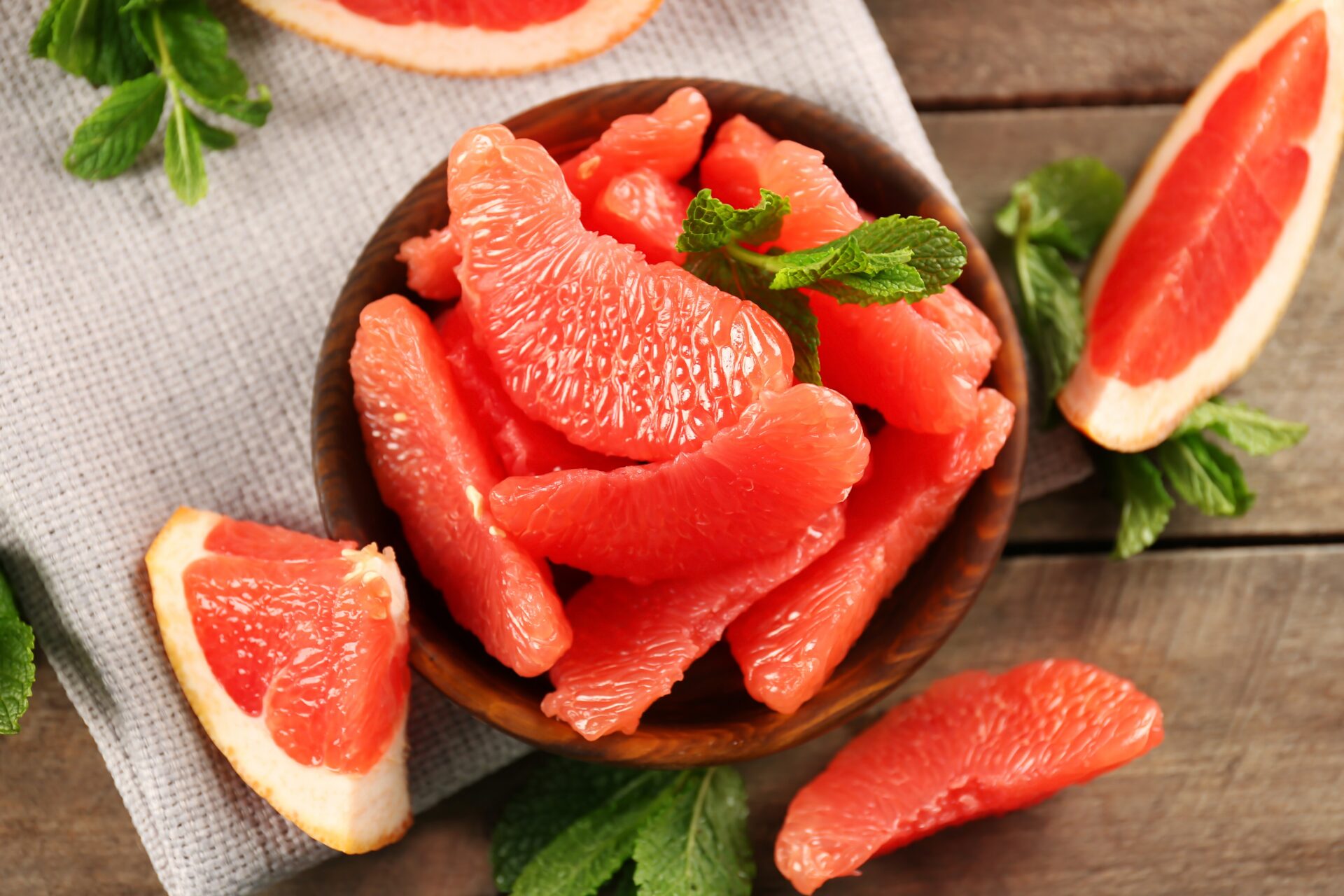
Citrus fruits are generally recommended when watching your weight, praised for their “fat-burning” qualities. Grapefruit is a prime example, enjoying a well-established reputation as a slimming fruit. But is it deserved? What are the actual fat-burning actions of grapefruit?
Grapefruit’s fat-burning action no1: it’s low in calories
The grapefruit is one of the least caloric fruits around: just 40 kcal per 100 g. It’s also very low in sugar, containing only 6 g of sugar. And that sugar is particularly well absorbed by the body, as it comes in the form of natural fructose. Add to this a good fibre content — which naturally lowers the glycaemic load of foods and promotes satiety — and you have the ultimate slimming food!
Action no2: grapefruit aids digestion

Grapefruit is naturally rich in water and in soluble fibres , which are gentle on the intestines. It’s therefore ideal for supporting digestion and boosting transit. But it has another advantage: it lowers bad cholesterol in favour of the good kind, by neutralising some of the dietary fats (partly thanks to the citric acid it contains). Starting or finishing a meal with a grapefruit (or a pomelo, its close cousin) is therefore an excellent choice: digestion improves, you feel less bloated and your body eliminates dietary lipids more easily.
Action no3: it detoxifies the body
Grapefruit as a detox food? Its exceptional micronutrient content certainly supports that claim:
- provitamin A and vitamin C, both antioxidants that neutralise free radicals;
- flavonoids, which support the immune system and strengthen blood vessel walls;
- potassium, a trace element that promotes drainage and reduces the risk of water retention ;
- water, always welcome for draining the body.
And detoxification creates the ideal conditions for releasing stored fat.
Action no4: grapefruit is lipolytic

It’s often said that applying grapefruit essential oil to the skin has a slimming effect, as it promotes lipolysis (the emptying of fat cells of their fatty content). But does eating grapefruit produce the same effect? Absolutely! This fruit is a genuine “fat-burner”: its chemical composition (particularly its polyphenols) is lipolytic(1). The fruit — from its zest to its flesh and even its seeds — encourages the body to release some of its stored fat reserves.
Action no5: its scent acts as an appetite suppressant
No, this isn’t a joke. In fact, it’s quite serious: science(2) suggests that certain scents may influence nervous and brain activity and, in turn, affect how much we eat. Citrus fragrances (and grapefruit in particular) may help reduce appetite by acting on the levels of substances that regulate hunger. Simply inhaling the scent of grapefruit before a meal could lead to eating less — and ultimately, losing weight !
Action no6: grapefruit acts on blood sugar levels
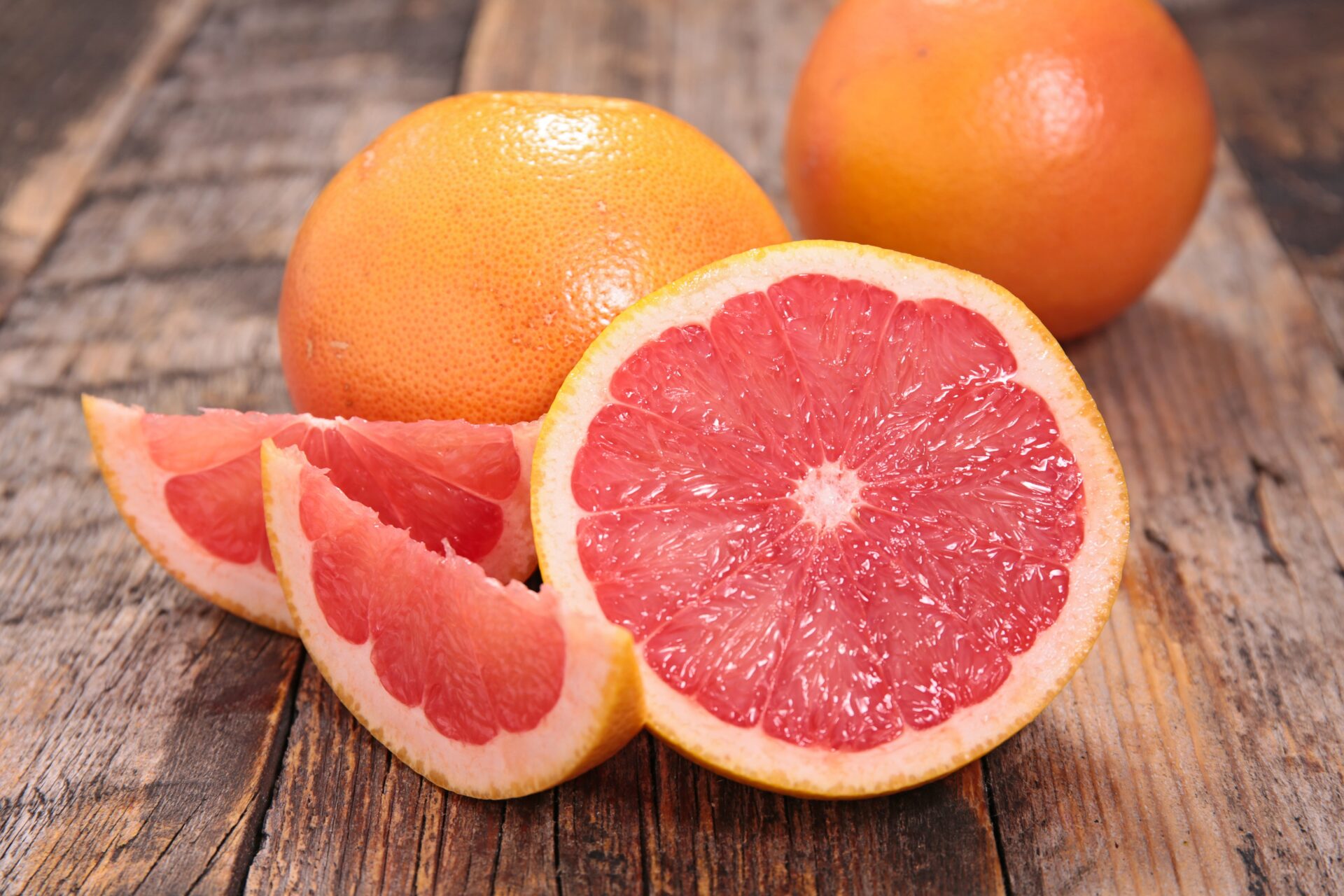
Another surprising benefit of grapefruit: it may help prevent fat storage by acting directly on the absorption of dietary sugars. Eating grapefruit regularly could influence insulin resistance and help prevent hyperglycaemia. And it’s precisely during blood sugar spikes that the body responds by storing fat. More than a fat-burner, grapefruit helps prevent fat from forming in the first place!
One final note about grapefruit: it should be avoided if you are taking medication, particularly statins (cholesterol), benzodiazepines (depression), immunosuppressants, or calcium channel blockers (heart conditions). It may inhibit their effects.
(1) 2008, Dallas et al., Lipolytic effect of a polyphenolic citrus dry extract of red orange, grapefruit, orange (SINETROL) in human body fat adipocytes. Mechanism of action by inhibition of cAMP-phosphodiesterase (PDE)
(2) 2005, Shen et al., Olfactory stimulation with scent of grapefruit oil affects autonomic nerves, lipolysis and appetite in rats