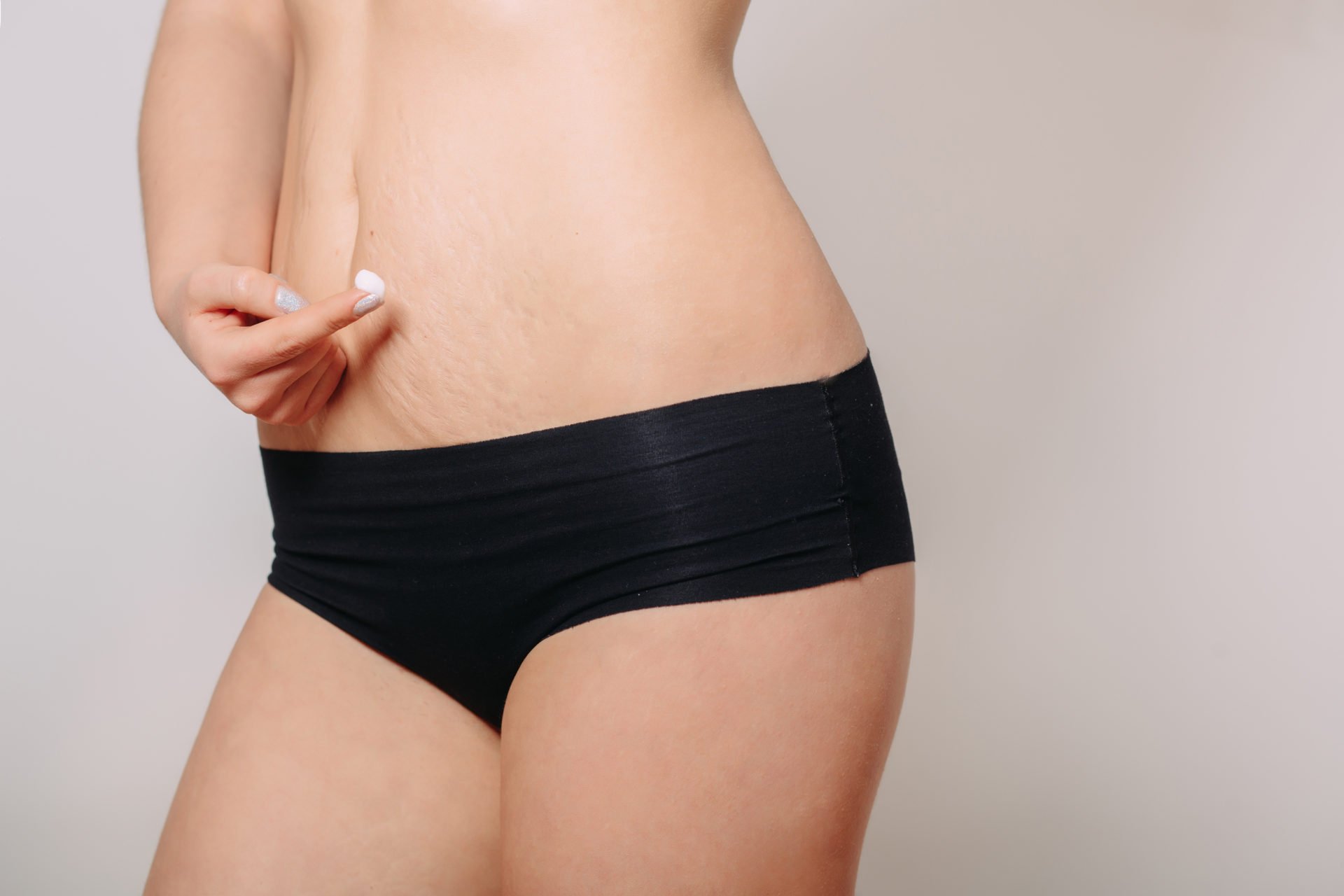
Stretch marks are a real source of self-consciousness. You do everything to hide those fine lines on your stomach, thighs or buttocks… You’d love to fade them, and you’ve heard about microdermabrasion. To find out everything about this aesthetic medicine technique, and whether it’s truly effective for treating stretch marks, read on!
Sommaire
What is microdermabrasion?
1- Microdermabrasion vs. peeling: what’s the difference?
Microdermabrasion (also known as controlled micro-peeling) is a cosmetic procedure that gently exfoliates the skin to remove imperfections. Similar to peeling, microdermabrasion is less abrasive and better suited to sensitive and delicate skin. Why? Because while peeling uses an acidic chemical solution (chemical peel) or a rotating brush (mechanical peel) to “sand” the skin, microdermabrasion relies on the projection of microcrystals. The method is therefore far less aggressive. Yet the goal is the same: to remove the outermost layer of the epidermis (the uppermost layer of the epithelium, if you want the full picture!), to encourage regeneration and restore a soft, smooth appearance to the skin.
2- How microdermabrasion works
The principle behind microdermabrasion is straightforward: it involves high-intensity projection of exfoliating microcrystals onto the skin – a kind of pressurised exfoliation – followed by suction to remove dead skin debris. The microcrystals used are typically made from aluminium oxide (alumina), which is chemically inert, meaning it does not react with the skin. The exfoliation is mechanical, not chemical.
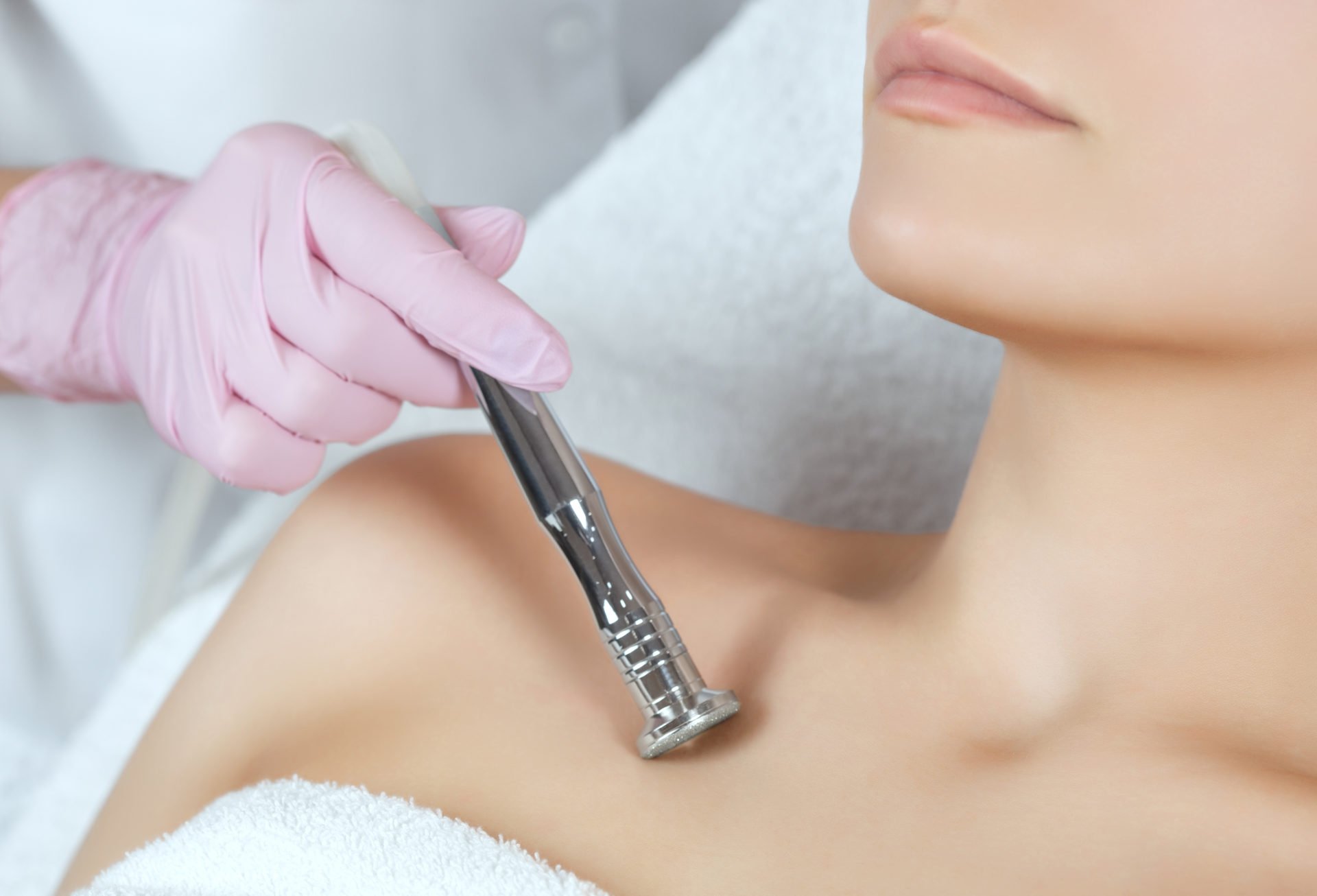
There is also a newer, next-generation technique: diamond-tip microdermabrasion. It has the advantage of being faster, treating the skin at a deeper level (though this means a longer healing time), and leaving no residue on the skin – since even after suction, a few microcrystal particles can sometimes remain following a standard session.
Microdermabrasion treatment is non-invasive, may cause mild discomfort, and can only be performed by a qualified medical professional (dermatologist, surgeon or aesthetic doctor).
Why is microdermabrasion effective on stretch marks?
Microdermabrasion is used to address a range of skin concerns:
- Treatment of early fine lines
- Fading of dark spots
- Enlarged pores
- Treatment of acne and acne scars
- Smoothing rough skin texture (particularly for very dry skin)
- Stretch marks
Microdermabrasion is thought to offer numerous benefits for skin quality:
- Removing dead cells and impurities to encourage cellular renewal
- Stimulating the superficial layers of the skin
- Boosting microcirculation for better oxygenation and nourishment of the tissues
- Supporting the healing process, as the skin is stimulated on multiple levels (cellular and circulatory)
- Evening out skin tone
- Filling in the grooves left by stretch marks by promoting skin thickening
When it comes to stretch marks, all areas of the body can be treated. You can consider microdermabrasion for smaller areas (stretch marks on the shoulders or calves) as well as larger ones (stretch marks on the thighs, stomach or hips). Only the number of sessions will vary. That said, microdermabrasion tends to be more effective on wide, deep and soft stretch marks – whether they are white, red or purple – than on narrow, hardened ones.
What happens during a session?
Each microdermabrasion session takes place in a medical setting.
First, the skin is prepared: the doctor examines the area, defines the treatment zone, then cleanses and disinfects the skin. If you are particularly sensitive, a numbing cream may be applied beforehand.
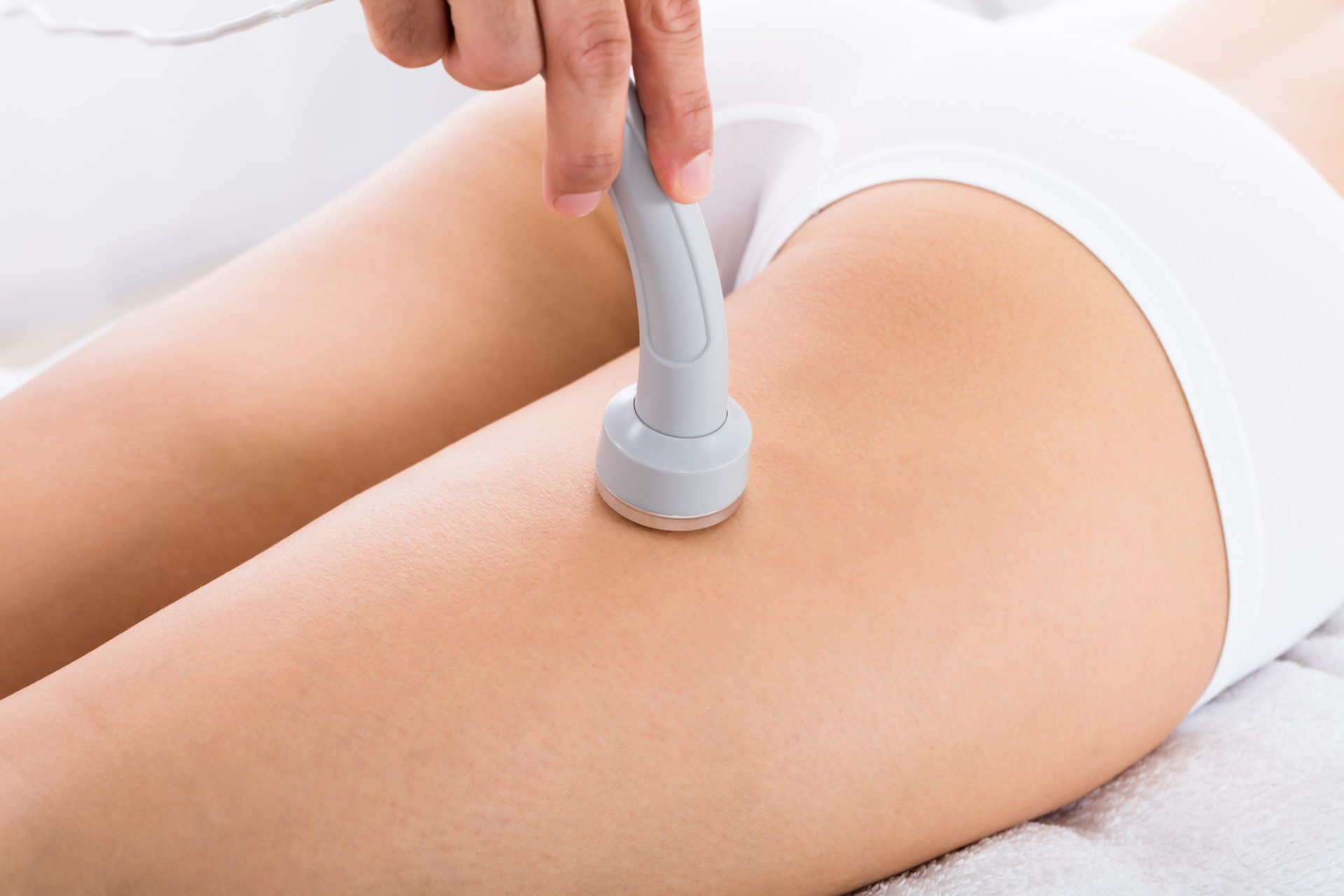
The microdermabrasion treatment then begins and can last between 30 minutes and one hour. The device used is a pressurised machine (for microcrystal projection microdermabrasion). It is generally quite powerful and operates at three intensity levels. Using the handpiece, the doctor moves in a zigzag pattern over the stretch marks to exfoliate the skin. This step is known as sandblasting. The stretch marks are treated until slight bleeding occurs. There’s no need to worry – this is perfectly normal: as the dead skin particles are removed, the epidermis is exposed. The doctor then suctions away the microcrystals and dead cells.
Finally, once the skin has been thoroughly cleansed, the doctor applies a healing solution and then a dressing. This should be kept on for at least 48 hours to protect the treated area.
Are there any side effects?
There are a few potential side effects associated with microdermabrasion for stretch marks. As with many dermatological treatments, you may experience localised skin irritation, redness in the treated area (which will subside quickly), as well as tightness and tingling.
When sessions are scheduled too close together, or if the treatment is not properly administered (incorrect machine settings), microdermabrasion can carry a risk of infection. It goes without saying that choosing the right practitioner is essential!
During a microdermabrasion stretch mark treatment, sun exposure is strongly discouraged. It can lead to swelling and dark spots (hyperpigmentation). If you’re considering this treatment, opt for the winter months, when sun exposure is less likely.
Finally, after each session, it’s important to follow a few key guidelines:
- If you touch the treated area, make sure to wash your hands thoroughly beforehand to prevent any risk of infection.
- Do not apply any cosmetic cream to the treated area. The skin is raw and cannot tolerate additional products, which could cause further irritation. The only product to use is the healing cream prescribed by your practitioner, for a period of 15 days to one month.
- Cleanse the treated area with pure water, preferably cold.
What about the duration and cost of microdermabrasion for stretch marks?
The length of a microdermabrasion treatment depends on the number and nature of the stretch marks (width, depth), skin reactivity, and the size of the area to be treated. You should expect to need several sessions to effectively treat stretch marks – roughly between 5 and 20. Each session should be spaced out (one to two months apart) to allow the skin sufficient time to regenerate. The overall treatment can therefore be quite lengthy.
As for the cost, it varies depending on the practitioner and the extent of the treatment. Expect to pay between €60 and €150 per session approximately.
Are there any contraindications to microdermabrasion for stretch marks?
As with any aesthetic treatment, microdermabrasion for stretch marks is not recommended for:
- People with unhealed burns or open wounds
- Those with inflammatory acne, rosacea, or an active skin condition (psoriasis, eczema, hives)
- People with diabetes
- People with contagious infections (such as herpes) or a weakened immune system (cancer, autoimmune disease).
- People with darker skin tones, who are at greater risk of hyperpigmentation
Are there any alternative methods?
If you’re hesitant about microdermabrasion (due to the time commitment, cost or the procedure itself) but still want to reduce the appearance of your stretch marks, there are other alternatives for treating them. Skincare products are becoming increasingly effective at fading stretch marks, whether recent or long-standing. Our Stretch Mark Pack is the perfect place to start! It contains 3 products specially formulated to target stretch marks and care for skin in depth:
- The Stretch Mark Scrub, which gently exfoliates the skin without aggressing it, for a smoother texture and a complexion free of dead cells. Its exfoliating micro-grains are of natural origin (apricot kernel and bamboo), to avoid any irritation, while its nourishing agents (mango butter and wheat germ) support the skin’s healing process.
- The Stretch Mark Cream is ideal for treating all types of stretch marks: old and new, from growth, pregnancy or in men. Its natural formula, enriched with macadamia oil and cocoa butter, helps reduce the creviced appearance of stretch marks and restore skin elasticity.
- The Stretch Mark Care Oil is a blend of 6 natural plant oils (including avocado, jojoba and sesame) with exceptional skin benefits. Used daily, it helps prevent the appearance of stretch marks or treat existing skin damage. Users love it: 95% of them noticed a visible reduction in their stretch marks with regular use.
