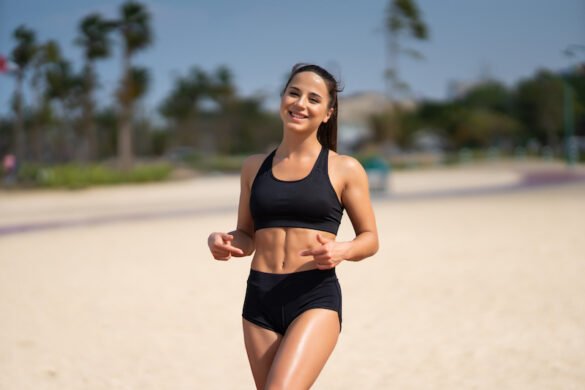
Fed up with your stubborn tummy and looking for an enjoyable way to work your midsection? Why not give cycling a try? Simple, affordable, fun and a great way to get out and about, it ticks every box. Find out how to cycle well (frequency, duration), discover the other benefits of this sport and, above all, the simple habits that go hand in hand with your rides.
Does cycling help you lose belly fat?
Cycling doesn’t target one specific area: it’s an endurance activity that works the whole body, core included. It’s best done regularly, over fairly long sessions, alongside a varied, balanced diet and good hydration. How often to ride, for how long, which muscles it works and tips to support your sessions: here’s what you need to know.
Cycling: an endurance sport
Cycling, like running or swimming, is what we call an endurance sport. Cycling is a cardio-based activity, meaning it requires a moderate but sustained effort. Riding regularly and over longer sessions is an enjoyable way to stay active and burn calories. So cycling can easily find a place in your fitness routine. That said, as with any cardio activity, a few simple rules apply:
- Ride regularly, meaning at least two longer sessions per week. Pedalling several times a week is better than one long ride once a month.
- These sessions can be complemented by regular short everyday rides, such as cycling to work or picking the kids up from school.
- Allow enough time for each session: aim for around 30 to 40 minutes of exercise, for example, and adjust this to your fitness level. So, to work on your tummy, it’s best to keep the effort going.
Cycling: a full-body sport
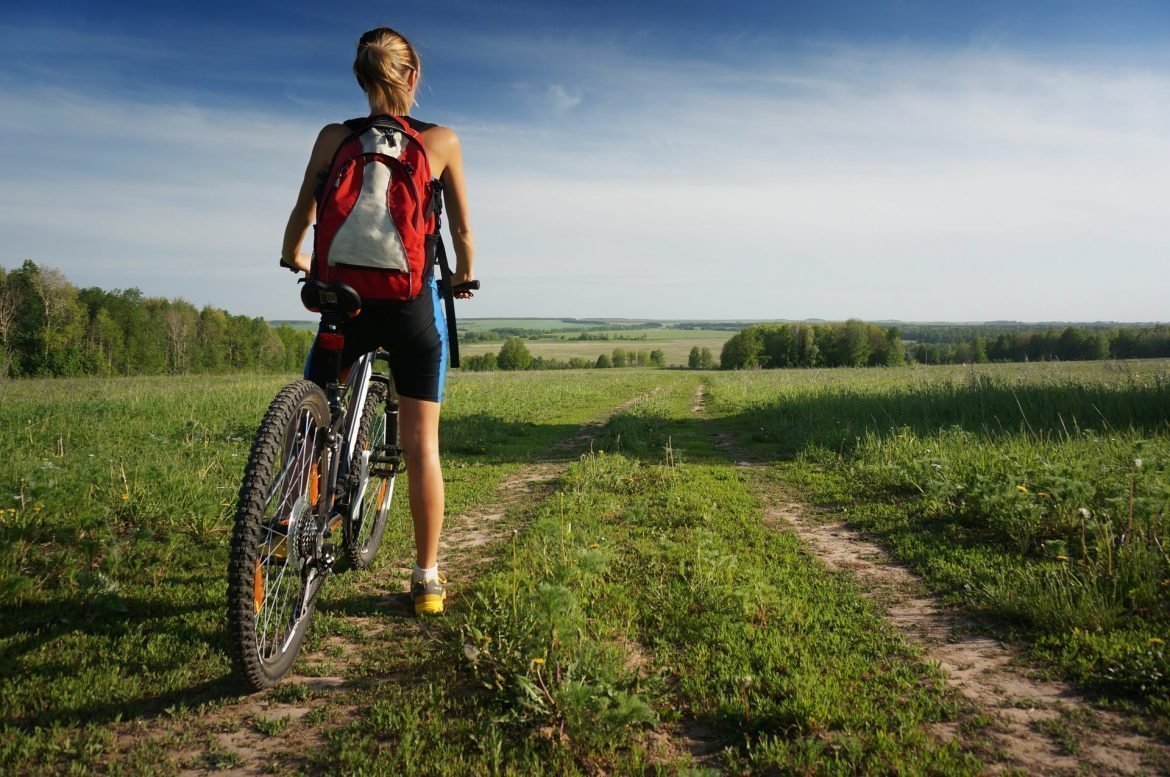
Cycling engages almost every muscle group in the body. Of course, some are worked harder than others:
- The gluteal muscles, especially the gluteus maximus, as they generate the power needed to push down on the pedals.
- The thigh muscles, such as the quadriceps and hamstrings, which enable both hip-to-knee flexion and the powerful push strokes required in cycling.
- The lower leg muscles, including the calves and tibial muscles, which are activated during both the push and pull phases of pedalling.
Cycling also engages:
- The arm muscles, such as the biceps and triceps, which help grip the handlebars and keep the bike under control.
- The shoulder muscles, like the deltoids, which work depending on how your hands are positioned on the handlebars.
- The abdominal muscles, which are particularly engaged when you stand up to pedal. More generally, maintaining balance requires sustained contraction of the core.
As you can see, cycling doesn’t only engage your core: as an endurance activity, it calls on many muscles right across your figure.

The cooling gel that leaves the skin on your stomach firmer
- Arctic Algae, Prosveltyl® & Menthol, combined in a formula designed for the stomach and hips
- Sorbet texture: it absorbs faster and makes the fresh sensation last longer
- 🍃 98.3% natural-origin ingredients
What are the benefits of taking up cycling?
There are many! As mentioned, cycling is an endurance sport that fits easily into an active lifestyle, and an enjoyable way to keep your healthy weight in mind over the long term. On top of that, cycling is a complete sport that engages many different muscles, belly included. Worried about a little paunch? Cycling is a pleasant way to get moving.
But cycling has other benefits too:
- It gets your legs moving: if you often suffer from heavy legs or a feeling of water retention (including around the belly), moving regularly is one of the most common lifestyle tips. If the discomfort persists, speak to your GP.
- It’s good fun: cycling is a playful activity with strong childhood associations. More often than not, it doesn’t feel like exercise — a bike ride rarely registers as a workout. So you’ll be moving more without even realising it! Many people also enjoy a ride as a chance to unwind and take a break from everyday stress.
- It’s a gentle cardio activity: like other endurance sports, cycling gets you moving at a moderate, steady pace that you can adapt to your level. Moving regularly is also one of the usual lifestyle tips for comfortable digestion.
How can I make the most of my cycling sessions?
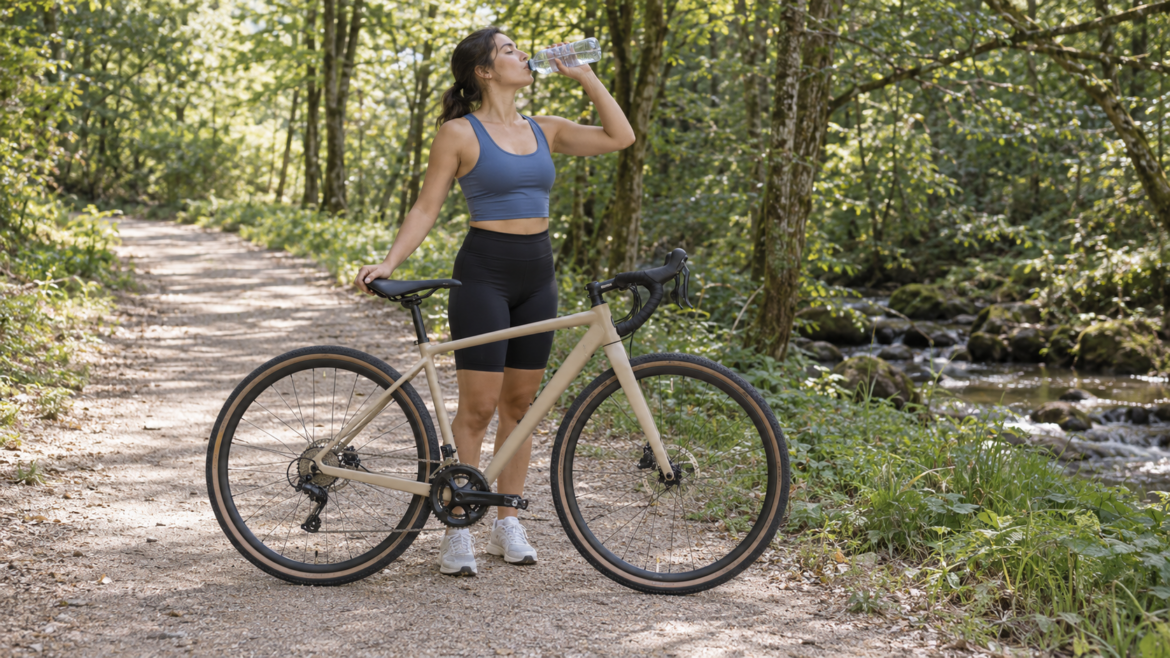
A few simple habits can go hand in hand with your cycling routine. You’ve probably heard them before, but a little reminder never hurts:
Watch what you eat: Exercise goes hand in hand with a suitable diet. Think varied, balanced meals built around fruit and vegetables, low-GI complex carbohydrates and lean proteins. Cut back on fast sugars, saturated fats and bloating foods.
Stay properly hydrated: don’t forget to drink, especially when you’re out on the bike, as you lose water through sweat when you exercise, even at a moderate pace. Drink before, during and after your ride. Hydration should be based on water, plain and simple, so go easy on sugary drinks. And for more everyday tips on that little unwanted bulge, take a look at our dedicated article.
Follow a dedicated belly-care routine: so you’ve decided to take up cycling to work on your tummy? Excellent idea! And if you’d like to pamper your stomach between rides, our 21-Day Extra Flat Belly Programme is the perfect companion. It includes an 80-page guide packed with tips and advice about your tummy, plus two indulgent belly treatments. Our cryo gel for the belly is applied in the morning to the abdominal area, and our night cream for the belly is applied in the evening to round off your routine.
Frequently asked questions
How long should each cycling session be?
The guideline given in the section “Cycling: an endurance sport” should be adjusted to your current fitness level. The idea is to pedal at a moderate but steady pace, rather than squeezing in lots of very short rides. If you’re getting back into exercise after a long break, build up gradually.
Should I aim to cycle a set distance every day?
Distance isn’t a very meaningful guide, as it depends on the terrain, your bike and your pace. It’s better to think in terms of how long you ride and how regularly, as explained in the section “Cycling: an endurance sport”, and to go at your own pace.
Which muscles does cycling work?
Mainly the lower body, although the arms, shoulders and abs are involved too. You’ll find the details in the section “Cycling: a full-body sport”.
Related articles
- How to lose belly fat without doing abs?
- 24 Tips to Lose Belly Fat Naturally
- 8 exercises to slim your waistline
Useful categories: Slimming the Belly, Weight Management.
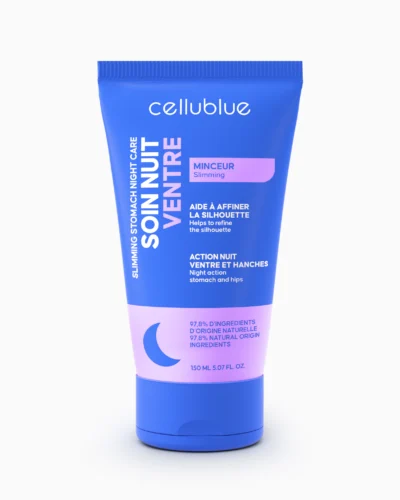
The evening treatment with Ginger & Slimsize® for the belly and hips
- Targeted night treatment for belly & hips, to massage in every evening before bed
- Ginger & Slimsize®, with a patented active ingredient at the heart of the formula
- Helps smooth and firm the skin
 -26%
-26%The cordless massager: 2 900 rotations per minute to stimulate your skin
- A deep mechanical massage: rotations and vibrations, up to 2 900 turns per minute, knead the skin on your thighs, stomach, arms and bottom
- 2 complementary heads: the ball head kneads deep down, then the wave head smooths and tones the surface
- 5 intensity levels on a touchscreen, a blue light, cordless and quiet