
When it comes to reducing cellulite, there are natural methods worth exploring — including the most well-known and effective one: the palper-rouler massage! Essential oils are also among the effective approaches that can help smooth the appearance of dimpled skin. Here’s everything you need to know about these oils and their benefits.
What is an essential oil?
First things first: despite what the name might suggest, an essential oil is not actually an oil — it’s a concentrated liquid extract. This ultra-concentrated extract is obtained by steam distillation of plants. Essential oils are therefore 100% natural.
Depending on the plant used, these oils offer a wide range of benefits:
- promoting better sleep,
- easing stress,
- soothing sunburn,
- relieving headaches…
The possibilities are virtually endless! Among them, one stands out for us: targeting cellulite. Thanks to their concentrated active compounds and the way they’re applied, essential oils can help stimulate healthy blood circulation and lymphatic drainage. In doing so, they support your body’s ability to flush out excess fat and toxins more effectively.
Which essential oils work against cellulite?
 Not all essential oils are suited to tackling cellulite — only certain ones have the right properties. Here’s the selection:
- Lemon essential oil: like fennel, this oil is known for its diuretic properties, making it ideal for water retention and aqueous cellulite.
- Grapefruit essential oil: this oil supports the elimination of accumulated waste and toxins, and may even help curb appetite!
- Helichrysum essential oil: its decongesting and toning properties make it effective for addressing venous and lymphatic circulation issues and reducing the appearance of cellulite.
- Cypress essential oil: it improves venous and lymphatic circulation and can help relieve heavy legs.
- Cedarwood oil: a true all-rounder — it decongests tissues, helping the body eliminate fat deposits, toxins, and excess fluids.
- Fennel essential oil: with its diuretic properties, this oil supports the elimination of toxins and retained fluids. It is particularly recommended for aqueous cellulite.
- Menthol eucalyptus essential oil: its draining and lipolytic properties allow it to act directly on cellulite and skin dimpling.
- Juniper essential oil: it tones the skin’s surface and helps eliminate toxins from subcutaneous tissue.
- Geranium essential oil: it improves blood and lymphatic circulation, helping the body break down and eliminate fat more efficiently.
- Peppermint essential oil: this oil has lipolytic properties that help reduce the appearance of orange-peel skin.
- Rosemary essential oil: a multi-benefit oil that, among other things, helps prevent the build-up of toxins and the stagnation of fluids in the body.
Overall, all of these essential oils are recommended for targeting cellulite. They help reduce fatty deposits, flush out stored fluids and toxins, improve blood and lymphatic circulation, and tone the skin.
How to use essential oils?
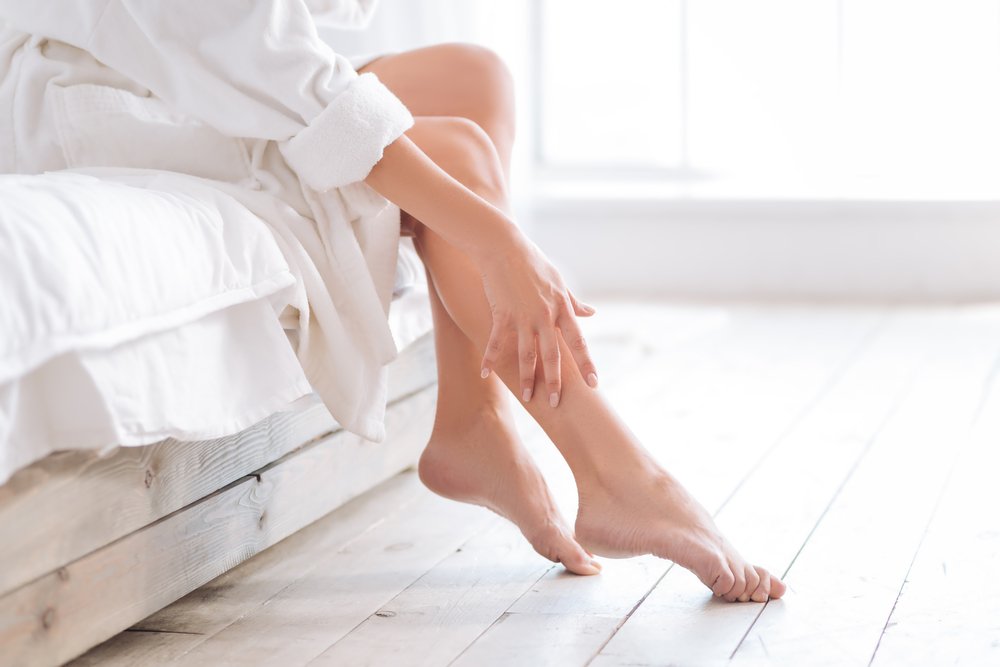 Essential oils can be used in many ways: taken internally, diffused, inhaled from a cloth… But when it comes to fighting cellulite, the most effective method is massage. This way, you combine the benefits of the oil with those of an anti-cellulite massage — the ideal combination for maximum results!
Massage with pure essential oils
If you want to use your essential oils undiluted, keep in mind that they should never be applied directly to the skin. Doing so could cause irritation or even more serious damage. To use an undiluted oil on cellulite, place 1 to 2 drops onto a natural-bristle brush designed for body massage. Then massage the area using small circular movements, working from the bottom upwards over the area to be treated.
Massage with diluted essential oils
For a hands-on massage, blend your chosen essential oil with a carrier oil, such as castor oil or avocado oil. Mix well, then massage the area, always working from the bottom upwards.
You can use just one of these essential oils to target cellulite. However, combining several allows you to benefit from all of their properties at once.
There are contraindications to the use of essential oils (allergies, pregnant women or those who are breastfeeding, high blood pressure…). If in any doubt, always consult your doctor before use.
Essential oil usage precautions
Essential oils, while particularly beneficial for cellulite, must be used under certain conditions:
- For massage, they must be diluted to 2 or 3% in a natural carrier oil.
- In an anti-cellulite bath, they must be combined with a dispersant or an oil, and optionally a carrier such as salt. They do not dissolve directly in water!
As for general usage guidelines, here they are:
- Never use an EO on a prolonged basis without medical advice.
- Never exceed the doses specified in a recipe within a regulated or medical context.
- Do not ingest an essential oil unless it is specifically approved for oral use.
- Always choose 100% natural EOs. Be very careful about where you source them.
- Never apply an essential oil to mucous membranes: nose, eyes, mouth, or ears.
- If using citrus EOs (lemon, grapefruit), avoid sun exposure. These EOs are photosensitising and may cause a skin reaction.
- Keep your EOs out of reach of children and pets. They can be toxic if ingested or applied in large quantities.
- If you are undergoing medical treatment, check with your doctor before using an essential oil. Some may interfere with your treatment.
- Be careful with blends! Don’t create your own recipes. Some EOs are incompatible and can cause skin damage.
- Before any use, check that you are not allergic to the essential oil. Test your EO, mixed with a little carrier oil, on a small area of skin first.
Finally, an effective essential oil is one that is properly stored. With that in mind:
- Keep your bottles away from heat sources and light.
- Always reseal your EO bottles tightly after each use to preserve their properties.
- Citrus essences prefer cool conditions. Don’t hesitate to store them somewhere fresh.
- EOs have an expiry date. Respect it!
Contraindications for EOs:
The essential oils mentioned above come with a few contraindications.
- Fennel EO: should not be used by pregnant or breastfeeding women, or children under 6. Also contraindicated for people with epilepsy, ulcers, gastritis, hormone-dependent cancer, neurological conditions, or respiratory allergies.
- Juniper EO: should not be used by pregnant or breastfeeding women, or children under 3.
- Rosemary EO: should not be used by pregnant or breastfeeding women, young children, or people with hepatic hypersensitivity or dermatitis. Use is not recommended alongside certain diuretic or anticoagulant medications.
- Geranium EO: should not be used during the first 5 months of pregnancy, or on infants.
- Citronella EO: no specific contraindications, except that it can be dermocaustic and must therefore be used with a carrier oil.
- Grapefruit EO: can be used from the 3rd month of pregnancy and by children over 3. Photosensitising — do not use before sun exposure.
- Cedarwood EO: should not be used during pregnancy or breastfeeding, by children under 10, people with epilepsy, or those with a history of hormone-dependent cancer.
Used alone, essential oils won’t eliminate cellulite entirely. However, combined with palper-rouler massages, targeted treatments, a balanced diet, and regular exercise, they make an excellent natural boost!
