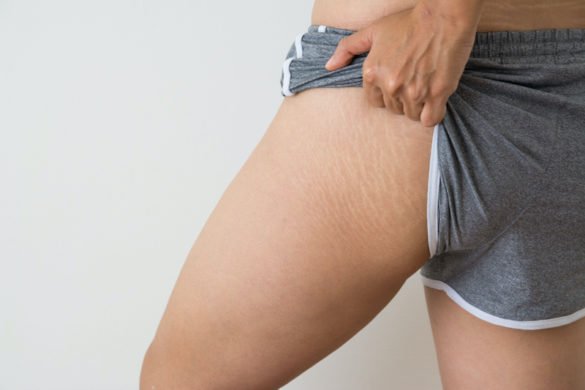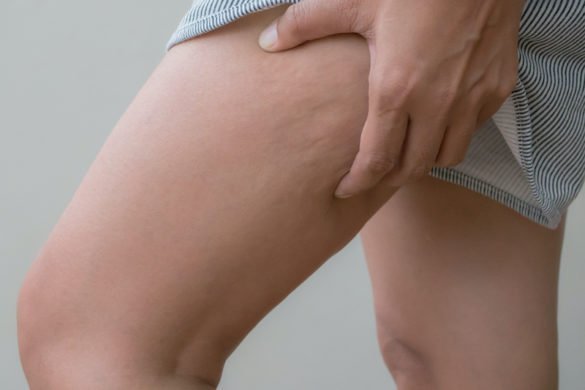
Cellulite in women is common, even ordinary, affecting 80 to 90% of them. It is far rarer, however, to see cellulite in children or teenagers. That said, between the rise in childhood obesity and puberty starting earlier, it is becoming more and more common to notice cellulite appearing prematurely in young girls. How does fat tissue develop in children? At what age can cellulite appear? And which everyday habits are worth adopting, from diet and exercise to medical advice? Here are the key points to know.
Adipose tissue in children
At birth, every child has adipose tissue, accounting for around 15% of their total body mass. This is entirely normal — every individual is born with a “reserve” of fat, which provides the body with:
- An energy reserve
- Thermal insulation
- Endocrine functions, as adipose tissue also produces hormones and other signalling molecules
Children therefore have a certain number of pre-adipocyte cells, which remains stable during the first year — these cells do not multiply, they simply grow larger (hypertrophy). From that point until adolescence, they multiply continuously (hyperplasia). It is at puberty that their number “explodes”, driven by sex hormones — testosterone in boys, oestrogen in girls.
Oestrogen stimulates the development of subcutaneous fat (adipogenesis) in the chest, hips,buttocks andthighs, while testosterone and androgens encourage the development of adipocytes in the abdominal area.
It is therefore during this pivotal moment that cellulite is likely to appear, and young girls will be more prone to it than young boys. This can be explained by several factors:
- A pubescent girl is capable of reproduction. The female body is naturally designed to “build up fat reserves” in preparation for a potential pregnancy.
- The structure of adipose tissue differs between girls and boys, which is why cellulite is visible in women.
- Girls have a higher number of adipocytes.
- Boys have thicker skin.
At what age does cellulite appear in teenagers?

There is no universal answer to this question. 90% of women have cellulite, but it will not be visible in all women at a predetermined age. Everything depends on:
- Hereditary factors: if the young girl’s mother (or grandmother) experienced “juvenile” cellulite, there is a strong chance the same will happen to her (thanks, Mum!). The same applies tovenous and lymphatic insufficiency, which is a contributing factor to cellulite.
- Hormonal activity: this varies from person to person. But if a young girl experiences significanthormonal fluctuations, with pronounced oestrogen peaks, she will be more prone to developing cellulite.
- Diet: a diet high insugar, saturated fats andsalt can have a significant impact on the body, even in teenagers. An overly rich and unbalanced diet can lead to the development of cellulite (adipose cellulite from excess sugar and fat,water-retention cellulite from excess salt).
- Physical activity: a sedentary lifestyle is a contributing factor to excess weight and cellulite, in teenagers just as much as in adults.
Cellulite is therefore amultifactorialphenomenon — whether you are a young girl or a grown woman!

The body cream that hydrates and helps firm the skin
- Kigeline & Fenugreek, two plant-based actives at the heart of the formula
- Hydrates the skin and helps strengthen its firmness on targeted areas
- Melting texture: it absorbs quickly, with no residue or greasy film
What about babies and toddlers?
A baby’s little rolls and chubby thighs are usually just part of the “reserve” of fat every child is born with. In toddlers, cellulite as we know it in adult women is far rarer, as it mainly appears with the hormones of puberty.
If the appearance of your child’s skin puzzles you, or you have questions about their weight, the simplest thing is to talk to your GP or paediatrician.
How to address cellulite in children?
1- Diet

First and foremost — without being overly restrictive with the child — it is important to rebalance their diet. If eating habits are chaotic, with an abundance of saturated fats and sugar, it is essential to course-correct as early as possible. This matters all the more because healthy eating habits formed in childhood tend to carry through into adulthood. Without creating too much frustration, it is important to offer children and teenagers adiet that is varied, supports their growth and helps maintain a healthy weight:
- Fruit and vegetables at every meal
- Dairy products, which contribute to healthy bone development
- Complex carbohydrates, for energy and cognitive health
- Protein, to support muscle development
- Iron-rich foods, as 25% of girls who have started their periods are anaemic
- Hydration based primarily onwater
The occasional sweet treat or burger is not going to trigger cellulite! The key is simply to make sure that fast food, nutritionally poor foods (ready meals, white bread, chocolate spread…) and sugary drinks do not become a child’s daily staple. This helps limit any increase in the number of adipocytes and, with it, the risk of excess weight and cellulite.
2- Exercise

It is important for teenagers to engage in regular physical activity.Sport allows children to:
- Develop their motor skills: coordination, balance and flexibility.
- Strengthen their heart, respiratory capacity and bone density.
- Reduce the risk of excess weight and, in young girls, of cellulite appearing prematurely.
- Support their mental and emotional wellbeing.
It is therefore advisable to guide your child towards sport — helping them find an activity they enjoy and in which they can truly thrive.
3- Hormonal balance

In the case of young girls, it is essential to wait until growth is complete — meaning until puberty has run its course — before addressing the possible appearance of cellulite. Until hormonal balance is achieved, it is difficult to make any assessment or decide on an “anti-cellulite action plan”. Once hormonal balance is established — with a relatively stable menstrual cycle — a conversation with a GP, or even a first visit to a gynaecologist, can be considered. A healthcare professional will be best placed to assess the state of the cellulite (if present) or to suggest ways to limit its development.
Frequently asked questions
How can I tone my thighs and tummy as a teenager?
As a teenager, it is best to avoid strict diets. Focus on a varied diet (fruit, vegetables, protein, complex carbohydrates, water) and a sport you enjoy. Your figure is still changing during puberty. Wait until you have finished growing, then talk to your GP if it is something that worries you.
My daughter hasn’t reached puberty yet and has cellulite on her tummy. What should I do?
Try not to make it something your child feels self-conscious about. Our pointers are set out in the sections “What about babies and toddlers?” and “How to address cellulite in children?”.
At what age can cellulite appear in girls?
There is no set age. Cellulite mainly appears at puberty, under the influence of oestrogen, and whether it appears depends on heredity, hormonal activity, diet and physical activity. All of these factors are covered in the section “At what age does cellulite appear in teenagers?”.
Related articles
- Gaining weight for no reason: 8 common causes
- Pretox before the holidays: a good idea?
- Coffee and exercise: a good match?
To go further, explore the Cellublue shop: our anti-cellulite products.


The scrub that leaves skin smooth and skin texture refined*
*User test on 21 volunteers over 4 weeks, based on participants' feedback.
- Olive & apricot kernels: these natural grains gently sweep away dead skin cells
- Caffeine & monoi scent, so your shower instantly smells like a holiday
- In the shower, two to three times a week, massaging your thighs, bottom and stomach

The cupping tool that replicates pinching and rolling, 3 minutes per zone
- The professionals' technique, at home: you lift, glide, and release, and the tool grips the skin fold like a manual pinching and rolling
- Soft silicone that fits thighs, buttocks, stomach, and arms
- 3 minutes per zone, every day, always with a massage oil so the tool glides