
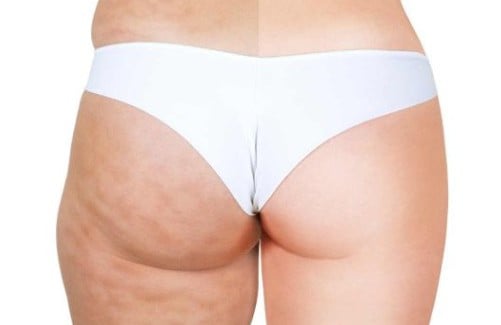
No. Hip dips are not cellulite in themselves. They are a natural curve in the body’s outline, between the hip and the upper thigh. Cellulite, on the other hand, refers to a dimpled appearance on the skin’s surface. You can have hip dips with smooth-looking skin, cellulite without a noticeable indentation, or both in the same area.
This distinction helps you avoid choosing a treatment or exercise routine with an impossible goal: a cream cannot change your bone structure, and an anti-cellulite routine cannot promise to fill an anatomical indentation.
How bone structure shapes hip dips
According to the Cleveland Clinic’s article on hip dips, these indentations are mainly explained by bone structure. The shape of the pelvis and the position of the upper thigh bone both contribute to the outline of the hip. The space between these anatomical landmarks is more or less visible from one person to another.
Muscle mass and the way fat is distributed can make this shape more noticeable, but they do not cause its anatomical basis. A visible indentation therefore does not indicate either a lack of exercise or excess body fat.
The Cleveland Clinic also points out that hip dips say nothing about your level of fitness or your health. The term describes an appearance, not an illness. There is no single outline that your hips are supposed to have.
Hip dips or dimples: what should you look at?
The most useful distinction is one of scale: a hip dip concerns the overall line of the silhouette, while cellulite concerns the texture of the skin. This table can help clarify the terms, but it cannot establish a diagnosis from a photograph.
| What you notice | What it describes | What it does not prove |
|---|---|---|
| An inward curve between the hip and the upper thigh | An outline consistent with hip dips | The presence of cellulite or a need to lose weight |
| Small dips and bumps on the skin’s surface | A dimpled texture, often called orange-peel skin | That the overall hip indentation is caused by cellulite |
| An indentation that looks more pronounced when you shift your weight | A change in appearance linked to body position | A change in your anatomy |
| Sharper shadows under side lighting | Texture made more visible by the lighting | That the area has worsened between two images |
The two can overlap
A hip can have an indentation in its outline and dimpling on the skin covering it. You do not have to choose one explanation for the whole area: body shape and skin texture are two separate observations.

The cupping tool that replicates pinching and rolling, 3 minutes per zone
- The professionals' technique, at home: you lift, glide, and release, and the tool grips the skin fold like a manual pinching and rolling
- Soft silicone that fits thighs, buttocks, stomach, and arms
- 3 minutes per zone, every day, always with a massage oil so the tool glides
If your concern is mainly the dimpled texture, our guide to cellulite by body area looks at that subject separately. Its aims should not be applied to the bone structure of the hips.
Thigh size is a separate issue too
The width of a thigh, its skin texture and the outline of the hip are not interchangeable terms. Our article on cellulite and larger thighs explores this distinction. Here, the key point is that a hip dip is not enough to draw any conclusion about your weight.
What a photograph cannot tell you
Turning your pelvis slightly, placing one leg in front of the other or shifting your weight to one side changes the silhouette you can see. Lighting can also emphasise an indentation or make small areas of skin texture less noticeable.
An image in which the indentation seems to disappear therefore does not show that an exercise or product has “corrected” it. Two photographs taken in different positions are not proof of effectiveness.
To understand what you are looking at, you can simply distinguish mentally between the outer edge of the body and the surface of the skin. This is a personal observation guide, not a medical test or a required tracking method. You do not need to take lots of photographs or pinch your skin to look for a flaw.
Choosing a routine without trying to fill hip dips
Set a goal that genuinely concerns the skin
If you want to care for this area, a realistic goal could be skin that feels hydrated, soft and supple. This kind of skin comfort does not mean that the outline of your hips will change. You can also choose to apply nothing: hip dips do not require corrective care.
Similarly, a routine intended to target the size of the thighs and buttocks has a different purpose. It should not turn into a promise to erase hip dips. The Cleveland Clinic points out that losing weight or building muscle does not “repair” this anatomical feature.
Frequently asked questions
Can you have hip dips without cellulite?
Yes. An inward curve in the hip’s outline can be present while the skin appears smooth. Conversely, dimpling can be visible without pronounced hip dips.
Can exercises fill hip dips?
They can build muscle, but they do not change your bone structure. The Cleveland Clinic recommends focusing on strength and mobility rather than on promises that hip dips will disappear.
Can a cream make a hip dip disappear?
No. Hydrating the skin and changing an anatomical outline are two different goals. Seeing the indentation after applying a moisturiser does not mean that the product has failed.
To go further, explore the Cellublue shop: our anti-cellulite products.

The scrub that leaves skin smooth and skin texture refined*
*User test on 21 volunteers over 4 weeks, based on participants' feedback.
- Olive & apricot kernels: these natural grains gently sweep away dead skin cells
- Caffeine & monoi scent, so your shower instantly smells like a holiday
- In the shower, two to three times a week, massaging your thighs, bottom and stomach




Comments (0)