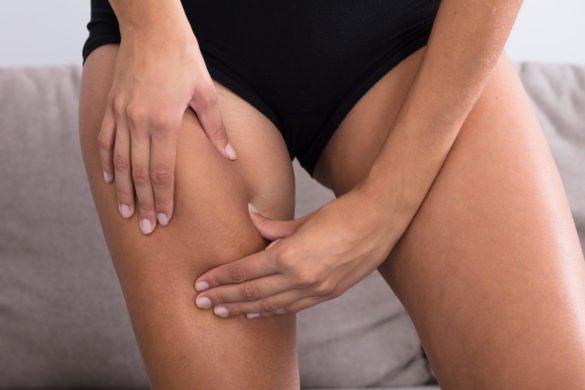
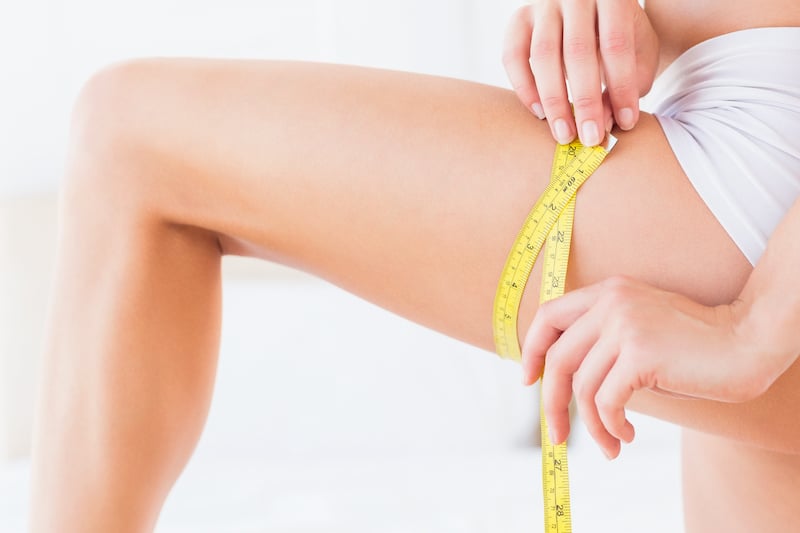
If you want to look after your thighs and work them, this article is for you! It takes a little consistency, but it is far from impossible. We have put together a simple, healthy programme for your thighs: targeted exercises to work the thigh muscles, nutritional guidance to support your efforts, and a skincare routine to look after your skin. Follow the guide at your own pace.
Tip 1: exercise for your thighs
Physical activity is a good way to work your thighs, especially when it targets the different muscle groups:
- the inner thigh muscles, known as the adductors;
- the hamstrings, located at the back of the thigh, responsible for knee flexion;
- the quadriceps, the muscles at the front of each thigh.
To work your legs, choose exercises such as yoga, fitness and Pilates, or activities such as cycling, rollerblading and walking, to engage these muscles. Need some inspiration? Here is a little programme we have put together to work them all!
Working your thighs: good habits to adopt
When it comes to working your thighs, consistency matters more than intensity. A few short sessions each week are better than one isolated effort: repeating the exercises is what helps them become habits. Vary your activities, including yoga, fitness, Pilates, cycling, rollerblading and walking, to work all the thigh muscles without getting bored.
It is also worth paying attention to your posture throughout the day and moving regularly: take the stairs or walk instead of driving for short journeys. These simple habits complement the programme and are easy to fit into your routine. The most important thing is to stay consistent without putting pressure on yourself over how quickly you should see a change.
Exercise 1: the wall sit
The ultimate core stability move! And a very comprehensive, all-round exercise for strengthening the quadriceps and working the thighs.
- Start standing with your back against a wall, feet slightly apart and arms by your sides.
- Slowly slide down, keeping your back flat against the wall, as if you were sitting on an imaginary chair. Your thighs should be parallel to the floor, with your hands stretched out in front of you or resting on your thighs.
- Hold the position for 30 seconds if you are a beginner, gradually increasing the duration over time.
- Quick tip: engage your core to help you hold the position and breathe steadily.
- Then slowly slide back up.
- Incorporate this exercise into your thigh programme between each so-called “active” exercise.
Exercise 2: the bridge
Another fitness classic, which has the added benefit of working the glutes as well as the hamstrings.
- Start lying on your back, knees bent, upper body firmly grounded, arms by your sides.
- Engage your core, glutes and thighs.
- On the inhale, lift your hips and glutes as if they were being pulled towards the ceiling.
- Hold for 5 seconds, then slowly lower back down.
- Repeat the movement around twenty times.
- Quick tip: you can add a variation by lifting one leg then the other with each hip raise (single-leg bridge).
Exercise 3: lateral squats
The adductors are often neglected. The result: inner thighs that lack tone and firmness… Time to change that!
- Start standing, feet shoulder-width apart, arms by your sides.
- On the inhale, extend one leg out to the side while bending the other (as in a standard squat). Let your hips shift slightly back, without arching your lower back.
- On the exhale, push back up and bring the extended leg back in line with your body.
- Repeat about ten times, then switch sides.
Exercise 4: the lateral leg raise
Another essential move for working and stretching your legs, as well as working the muscles in your hips.
- Lie on your side, propped up on your elbow, with your back and legs in a straight line.
- Raise the top leg, keeping the lower one in contact with the floor. The raised leg should stay in line with your body — not drift forwards or backwards.
- Lower the leg without letting it rest on the other, keeping the muscles under tension throughout.
- Repeat 10 to 15 times, then switch sides.
Exercise 5: high knees
A slightly cardio-focused move, but one that has the benefit of engaging the quadriceps and the knees.
- Start standing, feet slightly apart, arms bent.
- Drive one knee up as high and as quickly as possible. Keep the grounded foot on tiptoe to help you pick up speed, as if you were running.
- Lower that leg and immediately alternate with the other, maintaining the same pace.
- Keep alternating in a running-on-the-spot motion for one minute.
Exercise 6: the butterfly stretch
To look after your thighs, you also need to stretch them. There are many ways to do this, but the butterfly exercise remains a classic for relaxing the thigh muscles.
- Sit on the floor cross-legged, back straight, feet together and drawn in towards your groin.
- Hold your feet with your hands and gently “flap” your thighs up and down, like a butterfly beating its wings.
- The movements should be even, rhythmic and effortless.
- Continue for one minute, then straighten your legs out in front of you and let the muscles fully relax.
How long should you follow this programme?
There is no universal timeframe: every body is different. The important thing is to stick with the programme over time and at your own pace, rather than looking for a quick change.
Alternate targeted exercises, stretching and a balanced diet. If you have pain, medical questions or are pregnant, ask a doctor or medical professional for advice before starting or continuing this type of programme.
Tip 2: everyday nutrition
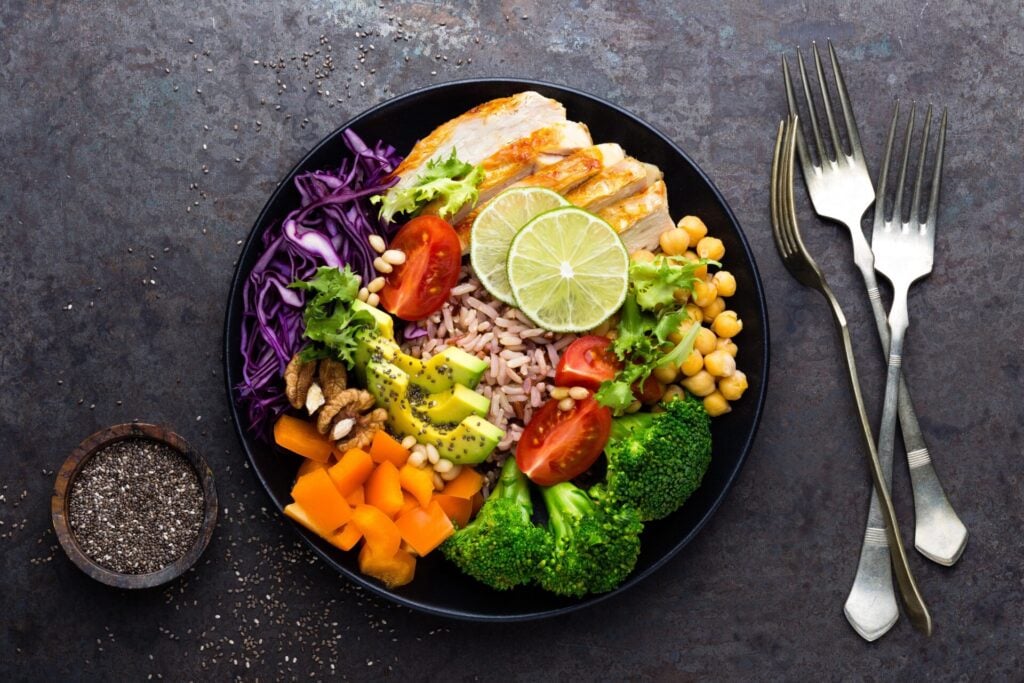
Let’s continue this programme with a few nutrition tips. Because yes, exercise is great — but some attention to what’s on your plate also matters for feeling comfortable in your body.
1- Protein on the menu
Lean proteins have their place on a balanced plate, alongside your exercise routine. Top choices include: white meat, fish, eggs, plant-based proteins, and fat-free fromage blanc.
2- Fruit and vegetables at every meal
Fruit and vegetables should feature at every meal. Varied and seasonal, they have their place in a balanced meal (see also: natural appetite suppressants). In short: go for it!
3- Carbohydrates, chosen wisely
Carbohydrates have their place on your plate, especially when you’re exercising regularly. That said, not all carbs are equal: opt for complex carbohydrates with a low glycaemic index. Best choices: wholegrains and pseudo-cereals, legumes, and root vegetables (sweet potato, parsnip, boiled potato with the skin on). Also be mindful of portion sizes — refer to recommended daily intakes as a guide.
4- Fats, in moderation
Don’t cut out fats entirely. That said, consumption should be moderate and sources chosen wisely: yes to avocado, oily fish and nuts, no to the saturated fats found in processed meats, fried foods and ready meals.
5- Hydration every day
Finally, to look after your thighs, make sure you stay well hydrated. Drinking enough throughout the day is a good habit. Choose zero-calorie drinks such as water, herbal teas, unsweetened tea and coffee in moderation, and homemade flavoured waters. If you feel a little hungry, a homemade vegetable juice makes an excellent snack.
Tip 3: the skincare boost
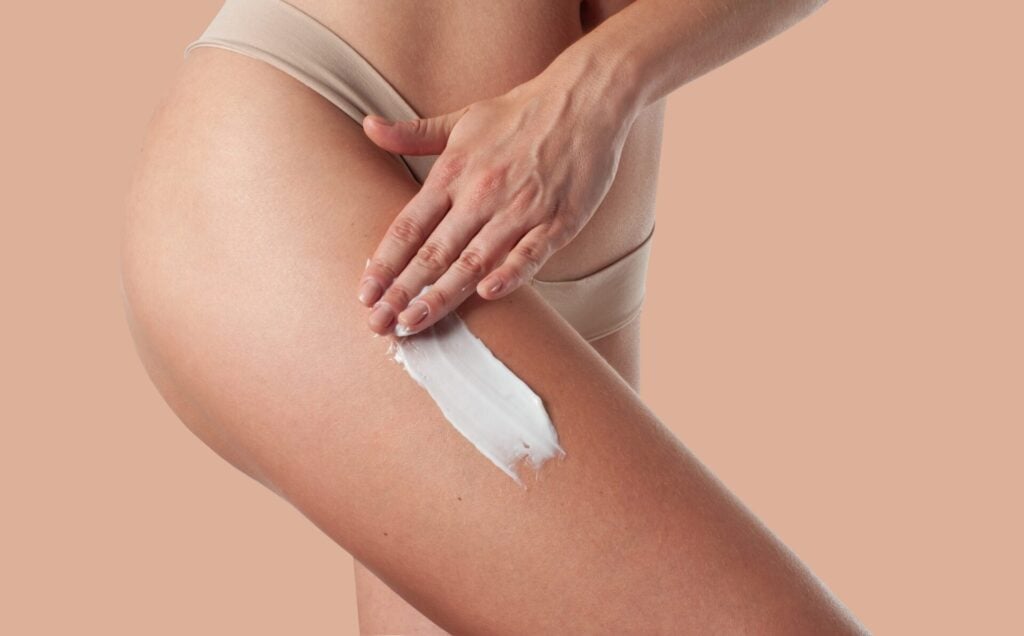
What if skincare could support your exercise and nutrition efforts? Cellublue offers a full range of products to include in a skincare routine for your thighs.
- The Slimming Serum, enriched with sea fennel and caffeine, can be used alongside the other treatments in the range.
Our duo Cryo Thigh Slimming Gel and Thighs Night Slimming Cream form a day-and-night routine dedicated to the thighs. Their formulas combine sacred lotus, coffee and fucus, and nourish the skin with sunflower oil.
The cooling gel that leaves thigh skin firmer
- Immediate cooling effect: menthol kicks in as soon as it is applied, then skin is firmer under your fingers (keep the gel in the fridge for even more intensity)
- Caffeine & Lipothetic®, a patented active ingredient, at the heart of a formula designed for thighs and buttocks
- Sorbet texture: it absorbs faster and makes the feeling of freshness last longer
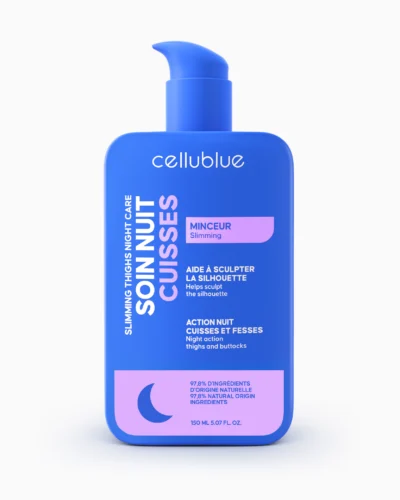
The evening slimming treatment for thighs and buttocks
- Targeted night treatment for thighs & buttocks, to massage in every evening before bed
- A formula with Ginger and Remoduline® (a patented active) to apply every evening
- Helps smooth and firm the skin
For targeted areas — particularly saddlebags or the little roll just above the knee — our Slimming Caviar for Stubborn Areas is a treatment worth trying. Enriched with green coffee and pomegranate, it looks after the skin in these targeted areas.
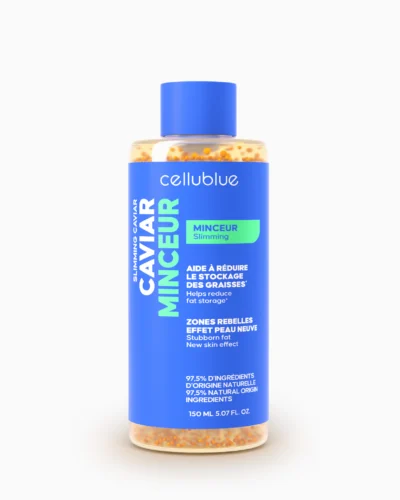
The micro-bead body care that leaves skin smooth and firmer*, on stubborn areas
*Self-assessment of 22 women after 21 days of using Caviar Minceur alone, morning and evening, in a usage test under dermatological control.
- Instructions for use
- Friendly advice
Finally, your skincare routine can be accompanied by a regular massage ritual. For the thighs, we like using the Wireless Intelligent Slimming Device. Equipped with four massage heads, it lets you tailor the massage action to suit your preferences. In a word: one to add to your routine!
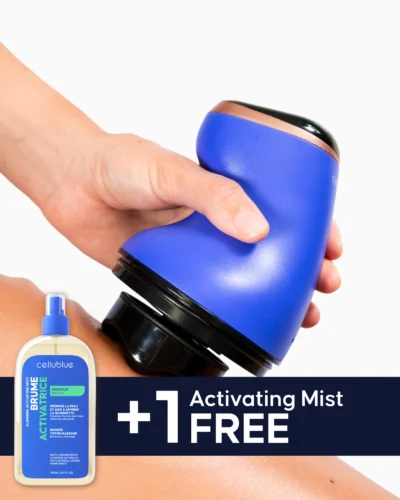
The cordless massager: 2 900 rotations per minute to stimulate your skin
- A deep mechanical massage: rotations and vibrations, up to 2 900 turns per minute, knead the skin on your thighs, stomach, arms and bottom
- 2 complementary heads: the ball head kneads deep down, then the wave head smooths and tones the surface
- 5 intensity levels on a touchscreen, a blue light, cordless and quiet
Frequently asked questions
How do you start a thigh programme?
There is no quick fix: consistency is key. Combine exercises that work the thigh muscles, such as wall sits, bridges, lateral squats, lateral leg raises and high knees, with stretching, a balanced diet and good hydration. A few short sessions each week, repeated over time, are better than one-off effort.
Which activities can you choose to work your legs?
The idea is to work all the thigh muscles, including the adductors, hamstrings and quadriceps, through varied activities such as yoga, fitness, Pilates, cycling, rollerblading and walking. Add stretching and a balanced diet. Every body is different, so find a pace that works for you.
Which exercises can you do for your thighs at home?
The article covers six accessible exercises that require no equipment: wall sits, bridges, lateral squats, lateral leg raises, high knees and the butterfly stretch. Alternate them and add them to your routine several times a week, following the repetitions and timings given for each movement.
What should you eat alongside exercise?
Your diet supports your exercise routine. Choose lean proteins, fruit and vegetables at every meal, complex carbohydrates with a low glycaemic index, good sources of fat such as avocado, oily fish and nuts, and plenty of fluids. Limit saturated fats and sugary drinks. If in doubt, ask a medical or nutrition professional for advice.
Related articles
- How to slim your thighs during pregnancy?
- 15-Day Fitness Challenge: Day 14
- CelluBlue Body Challenge – Day 23
Useful categories: Slimming Program, Weight Management.