
For women, turning fifty is a paradoxical age. A milestone that brings both maturity and a sense of calm, but also the arrival of menopause. And this stage of life is often associated with weight gain, changes in skin texture and a shift in the overall appearance of the figure. As a result, many women aged 50 and over notice a loss of firmness in their thighs. What are the solutions to address this and firm up your thighs after 50?
Why do thighs lose firmness after 50?
Several factors explain this sagging:
- age leads to a decline in collagen and elastin production, the proteins that give skin its elasticity and firmness. As a result, the skin gradually loses its tone and thighs appear softer;
- the menopause, caused by the gradual decline in female sex hormone production, namely oestrogen and progesterone, has a negative impact on firmness – worsening water retention, slower skin renewal and increased cellulite;
- age-related changes can also play a role: muscle mass tends to decrease gradually over the years and body composition changes, which can influence the appearance of the thighs among other areas;
- at fifty, we start to feel the effects of past excesses, and certain habits can accelerate skin ageing – smoking, excessive sun exposure and an erratic lifestyle are among the main culprits.
What can you do to firm up your thighs after 50?
Turning fifty doesn’t automatically mean weight gain and sagging thighs. But to maintain a toned figure and look after your thighs, it’s all about building the right habits!
Tip 1: Adapt your diet to your age

After 50, a woman’s nutritional needs change. To look after your thighs, you can act on three levels:
- reassess the quality of your energy intake, as we tend to store fat more easily as we age;
- maintain your muscle mass through diet;
- choose the right foods, which provide vitamins that are good for your skin.
In practice:
- it’s essential to increase your intake of lean protein to preserve muscle mass – white meat, fish, eggs and plant-based proteins, every day;
- carbohydrate intake should be kept in check, and it’s best to choose quality sources such as root vegetables, legumes, pseudo-grains and, to a lesser extent, whole grains;
- fresh fruit and vegetables should feature at every meal, particularly those rich in vitamin C, which contributes to normal collagen formation for the normal function of the skin (kiwi, bell pepper, parsley, citrus fruits, berries) and in provitamin A (colourful plant foods rich in beta-carotene, lycopene and anthocyanins);
- offal, cacao, seafood, wheat germ, brewer’s yeast and nuts and seeds should be included in your diet, particularly for their content of vitamin B5, copper and zinc (copper contributes to normal skin pigmentation and zinc to the maintenance of normal skin);
- dairy products, especially low-fat varieties, should also have a place at the table: they are a source of calcium, which is needed for the maintenance of normal bones;
- snacking, sugar, salt, alcohol, saturated fats and processed foods should be avoided.
Tip 2: Move every day
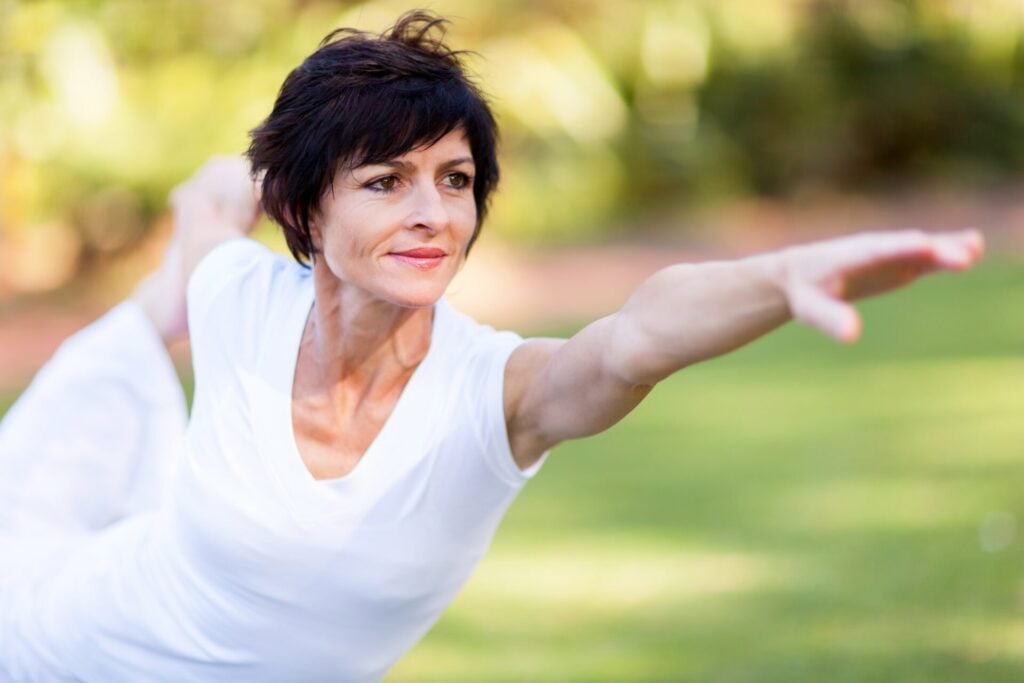
To look after your thighs after 50, keeping up regular physical activity is important. Some women may notice fatigue, reduced tone, increased breathlessness and lower endurance following menopause. But sport and, more broadly, everyday movement help you stay fit and maintain your muscle mass. Find out more: is cellulite linked to poor circulation? So there’s really no good reason not to (re)start exercising!
The best approach is to combine:
- daily physical activity, including walking, getting around on foot, and leisure or relaxation activities;
- a weekly sport you enjoy that targets the thigh muscles – cycling, swimming, exercise bike, elliptical trainer, targeted fitness, running, rowing…;
- regular core and stabilisation exercises to engage the deep thigh muscles, such as certain yoga poses (the chair pose in particular).
Tip 3: Massage your thighs
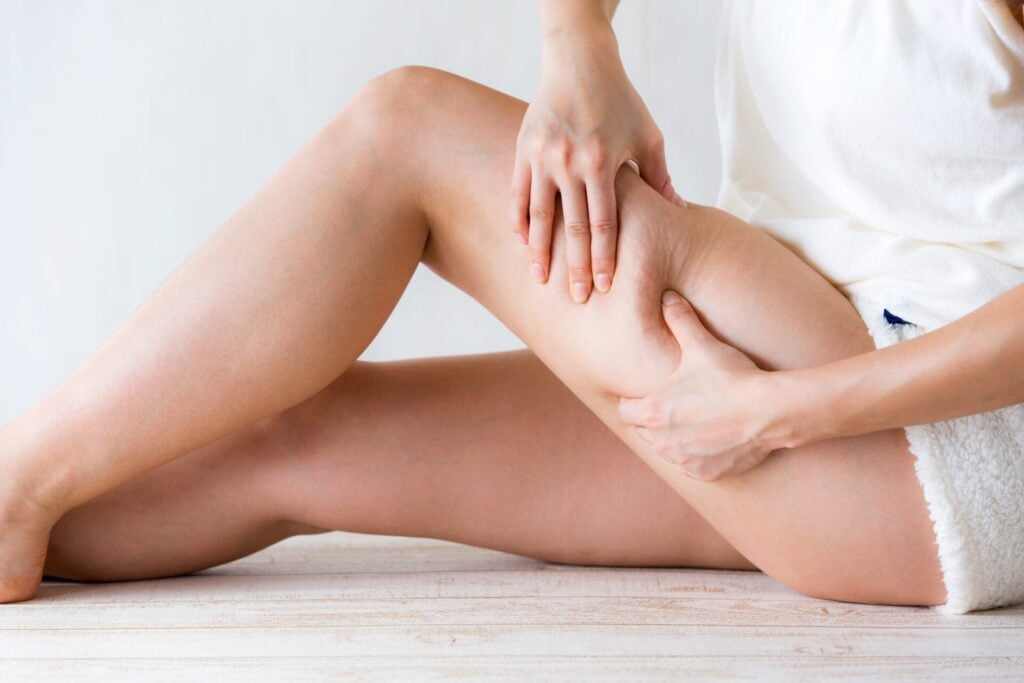
Massages have a real place in thigh care after 50. They help you look after the skin, not to mention the psychological benefits of massage – these moments of sensory connection help you reconnect with your body… To combine business with pleasure, what better than our Firming Device? It delivers high-intensity percussions and fits easily into your routine, at 3 minutes a day per area.
The body cream that hydrates and helps firm the skin
- Kigeline & Fenugreek, two plant-based actives at the heart of the formula
- Hydrates the skin and helps strengthen its firmness on targeted areas
- Melting texture: it absorbs quickly, with no residue or greasy film
Tip 4: Let skincare do its part
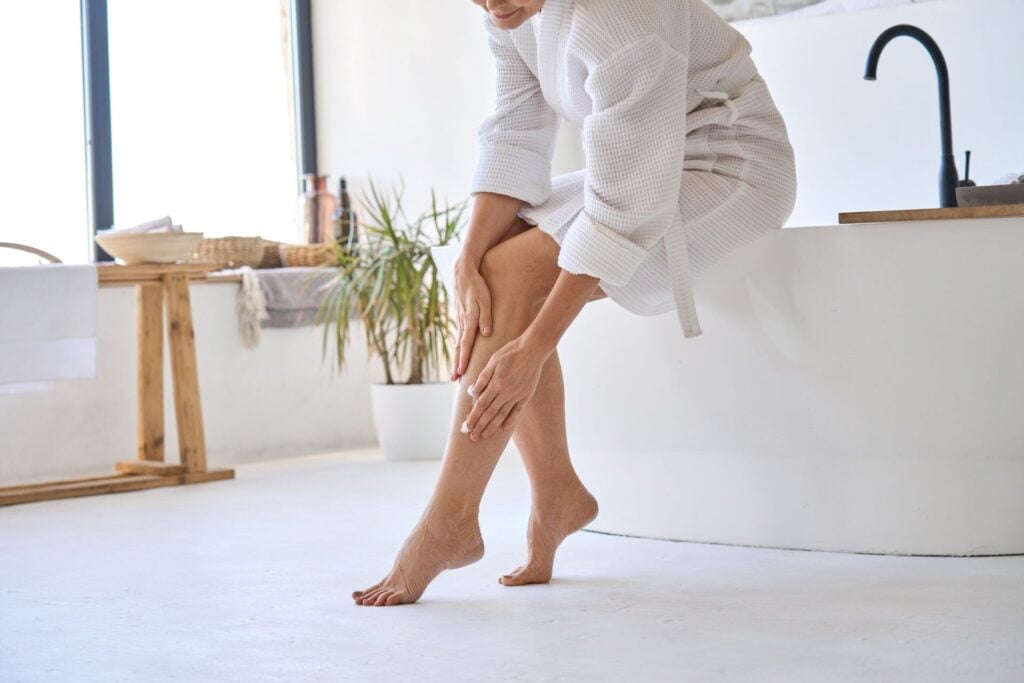
Who says skincare can’t be the little extra that complements these habits? Today’s body creams and oils, enriched with natural active ingredients, are part of a daily skincare routine. To look after your thighs after 50, it pays to invest in the right treatments.
- A routine built around the Cryo Thigh Slimming Gel and the Night Thigh Slimming Cream can be a good option. These products contain ingredients associated with skincare, such as algae, sunflower oil, caffeine, sacred lotus and menthol.
Great legs at 50: consistency is key
Having great legs at 50 isn’t about trying to get back the legs you had when you were younger. It’s about looking after your thighs day to day by combining the tips above: a plate rich in protein (white meat, fish, eggs, plant-based proteins), fresh fruit and vegetables, walking and a sport that works your thighs, moments of massage and suitable skincare. It’s all these small habits, repeated over time, that count.
If you want to look after your legs after 50, listen to your body too. Choose activities you enjoy, adjust the intensity to how you feel at the time and make time for yourself. If you’re unsure about taking up exercise again, ask your GP for advice.
Frequently asked questions
How can I tone my thighs after 50?
Combine daily walking with a weekly sport that works your thighs, such as cycling, swimming, the elliptical trainer, rowing or targeted fitness. Core exercises, like the chair pose in yoga, also engage the deep muscles. Make sure there’s protein on your plate and, if in doubt, ask your GP for advice.
How can I tighten the skin on my thighs?
With age, skin loses firmness because it produces less collagen and elastin. To look after it, opt for a diet rich in vitamin C and provitamin A, and avoid smoking and too much sun exposure. You can also add massage and body care products to your routine.
Does the menopause change the appearance of your thighs?
With the menopause, the appearance of the skin on your thighs can change, and many women notice a loss of firmness. A suitable diet, physical activity, massage and skincare can support you day to day. For any questions about the menopause itself, ask your GP or another medical professional.
Related articles
Useful categories: Slimming the Thighs, Weight Management.