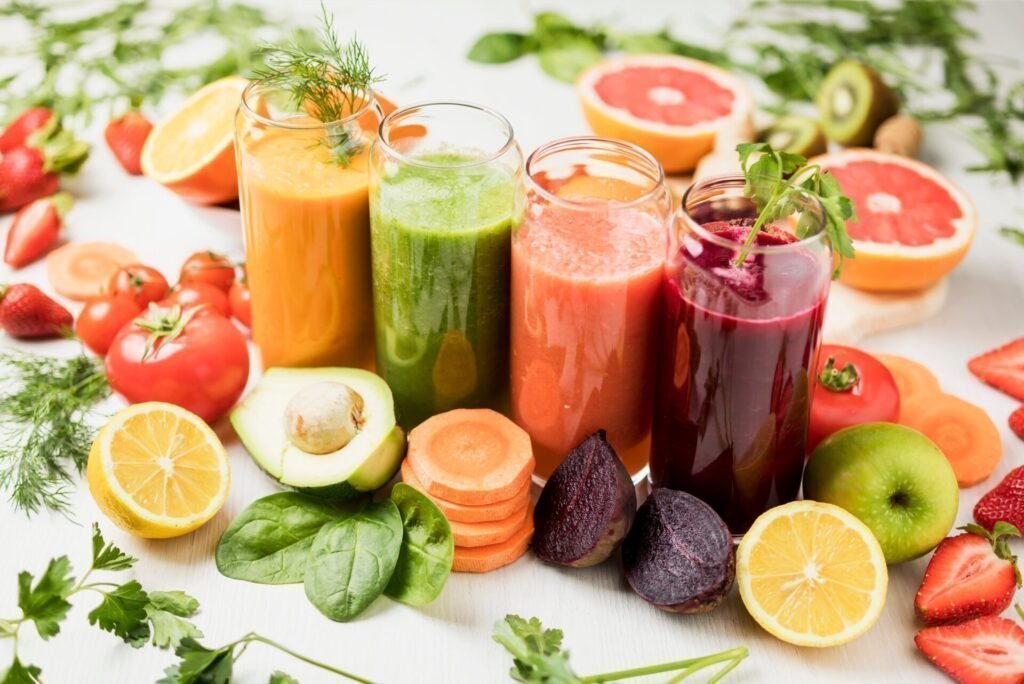
You love interesting drinks but steer clear of anything that might compromise your figure or your health? Vegetable juices could be just the answer. Here are 6 fresh vegetable juice recipes to make in a blender or juicer, from a classic carrot juice to a surprising courgette and pineapple combination, so you can enjoy more vegetables without losing any of the pleasure. You’ll also find out what you can realistically expect from these juices, along with a few points worth bearing in mind.
What are vegetable juices?
Vegetable juice is a drink made primarily from vegetables (raw or lightly cooked), either blended (to retain the fibre) or cold-pressed using a juicer (which removes the pulp). Purists stick to vegetables only, but many enthusiasts prefer to combine fruits and vegetables — both to enhance the flavour of their drinks and to make the most of seasonal produce and the nutritional benefits of a variety of ingredients. Spices and herbs can also be added.
It’s worth noting that ready-made vegetable juices are available in shops. However, they are often pasteurised for preservation purposes, which causes them to lose a significant portion of their nutrients. It’s therefore best to make them yourself at home. Here are a few recipes to get you started.
Vegetable juice recipe No. 1: carrot energy juice
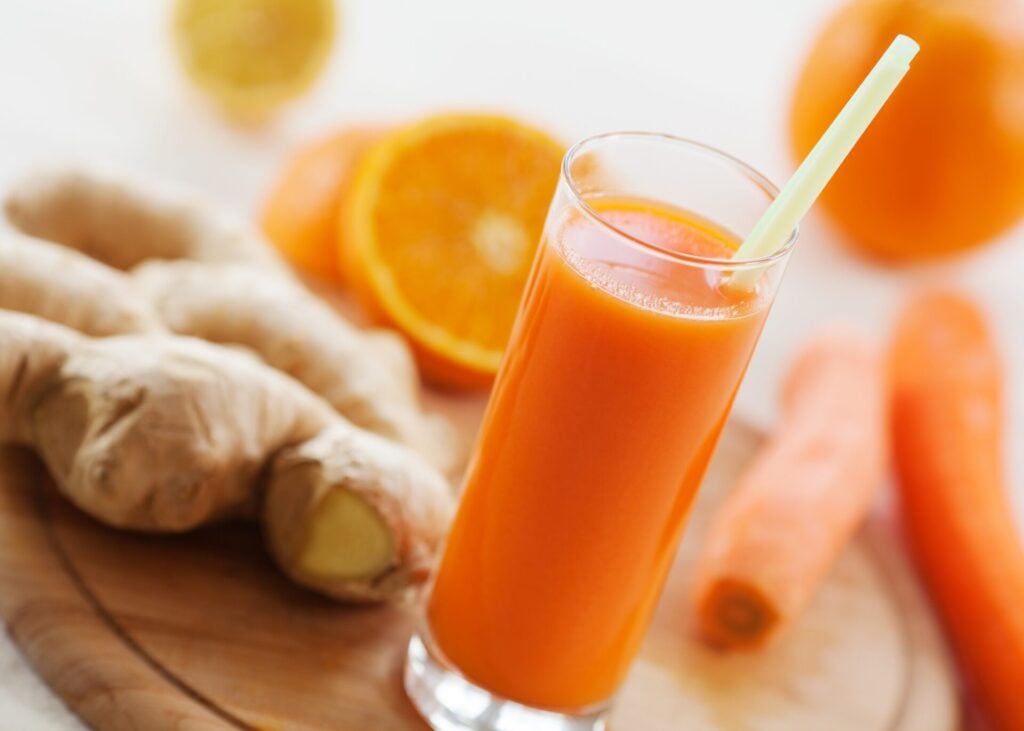
This vitamin-packed, antioxidant-rich juice is ideal in the morning for a bright start to the day. To make it, you will need:
- 2–3 carrots
- 1 orange
- A piece of fresh ginger
- A piece of fresh turmeric
Here’s how to prepare it:
- Scrub the carrots thoroughly under running water — no need to peel them.
- Cut them into pieces and place in the blender.
- Peel the ginger and turmeric, cut into pieces and add to the blender.
- Squeeze the orange and pour the juice — pulp included — into the blender.
- Blend until smooth. For a thinner consistency, simply add a splash of water.
Recipe No. 2: green fruit and vegetable juice
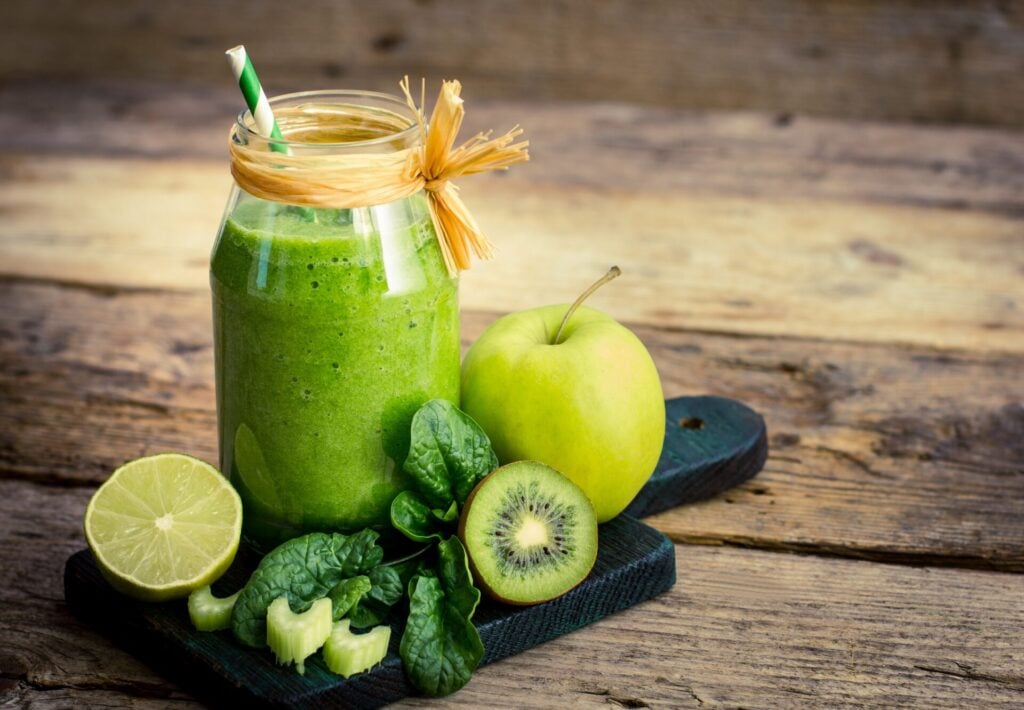
Green juices are having a moment, and for good reason. When it comes to freshness, they’re hard to beat! Their chlorophyll gives them their gorgeous colour, and they’re a great way to ring the changes. This recipe combines the sweetness of apple, the tartness of kiwi and the chlorophyll-rich goodness of spinach. To make it:
- 1 apple of your choice (tart Granny Smith, sweet Golden Delicious…)
- 1 kiwi
- 1 generous handful of spinach
- The juice of 1 lime
To prepare:
- Peel the apple, cut it into pieces and place in the blender.
- Do the same with the kiwi.
- Wash the spinach leaves, drain and remove the stems, then add to the blender.
- Squeeze the lime and add the juice to the fruit and vegetables.
- Blend everything together, add a little water to adjust the consistency, and enjoy!
Recipe No. 3: herbed tomato juice
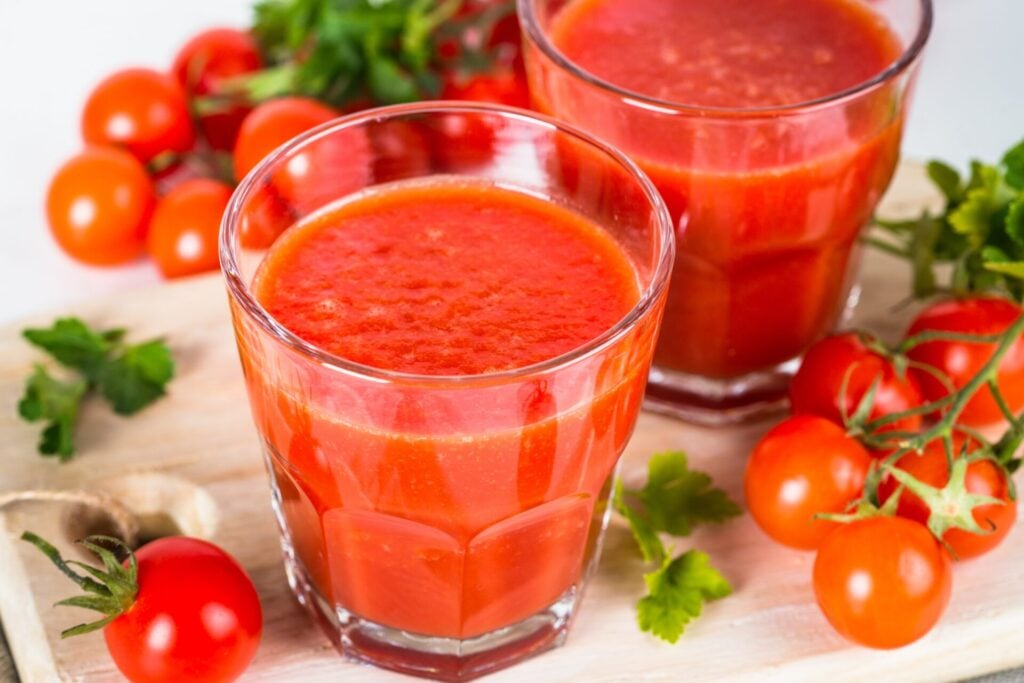
Love it or hate it, tomato juice is a classic at aperitif time, making a perfect stand-in for alcoholic drinks. It’s rich in antioxidants, including lycopene — the pigment responsible for the tomato’s vibrant red colour. Here’s a fresh take on the classic. You will need:
- 2 ripe tomatoes
- 4–5 sprigs of parsley
- 4–5 basil leaves
- 4–5 celery stalks
- Salt and pepper
Here’s how to prepare it:
- Peel and deseed the tomatoes, then place them in the blender.
- Wash all the fresh herbs, pat dry and add to the tomatoes.
- Add just a splash of water and blend.
- Season with a little salt and pepper, add ice cubes and serve well chilled.
Recipe No. 4: lemon and cucumber juice
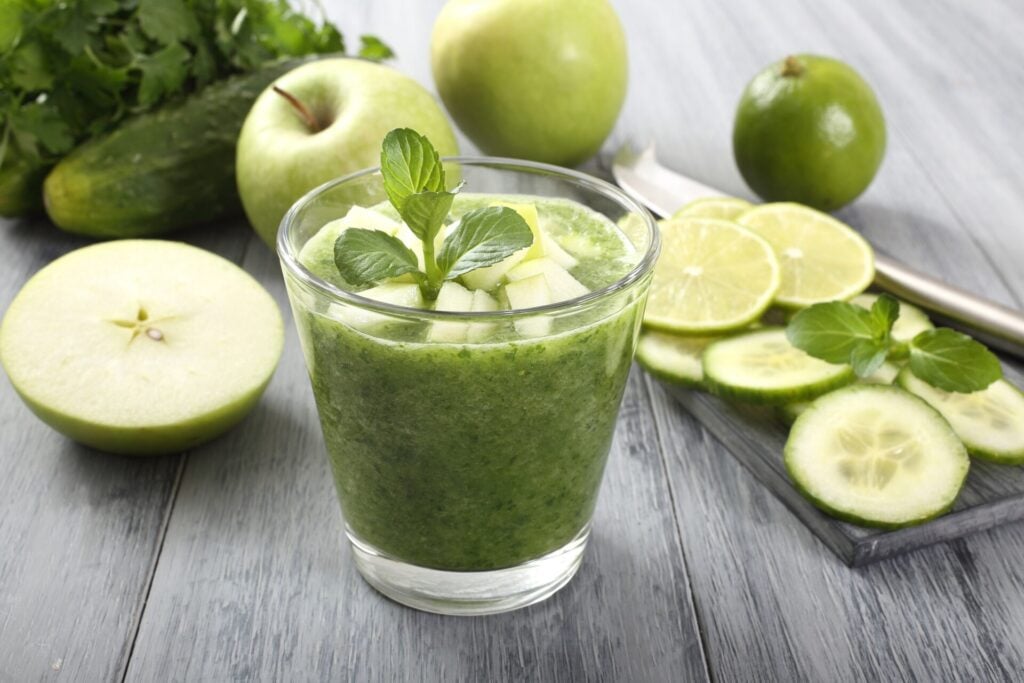
It’s hard to talk about juices for a balanced lifestyle without mentioning the classic cucumber-lemon duo. Cucumber has an exceptionally high water content. Lemon is packed with vitamin C. This vegetable juice is perfect alongside breakfast. You will need:
- ½ cucumber with smooth skin
- 1–2 apples
- A little ginger
- Around ten mint leaves
- 1 lemon
Here’s how to prepare it:
- Wash the half cucumber thoroughly but leave the skin on. Cut into pieces and place in the blender.
- Peel the apple, cut into pieces and add to the cucumber.
- Do the same with the ginger.
- Wash the mint leaves, pat dry and add to the blender.
- Squeeze the lemon juice over the fruit and vegetables.
- Blend everything together and serve well chilled.
Recipe No. 5: red beetroot and grape juice
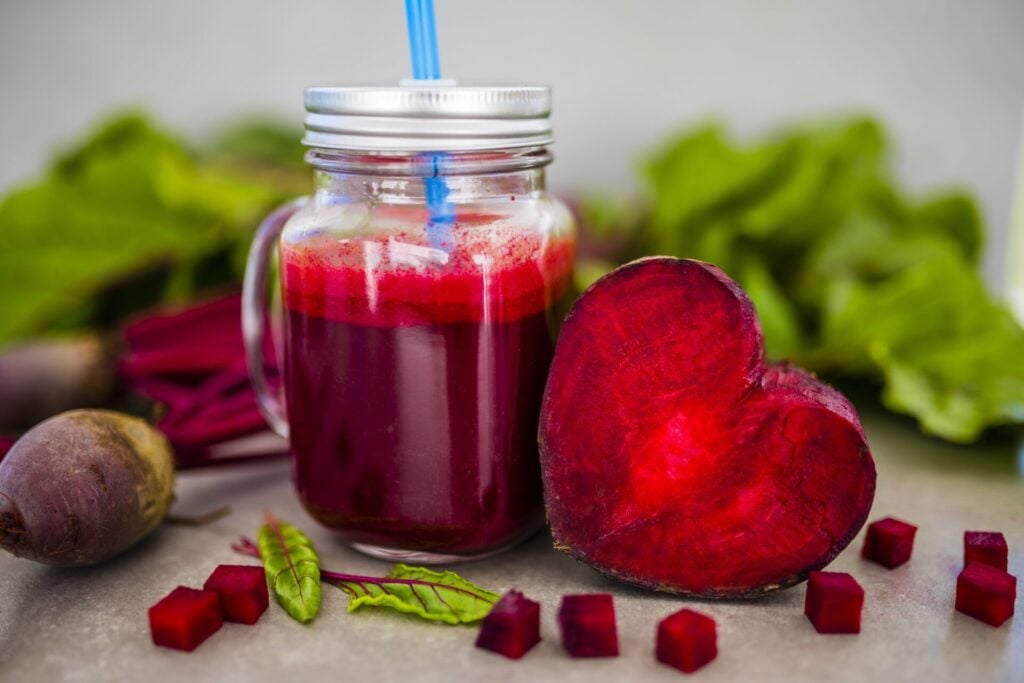
Beetroot, once an underappreciated vegetable, is firmly back in the spotlight, and we couldn’t be happier, as it deserves its place in a varied diet. This juice can also be enjoyed before a workout. To make this recipe, you will need:
- 1 raw beetroot
- 1 handful of spinach
- 100 g of grapes, red or white
- A pinch of ground turmeric
Here’s how to prepare it:
- Peel the beetroot, rinse it, cut it into pieces and place in a juicer.
- Wash the grapes and spinach and add them to the beetroot.
- Collect your juice and stir in a pinch of turmeric.
Recipe No. 6: courgette and pineapple juice
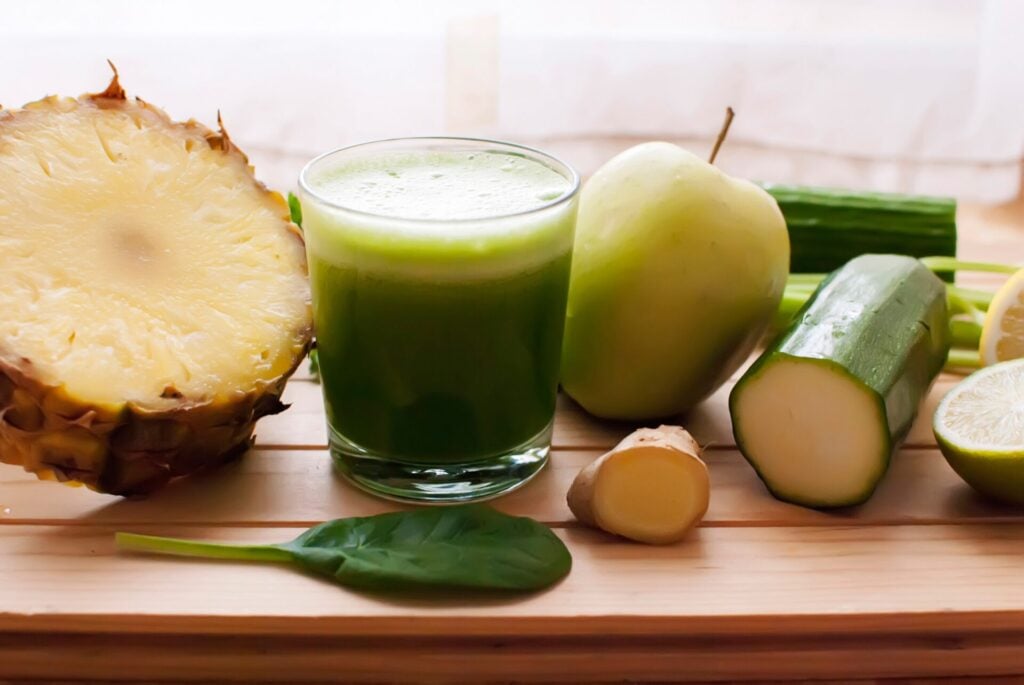
The combination may seem unusual, but don’t be put off: it works! Pineapple, rich in bromelain, brings a fruity, tangy note. Courgette, with its mild flavour, adds a pleasant roundness. To make this vegetable juice, you will need:
- 1 small courgette
- 1 apple
- 1 generous slice of pineapple
- A handful of spinach or lamb’s lettuce
- A little ginger
To prepare, follow these steps.
- Wash the courgette, trim the ends and cut into pieces, then place in the blender.
- Peel the apple, cut it up and add to the courgette.
- Do the same with the ginger and pineapple.
- Finally, wash your chosen salad leaves and add to the other ingredients.
- Blend everything together, add a little water if you prefer a thinner consistency, and serve!
What are the benefits of vegetable juices?
Fans of vegetable juices credit them with all sorts of qualities. But is this reputation well deserved?
1- Why should you embrace vegetable juices?
Like soup, vegetable juices are an excellent source of hydration. They’re ideal for those who don’t drink enough water or simply don’t enjoy it, and they help you stay well hydrated day to day;
- juices make it easy to increase your daily vegetable intake, allowing you to benefit from their nutrients;
- vegetable juices, particularly when they retain some or all of the vegetable flesh, also contain fibre (see also our article on natural appetite suppressants);
- regularly consuming vegetable juices can easily be part of a balanced lifestyle, rich in vegetables and the antioxidants found in them, alongside regular physical activity (see also our article on waist circumference).
2- Are there any downsides?
A word of caution, though! Consuming too much vegetable juice could, over time, become counterproductive:
- a juice is not a substitute for a plate of vegetables, especially when using a juicer. Most of the vitamins, minerals and antioxidants in vegetables are found in the “solid” parts: the flesh and the skin;
- by extension, if juices are made with a centrifugal juicer rather than a blender, they contain no fibre, unlike blended juices, which keep it (to find out more, see our article on drinks and digestion);
- some juices are particularly high in sugar, especially those made with tomatoes, carrots or beetroot. And drinking sugary beverages every day, or several times a day, isn’t really advisable.
Drinking vegetable juice regularly: what to bear in mind
Fancy making vegetable juices a regular habit? The recipes above can easily become part of your daily routine, as long as you keep the limits mentioned above in mind. A juice doesn’t replace a plate of vegetables: it complements balanced, varied meals. Opt for a blender, which keeps the fibre, rather than a centrifugal juicer.
Vary the recipes from one day to the next too, alternating juices made with carrot, beetroot or tomato, which are higher in sugar, with green juices. To find out more, read our article on juice cleanses. If you have any doubts or medical concerns, ask your GP for advice.
Frequently asked questions
How do you make vegetable juice?
Wash your vegetables, cut them into pieces, then either whizz them in a blender, which keeps the fibre, or put them through a juicer for a pulp-free juice. You can add fruit, spices or herbs, plus a splash of water to adjust the consistency. The 6 recipes in this article take you through each step.
What can you do with courgette juice?
Courgette has a very mild flavour and pairs well with fruit. In recipe No. 6, it’s blended with an apple, a slice of pineapple, a little ginger and a handful of spinach or lamb’s lettuce. Add a splash of water if you prefer a thinner consistency, and serve well chilled.
What can you make with a standard blender?
A standard blender is all you need for most of the recipes in this article: the carrot juice, the green juice, the herbed tomato juice, the lemon and cucumber juice and the courgette and pineapple juice. It keeps the fibre from the fruit and vegetables. Only recipe No. 5, with beetroot, is made in a juicer.
Can vegetable juices help you keep your figure?
A vegetable juice is above all an enjoyable way to eat more vegetables as part of a varied diet. For the precautions to take, see the section “Drinking vegetable juice regularly: what to bear in mind”. For any questions about your weight or health, speak to your GP or another medical professional.
Related articles
- Fruit-infused water: 9 easy homemade recipes
- Drinks to try daily: from Sassy Water to green tea
- Juice cleanse: what it is, side effects and how to start
- Mushrooms: nutrition, uses and recipe ideas
Useful categories: Anti-Cellulite Diet, Slimming Nutrition.
To go further, explore the Cellublue shop: our body care products and our anti-cellulite products.

The cupping tool that replicates pinching and rolling, 3 minutes per zone
- The professionals' technique, at home: you lift, glide, and release, and the tool grips the skin fold like a manual pinching and rolling
- Soft silicone that fits thighs, buttocks, stomach, and arms
- 3 minutes per zone, every day, always with a massage oil so the tool glides

The scrub that leaves skin smooth and skin texture refined*
*User test on 21 volunteers over 4 weeks, based on participants' feedback.
- Olive & apricot kernels: these natural grains gently sweep away dead skin cells
- Caffeine & monoi scent, so your shower instantly smells like a holiday
- In the shower, two to three times a week, massaging your thighs, bottom and stomach