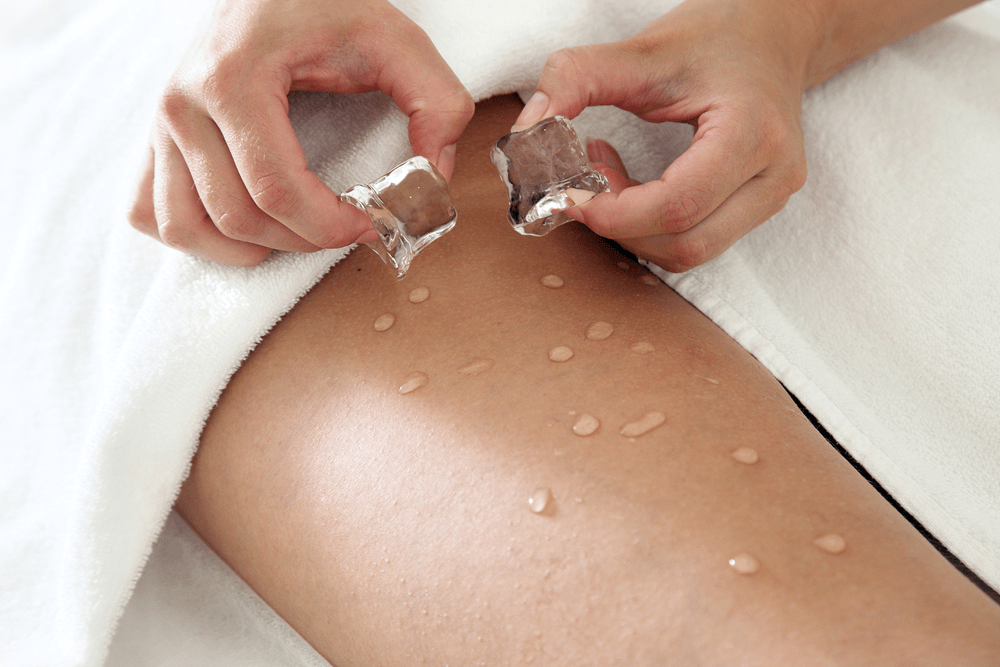
Cryotherapy is a method that uses cold, particularly in the field of slimming and body care. The term comes from the Greek “krùos”, meaning “cold”, and “therapéuô”, meaning “to heal, to treat”. Cryotherapy is therefore a way of “treating with cold”, which is why it is also known as “cold therapy”.
Cryotherapy is known for its aesthetic uses, but not exclusively. In this article, you will discover where it comes from and how it is used, the principle behind applying cold, and what a cryolipolysis session with an aesthetic professional involves. We also look at who it is suitable for and, finally, how the method fits into a cellulite care routine.
What is cryotherapy and what is it used for?
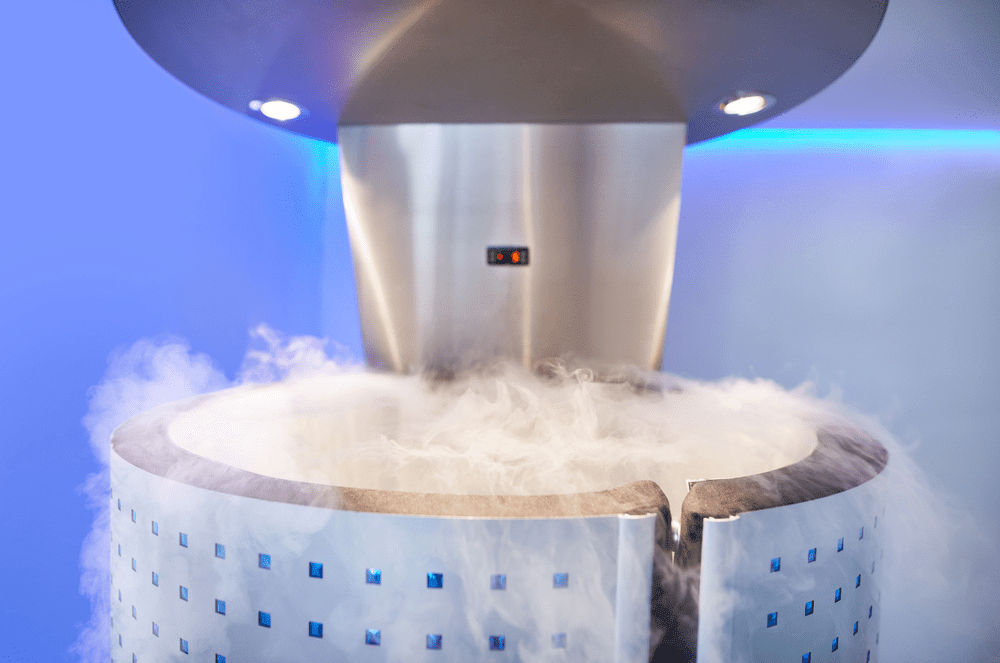
Cryotherapy is a treatment method that has been known since Antiquity. At that time, it was common practice to take very cold baths. However, it was not until the 1970s that scientists began developing mechanical methods to make cryotherapy easy to use in a controlled way. The first trials were carried out in Japan in 1978, when Dr Yamaguchi created a cryotherapy chamber reaching temperatures as low as -164°C. It would take until 2011 for cryotherapy to be used with athletes, and until 2016 for the method to become widely available to the general public — notably for its aesthetic uses.
Cryotherapy involves exposing the body to intense cold for a brief period, typically -110° for 3 minutes. Scientific research has identified a wide range of benefits to cryotherapy, the main ones being:
- Therapeutic indications, meaning the use of whole-body cryotherapy prescribed by a doctor for certain conditions, in a medical setting. It is for the doctor to decide whether it is appropriate.
- Sports indications, meaning the use of whole-body cryotherapy for high-level athletes. In these cases, cryotherapy is used to prepare for competition, as part of recovery, or to support rehabilitation.
- Aesthetic and wellness indications, which are more recent. “Localised” cryotherapy, also known as “cryolipolysis”, is offered in connection with firming the skin, cellulite and localised fat, and also as part of a relaxation approach.
Cryolipolysis: the aesthetic branch of cryotherapy
In this article, we focus on the “aesthetic and wellness” branch of cryotherapy: cryolipolysis. Derived from cryotherapy, cryolipolysis has become more widely available in recent years, with the first aesthetic clinics in France offering it in 2016. The term cryolipolysis comes from “cryo”, meaning “cold”, and “lipolysis”. Lipolysis is a natural process in the body: it is the phase during which the body draws on stored fat for the energy it needs to function. This fat is stored as lipids within fat cells called adipocytes. Cryolipolysis is therefore based on applying cold to a targeted area.
This method was developed by Doctors Rox Anderson and Dieter Manstein[1], both heads of the dermatology department at Massachusetts General Hospital in Boston, USA. They built on an observation made in the 1880s, known as “cold panniculitis”, which described a reaction of the fatty tissue on the thighs of women who rode horses in skirts in cold weather. Drawing on this historical observation and combining it with more recent studies, the two doctors studied how sensitive adipocytes are to cold and the idea of targeting a specific area of the body.
Researchers at Harvard Medical School then built on this data to develop the first cryolipolysis devices. After numerous clinical trials, modern cryolipolysis was born.
How does cold act on the body?
Cryolipolysis is therefore based on applying cold for aesthetic purposes. The method involves applying a device that generates a temperature of between -13°C and -9°C to a specific area of the body for 60 minutes. The cold is directed at the adipocytes (the fat cells), which are particularly sensitive to low temperatures. The process described by researchers is known as “apoptosis”. The rest of the process takes place over several weeks, at a pace specific to each person.
This method is aimed in particular at areas with bulges and cellulite, where the fat layer is located. According to research[2], fat cells are thought to be the most sensitive to cold. Other cells in the area, such as those that make up blood vessels or nerves, are much less sensitive to low temperatures[3]. Fat cells are therefore the target of this method. If you have any questions about its safety, ask a doctor or medical professional for advice.
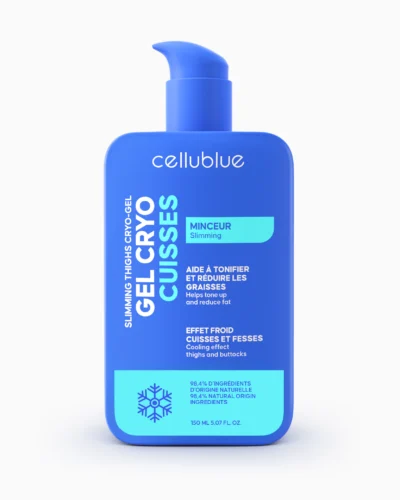
The cooling gel that leaves thigh skin firmer
- Immediate cooling effect: menthol kicks in as soon as it is applied, then skin is firmer under your fingers (keep the gel in the fridge for even more intensity)
- Caffeine & Lipothetic®, a patented active ingredient, at the heart of a formula designed for thighs and buttocks
- Sorbet texture: it absorbs faster and makes the feeling of freshness last longer
The appearance of the treated area can change gradually over several weeks after the session. The studies cited as references looked at the volume of fatty tissue in the treated areas. Everyone responds differently, depending on their eating habits, their body and how sensitive their cells are to cold.[4]
Cryolipolysis only concerns the area treated by the device. It is therefore part of a long-term approach and is best combined with a balanced lifestyle, with a varied diet and regular physical activity in daily life.
What does a cryolipolysis session involve?
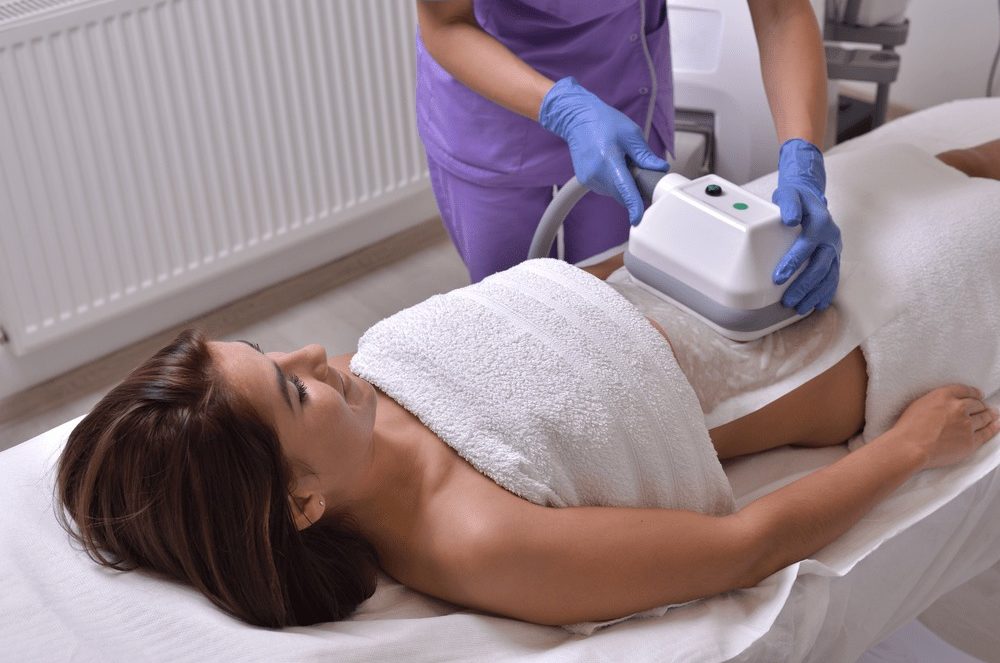
Cryolipolysis is a non-invasive aesthetic method, unlike liposuction, for example. It is also painless and quick. The technique can be carried out by a doctor (dermatologist, cosmetic surgeon or plastic surgeon) or at an aesthetic clinic. The first step is a patient assessment by the practitioner, who looks at skin quality and the thickness of the fatty tissue. For the method to be suitable, the fatty tissue needs to be around 4 cm thick. A practitioner’s patient assessment is one step; interpreting a cosmetic result also requires checking what was assessed, by whom and under which conditions.
Once this step is complete, the treatment can begin. A gel-coated membrane and then an applicator, resembling a large suction cup, are placed on the area for approximately 60 minutes, generating a temperature of between -9°C and -13°C. The applicator is then removed and the practitioner gives the area a brief massage.
The treatment is not painful; only sensations of skin stretching and cold may be felt at the start of the session. Once the applicator is removed, temporary redness, swelling or itching may occur.
As a general rule, one session per treatment area is offered, and the appearance of the area can change gradually over the weeks following the session. This pace varies from person to person.
After the session, follow the aftercare advice given by your practitioner.
The cost of cryolipolysis treatment varies depending on the area being treated and the type of facility chosen. In France, the average price per session is estimated at €150 at a beauty institute and up to €600 when performed by a cosmetic surgeon.
It is also possible to recreate cryotherapy-inspired treatments at home. This is the idea behind the Cellublue Cryo thigh gel, part of the Cryo range designed for areas such as the stomach, hips, thighs and buttocks.
Who is cryolipolysis suitable for?
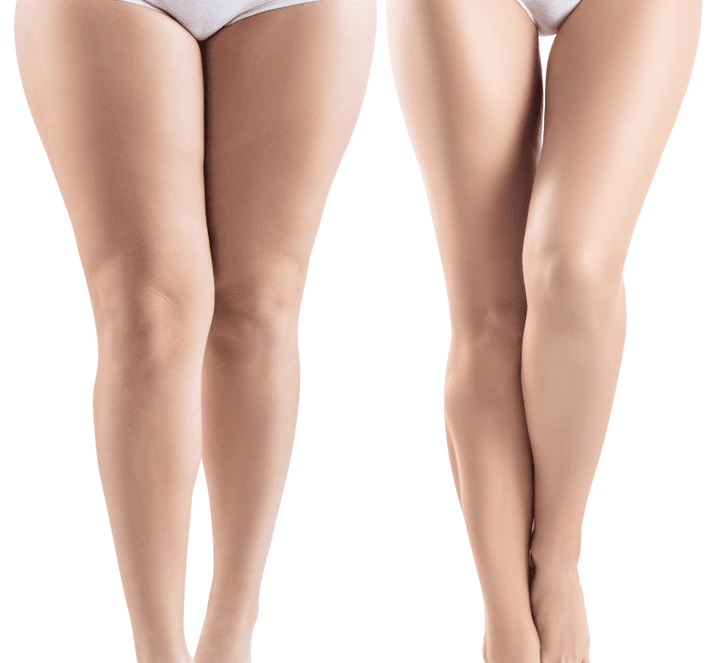
Cryolipolysis is not suitable for everyone, particularly during pregnancy or breastfeeding. Ask a doctor for advice: they will assess any possible contraindications.
Cryolipolysis is intended for people at a stable weight with localised pockets of fat in specific areas. The method concerns the following zones:
- The stomach
- The back
- The inner knees and inner thighs
- The saddlebags
- Rolls beneath the buttocks
- The inner arms
- The chin
It is also worth noting that cryolipolysis is aimed more at adipose and fibrous cellulite than at aqueous cellulite, which is linked to water retention.
Cryotherapy for cellulite on the legs
When people talk about cryotherapy for cellulite, they generally mean cryolipolysis, in other words localised cryotherapy. On the legs, the areas mentioned in this article are the inner knees and inner thighs, saddlebags and the rolls beneath the buttocks. The type of cellulite and the area concerned are assessed on an individual basis. At the initial consultation, the practitioner looks at your skin quality and the thickness of the fatty tissue before telling you whether the method is right for you.
Day to day, looking after your legs comes down to a few simple habits. Drink enough water, walk regularly and eat a balanced diet. You can also add palper-rouler massages or anti-cellulite treatments to your routine.
Conclusion
In summary, cryolipolysis, the aesthetic branch of cryotherapy, is a method that applies cold in a targeted way to areas with localised pockets of fat. It fits into a balanced lifestyle (varied diet and regular physical activity) as a way to look after your figure over time.
Sources
[1] Cryolipolysis for noninvasive fat cell destruction – Manstein, D; Laubach, H; Watanabe, K; Farinelli, W; et al. (2008): https://www.researchgate.net/scientific-contributions/79756314_Dieter_Manstein_MD
[2] Evaluation de la tolérance et de l’efficacité de la cryolipolyse – étude rétrospective sur 1 an par le Dr Michael Naouri: https://www.deleo.fr/images/White%20Paper%20Dr%20Naouri%20-%20Cristal.pdf
[3] Coleman, SR; Sachdeva, K; Egbert, BM; Preciado, J; et al. (2009). “Clinical efficacy of noninvasive cryolipolysis and its effects on peripheral nerves”
[4] La cryolipolyse contre la cellulite – AFME Association Française de Médecine Esthétique et anti-âge: https://www.afme.org/actes-me/cellulite-actes-me/cryolipolyse-ou-lipocryolyse/
Frequently asked questions
Is cryotherapy relevant to your figure?
Whole-body cryotherapy is mainly used in a medical or sports setting. When it comes to your figure, the relevant method is cryolipolysis. It is aimed at localised pockets of fat in people at a stable weight. A professional will first assess whether the method is right for you, and a balanced lifestyle remains essential.
How many cryolipolysis sessions are needed to treat one area?
As a general rule, one session per treatment area is offered with cryolipolysis. The practitioner confirms this at the initial consultation, where they assess your skin quality and the thickness of the fatty tissue. The full process is described in the section on what a session involves.
How much does a cryolipolysis session cost?
The price depends on the area being treated and where you have it done; see the section on what a session involves for an overview. Ask for a detailed quote before committing.
Can you have cryolipolysis if you are pregnant or have a medical condition?
If you have any questions about a medical condition, pregnancy or breastfeeding, ask a doctor or medical professional for advice before considering a session.
Can you try cryotherapy-inspired treatments at home?
Yes. Some products draw on the idea of cold for use at home, as mentioned in the section on what a session involves. These products are not a substitute for a session carried out at a clinic or aesthetic centre.
Related articles
- Should you exercise every day?
- Slimming your figure in one week: is it realistic?
- Holiday meals: the worst foods!
Useful categories: Everything You Need to Know About Slimming.
Menthol Cooling Gel vs Cryolipolysis: What’s the Difference?

The cupping tool that replicates pinching and rolling, 3 minutes per zone
- The professionals' technique, at home: you lift, glide, and release, and the tool grips the skin fold like a manual pinching and rolling
- Soft silicone that fits thighs, buttocks, stomach, and arms
- 3 minutes per zone, every day, always with a massage oil so the tool glides

The scrub that leaves skin smooth and skin texture refined*
*User test on 21 volunteers over 4 weeks, based on participants' feedback.
- Olive & apricot kernels: these natural grains gently sweep away dead skin cells
- Caffeine & monoi scent, so your shower instantly smells like a holiday
- In the shower, two to three times a week, massaging your thighs, bottom and stomach