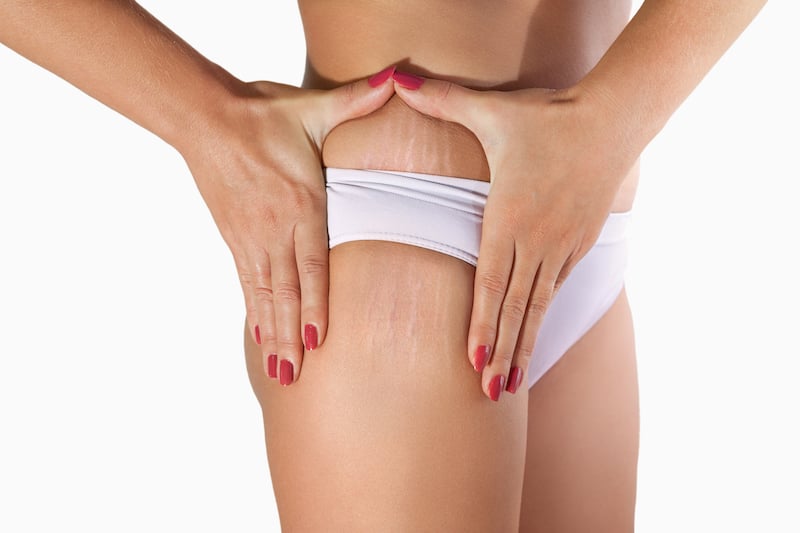
Red stretch marks are unsightly marks that often appear on the skin following significant weight fluctuations or a surge in hormonal activity. In women, the appearance of red stretch marks is most commonly associated with pregnancy.
When treated early enough, these unwanted streaks can be reduced, halted or completely eliminated by taking the right steps and following a few expert tips.
Sommaire
How do red stretch marks form?
Skin elasticity plays a key role in its overall tone and suppleness. When the cellular fibres responsible for this elasticity are stretched beyond their limit, they suddenly break.
This sudden tearing creates a collapse of tissue between the epidermis and the hypodermis. The resulting inflammation causes fissures to appear on the skin in the form of soft, reddish scars — these are red stretch marks.(1)
The red colour corresponds to the initial stage of stretch mark formation. When left untreated, they gradually shift from red to purple, then fade to white over time.
Even if you tend to hide them out of self-consciousness, it is worth knowing that this type of stretch mark poses no risk to your health. Many women carry them on their bodies, as do men, though less frequently.
What causes red stretch marks to appear?
As explained above, red stretch marks form as a result of breaks in the skin’s elastic fibres. In many cases, a significant build-up of cortisol or corticosteroids triggers this tearing of the fibres.
This is why red stretch marks typically appear during pregnancy or puberty — both periods of major hormonal change.
More specifically, around the second trimester of pregnancy, cortisol levels rise in the body and affect the skin’s elasticity and suppleness. Stretch marks may then appear, and will be more pronounced on fragile or sensitive skin.
Growth spurts and weight fluctuations are also common triggers for the development of red stretch marks.
Which parts of the body are most affected?
The areas of the body most prone to stretch marks are those subject to the greatest skin stretching:
- The buttocks
- The thighs
- The hips
- The backs of the knees
- The stomach
- The breasts
As soon as red stretch marks appear on any of these areas, it is important to start a treatment promptly, before they turn into white stretch marks, which are far more difficult to eliminate.
It is worth noting that red stretch marks are considered “immature” because they are still in the early stages of development — making them ideal candidates for swift action to reduce their appearance or eliminate them entirely.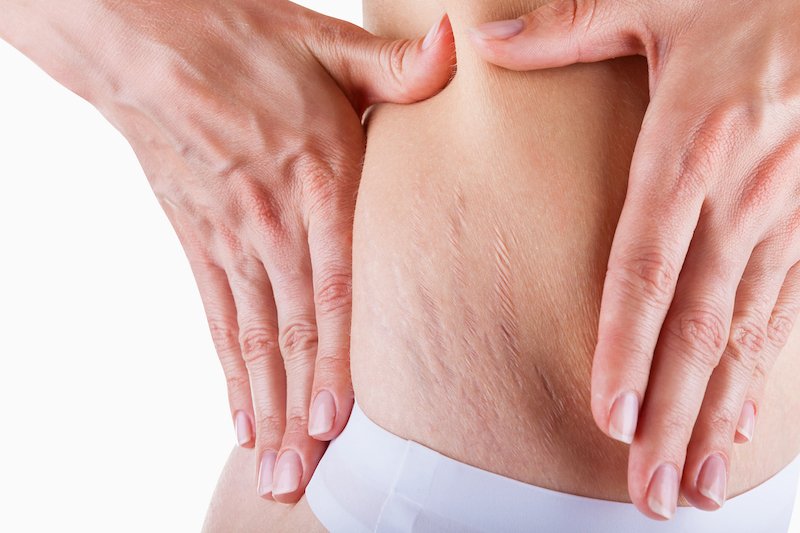
The most effective treatments for red stretch marks
Reducing the appearance of streaks, slowing the progression of stretch marks, preventing new ones from forming, and even eliminating them altogether — these are the goals of anti-stretch mark treatments.(2) Solutions range from creams and oils to medical procedures.
When choosing the right solution, skin sensitivity must be taken into account. Pay close attention to the ingredients you use. We recommend opting for treatments based on natural ingredients and avoiding overly chemical formulations.
Red stretch mark creams
The key selection criteria are the product’s formulation and your skin type (dry, oily or normal). The effectiveness of creams for getting rid of stretch marks lies in their active ingredients, which support skin elasticity and help it become more supple and resilient.
Beyond their pleasant, fast-absorbing texture, they are deeply moisturising and packed with anti-inflammatory and regenerating ingredients. Apply them directly to the affected areas using firm, regular movements to encourage deep penetration.
The Anti-Stretch Mark Cream by Cellublue heals and repairs all types of stretch marks, even long-standing ones. Rich in provitamin B5 and 98% natural actives, it stimulates collagen production for visibly plumper skin and significantly faded stretch marks.

Red stretch mark oils
Just as reliable as creams, oils have earned their place in the anti-stretch mark skincare aisle. They are naturally richer than creams, contain no water, and absorb into the skin more quickly. Look for natural plant-based oils. They work by improving skin tone and elasticity.
Like creams, they are applied with a gentle massage to the affected areas. However, avoid mineral oils and essential oils, which are not suitable for treating red stretch marks.
The Cellublue Anti-Stretch Mark Oil combines 6 plant-based oils renowned for their effectiveness in preventing and reducing stretch marks. The oil absorbs quickly and targets the area being treated. Skin feels smoother and stretch marks and scars are visibly reduced.

Medical treatments
Sometimes red stretch marks become particularly bothersome and a source of daily discomfort. When oils and anti-stretch mark creams have not delivered the desired results, the next step may be a cosmetic procedure.
The advantage of this option is that it can completely eliminate red stretch marks — something that is nearly impossible to achieve with creams and oils alone. However, these treatments require a significant investment, and as with any reconstructive procedure, they may leave scars.
Here are a few examples of these typically abrasive treatments:
• Laser therapy
Laser treatment is widely used in dermatology. During a session, the aesthetician or dermatologist uses pulsed light to target stretch marks. (3) The laser beam absorbs the reddish pigments in the blood vessels until they break down, resulting in a noticeable burning sensation.
It should be noted that this treatment is contraindicated on certain areas of the body such as the breasts, inner thighs or lower abdomen, on dark and olive skin tones, and during pregnancy.
• Peeling
This method involves superficially burning the skin’s streaks with glycolic acid to erase stretch mark traces. The skin then regenerates, though visible results may not appear for several months. This approach can be quite effective against stretch marks.
• Reconstructive surgery
This treatment alternates between localised injections and the removal of skin tissue. Those who opt for this procedure typically have deeply marked and distressing red stretch marks. In some cases, this type of reconstructive surgery may be fully covered by national health insurance.
Everyday preventive habits
The health of your skin and body as a whole depends above all on a balanced diet and a healthy lifestyle. The better you eat, the more beneficial the effects on your skin’s suppleness and elasticity.
In other words, preventing red stretch marks means cutting back on excess (alcohol, tobacco…) and removing fatty, sugary and high-salt foods from your plate.
Moisturise your skin every day with nourishing creams or oils, drink plenty of water and exercise regularly to keep your muscles toned.
After one month using our products, you will be able to see a real difference in the appearance of your red stretch marks.
Say goodbye to stretch marks! Discover the complete solution to treat, prevent and nourish your stretch marks and visibly reduce them. The Cellublue expert team has developed an exclusive, comprehensive and effective treatment, suitable for all skin types. Click below to find out more.

Sources and references
(1) : Are Pregnancy Stretch Marks Different
(2) : Traitement pour effacer les vergetures
(3) : Les études scientifiques sur la photothérapie LED