Every woman has her own insecurity. Some dislike their stomach, never firm enough. Others feel self-conscious about their bottom, too flat. And then there are those who can’t stand their calves. Too small, too big, not defined enough… If you’d love to reshape the contour of your calves and get back slender legs and a sleek silhouette, here are a few tips to slim down your calves.
Why do I have large calves?
Several reasons can explain this morphological characteristic:
- Water retention: This is a fairly common and benign phenomenon caused by circulatory issues, but it has the unfortunate effect of making calves appear thicker. Blood and lymphatic vessels can become porous and allow some of the fluid they carry to seep into surrounding tissues. The result: oedema develops, particularly in the lower body. Your legs swell — for instance during the first warm days of the year or after dietary overindulgence.
- Your natural body shape: you’re not overweight, you watch what you eat, you exercise — and yet your calves stubbornly remain thick. But perhaps you’re forgetting to mention that you have a naturally larger bone structure? Or that you tend to build muscle easily? In that case, it’s no surprise that your calves are a little full and your legs on the sturdier side.
- The direct result of physical activity: certain sports promote muscular hypertrophy of the soleus and gastrocnemius muscles (the muscles of the calves). High-impact sports such as handball, basketball, volleyball, strength training, athletics, skipping rope and alpine skiing tend to place particularly heavy demands on the leg muscle groups, starting with the calves.
- Being overweight: the legs bear the entire weight of the body when standing. The heavier the load, the harder the leg muscles have to work to maintain an upright posture. With this constant effort, the calf muscles tend to develop… and the legs to thicken.
What about cellulite on the calves?
Beyond volume, some women notice a dimpled, orange-peel look on their lower legs. The calves aren’t the area most affected, but they aren’t immune either. The advice in this article still applies: a varied diet that’s low in salt, gentle exercise and regularly massaging your legs.
To find out more, take a look at our dedicated article on cellulite on the knees and calves.
What can you do to slim down your calves?
It is entirely possible to adopt healthy lifestyle habits that will help you care for your legs day to day.
1- A tailored diet

These tips apply to everyone, but they are especially relevant for those dealing with excess weight. A balanced diet remains the foundation.
- Opt for a varied and balanced diet that puts whole foods front and centre: fruit and vegetables, lean proteins (white meat, fish, eggs, plant-based proteins) and low-GI complex carbohydrates (wholegrains, pseudo-cereals, pulses, root vegetables), along with mono- and polyunsaturated fats (vegetable oils, nuts and seeds).
- Cook your own meals rather than defaulting to a takeaway or ready meals.
- Avoid processed foods, deli meats, sugary treats, fizzy drinks… They are loaded with sugar, fat and salt.
- Stay well hydrated, mainly with water. If you like, you can also discover drainers, for example one of our drainers, alongside a varied diet.
- On your plate, cut back on salt, including hidden sodium (ready meals, shop-bought soups, tinned foods…), and think of foods that are sources of potassium (nuts, bananas, green vegetables, pulses, oily fish) as part of a varied diet. To find out more about drainers, see also our Cellulite Drainer.
Concentrated green tea, guarana and cola, one dose a day with a meal
- Green tea features in the formula
- Guarana helps reduce tiredness, while cola helps you feel more energetic
- With matcha, the whole green tea leaf

Four plant extracts, one dose a day
- Instructions for use
- Friendly advice
2- Exercise — but the right kind

As mentioned above, bulky calves can be the result of high-impact sports. To slim down your calves, it’s better to choose activities that engage the gastrocnemius muscles gently. The goal: to define, lengthen and tone the muscles rather than adding bulk.
Swimming and, more broadly, water-based sports (aqua aerobics, aqua cycling, water walking) gently tone the calves. The gentle resistance of the water works the muscles without overloading them. The water can also make the activity feel more comfortable.
“Zen” sports, such as yoga, Pilates or fitness classes, are also recommended. They build muscular density without leading to the dreaded hypertrophy. They help you tone up, maintain a healthy weight and keep good posture. They are therefore well suited to anyone who wants to tone their legs gently. It’s worth noting that fitness fans should skip certain cardio activities within the discipline, such as skipping rope or step.
Brisk walking is also a great option: it gently tones the calves as well as all other muscle groups, making it a well-rounded activity. It helps you use up energy, and it’s popular with people who experience heavy legs. To get the most out of it, invest in a good pair of walking shoes and choose soft surfaces (dirt tracks, sand).
Other sports may also be suitable: dance, which works the legs, or cycling, as long as you don’t push too hard.
3- Treatments and massages

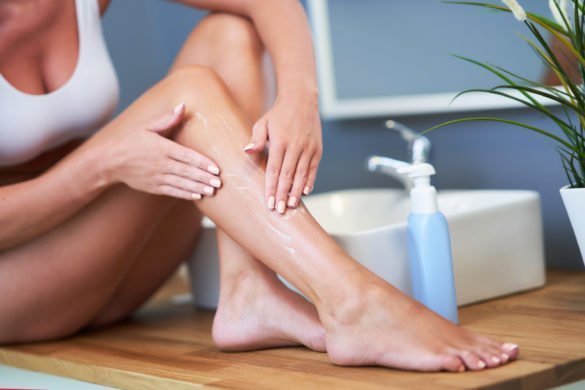
Finally, one last tip: targeted treatments. Massaging your legs every day with targeted products is a pleasant ritual that complements the efforts you make with your diet and exercise. If your legs often feel heavy or swollen, ask your GP for advice. There are targeted treatments, such as our anti-cellulite range. The Cryo Thigh Slimming Gel and the Thigh Night Slimming Cream can absolutely be used on the calves too! The routine to follow? It’s wonderfully simple:
- In the morning, finish your shower with a blast of cold water over your thighs and calves. Start from the ankles and work upwards. A lovely fresh feeling!
- Then, massage your calves and thighs with the Cryo Thigh Slimming Gel. Alternate circular movements with smoothing strokes, working from bottom to top.
- In the evening, feel free to run another cold water rinse over your legs if you feel the need. Tired legs, tense calves, that heavy feeling — we know it all too well! And don’t forget one simple trick: elevate the foot of your bed.
- Then, repeat the massage with the Thigh Night Slimming Cream.
- Throughout your routine, make full use of the complete leg-focused coaching guide included in the programme. You’ll find tips, meal plans, recipes and exercises dedicated to the legs.
Can you change the shape of your calves quickly?
Many people are looking for a quick fix. It’s best to be realistic: the size of your calves depends partly on your natural body shape, your bone structure and how easily you build muscle. These characteristics won’t change in a matter of days.
What matters is consistency: a varied diet that’s low in salt, gentle exercise such as swimming, walking or yoga, and a daily leg massage. Kept up over time, these habits are part of an overall approach to looking after your legs, at your own pace.
Frequently asked questions
How can you look after your calves?
Three approaches work together. First, a varied diet that is rich in whole foods and low in salt. Next, gentle exercise that works the calves without adding bulk (swimming, yoga, Pilates, walking). Finally, a daily leg massage with targeted products. You will find the details of each in the section “What can you do to slim down your calves?”.
I’m not overweight but I have large calves. Why?
Your natural body shape may explain it: a larger bone structure or a tendency to build muscle easily often means more defined calves. Regularly practising a high-impact sport can also play a part. If so, choose gentle activities such as swimming, yoga or Pilates.
Which sports should you avoid if you have defined calves?
High-impact sports put a lot of demand on the calves: ball sports (handball, basketball, volleyball), weightlifting, athletics, skipping rope, step or alpine skiing. It is better to choose swimming, aqua aerobics, brisk walking, yoga, Pilates, dance, or cycling without pushing too hard.
My legs often swell. What should I do?
Cutting back on salt, including the hidden sodium in ready meals, and staying well hydrated are among the common-sense tips detailed in the article. If your legs often swell, if they are painful or if you have any doubts, ask a doctor for advice.
Related articles
- The 8 Best Exercises to Slim Your Legs and Thighs
- Thighs: diet, exercise, treatments and style tips
- 7 alternatives to cardio worth exploring
Useful categories: Weight Management.