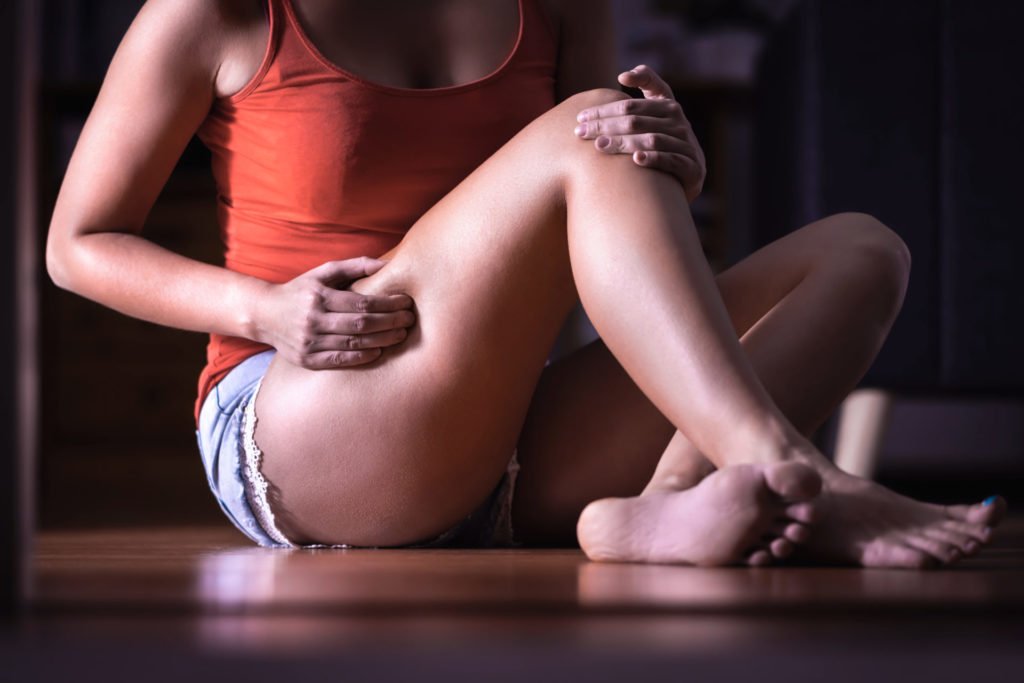
You’re always the first to run, cycle and swim. Yet despite your athletic efforts, your thighs stubbornly remain flabby. Why is the skin on your thighs so loose? Age, hormones, smoking, sun exposure: first, let’s look at the most common causes. Then we’ll turn to everyday ways to firm them up, from exercise and massage to what’s on your plate.
Why do I have flabby thighs?
Skin laxity is one of women’s biggest concerns. Soft arms, sagging breasts, flat buttocks, and flabby thighs are all signs of skin that has lost its firmness. Many factors contribute to this loss of tone. The most common ones are:
- Age: as the years go by, the production of collagen and elastin — the proteins responsible for skin suppleness and firmness — gradually declines. As a result, the skin begins to sag, and even with regular exercise, thighs can remain a little flabby.
- Hormonal changes: particularly those triggered bymenopause, as the drop in oestrogen and progesterone levels worsens water retention and slows down the skin’s natural regeneration process.
- Excessive weight loss: the body needs fat as an essential energy source for the proper functioning of muscles and the brain, and also because it helps keep the skin “in place”. During drastic diets, it is not uncommon to notice the appearance of loose skin on the arms, stomach, and inner thighs.
- Smoking: smoking significantly slows down the renewal of skin cells and causes the dermis to dehydrate. The skin, weakened and dried out, loses its elasticity — becoming looser and thinner. What’s more, the vasoconstrictive effect of tobacco (the narrowing of blood vessels responsible for proper cellular and muscular oxygenation) further accelerates the loss of firmness and the appearance of cellulite.
- Pregnancy: it involves rapid weight gain followed by rapid weight loss. As a result,pregnancy can cause skin laxity around the breasts, stomach, hips, and thighs.
- Sun exposure: sunlight is beneficial for health, as it enables the body to synthesise vitamin D, which is essential for muscle tone. However, excessive UV exposure not only accelerates skin ageing but also weakens the skin’s elastic network (free radicals attacking collagen fibres).
Flabby legs, saggy thighs and loose skin on the inner thighs: what are we talking about?
Flabby legs, saggy thighs, crepey skin on the thighs: these expressions are often used to describe thighs that lack firmness. They can refer to loose skin or to a lack of muscle tone. This article focuses mainly on loose skin, linked to the factors listed above. The inner thighs are among the areas concerned, particularly after a drastic diet, as mentioned above.
How do I get rid of my flabby thighs?
Flabby thighs before and after exercise: why the difference can be subtle
Exercise helps maintain muscle tone. But skin firmness also depends on collagen and elastin, hormonal changes, smoking and sun exposure. That’s why your thighs can stay a little flabby despite regular training. Rather than comparing your thighs before and after a few sessions, focus on consistency. Combine physical activity with the other habits covered below: a varied diet and a massage routine.
1- Keep up with physical activity
It’s essential to keep exercising, even if you feel it isn’t making a difference to your flabby thighs. Think again! Exercise has plenty of benefits: it keeps you fit and, above all, it maintains muscle tone. Giving up physical activity would only make your thighs flabbier. Focus on toning exercises for the thighs, such as aquabiking, fitness training and cycling.
2- Eat a varied, balanced diet
Take a closer look at what’s on your plate: a varied diet is part of your routine! Prioritise foods such as:
- Fresh produce such as blackcurrants, parsley, kiwi, and bell peppers, rich in Vitamin C
- Offal, such as liver, rich in Vitamins A and B5, copper and zinc
- Nuts and seeds, packed with Vitamin E, copper and zinc
Don’t overlook your protein intake , to keep your muscles toned. Choose healthy fats and cut out anything that works against your body: sugar, saturated fats, alcohol, and refined grains.
Finally, drink as much water as you can to prevent the factors that contribute to flabby thighs, such as:
- Water retention
- Dry skin
- Cellular and muscular dehydration
3- Massage your thighs
To get the most out of the healthy lifestyle habits mentioned above, nothing beats a regular massage routine! The goal is to take care of your flabby thighs and of any cellulite (which certainly doesn’t help!). Here’s how:
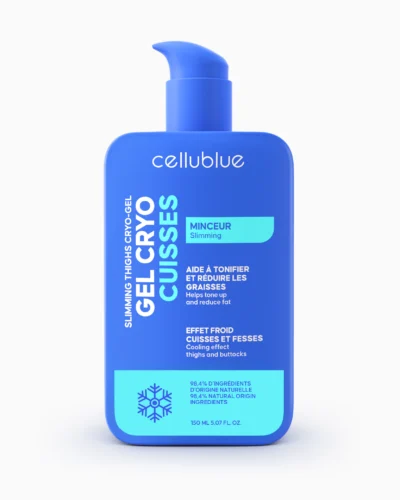
- Our gel gives you a moment of freshness after your workout session, thanks to its cold effect.
The cooling gel that leaves thigh skin firmer
- Immediate cooling effect: menthol kicks in as soon as it is applied, then skin is firmer under your fingers (keep the gel in the fridge for even more intensity)
- Caffeine & Lipothetic®, a patented active ingredient, at the heart of a formula designed for thighs and buttocks
- Sorbet texture: it absorbs faster and makes the feeling of freshness last longer
- Daily anti-cellulite massages with the Cellublue Cup help you take care of the areas where cellulite is stored. Massage each thigh for 3 minutes every day, and make it part of your routine to take care of the appearance of your skin!

The cupping tool that replicates pinching and rolling, 3 minutes per zone
- The professionals' technique, at home: you lift, glide, and release, and the tool grips the skin fold like a manual pinching and rolling
- Soft silicone that fits thighs, buttocks, stomach, and arms
- 3 minutes per zone, every day, always with a massage oil so the tool glides
- For targeted care of flabby thighs, try our device. Its ball head and wave head are used to massage your thighs, for 15 minutes a day.

The cordless massager: 2 900 rotations per minute to stimulate your skin
- A deep mechanical massage: rotations and vibrations, up to 2 900 turns per minute, knead the skin on your thighs, stomach, arms and bottom
- 2 complementary heads: the ball head kneads deep down, then the wave head smooths and tones the surface
- 5 intensity levels on a touchscreen, a blue light, cordless and quiet
Build these habits into your routine: say goodbye to neglect and hello to daily care for your flabby thighs and skin!
Frequently asked questions
How can I firm up the skin on my thighs?
The key is to combine several habits: keep up regular exercise, eat a varied diet rich in vitamin C, protein and good fats, drink plenty of water and set up a massage routine. None of these habits is enough on its own. Together, and over time, they make up a complete routine for your thighs.
How can I tone my inner thighs?
For exercises that target the inner thighs and suit your level, the simplest option is to ask a personal trainer for advice. They can suggest moves to add to your usual workouts. If you feel any pain, ask a doctor or another medical professional for advice.
How long does it take to tone up by walking?
There’s no timescale that applies to everyone. It depends on your fitness level and on how often and how briskly you walk. The advantage of walking is that it fits easily into everyday life. For a programme tailored to you, ask a personal trainer for advice. If you feel any pain, see a doctor.
Related articles
Useful categories: Slimming the Thighs, Weight Management.