
Cellulite Cellulite in men: how to treat male cellulite?

Cellulite in men: how to treat male cellulite?

par
Cellulite-uomo

90% of women are affected by cellulite, or superficial lipodystrophy… A sad reality indeed (we feel for you, ladies!). Only around 2% of men are affected by this benign yet unsightly phenomenon. In men, cellulite is rarely visible — but it does exist. For everything you need to know about male cellulite, its causes and how to get rid of it, read on!

Why can men get cellulite too?

Men rarely develop cellulite. The reason is simple: subcutaneous fatty tissue, made up of adipocytes — the cells responsible for storing fat — is primarily a female characteristic. Men do have adipose tissue, but it tends to concentrate mainly in the abdominal area: stomach, belly, and flanks. Which explains the beer belly some men tend to develop! In men, adipocytes are structured differently than in women: smaller, with oblique walls, so that even when hypertrophied (i.e. overloaded with fat), the hypertrophy is barely visible on the skin’s surface. Men can therefore suffer from excess weight and cellulite, but orange-peel skin is not a common phenomenon for them.

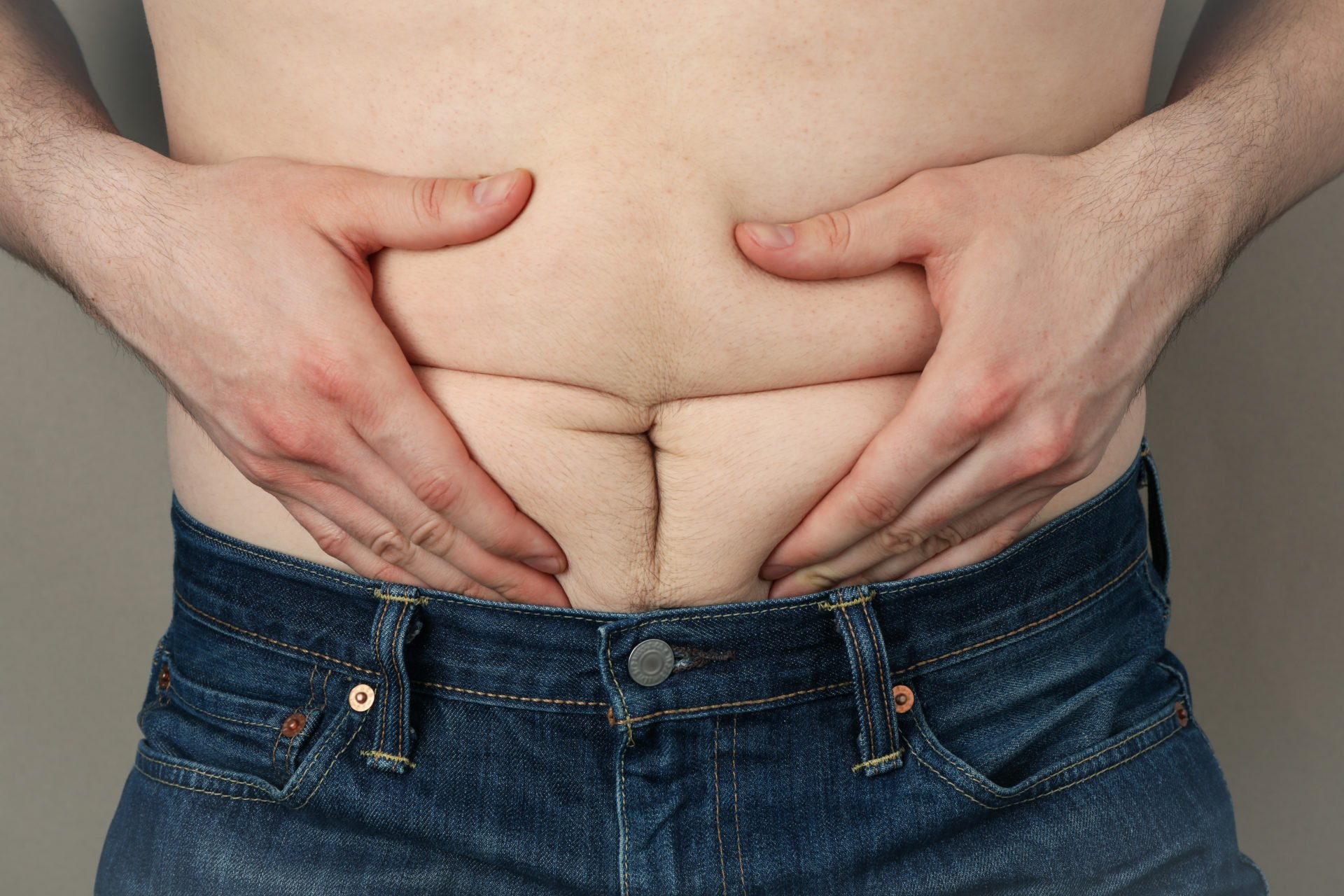
However, in certain circumstances — such as being overweight or even obese — visible cellulite can appear in men, around the abdomen, belly, and love handles. Fibrosis develops in the deeper layers of the skin (hypodermis) and becomes significant enough for cellulite to become visible.

The differences between men and women when it comes to cellulite

cellulite-homme-femme

As you can see, men and women are not equal when it comes to cellulite, for several reasons:

  • Fat mass : it is greater in women than in men. Adipose tissue accounts for 20–25% of a woman’s total body mass, compared to 15–20% in men. The reason is purely anatomical: a woman’s body is designed for childbearing. She therefore needs to store fat reserves to carry a potential pregnancy to term and support breastfeeding afterwards.
  • The number of adipocytes : it is higher in women than in men.
  • The structure of adipose tissue : it differs between men and women. In men, fat cells are oblique relative to the skin’s surface. Smaller and diamond-shaped, they are separated by walls (septa) arranged in a criss-cross pattern. The intercellular circulation of blood, water and lymph flows freely, making water retention unlikely. In women, adipocytes are larger and separated by septa perpendicular to the skin’s surface. As a result, when women’s fat cells expand, they tend to “push” against the dermis — creating that characteristic orange-peel effect.
  • Skin density : The male dermis is thicker than the female dermis. If adipocyte hypertrophy occurs, it will be less visible in men than in women.
  • Where cellulite appears : men who develop cellulite will typically notice it in the upper body: belly, stomach, flanks, and sometimes the neck and arms. Women traditionally see cellulite appear on their thighs, hips, buttocks, and knees.
  • Female hormones (oestrogen, progesterone): they play a crucial role in the development of cellulite. They encourage both cellular fat storage and water retention. Male testosterone also promotes fat storage, but to a lesser extent — since men technically need less of it!

The causes of cellulite in men

It is worth noting that aqueous cellulite is very rare in men. When male cellulite does occur, it is most often adipose cellulite, or even fibrous cellulite — as men develop just as much fibrosis (the breakdown and tangling of collagen fibres, which hinders fat release) as women. So, what are the most common causes of cellulite in men?

Poor lifestyle habits

A diet too rich in calories, a sedentary lifestyle… weight gain is inevitable. If the weight gain is significant, men will accumulate fat reserves in the abdominal adipose tissue. Cellulite can develop there and may even become visible, giving the skin a dimpled appearance around the belly and waist — the notorious love handles.

Poor blood and lymphatic circulation

Men are rarely prone to water retention, as the structure of their adipocytes allows vital fluids to circulate freely. However, some men do experience venous insufficiency, which can eventually manifest as cellulite.

Hormonal imbalance

The hormones can play tricks on men too! Andropause, or age-related androgen deficiency, is a common phenomenon. It typically occurs in men between the ages of 40 and 55 and is characterised by a gradual decline in testosterone levels. The effects are varied, but include muscle mass loss in favour of fat mass, deterioration of venous and lymphatic circulation, and thinning of the skin. Visible cellulite may then appear.

Solutions for male cellulite

Cellulite-homme-soin

They are the same as for women!

A balanced and varied diet

To avoid adipose cellulite, the answer is no secret! It’s all about eating a bit of everything, in moderation.

Of course, the focus should be on lean proteins (to fuel muscle mass and the brain!), plenty of fruit and vegetables (vitamins, water, minerals, and fibre essential for the body’s overall wellbeing), and complex carbohydrates (because men’s bodies need energy!).

It is best to avoid excess of all kinds, such as too much salt and sugar, alcohol, processed foods, and fizzy drinks. And of course, staying well hydrated — primarily with water — is essential.

Exercise

Without regular physical activity, men tend to gain weight and encourage the development of subcutaneous cellulite. It is therefore important to walk every day, incorporate regular exercise sessions into your routine (2 to 3 times a week), and avoid a sedentary lifestyle (step away from the sofa!).

Targeted treatments

Gentlemen, if you’re dealing with abdominal cellulite, don’t panic! There are targeted treatments designed to break down accumulated fat around the belly and help drain the body. Several options are available to you:

    • The anti-cellulite creams specifically formulated for the stomach area, whose active ingredients help stimulate adipocyte drainage and microcirculation
    • The food supplements, generally formulated with natural ingredients (draining plants or “fat burners“), which are a perfect complement to topical treatments. They are typically available in capsule, drink or ampoule form.
    • Massage is also beneficial for eliminating cellulite in men. A daily massage using the pinch-and-roll technique can be effective in targeting abdominal dimpling and working towards a flatter stomach.

VOUS AIMEREZ AUSSI...