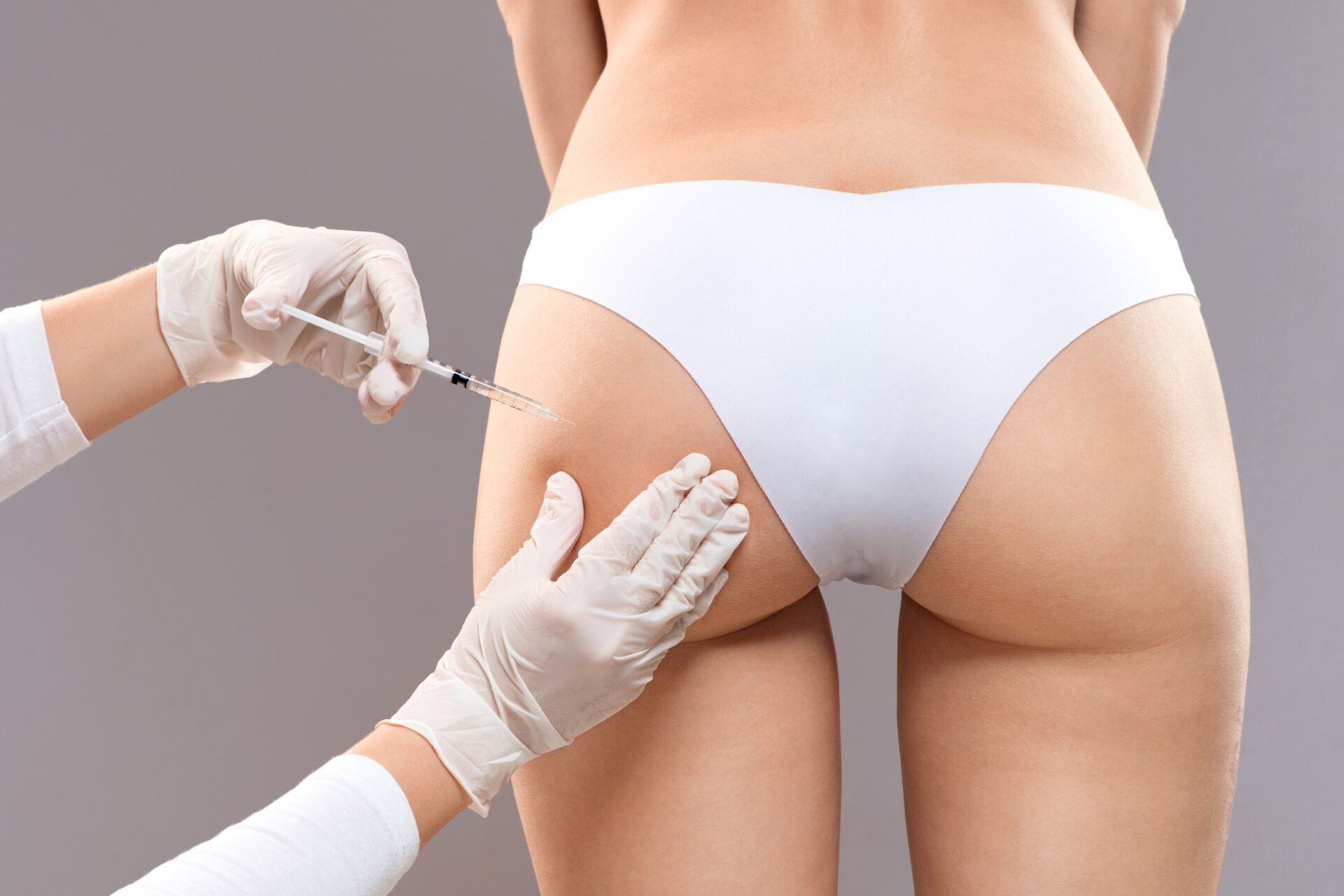
What do Cardi B, Kim K and Kylie Jenner all have in common? They all flaunt full, rounded curves. And while some are reluctant to admit it, it’s no longer a secret that achieving such a silhouette has involved a Brazilian butt lift. But what exactly does it involve? Is it risk-free? And above all, are there any non-surgical alternatives for a beautifully rounded bum?
What is the Brazilian butt lift?
The Brazilian butt lift, or BBL, is a cosmetic surgery procedure designed to increase the volume of the buttocks and improve their shape and firmness. It is an autograft:
- first, a liposuction is performed on a fat-rich area of the body, typically the stomach, hips, thighs or saddlebags ;
- in a second step, this fat, once purified, is re-injected into the buttocks, both to lift them and to add volume and shape.
The procedure therefore allows surgeons to sculpt the entire waist-buttocks-thighs area: the waist and thighs are slimmed down, the curve of the back is reshaped, and the buttocks become rounder.
The Brazilian butt lift responds to the growing demand for a figure that is “slim thick”, literally slim yet curvy. This new body trend, fuelled by social media (and certain celebrities) and held up as the new feminine ideal, corresponds to a toned-looking silhouette. A slim waist, a super flat stomach and very generous hips and buttocks have become the ultimate symbols of femininity.
Brazilian butt lift: a controversial procedure?
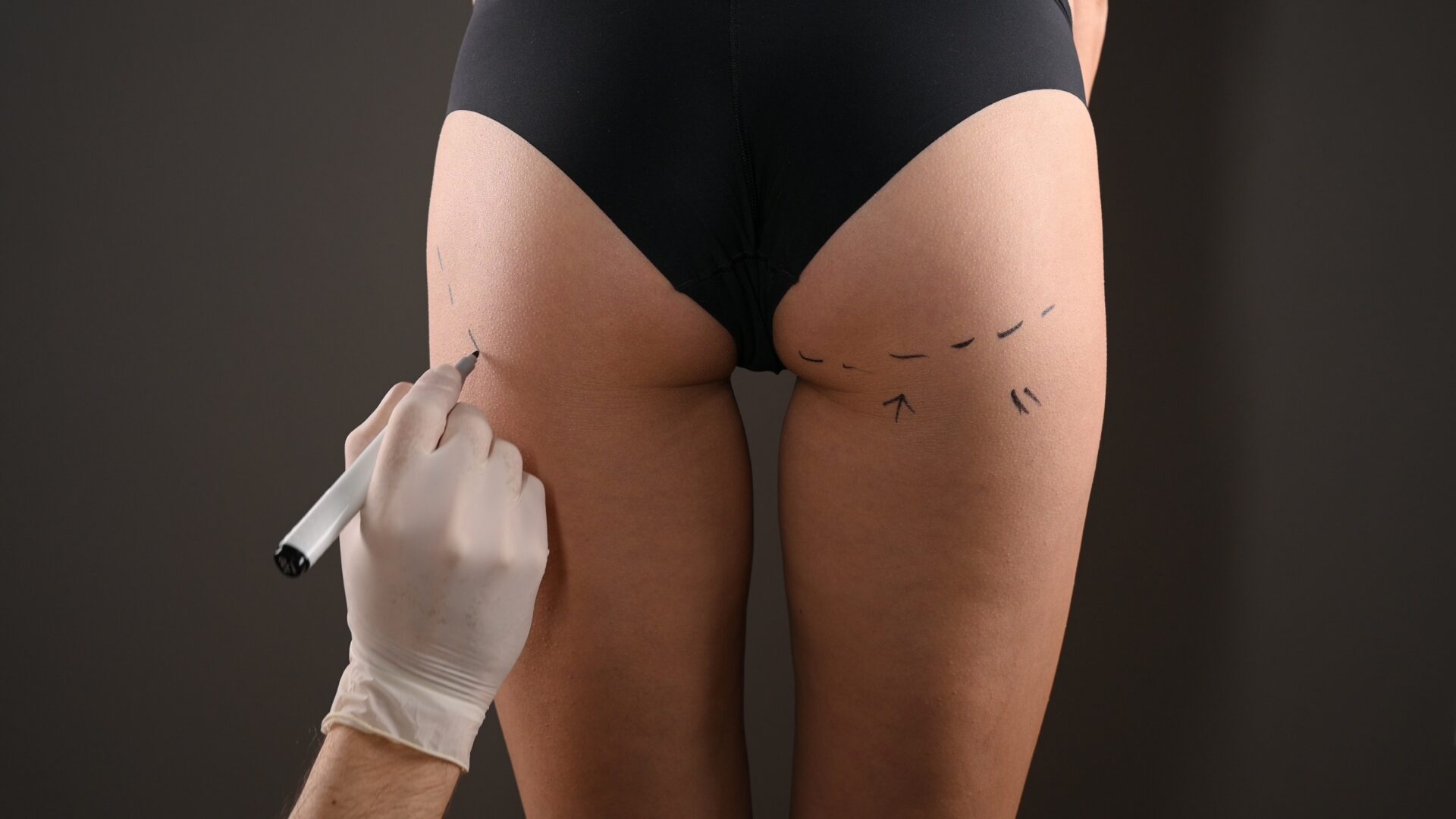
Here’s the thing: the BBL is not without risk. Over the past five years, demand for the Brazilian butt lift has doubled, but post-surgery complications, and even deaths, have also been on the rise. The procedure is even considered the most dangerous cosmetic surgery in existence (one death per 3,000 procedures).
Why is it so risky? The answer is straightforward: for the procedure to be effective, the harvested fat must be injected into vascularised tissue, such as muscle. But if the injection site is poorly chosen, the fat can take a wrong turn and enter the bloodstream and block a vein. This can result in a risk of fat pulmonary embolism (a fatty clot travelling to the lungs), or even a stroke (a cerebral clot).
And that’s not all: the maximum amount of fat that can be injected is 300 ml. Unfortunately, some patients push for larger injections, while certain cosmetic surgeons — unscrupulous or insufficiently qualified — exceed this limit. The consequences can once again be devastating, including permanent deformities, as well as septicaemia or gangrene.
Finally, and despite best practices followed by the majority of plastic surgeons, the long-term consequences of the Brazilian butt lift are still unknown. What happens inside the body, after a few years, when a large amount of “dead” fat has been injected into the buttocks? Because yes, the Brazilian butt lift is an irreversible procedure. Unlike implants (silicone or saline), once the fat has been injected, it cannot be removed… A portion tends to be absorbed by the body (around 20%), but the rest is there for life.
What about the cost and recovery?
1- A very high price tag
The cost of a Brazilian Butt Lift varies, as it depends on factors such as the number of fat-harvesting areas, the amount of fat removed, the surgeon’s and anaesthetist’s fees, hospitalisation costs, and operating theatre fees. In France, prices typically range from €4,000 to €8,000. This steep price tag leads many women to seek surgery outside the European Union, particularly in Tunisia or Turkey, where the procedure costs on average between €2,500 and €4,500. However, these operations are carried out with no guarantee that medical and hygiene standards meet European requirements. It is also worth noting that the Brazilian butt lift is not covered by French national health insurance or supplementary health plans, as it is a purely cosmetic procedure.
2- A painful recovery
What about recovery? Patients are almost unanimous: it is painful. Not only does localised liposuction cause swelling and pain, but that’s nothing compared to the constraints placed on the newly shaped buttocks, which must not be compressed. As a result:
- sitting down is forbidden for a minimum of 2 to 6 weeks, to avoid damaging the freshly implanted fat cells in the buttocks;
- it is also forbidden to sleep on your back;
- wearing compression garments (compression tights or leggings) is compulsory for 2–3 weeks, to maintain the new contours of the buttocks while reducing the risk of swelling;
- it is inadvisable to ride a bicycle or motorbike for up to 3 months after the procedure;
- returning to a seated position must be done gradually and with the help of an ergonomic cushion;
- buttock massages should be avoided for at least 3 months after the procedure, as should physical exercise.
What are the alternatives to the Brazilian butt lift?
After such a realistic picture, it’s completely understandable if the BBL doesn’t appeal to you — and we get it! Yet you still dream of showing off a beautiful, rounded, lifted bum. Don’t worry, Cellublue has the answer, as always. Alongside a balanced diet and targeted glute workouts, you can try our Méthode Fesses Bombées. It helps smooth and firm the skin, for a more toned and sculpted look.

It brings together 3 essential products:
- our new Firming Butt Cream, 96% natural, enriched with Kigeline phytoactive — renowned for its lifting effect — firming fenugreek, and nourishing apricot oil;
- our now iconic Anti-Cellulite Massage Oil which, thanks to its grapefruit lipolytic extracts and draining ivy, tackles even the most stubborn dimples;
- our Cellulite Cupping Cup, which lets you recreate the palpate-roll technique at home, to smooth away orange-peel skin on the buttocks.
This “ beautiful bum ” routine comes with a guide packed with tips to banish flat, lifeless buttocks for good. And skip the surgery altogether!