If you already have several tools at home, the most useful thing isn’t to add another one but to know which one to use and when. This comparison helps you understand what sets Gua Sha, cupping cups and foam rollers apart, depending on the area, the intensity you’re after and how easy each one is to use.
Cellublue Gua Sha, cupping cup or roller: how to tell them apart
Whether you already have a body Gua Sha, an anti-cellulite cupping cup or a foam roller, the question is not which one is “the best”, but which one suits your situation. Three criteria are enough to help you decide: the area you want to work on, the intensity you can comfortably tolerate and how easily you can use the tool without irritating your skin.
If one of them seems easier to handle, start with that one and keep using it for three weeks, as suggested in the plan below. Redness or pain is not a sign that you are using it correctly: if this happens, reduce the intensity or switch back to a gentler tool.
Three tools, three different techniques
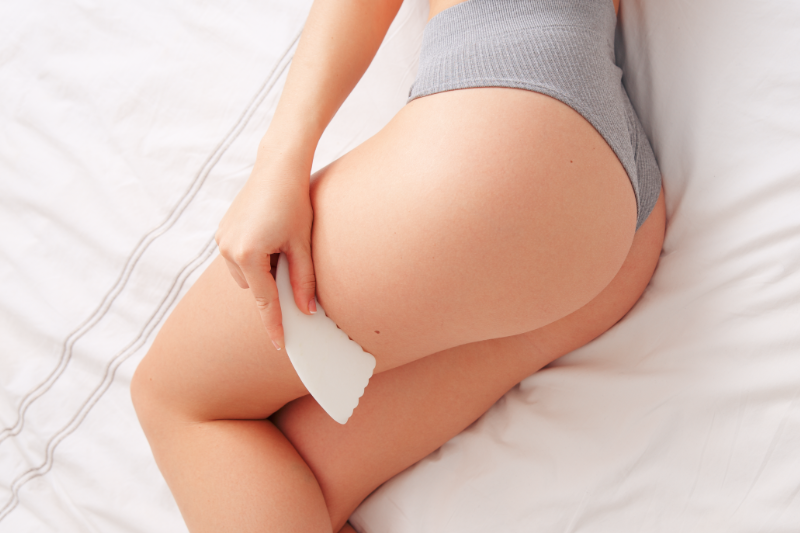
Gua Sha is a flat stone with rounded edges that you glide over skin you have oiled beforehand. The movement is a smoothing stroke, with more or less pressure, done from the bottom upwards, from the ankles towards the thighs. It is well suited to areas you want to work on gently: arms, inner thighs, knees, stomach.
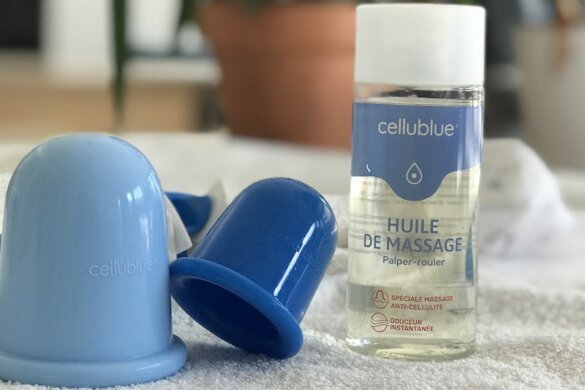
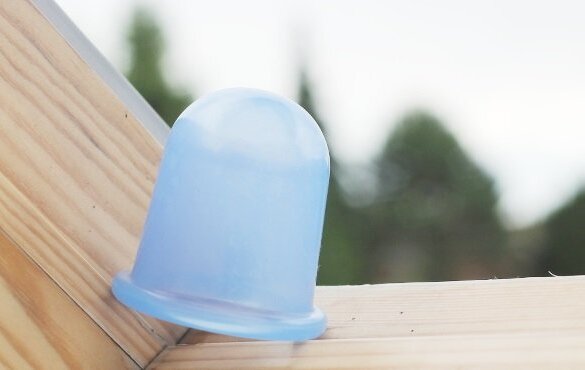
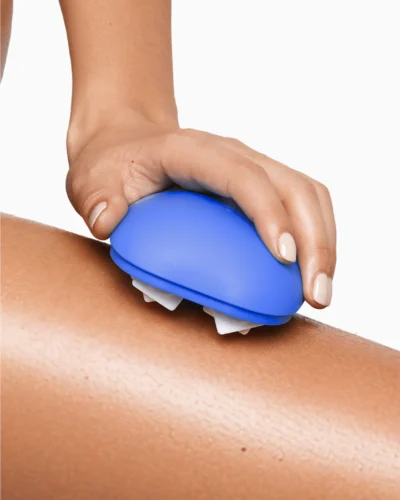
The cupping cup works the other way round: instead of pressing, it gently draws the skin up with suction. By gliding it over well-oiled skin, you perform a movement similar to palper-rouler. It is the tool designed for the areas where cellulite is most visible: thighs, buttocks, hips or stomach.
Finally, the foam roller is a foam cylinder that you place on the floor: you roll part of your body over it, using your own body weight. It is aimed primarily at the muscles and is mainly used after exercise, on the thighs, calves or glutes, without oil and even over leggings.
Which one should you choose for your situation?
- You want to focus on the areas where cellulite is most visible, such as the thighs, buttocks or stomach: the cupping cup is the tool designed for these areas, provided you oil the skin well and start with light suction.
- You have thin or sensitive skin, or you are mainly looking for a relaxing moment: Gua Sha allows you to adjust the pressure very precisely.
- You do sport and your muscles feel tense: the foam roller has its place after your session, alongside one of the other two tools.
- You have little time: choose the tool you will actually use. A few regular minutes are better than a long session once in a while.
Testing a tool before switching
This framework helps you compare your experience over several weeks of consistent use and see more clearly what suits you best.

The cupping tool that replicates pinching and rolling, 3 minutes per zone
- The professionals' technique, at home: you lift, glide, and release, and the tool grips the skin fold like a manual pinching and rolling
- Soft silicone that fits thighs, buttocks, stomach, and arms
- 3 minutes per zone, every day, always with a massage oil so the tool glides
Step 1
Choose a single basic tool for three weeks.
Step 2
Use it at the same time, on the same area and at a comparable frequency.
Step 3
Observe how comfortable it is, how easy it is to use and how willing you are to continue.
Step 4
Then keep it or switch, based on these observations rather than on a passing whim.
Action plan over 2 to 4 weeks
There is no need to do everything at once: choose a realistic order, then stick with it for long enough to see what suits you.
- Start with the tool you find easiest to use properly.
- Keep sessions short so you can stick with them over time.
- Combine the tool with walking, good hydration and gradual physical activity.
The right signal is not a visible transformation from one day to the next: it is a routine that feels pleasant, is well tolerated and is easy to maintain from one week to the next.
Using each tool properly
Gua Sha: apply a massage oil, hold the stone almost flat against the skin and make slow strokes, always in the same direction, from the bottom upwards.
Cupping cup: oil the area generously, squeeze the cup slightly before placing it, then glide it in lines or circles. To remove it, press on its edge to release the suction rather than pulling it off.
Foam roller: place the roller under the area you are working on and roll slowly, with bearable pressure. Avoid joints and the lower back.
Common precautions
Whatever the tool, avoid areas with varicose veins, a wound, inflammation or irritation. The cupping cup may cause slight temporary redness; pain or bruising, however, means that the pressure is too strong. If you are pregnant, have a vein problem or are taking anticoagulants, ask your doctor for advice before getting started.
Common mistakes to avoid
- Switching tools every session.
- Believing that redness or pain means you are doing it correctly.
- Adding several methods too quickly, until you can no longer tell which one suits you.
- Neglecting sensitive areas or rest between sessions on the same area.
Frequently asked questions
Which tool should you start with?
The best first choice is usually the one you can use easily and regularly without irritating your skin. For the areas where cellulite is most visible, the cupping cup is a possible starting point; for a gentler approach, Gua Sha.
Should you combine all three?
No. Sticking to a single tool as a clear starting point already makes it easier to see how your body responds.
How long should you test a tool before deciding?
Three weeks of consistent use already give you a far more reliable picture than using tools here and there.
Guides to read next
These guides take a broader or more structured approach, depending on what you still want to find out.
- Anti-cellulite massage guide: methods, how to choose and how often
- Anti-cellulite techniques guide: comparison and cost
- Anti-cellulite cupping guide: method, frequency and mistakes to avoid
- Cellulite: definition, types, causes and solutions
Further reading
These articles offer a more practical or more comparative perspective, depending on what you’d like to clarify next.
- Cupping vs palper-rouler massage: which method should you choose?
- Anti-cellulite routine: how long before taking stock?
- 21-day anti-cellulite routine: the complete plan
To go further, explore the Cellublue shop: our anti-cellulite products.

The scrub that leaves skin smooth and skin texture refined*
*User test on 21 volunteers over 4 weeks, based on participants' feedback.
- Olive & apricot kernels: these natural grains gently sweep away dead skin cells
- Caffeine & monoi scent, so your shower instantly smells like a holiday
- In the shower, two to three times a week, massaging your thighs, bottom and stomach