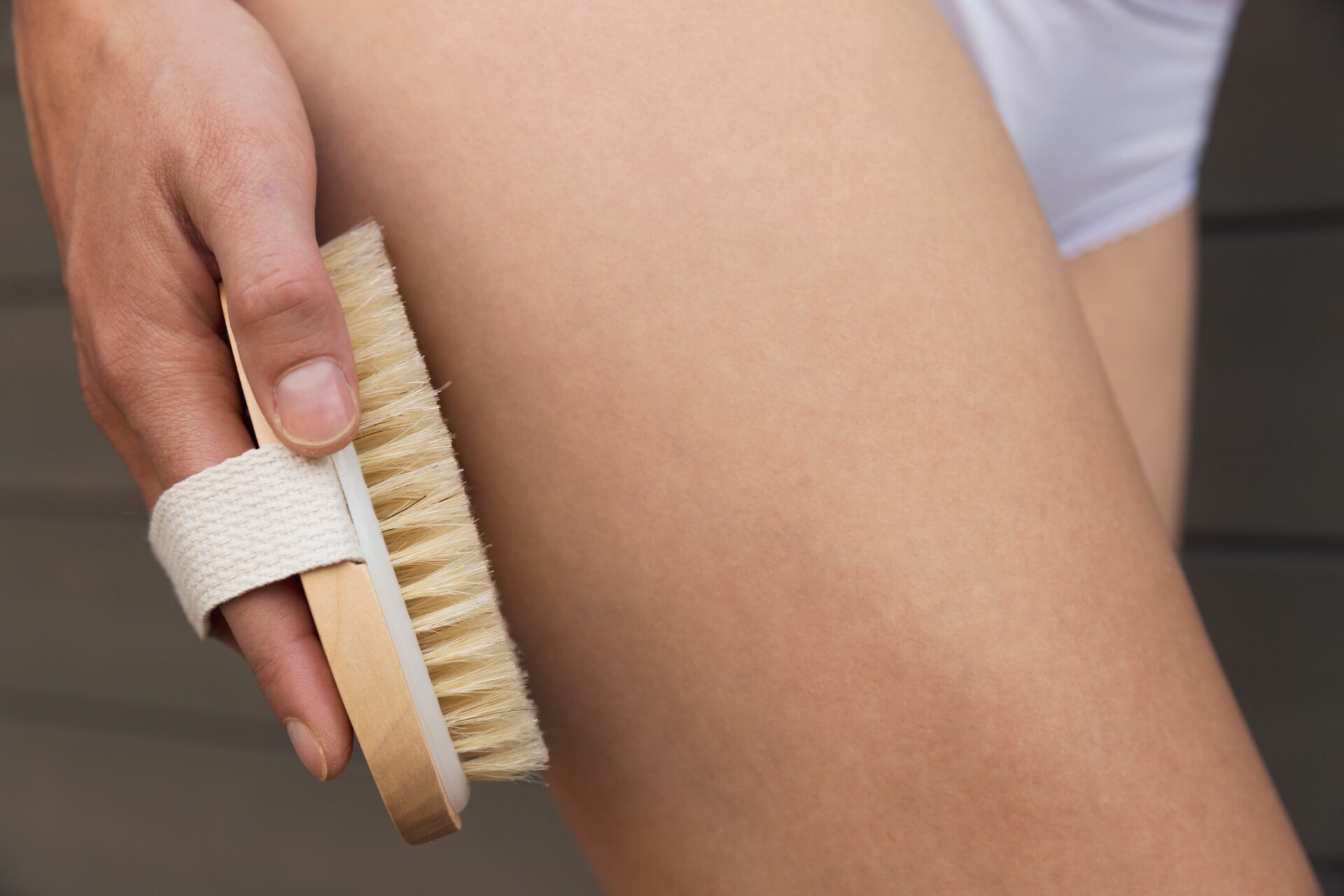
Brushing your body? What a strange idea! And yet, we brush our teeth and our hair without a second thought — so why not our skin? Dry brushing is an age-old practice that has been brought back into the spotlight by countless celebrities. Discover everything you need to know about this technique, somewhere between massage and skincare ritual, and the many benefits it offers.
What is dry brushing?
The dry brushing of the skin is, as the name suggests, a practice that involves brushing your skin while it is completely dry, using a hand brush — most often made from natural fibres.
We tend to forget that the skin is, like the lungs or kidneys, an emunctory organ. It has a protective function, but also an elimination function, through sweat and sebaceous secretions. It also reflects the body’s imbalances: alternately oily and prone to blemishes, or dry, reactive and itchy — it is something of a barometer of our overall wellbeing. Taking care of it is therefore essential!
Just beneath the skin lies a network of veins and vessels that nourishes, oxygenates and purifies the body. This is the role of the blood, which carries nutrients and delivers them to the organs, and of the lymph, which drains waste and toxins.
Dry brushing therefore works through a dual mechanical action: unblocking pores to support the skin’s emunctory function, while stimulating the circulation of fluids.
What are the benefits of dry brushing?
As you can see, the benefits of dry brushing are numerous:
- It provides a gentle exfoliation of the skin, removing dead cells, unclogging pores and encouraging epidermal renewal
- It stimulates blood circulation, for better nourishment and oxygenation of the tissues
- It supports the drainage of toxins through gentle stimulation of lymphatic flow
- It helps tone connective tissue and, in doing so, reduces fibrosis (typical of deep-set cellulite) and encourages the production of collagen and elastin (a welcome effect when you are prone to stretch marks!)
- It is relaxing and helps ease nervous tension
Dry brushing is therefore recommended for sluggish veno-lymphatic circulation, loss of firmness, ptosis (sagging skin), stretch marks and cellulite (whatever the type). Its toning and revitalising qualities make it a highly beneficial natural treatment.
How to dry brush?
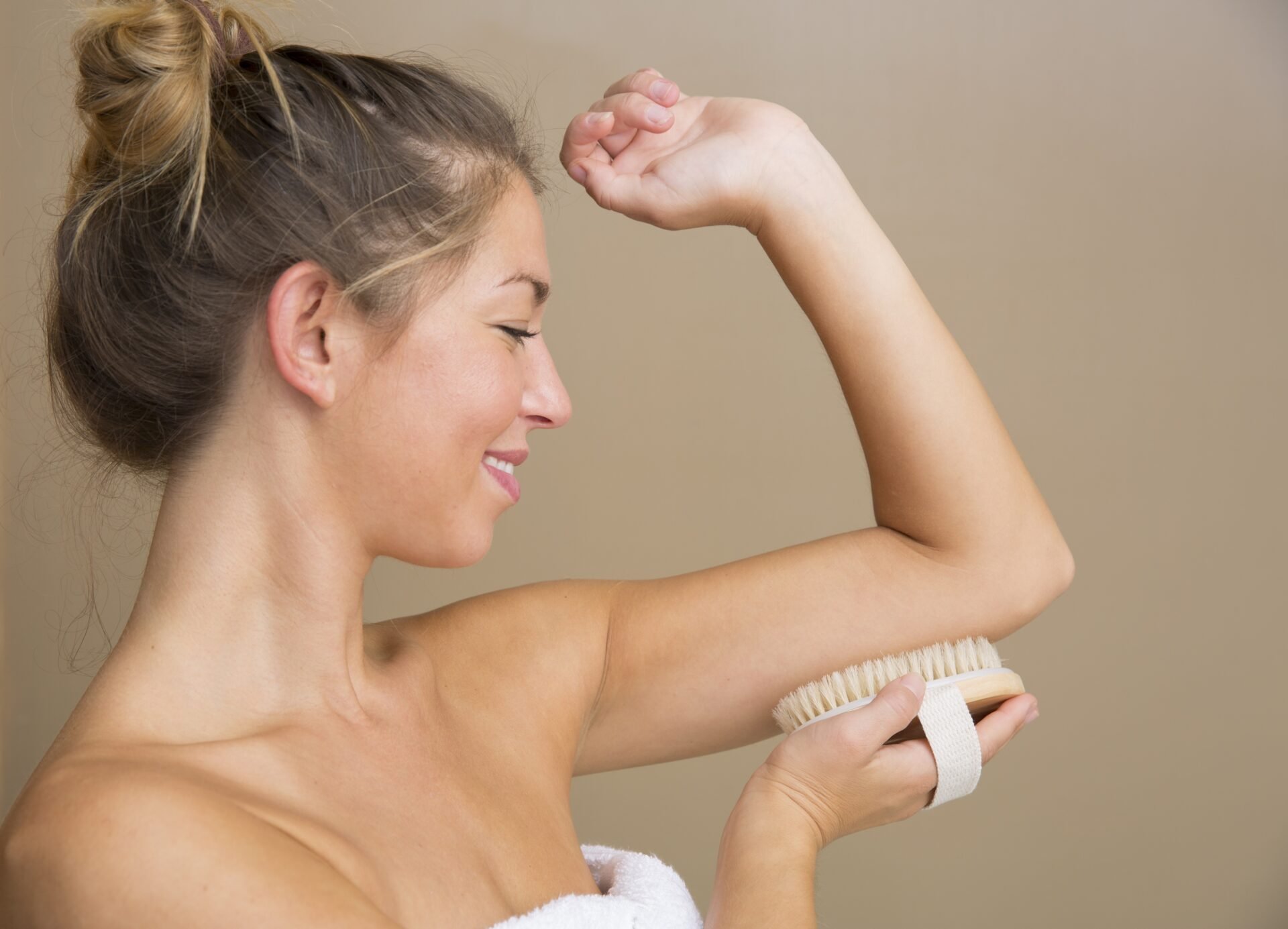
To get the most out of dry brushing, a few simple guidelines are worth following.
1- Frequency
Dry brushing is quick to do. Just 5 to 10 minutes per area, every day, is enough to see results. Improvements in skin radiance, tone and the reduction of orange-peel skin will become visible after a few weeks of daily massage. That said, this is a technique that requires patience and consistency. But what are 3 or 4 weeks in the grand scheme of things? After that, dry brushing can be done 2 to 3 times a week as a maintenance routine. It is also worth noting that it is advisable (though not essential!) to dry brush before showering.
2- Technique
Dry brushing should be performed using a specific technique. Movements are circular, firm but without excessive pressure — take it gently! Movements should also be directed towards the lymph nodes. Where are they located? At the level of:
- The neck (submandibular, cervical, submental)
- The armpit (axillary)
- The chest (bronchial)
- The abdomen (aortic)
- The lower abdomen (iliac)
- The groin (inguinal)
- The knee (popliteal)
Brushing should always be done on perfectly dry skin.
3- Body areas
All areas of the body can benefit from dry brushing (thighs, buttocks, arms or legs), with the exception of mucous membranes, the face and the chest. It is important to note that dry brushing should only be performed on healthy skin, free from any lesions — whether redness, a skin condition (eczema, hives, psoriasis), a cut, spots, sunburn or a wound. If the skin is irritated, there is no point in aggravating the situation! Also, if you have a recent history of phlebitis, it is best to avoid dry brushing the affected area for a while.
Which brush should you choose for dry brushing?
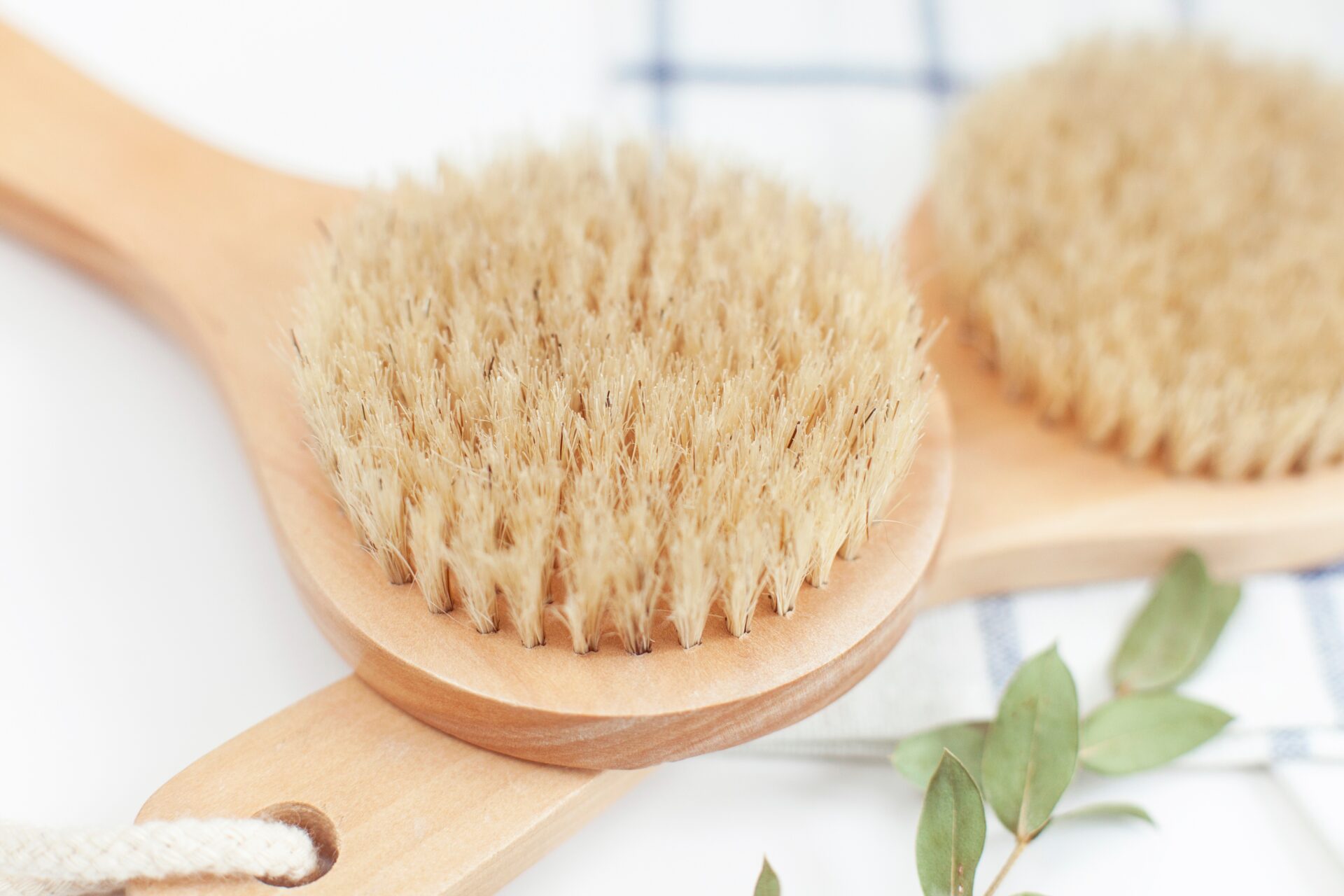
The key is to find your preference in terms of softness, firmness and texture. But the main criterion for a good brush is the material: it is best to opt for brushes with bristles made from natural fibres. These can be animal fibres, such as horsehair, or plant-based fibres, such as sisal, loofah or tampico. Another factor to consider when choosing your brush is the grip! Some people prefer small brushes with a handle, while others swear by a long-handled brush.
If dry brushing appeals to you — whether to target cellulite or simply to reveal smoother, more radiant skin — you’ll be pleased to know that we now offer the Brosse Peau Neuve. Featuring both bristles and nodules, this anti-cellulite brush massages the skin and works deep down on veno-lymphatic circulation. Its firm texture unclogs pores, leaving skin soft and luminous. Our brush honours the dual action of dry brushing: drainage and exfoliation, for smoother skin that is firmer and glowing with health!