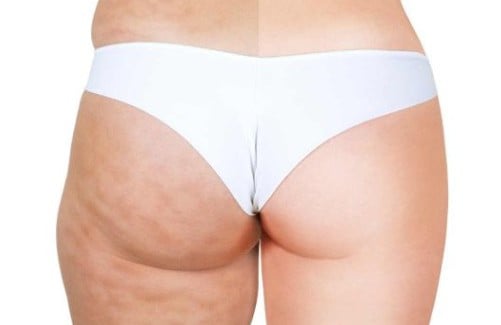
If you’re looking for solutions to tackle cellulite, you may have already heard of anti-cellulite dry brushing. As the name suggests, it involves brushing the skin while it’s dry. But how exactly can this fit into an anti-cellulite routine? Let’s break down this growing wellness trend together: how it works, which brush to choose, which direction to brush in, the precautions to bear in mind and what you can expect from it!
Anti-cellulite dry brushing: how does it work?
Dry brushing is a body massage performed with a natural-bristle brush on dry skin. The technique works by gently brushing the surface of your skin, which is great news when it comes to caring for it! Among other things, brushing helps remove dead skin cells and lift away small impurities and lifting away small impurities. In short, it helps you care for the body and leaves skin looking smoother and softer.
Our skin often reflects our lifestyle habits: an unbalanced diet, a lack of physical activity, stress and so on can show in its appearance.
But just 5 minutes of body brushing a day before your shower can help you look after your skin! And the benefits don’t stop there. Dry brushing can also help exfoliate the skin, all while giving yourself a daily moment of self-care. Not bad, right?
Dry brushing: how do you do it?
To get started, pick up a dedicated brush available online or at health stores. Then brush your entire body following a very specific direction. In practice, you work your way up from your feet towards the top of your body.
Which brush should you choose for dry brushing?
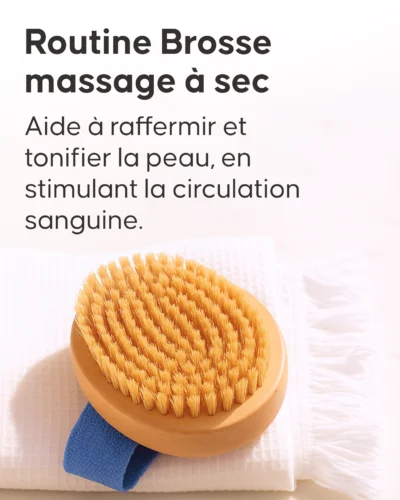
For dry brushing cellulite-prone areas, go for a dry brush made from natural fibres, in other words with natural bristles: this is the type suited to massaging dry skin. You’ll find them online or in organic shops. You can also opt for our Dry Massage Brush, designed especially for this ritual.
Whichever brush you choose, keep it for this purpose only. Remember to clean it regularly with soap and water, then leave it to dry thoroughly.
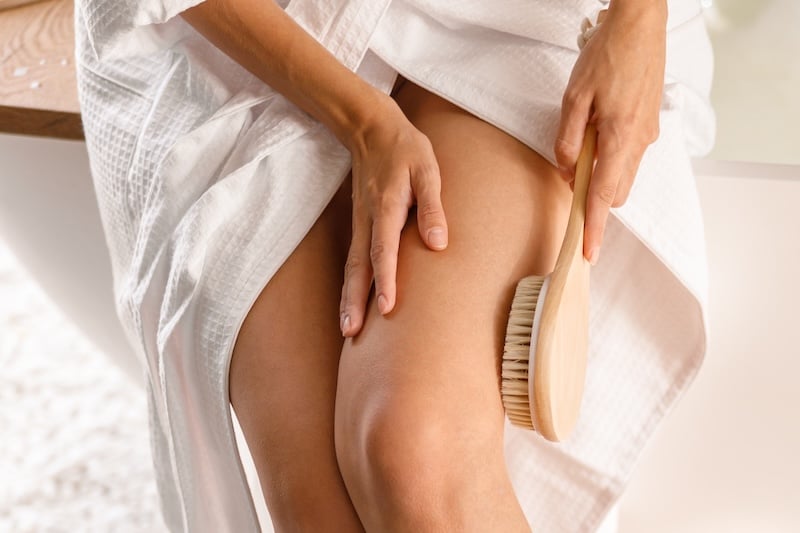
To dry brush effectively, use a natural-fibre brush and follow these steps:
- Start at the feet and work your way up the body.
- Use upward strokes, moving towards the heart.
- Brush your skin using circular movements.
- Adjust the pressure depending on the area you’re treating. Apply firmer pressure where the skin is thicker, such as the feet, and lighter pressure where the skin is more delicate.
- Shower after brushing, then moisturise your skin.
During your first dry brushing sessions, take it easy and use gentle pressure.
2 to 3 sessions per week with the brush are a good place to start.
Are there any contraindications to anti-cellulite dry brushing?
There are two important things to keep in mind when it comes to anti-cellulite dry brushing.
First: whatever you do, don’t scrub too hard. The goal is not to irritate your skin! And second, never use dry brushing on skin that is overly sensitive, irritated, or damaged.If you have any cuts, wounds, sunburn, or eczema, avoid brushing those areas. Dry brushing is also not recommended if you have very dry or sensitive skin.
Remember to clean your brush once a week with soap and water, then let it dry thoroughly to prevent mould from forming.
What results can you expect from dry brushing?
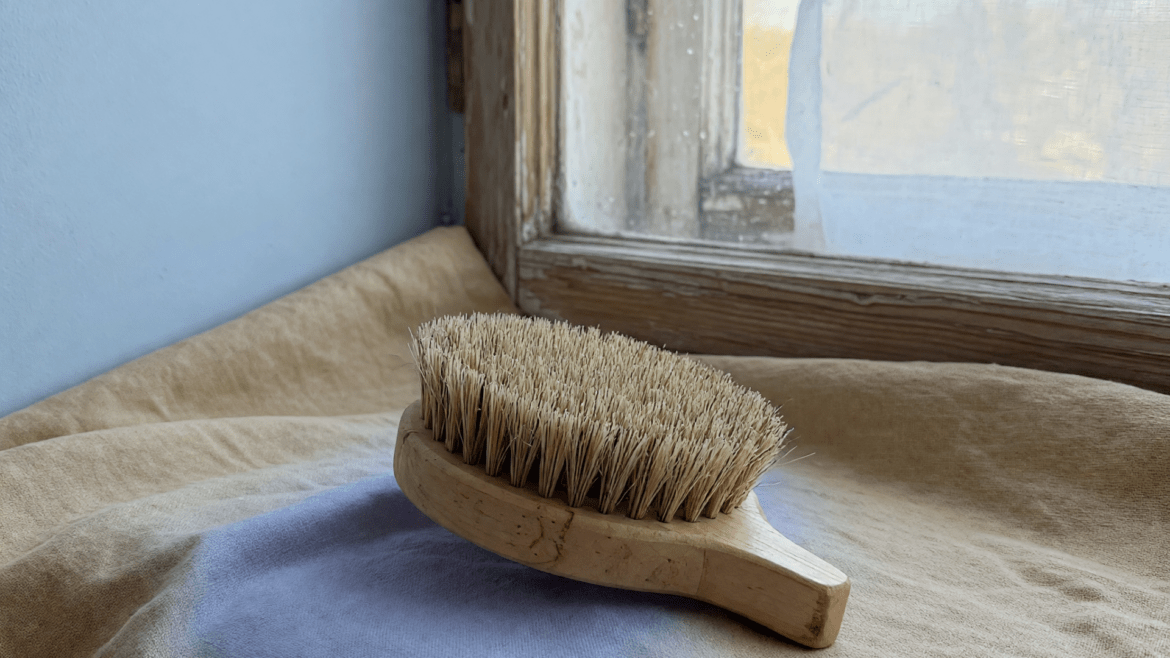
A moment of self-care
Regular dry brushing is one of those simple self-care steps that are easy to build into your routine: just a few minutes are enough to take some time out for yourself.
Exfoliates the skin
Brushing gently lifts away impurities and dead skin cells with ease. It helps remove dead cells and surface debris from the skin. The result? Smoother, exfoliated skin, cleaner pores, and naturally softer skin.
What about cellulite?
There is currently no scientific evidence conclusively proving the effectiveness of this massage on cellulite. That said, dry brushing does help lift away dead cells from the surface of the skin, and it can easily fit into your routine. By combining it with cellulite massage, dry brushing then has its place in your skincare routine.
💪🏻 COACH’S TIP 💪🏻
To go further than your anti-cellulite dry brushing routine, try our method using the Cellublue anti-cellulite cup: your go-to tool for caring for the look of orange peel skin on the buttocks, thighs, stomach, arms, and more.
Find everything you need in our 100% Anti-Cellulite Pack, which includes the complete 3-step method to pamper dimpled skin. Inside the pack, you’ll find:
=> 1 anti-cellulite cup made from pure silicone for performing the pinch-and-roll massage
=> 1 Massage Oil with a monoi fragrance, specially formulated for the pinch-and-roll technique.
=> 1 Orange Peel Massager to knead the skin using two silicone spike rollers that complement the action of the cup.
=> 1 Bye-Bye Cellulite coaching guide in PDF format to support you every day, with meal ideas, at-home workout routines, and expert tips for getting the most out of your Cellublue anti-cellulite cup massage sessions.
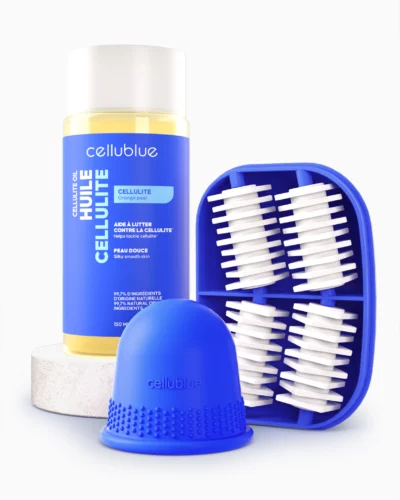
The Cellublue method to smooth the look of your skin
- Exclusive Cellublue design
- Anti-Cellulite Cup: recreates palper-rouler, gently lifting and massaging the skin
- Orange Peel Massager: visibly smooths the look of skin on the surface
Frequently asked questions
How do you use an anti-cellulite brush?
On dry skin, start at your feet and work your way up the body towards the heart, using circular movements. Press a little more firmly where the skin is thicker and more lightly where it is thinner. Then have a shower and moisturise your skin.
How often should you dry brush?
A few minutes before your shower is all it takes. 2 to 3 sessions per week with the brush are a good starting point. During your first sessions, take it easy and use gentle pressure while your skin gets used to it.
Can you dry brush if you have sensitive skin?
Dry brushing isn’t recommended on very dry, sensitive, irritated or damaged skin. Also avoid any areas with small cuts, eczema or skin that is red from too much sun. If you have any doubts, ask your GP or another medical professional for advice.
Should you brush hard?
No, definitely not! The idea isn’t to scrub your skin raw. Simply adjust the pressure to each area: a little firmer on the feet, where the skin is thicker, and lighter where the skin is thinner.
Related articles
- Dry brushing: why you absolutely need to try it
- What is the difference between cellulite and orange peel skin?
- TEST: What is my cellulite type?
Useful categories: All About Cellulite.