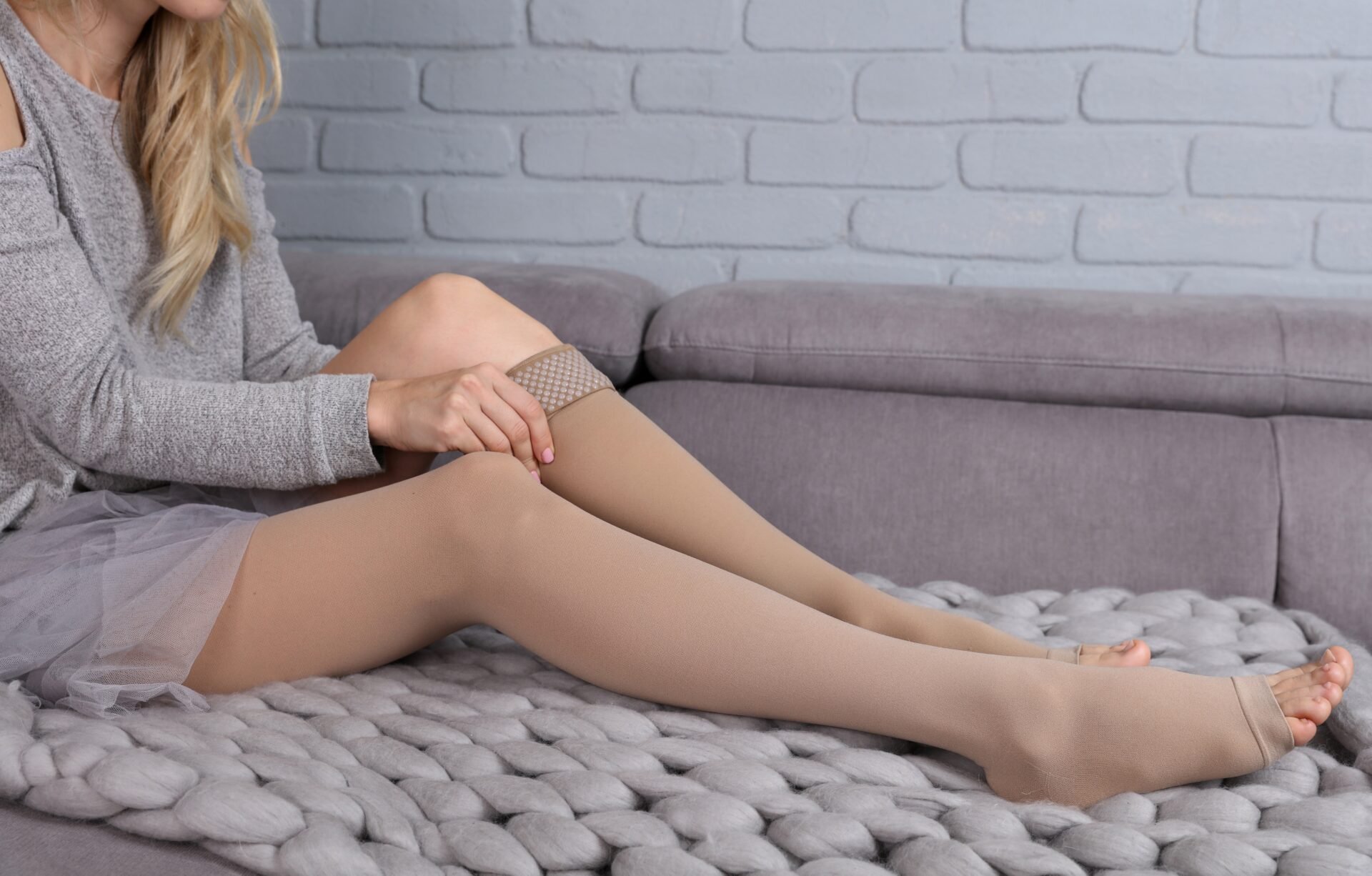
Among the strange anti-cellulite trends circulating online, there’s one that would have our grandmothers raising an eyebrow: compression stockings. These compressive garments, typically reserved for cases of severe venous insufficiency, are now being considered as a solution for dimpled skin. But do compression stockings actually have any effect on cellulite?
What are compression stockings?
These are stockings made from a highly elastic material that apply firm pressure to the legs. This intense compression helps promote better venous circulation and, in turn, improved blood flow back to the heart.
1- When are compression stockings recommended?
Compression garments are primarily intended for people with venous insufficiency of varying severity, particularly those at risk of complications such as varicose veins, ulcers, venous thrombosis (or phlebitis), and pulmonary embolism.
They are also recommended for pregnant women from the 3rd month onwards, as intense hormonal fluctuations during pregnancy can cause venous return issues.
Compression stockings may also be considered in cases of chronic lymphatic insufficiency, as compression helps stimulate lymph circulation. They are therefore recommended in cases of lymphoedema.
2- What types of compression garments are available?
While we often refer to stockings, compression garments come in several formats: socks, stockings or tights, covering all or part of the legs. Compression bandages also exist, but these are reserved for the most severe cases and are generally applied by a healthcare professional. There are also sleeves (for the arms) and gloves (for the hands).
Finally, the level of compression varies depending on the severity of venous insufficiency. Compression garments are therefore categorised into 4 different classes.
Do compression stockings have an effect on cellulite?
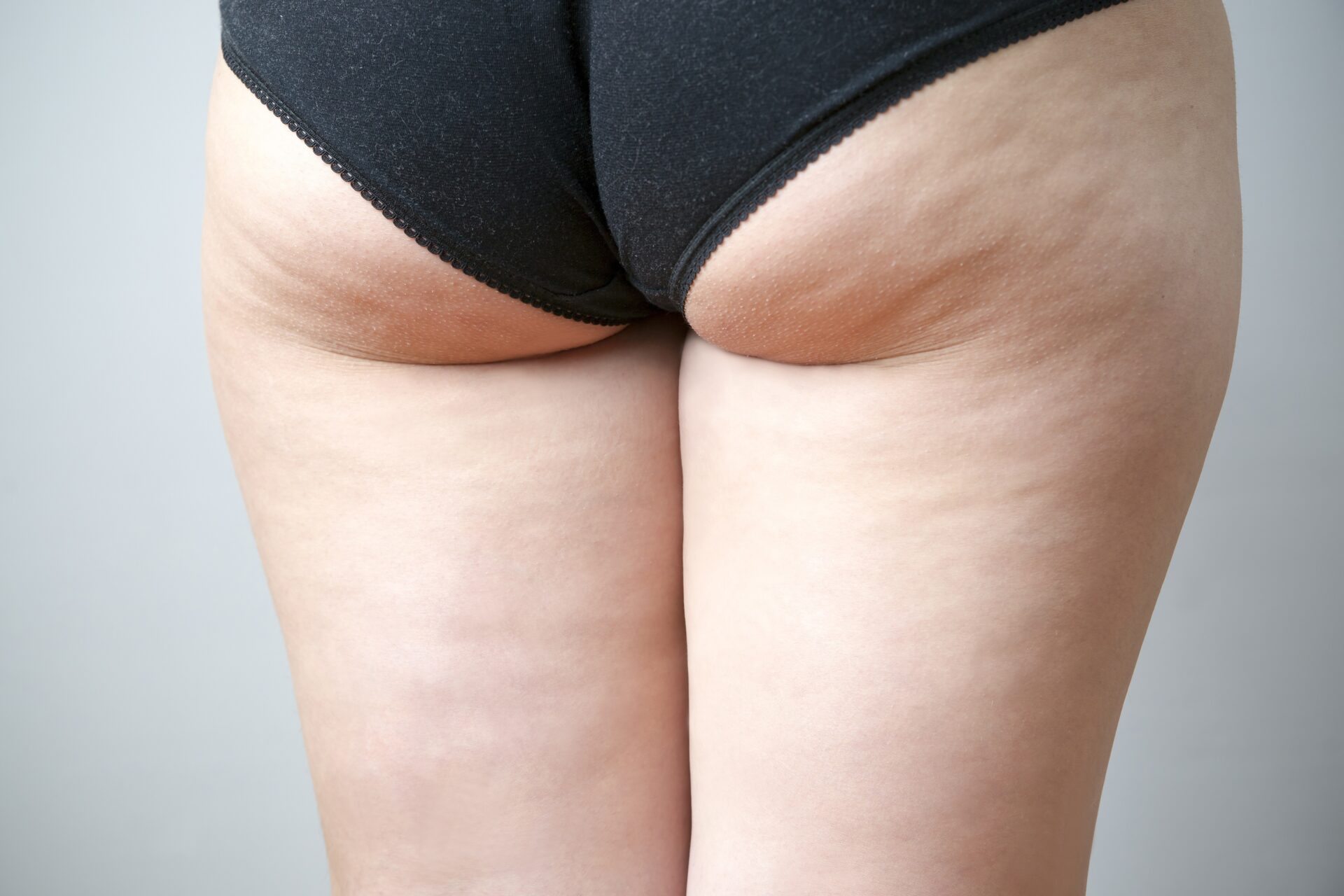
1- Compression stockings: useful for all types of cellulite?
First of all, it depends on which type of cellulite we’re talking about. There are 3 types:
- adipose cellulite, characterised primarily by adipocyte atrophy;
- fibrous cellulite, painful and deeply embedded, caused in part by a hardening of the subcutaneous elastic network;
- aqueous cellulite, caused by water retention.
In the first two cases, wearing compression stockings seems of little benefit. These types of cellulite are not triggered by circulatory weakness, but rather by lifestyle factors: a rich diet combined with a sedentary routine. Stress, genetics and hormonal fluctuations can also contribute to the development of this type of cellulite.
2- The effects of compression stockings on aqueous cellulite
In the case of aqueous cellulite, the answer is somewhat different. Sometimes referred to as infiltrated cellulite or hydrolipodystrophy, it is caused by water infiltration into the tissues. It becomes trapped there, compressed by the adipocytes, and cannot be naturally eliminated. This leads to swelling and oedema, particularly in the lower limbs (as gravity takes its toll).
Aqueous cellulite is caused either by venous insufficiency, lymphatic insufficiency, or a combination of both.
- In cases of venous insufficiency: the blood no longer fulfils its role of distributing nutrients effectively. The veins dilate and become porous, allowing interstitial fluid to leak into the tissues. Blood also pools in the lower body — this is known as venous stasis. The legs swell and feel heavy.
- In cases of lymphatic insufficiency: lymph circulation becomes impaired. It can no longer drain the excess fluid and toxins trapped in the tissues. As a result, the skin becomes congested and swollen, further compressing the vessels.
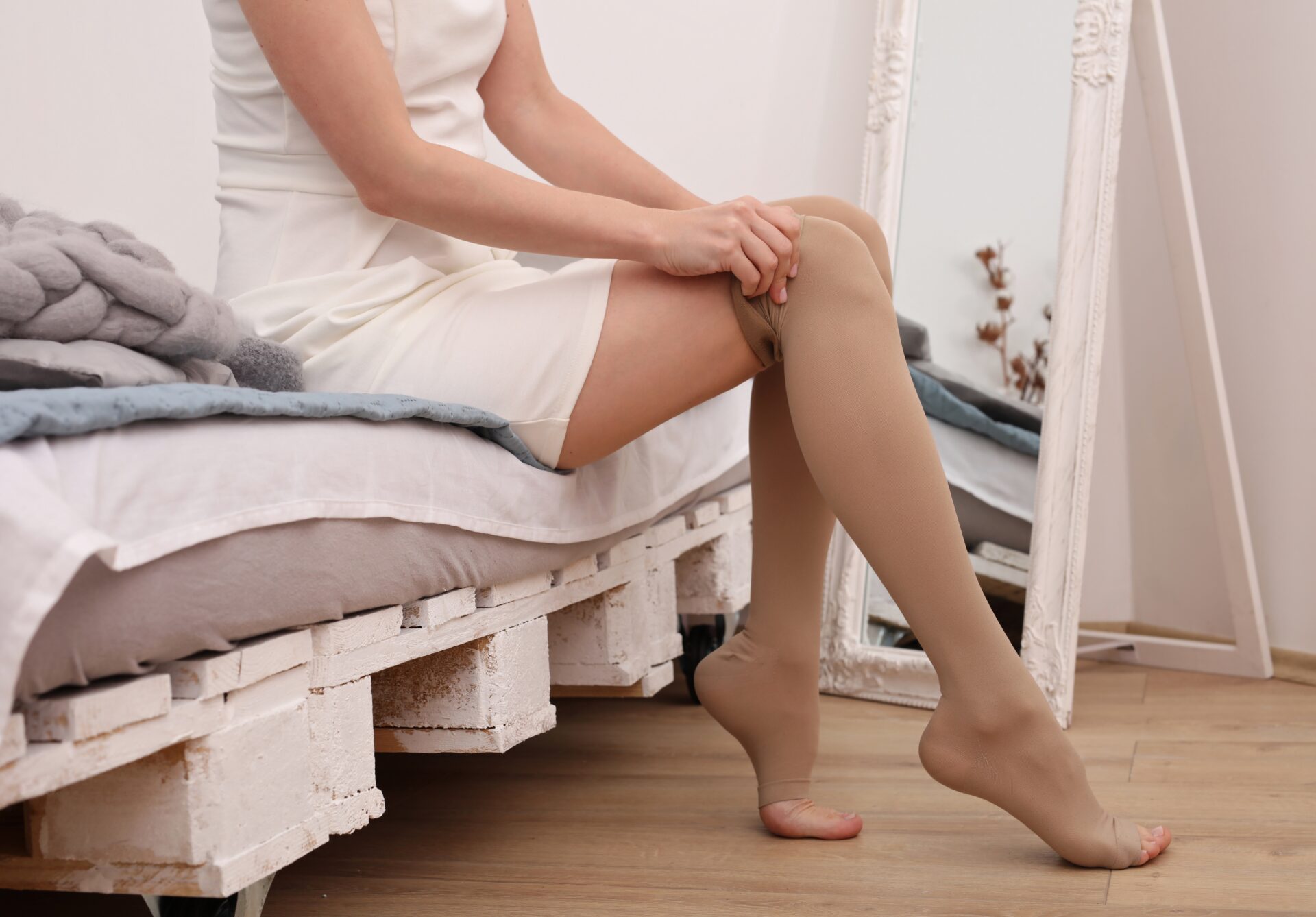
Wearing compression stockings may help relieve veno-lymphatic insufficiency, as they use compression to support circulatory activity. They are not a miracle solution, but they do offer a way to stimulate the circulation of fluids. They may therefore have a mild positive effect on cellulite, but only in confirmed cases of aqueous cellulite.
It is also worth noting that in cases of mixed cellulite (a combination of adipose and aqueous cellulite), their effectiveness will be limited. They may help to reduce water retention and the associated discomfort, but they will in no way address excess adipocyte build-up. This can only be tackled through a balanced diet, regular physical activity, and massage techniques such as palpate-roll (for example using our Cupping Massager and our Massage Oil).
Before reaching for a pair of compression stockings, take the time to identify your cellulite type — your doctor can help — and always seek professional advice (such as from a pharmacist) before choosing a compression garment.