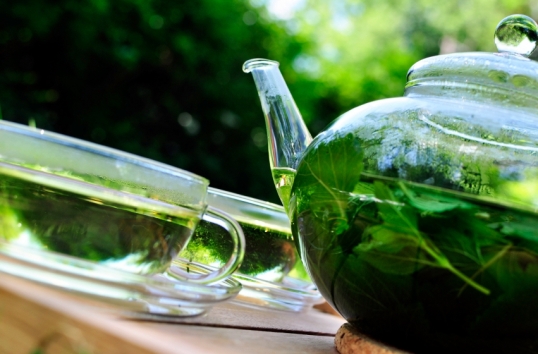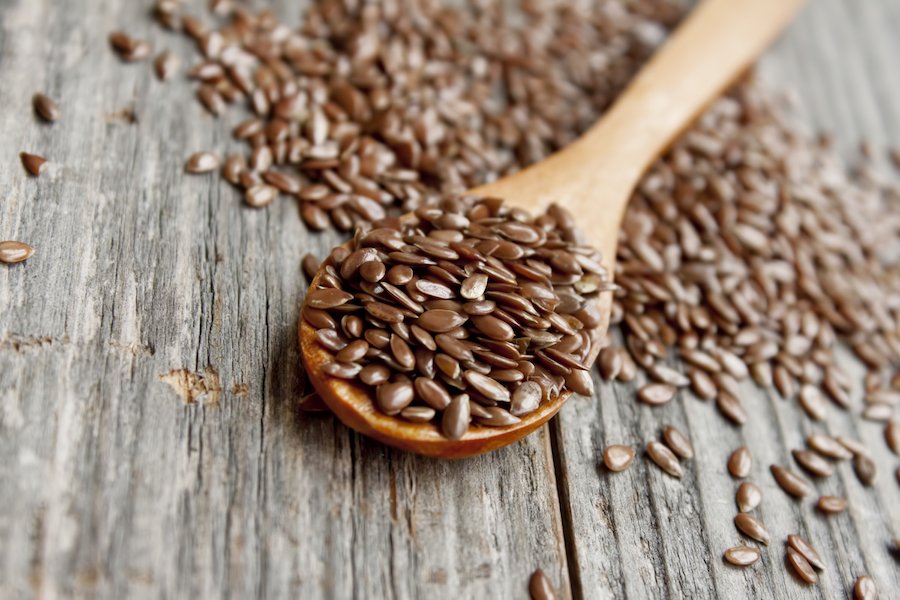
Fancy a warm, simple and natural drink? Discover the flaxseed infusion: a drink made from a little seed packed with nutrients, and easy to fit into a varied diet. All as part of a balanced lifestyle, of course!
Here’s what we’ll cover: what makes flaxseed so appealing, how to make a flaxseed infusion, and other ways to enjoy this little seed every day, whether ground, as an oil, sprouted or toasted.
The nutritional benefits of flaxseeds
Before looking at how flaxseeds fit into your daily routine, let’s take a closer look at their nutritional profile. Because this little brown seed has a lot to offer!
- A source of fibre: it has a high content of fibre (27.3g per 100g).
- Plant-based protein: flaxseeds are a good source of protein, making them a favourite among vegetarians, vegans, and anyone looking to eat less meat in favour of plant-based proteins.
- Gluten-free: flaxseeds contain no gluten, making them suitable for those who avoid gluten. If you have an allergy or intolerance, ask your doctor for advice.
- Unsaturated fatty acids: one of flaxseeds’ notable features is their content of mono- and polyunsaturated fatty acids, often called the “good fats”, which make them a nice addition to a varied diet.
- Lignans: they contain lignans, natural plant compounds found in the seed. For your skin, though, dryness is best handled with a suitable skincare routine.
- Phyto-oestrogen: those same lignans are phyto-oestrogens, plant-based compounds. If in doubt, particularly during the menopause, ask your doctor for advice.
- Iron: flaxseeds contain iron.
Flaxseeds as part of a varied diet
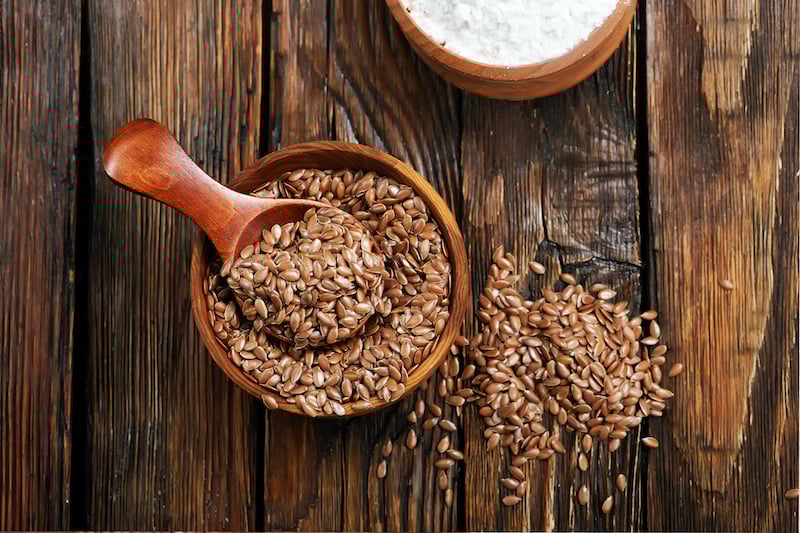
Flax, much like apple cider vinegar or nettle, is one of those natural ingredients we love to include in a varied diet! Yet no single food can make cellulite disappear: it’s the overall balance of your lifestyle that counts. Rich in essential fatty acids, it helps you vary your meals. Thanks to all its nutrients, it fits easily into a varied diet, alongside regular exercise and your usual body care routine!
Magnesium, zinc, iron, potassium, omega-3 and omega-6… Flaxseeds really do have it all! A flaxseed infusion can be enjoyed between meals, depending on your habits. Flaxseeds are also easy to use in the kitchen: stirred into salads or baked into bread. So why not enjoy this remarkable ingredient in a delicious infusion that’s incredibly easy to make!
How to prepare a flaxseed infusion?
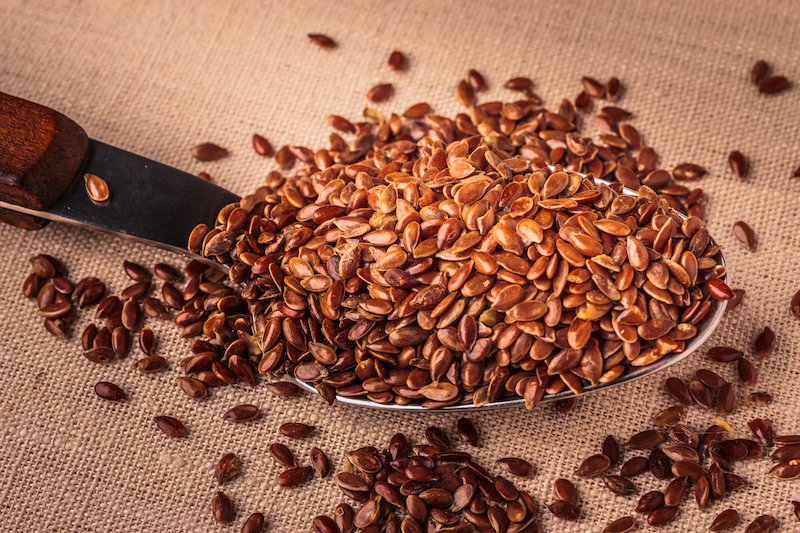
It couldn’t be simpler! All you need is one litre of boiling water and 3 tablespoons of flaxseeds, around 45g. You’ll find flaxseeds at some markets or in health food and organic stores. Add the flaxseeds to the boiling water, then leave the mixture to steep overnight. The next day, you can enjoy this rather thick flaxseed infusion — a 200–250 ml cup, 4 times a day, half an hour before each meal or snack.
You can enjoy it for around ten days, then take a ten-day break before starting again. As a complement, don’t forget to adjust your diet (fresh produce, adequate protein intake, herbal teas, etc.) and mix up your physical activities!
Other ways to use flaxseeds
Beyond the flaxseed infusion, you can use these little seeds (brown or golden — it doesn’t matter!) in a variety of ways:
- As a powder: simply grind your flaxseeds and add the powder to recipes of your choice: bread dough or pancake batter, as a seasoning for various dishes, a sauce binder, or stirred into porridge…
- As an oil: flaxseed oil is widely available. Opt for an organic, cold-pressed variety. Avoid heating it and use it for dressings instead. Store it in the fridge and use it within 3 months of opening. Flaxseed oil is also popular in skin and hair care. It can be used on oily skin as well as on dry skin and hair, and can even complement your stretch mark care routine!
- As a poultice: steep 50g of crushed or ground flaxseeds in boiling water for 10 to 15 minutes, then apply the warm, moist mixture as a poultice. If you suffer from skin inflammation, ask your doctor for advice first.
- Sprouted: you can easily sprout your flaxseeds and add them to salads as a wholesome ingredient in their own right!
- Toasted: you can also toast or roast your flaxseeds and sprinkle them lightly (yes, we did say lightly!) with salt. They make a crunchy little snack that’s utterly moreish!
💪🏻 COACH’S TIP 💪🏻
You can also count on the Cellublue anti-cellulite cup to complement your massage routine and care for the look of your skin every day!
The cupping tool that replicates pinching and rolling, 3 minutes per zone
- The professionals' technique, at home: you lift, glide, and release, and the tool grips the skin fold like a manual pinching and rolling
- Soft silicone that fits thighs, buttocks, stomach, and arms
- 3 minutes per zone, every day, always with a massage oil so the tool glides
Frequently asked questions
How can I include flaxseed in my daily routine?
The simplest option is a flaxseed infusion, left to steep overnight. You’ll find all the steps in the “How to prepare a flaxseed infusion?” section above.
How else can I use flaxseed, apart from an infusion?
You can grind the seeds and add the powder to bread dough, pancake batter or porridge. You can also sprout them for your salads, or toast them with a little salt for a snack. Flaxseed oil, on the other hand, is best kept for dressings.
Can you heat flaxseed oil?
It’s best to avoid heating it and keep it for dressings. Choose an organic, cold-pressed oil, store it in the fridge and use it within 3 months of opening. It can also be used in skin and hair care.
Should I choose brown or golden flaxseed?
It doesn’t matter! Brown and golden flaxseeds are used in exactly the same way: in an infusion, ground, sprouted or toasted. You’ll find them at some markets or in organic and natural food shops.
Related articles
- Christmas Goal Challenge: follow our 4 brand ambassadors!
- Cellulite Challenge: 14 Days of Exercise, Recipes and Care
- Silicone cupping: how to choose the right one?
Useful categories: Anti-Cellulite Diet.