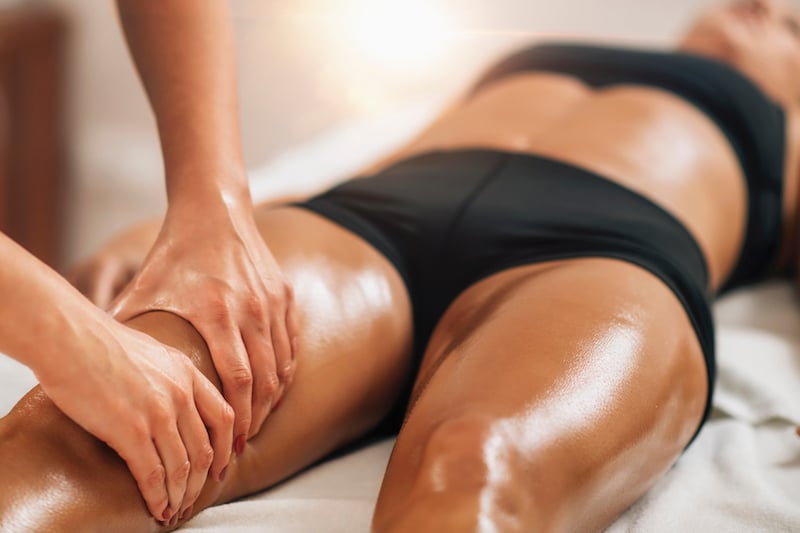
The other day, as you were trying on your new shorts in front of the mirror, you spotted it. That subtle orange-peel texture delicately scattered across your thighs, slender as they are… What if it was water retention cellulite, linked to venous insufficiency? What can you do to get rid of it? Two magic words: lymphatic drainage.
What is lymphatic drainage?
Manual drainage is a massage technique used for both medical and aesthetic purposes. Lymph — a colourless fluid that circulates through our lymphatic vessels — works to carry toxins and waste towards the lymph nodes. These nodes, found throughout the body, filter the lymph and produce the antibodies we need to stay healthy. But what happens when the lymphatic system becomes congested? A general inflammation sets in, causing a range of issues: skin problems, digestive discomfort, and circulatory concerns. Lymphatic drainage is designed to encourage the smooth flow of lymph through the vessels. It is typically performed by a physiotherapist or a qualified beauty therapist. The technique involves gentle, precise movements: first, the lymph nodes are “opened” with light pressure, then the lymph is “pushed” towards the heart through soft pumping motions.
Benefits of lymphatic drainage for cellulite
Lymphatic drainage is highly beneficial for the body, especially for women dealing with water retention cellulite. This type of cellulite stems from water retention, itself caused by venous and lymphatic dysfunction. By boosting venous return and promoting smooth lymph circulation through drainage, water is prevented from stagnating beneath the skin and can be naturally eliminated. And it is precisely this “stagnant” water that causes water retention cellulite — a soft, painless type that gives the skin a puffy appearance, typically concentrated in the lower body (gravity does its part): the stomach, thighs and legs. Lymphatic drainage can literally deflate and smooth out cellulite.
How to go about it?
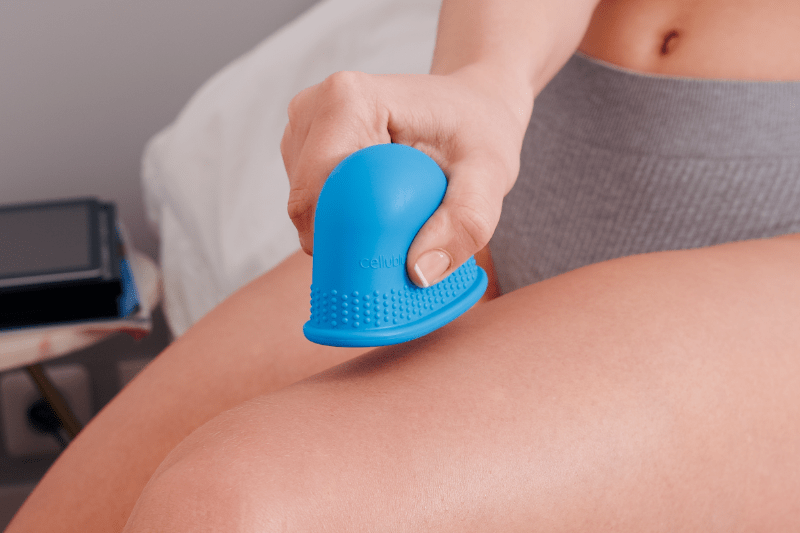
Performing a proper lymphatic drainage at home, by the book, is not really possible — unless, of course, you happen to be a physiotherapist! That said, the benefits of anti-cellulite massage are undeniable. Good massage oils, combined with movements that mimic lymphatic drainage, can certainly help reduce the appearance of cellulite. The best routine to adopt for water retention cellulite on the stomach, thighs and legs is as follows:
- Exfoliate! Choose a gentle scrub, apply it to damp skin using small circular motions, working from the bottom upwards. Rinse off with a cold water jet, starting from the legs and moving up to the stomach. This prepares the skin to receive the massage while mimicking the movements of manual lymphatic drainage.
- Moisturise! Choose a rich massage oil, ideally one with anti-cellulite active ingredients to maximise results.
- Massage! There are massage tools designed to replicate the typical lymphatic drainage movements recommended for cellulite. The cupping tool suctions and breaks down cellulite, while the orange-peel massager, fitted with spiked rollers, has a draining action similar to manual drainage. Just 3 minutes of daily massage per area, starting from the lower body and working upwards, is enough to smooth out water retention cellulite.
