
Stretch MarksStretch Mark SolutionsStretch Mark Care What are the benefits of wheat germ oil?

What are the benefits of wheat germ oil?

par
huile-germe-blé-bienfaits

Natural plant oils are true beauty elixirs. They are more often celebrated for their nutritional qualities than for their skin benefits — which is a real shame! But times are changing, and more and more women are incorporating oils into their beauty routines. So, can wheat germ oil also be used on the skin? And does it have anything to offer when it comes to stretch marks?

A closer look at wheat germ oil

huile-germe-blé-bienfaits-zoom

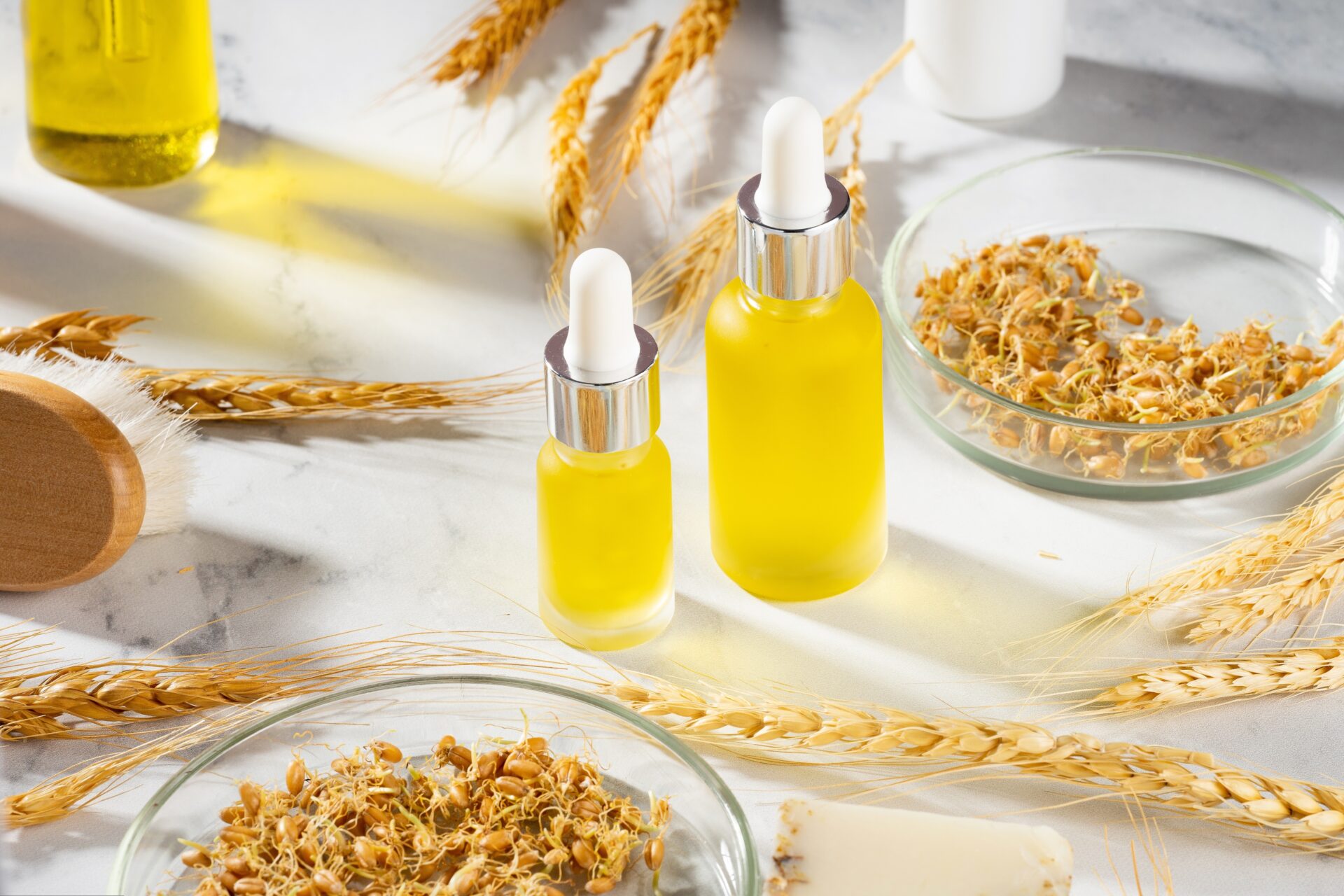
First things first — let’s take a look at how wheat germ oil is made. It is extracted by pressing the germ of wheat grains. The germ is the reproductive part of the cereal, destined to become the future plant. Accounting for around 3% of the grain’s total weight, it is also the part that contains the vast majority of nutrients: fatty acids (essential and non-essential), vitamins, and minerals.

To ensure optimum quality, it is best to choose a wheat germ oil extracted by cold first pressing. This guarantees that all its benefits are preserved. It should be thick, with a deep golden-orange colour, a rich, greasy feel, and a characteristic cereal scent. It is also worth noting that wheat germ oil is sensitive to oxidation, due to its very high content of polyunsaturated fats. It is therefore recommended to store it in a cool place, away from air and light — otherwise it may turn rancid.

Wheat germ oil can be eaten: it is a true nutritional treasure and helps reduce bad cholesterol. However, it must be consumed raw, as heat destroys most of its beneficial properties. Beyond the kitchen, it also works wonders on skin and hair, which is why it is regularly used as a care oil.

Benefit of wheat germ oil no1: a natural anti-wrinkle

This is one of its most well-known properties, and for good reason: its exceptional vitamin E content — it is one of the richest natural plant oils in this regard — along with its linoleic acid and plant squalenes.

  • Tocopherol (the other name for vitamin E) naturally present in the oil is antioxidant: it helps eliminate excess free radicals, which are responsible for oxidation and therefore premature skin ageing.
  • As for linoleic acid, it is an essential fatty acid (the body cannot produce it on its own) from the omega-6 family. Its role is to restore the skin’s cellular cohesion and reinforce its lipid barrier — the skin’s true protective shield against external aggressors.
  • Finally, squalenes are fat-soluble antioxidants that work in synergy with vitamin E to neutralise UV-induced oxidation.

In this way, wheat germ oil helps prevent the appearance of wrinkles and slows their development, while supporting cellular regeneration.

Benefit no2: a proven anti-inflammatory action

The second key quality of wheat germ oil: its action on skin inflammation.

  • This property is due to its content of alpha-linolenic acid, an omega-3 known for supporting the circulatory system while maintaining the skin’s mechanical properties. Wheat germ oil can therefore soothe redness and skin irritations, both through its emollient and softening action and its anti-inflammatory benefits.
  • It also contains octacosanol, a saturated primary alcohol, which further contributes to the prevention of skin irritations and conditions.

Wheat germ oil is therefore a wonderful ally for sensitised, irritated, or reactive skin — whether dealing with redness, sunburn, or eczema-prone skin.

One caveat: it is not suitable for acne-prone skin, as the palmitic acid it contains has too occlusive an effect (it can clog pores and cause breakouts).

Benefit no3: moisture retention and a softening effect

Wheat germ oil contains one more fatty acid: oleic acid. This omega-9 stands out for its composition, which is very close to that of sebum (which contains around 30% of it). Sebum plays multiple roles: it acts as a skin lubricant, contributes to the hydrolipidic film (the skin’s natural barrier against external aggressors) and maintains hydration in the deeper layers of the epidermis, preventing water loss. As a result, the skin — better hydrated and protected — retains its elasticity and regenerates more easily.

Can wheat germ oil help prevent and reduce stretch marks?

huile-germe-blé-bienfaits-vergetures

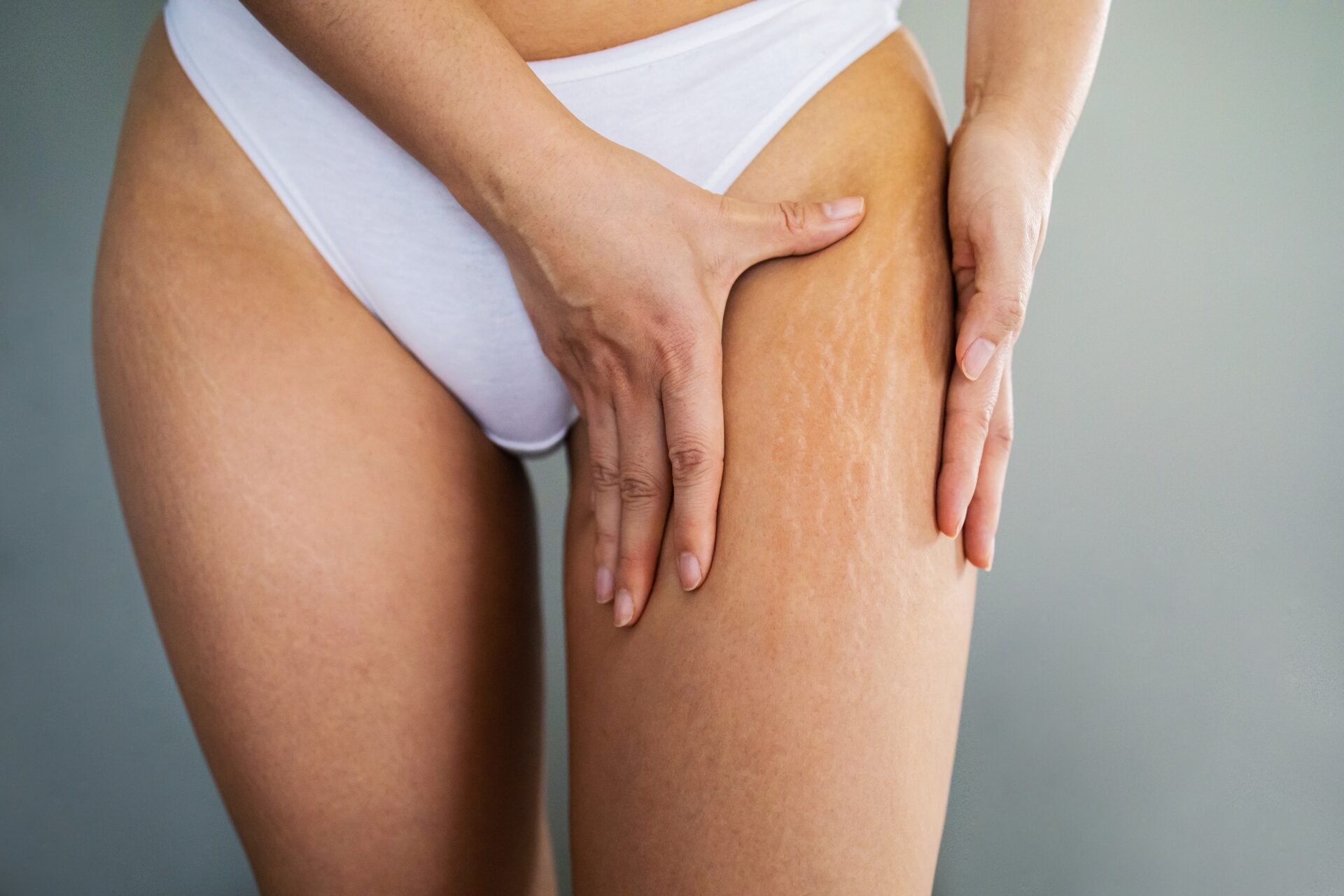
Absolutely! It is in fact regularly used for this very purpose. It helps prevent the appearance of stretch marks, as it supports the skin’s mechanical properties (resilience, elasticity and suppleness), while combating the skin dryness that can lead to tearing. It also works as a treatment to help reduce them, thanks to its anti-inflammatory properties. It works particularly well on recent stretch marks — whether red or purple — by calming subcutaneous inflammation and boosting the regeneration process.

How to use wheat germ oil as an anti-stretch mark treatment?

1- Combined with other oils

Wheat germ oil can be used on its own, applied directly to the skin. However, its low absorption rate, greasy feel, and thick, rich texture can make it less comfortable to use.

It is therefore recommended to use it in synergy with other natural plant oils that have a drier feel and better absorption. Good options include jojoba oil, macadamia oil, hazelnut oil, or rosehip oil.

It can also be combined with essential oils (provided you are not pregnant) — for example mandarin, lavender, rosewood, or Italian helichrysum (immortelle).

2- As an anti-stretch mark balm

Wheat germ oil is also ideal for making homemade anti-stretch mark balms: simply melt some shea butter or cocoa butter with a little beeswax in a bain-marie, add a little wheat germ oil to the mixture once removed from the heat, stir in a few drops of rose geranium essential oil, then pour everything into a jar and store in the fridge.

3- In an anti-stretch mark scrub

Finally, wheat germ oil can be incorporated into a body exfoliant (homemade or otherwise). Scrubs are effective both for preventing and treating stretch marks:

  • they remove dead skin cells;
  • the mechanical action of massage helps to stimulate microcirculation and, in turn, cellular regeneration (and therefore dermal repair);
  • the active ingredients in the formula, such as wheat germ oil, also help to nourish the skin and maintain its suppleness and softness.

That is why, at Cellublue, we chose to include this oil in the formulation of our Anti-Stretch Mark Scrub.

Its properties:

  • it gently exfoliates the skin;
  • its ultra-clean formula makes it suitable for all skin types and all types of stretch marks;
  • its exceptionally gentle texture means it can be applied 2–3 times a week;
  • its natural active ingredients target stretch marks at their source — nourishing and softening mango butter, combined with emollient, anti-inflammatory and soothing wheat germ oil.

VOUS AIMEREZ AUSSI...