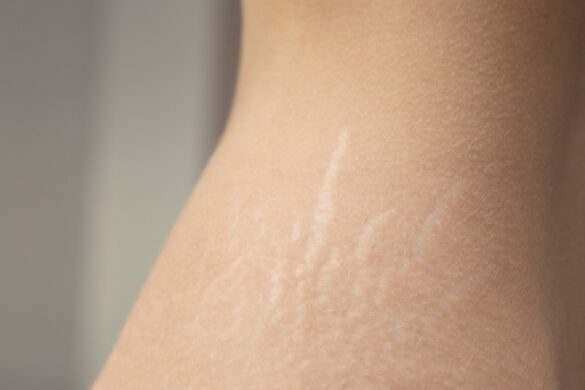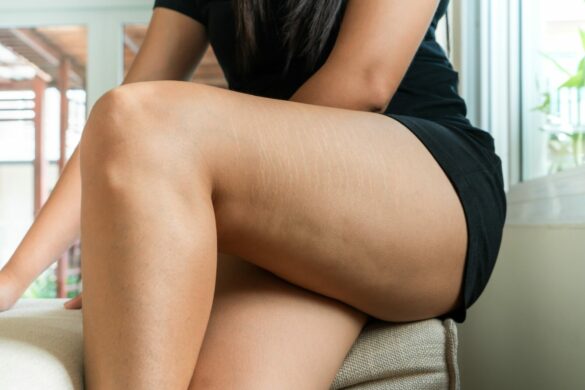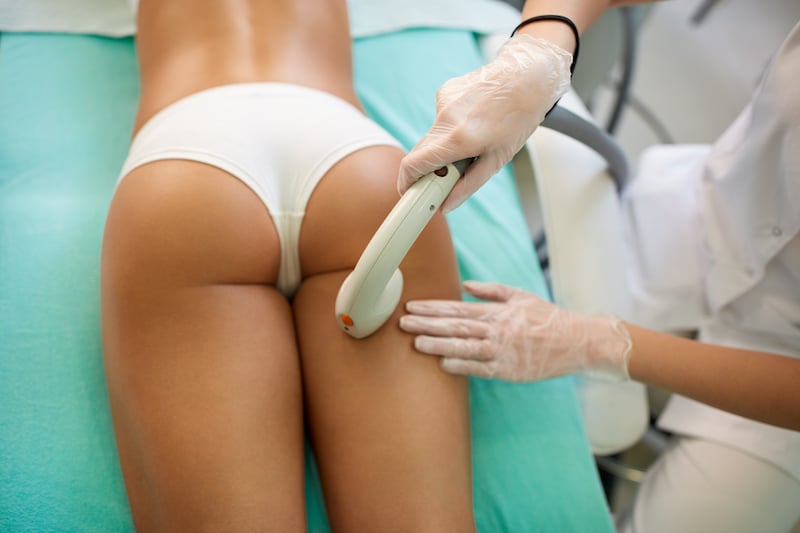
Your stretch marks are a major source of self-consciousness, and you’re considering a cosmetic procedure. With so many techniques on offer, though, it’s hard to know where to start. Don’t worry! This guide covers the aesthetic medicine treatments (injections, carboxytherapy, micro-needling, laser, LED lamp, radiofrequency and peeling), including how each one works and what it costs. It then looks at the only surgical option for stretch marks, abdominoplasty (a tummy tuck), including who it’s for and what it involves.
Aesthetic medicine for stretch marks: the different techniques
Aesthetic medicine and plastic surgery for stretch marks are two very different things. The former is often non-invasive or minimally invasive. It can be carried out without anaesthesia, or with a light local anaesthetic, and involves little aftercare. The latter is surgery in the full sense of the word, with all that entails. With that in mind, here is an overview of the main aesthetic medicine techniques used for stretch marks. Every skin responds differently, and only a doctor can tell you which technique is right for yours.
1- Plasma injections
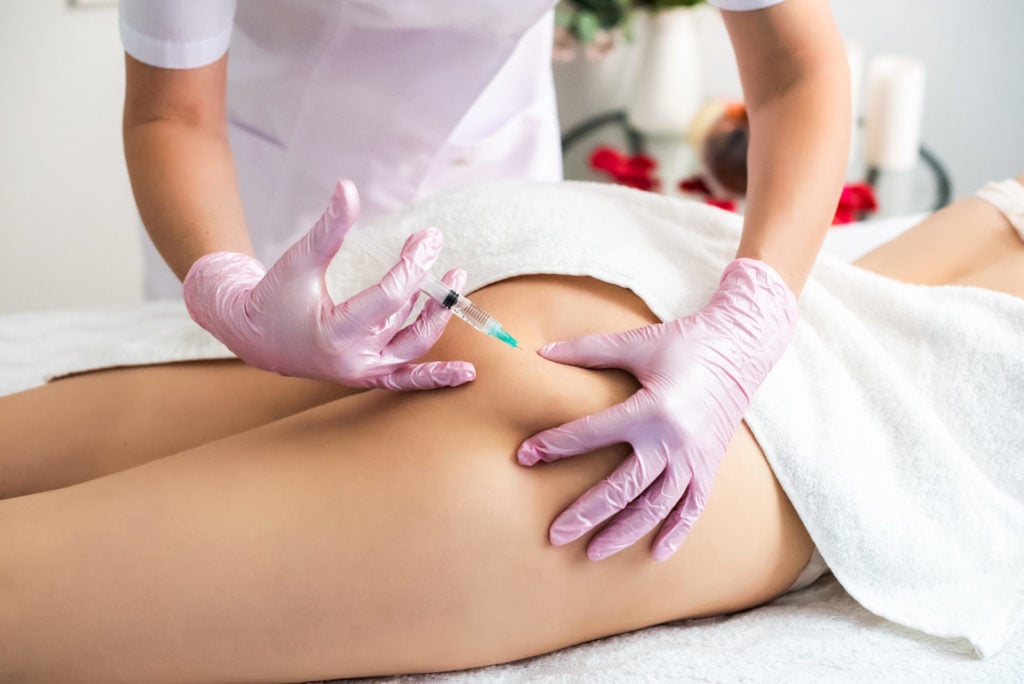
Platelet-rich plasma (PRP) injections are an aesthetic medicine procedure. They can be performed on any area of the body.
A session lasts between 20 minutes and 1 hour, and begins with a blood draw. The blood is then centrifuged to extract the platelet-rich plasma. Once isolated, it is re-injected into the area with stretch marks using a fine needle. The injections cause minimal discomfort, but for those with greater sensitivity, a numbing gel can be applied beforehand. A course of 3 to 5 sessions, spaced one month apart, is usually recommended.
In some cases, PRP treatment can be combined with autologous fat injections (lipostructure). Tiny fat cells are harvested from the patient via micro-liposuction, then re-injected into the area concerned.
Any changes are generally assessed after around 3 months. Once the full course is complete, a few maintenance sessions a year are usually suggested. The cost of a PRP injection session ranges from €300 to €600, depending on the practitioner and the size of the area being treated.
2- Carboxytherapy
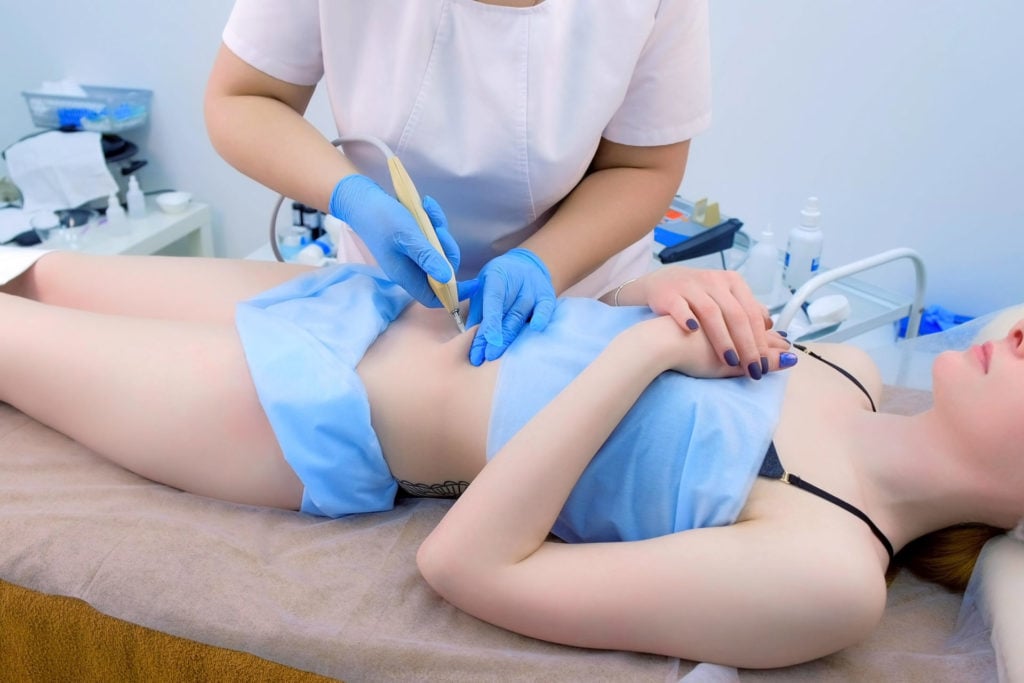
Carboxytherapy (also known as carbotherapy) is a technique that involves injecting sterile medical-grade carbon dioxide gas subcutaneously using a very fine needle. The injected gas is intended to support tissue renewal. Existing stretch marks may then look less visible as the skin regains suppleness and elasticity.
A session lasts between 20 and 30 minutes and requires no anaesthesia. The practitioner injects CO2 into each stretch mark at a low flow rate using a very fine needle. The stretch marks may swell temporarily and the skin may redden. The gas disperses very quickly, and the redness fades just as fast. A course generally involves 6 to 12 sessions per area, at a rate of one session a week or every two weeks. After the initial course, maintenance sessions are usually scheduled every 3 to 6 months. As for cost, a session ranges from €50 to €150.
3- Micro-needling
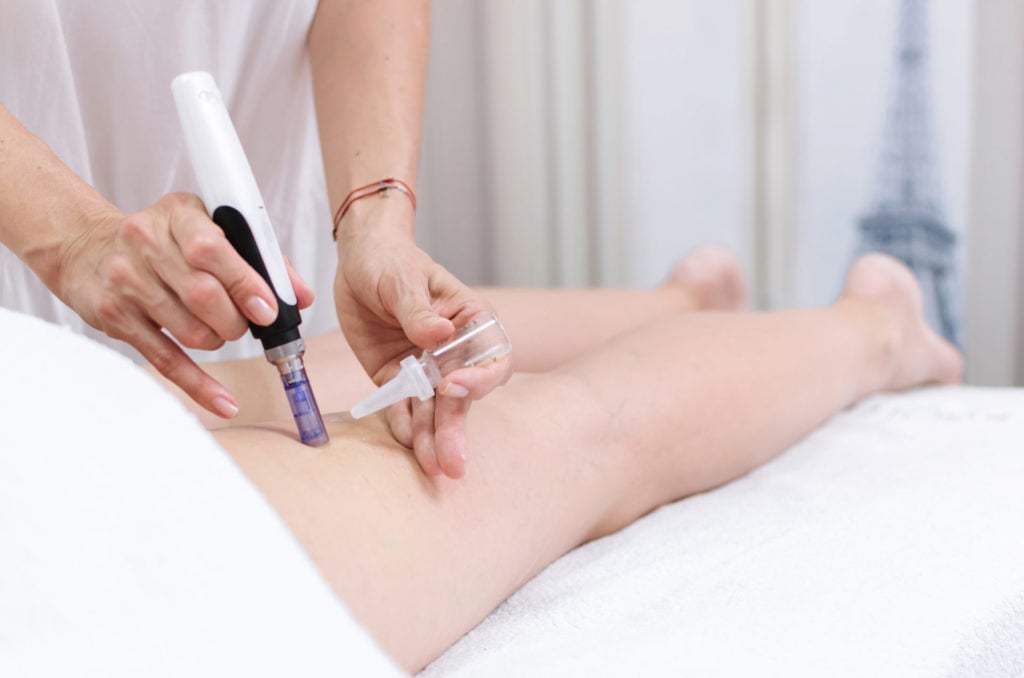
Micro-needling is a relatively recent aesthetic technique, often offered for stretch marks, particularly when they are recent (red or purple stretch marks). A practitioner passes an electric pen over the stretch marks. The pen is fitted with several sterile, single-use micro-needles of varying lengths (0.5 to 3 mm), which create micro-perforations across the different layers of the dermis. The procedure is followed by the application or injection of products such as silicon, hyaluronic acid and vitamins.
A micro-needling session lasts between 30 and 60 minutes, depending on the size of the area being treated. The sensation is tolerable, if not entirely comfortable. If the procedure proves too painful, the practitioner can apply a numbing gel beforehand. A little minor bleeding may occur after each session. A course usually involves an average of 3 to 4 sessions, spaced two weeks apart. The cost ranges from €150 to €300 per session.
 -33%
-33%The cream and booster duo for established stretch marks
- Stretch Mark Cream morning and evening: three plant oils and a velvet texture that nourishes and soothes
- Elasticity Booster: a few drops of ultra-concentrated aloe vera, to be mixed with a dollop of cream
- The same routine as usual, with an added concentrate, on the tummy, hips, thighs and bust
4- Laser
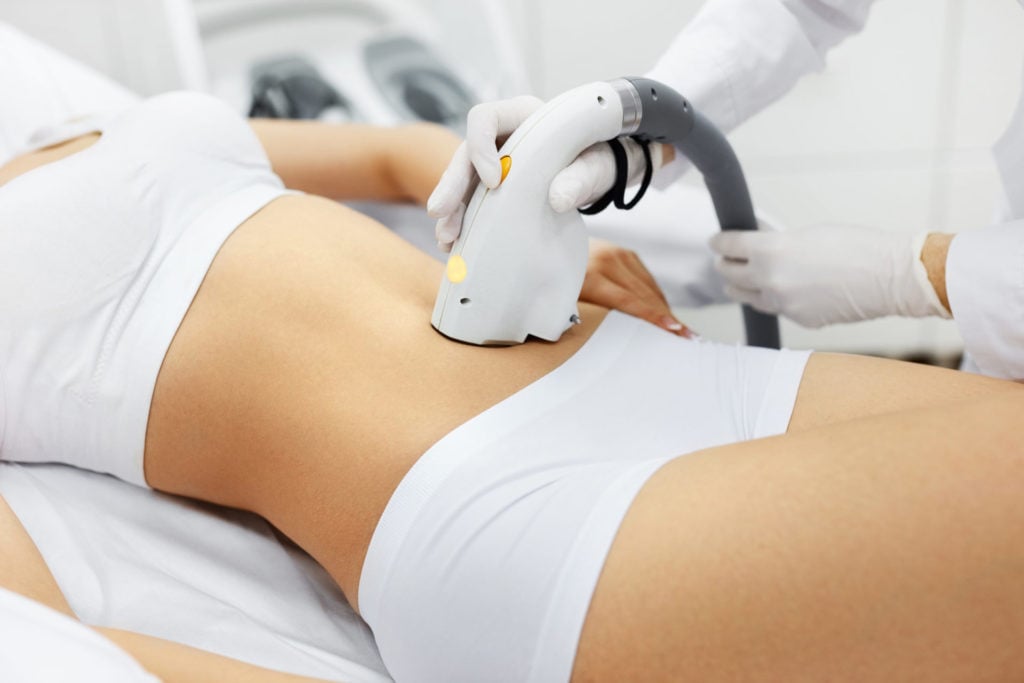
It would be more accurate to speak of lasers, as several types exist, chosen according to the severity and pigmentation of the stretch marks and the patient’s skin type.
- Ablative fractional laser: designed for thicker skin with mature stretch marks. This laser is designed to remove layers of skin. The healing period lasts between 3 and 10 days, with redness and scabbing. The technique is relatively aggressive and is not recommended for sensitive skin or delicate areas.
- Non-ablative fractional laser: less aggressive than the previous option, this laser technique targets the dermis without damaging the epidermis. It works by heating the deeper layers of the skin.
- Vascular laser: this approach directs pulsed light at the stretch marks, with a focus on their colour. It is mainly offered to people with recent stretch marks that are still red or purple.
Laser-based techniques usually involve at least 5 sessions. Each session costs between €150 and €300. Healing between sessions can take several weeks, so laser treatment for stretch marks is a lengthy process.
5- LED lamp
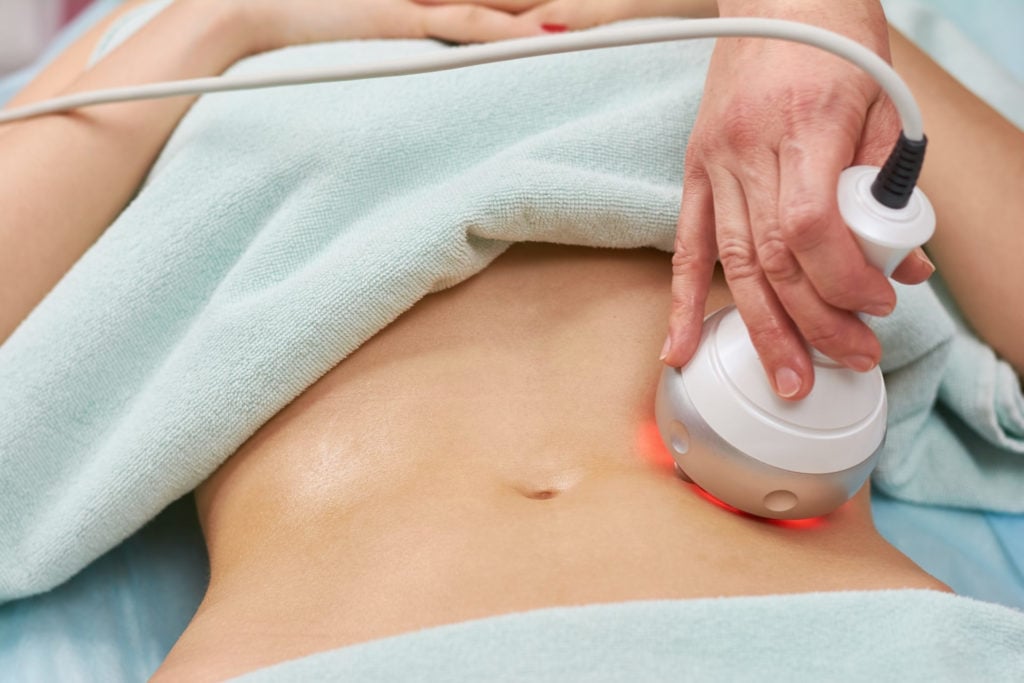
Luminostimulation, light therapy, LED photomodulation and LED lamp all describe the same procedure: a red light is directed onto the area with stretch marks. Results vary depending on the maturity of the stretch marks: generally better on recent stretch marks than on white stretch marks. A minimum of 3 to 5 sessions is generally needed before any initial changes may be seen, and 8 to 10 for a clearer difference in the look of the skin. Each session lasts approximately 30 to 40 minutes and the procedure is generally painless. The cost is around €100 per session.
6- Radiofrequency
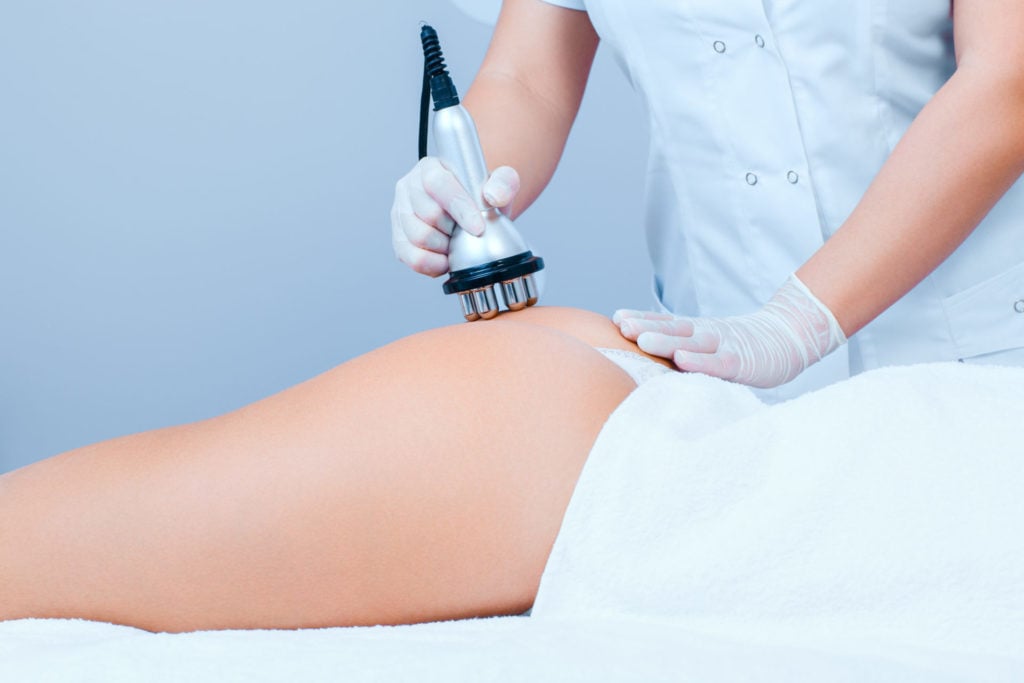
Radiofrequency works by delivering a very high-frequency electromagnetic pulse through the skin, where it is converted into heat: 39 to 42°C at the level of the epidermis, and 60 to 65°C at the level of the dermis. A radiofrequency session lasts approximately half an hour and the technique is generally painless. A minimum of 6 to 8 sessions, spaced two weeks apart, is usually recommended. In terms of cost, prices range from €175 to €300 per session.
7- Peeling
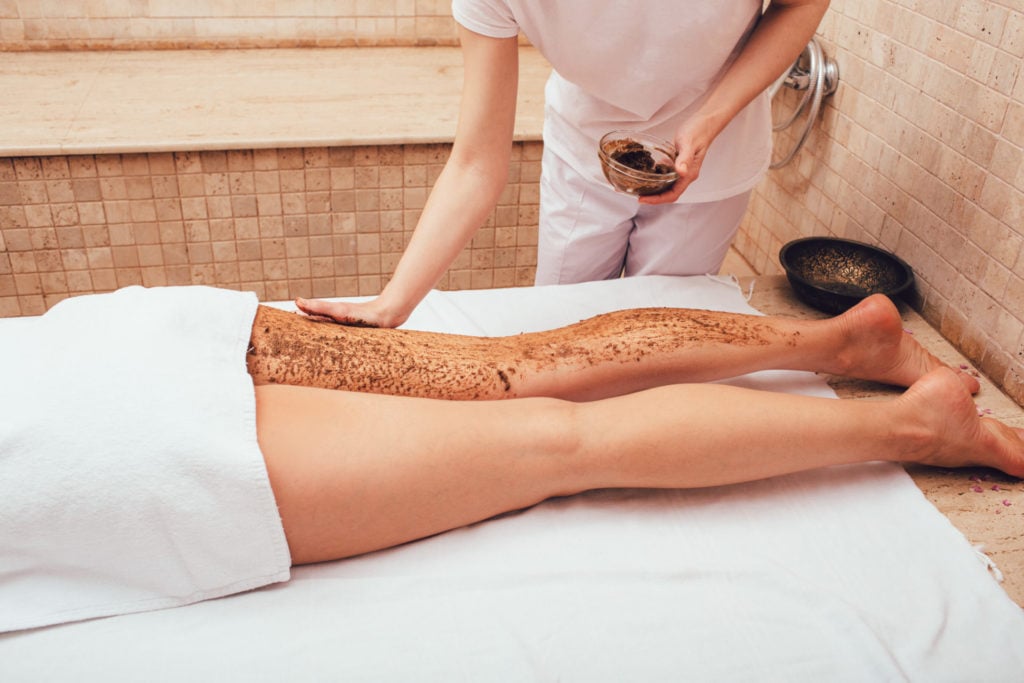
There are in fact two types of peeling used to treat stretch marks: mechanical peeling, or dermabrasion, and chemical peeling, which is more aggressive. These peels can be mild, medium or deep — a superficial peel has no effect on stretch marks whatsoever.
- Mechanical peeling: traditional dermabrasion has largely been replaced by microdermabrasion, which is easier to manage for both practitioner and patient. The principle, however, remains the same: the surface of the skin is “sanded down”. The treatment is mildly uncomfortable and is therefore performed under local anaesthesia. It lasts approximately 30 to 45 minutes.
- Chemical peeling: this involves applying an active mask made from various chemical substances, some more abrasive than others, which cause the skin to peel. A session lasts approximately 30 minutes and requires close medical supervision. Depending on the intensity of the peel, the aftermath can be more or less uncomfortable (swelling and burning sensations, followed by scabbing).
Peeling treatments generally require several spaced sessions, and their effectiveness is variable and not long-lasting. Costs also vary depending on the technique, the intensity of the peel and the area being treated, ranging from €150 to €700.
Stretch mark surgery: the one available procedure
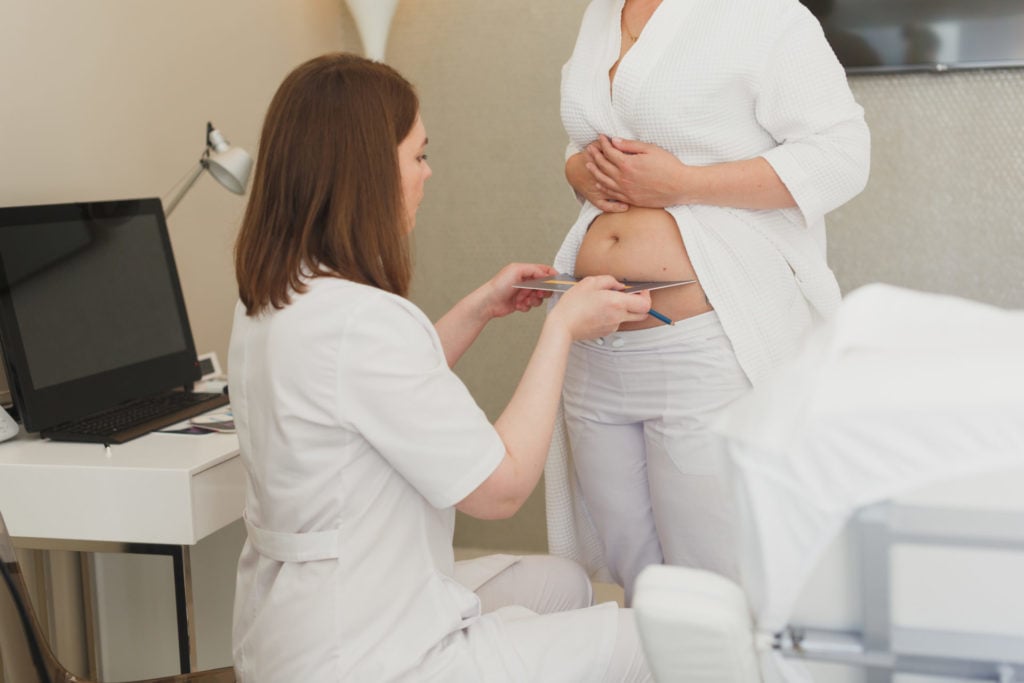
The techniques described above are not surgical procedures. They are minimally invasive or non-invasive and do not involve an operation. That said, it is possible to have surgery for stretch marks on the stomach, commonly known as abdominoplasty or a tummy tuck, which involves removing excess skin, and with it some of the stretch marks. However, stretch mark surgery isn’t suitable for everyone and is only carried out under specific conditions:
- The stretch marks must be associated with significant skin laxity.
- The area must present a substantial excess of skin.
Stretch mark surgery is therefore primarily considered for the abdomen (following a pregnancy or significant weight loss): this is referred to as dermolipectomy, abdominoplasty or tummy tuck. In most cases, eliminating stretch marks is not the patient’s primary motivation — rather, it is the removal of excess, sagging skin around the abdomen that fails to tighten despite diet and lifestyle changes.
Plastic surgery for stretch marks is not a decision to be taken lightly. It involves:
- A thorough consultation with the surgeon
- An operation under general anaesthesia
- Several days of hospitalisation
- A significant recovery period, both in terms of pain and aftercare
- Residual scarring
- A significant cost (at least €3,000), often not covered by national health insurance (as it is a cosmetic procedure).
It is therefore only suitable for a limited number of patients and is unlikely to be the ideal solution for permanently getting rid of stretch marks.
Surgery or aesthetic treatments: which should you choose for stretch marks?
If you’re searching for surgery to remove stretch marks, laser treatment is often the first thing that comes to mind. Yet laser, like injections, carboxytherapy, micro-needling, LED lamp, radiofrequency and peeling, falls under aesthetic medicine. It isn’t an operation but a course of several sessions, without general anaesthetic.
A tummy tuck (abdominoplasty) for stretch marks on the stomach is for a different situation: significant skin laxity and a substantial excess of skin, for example after pregnancy. Whichever route you’re considering, the wisest move is to talk it through with an aesthetic doctor or a surgeon, who can advise you based on how your stretch marks look, the area concerned and your budget.
Related articles
- Stretch mark treatments: how to reduce their appearance
- Microdermabrasion for Stretch Marks: Does It Work?
Useful categories: Stretch Mark Solutions, Stretch Marks.
To go further, explore the Cellublue shop: our stretch mark products.


The massage oil that helps prevent stretch marks from appearing*, during pregnancy and beyond
*User test on 21 volunteers over 3 weeks, based on participants' feedback.
- Why does it work?
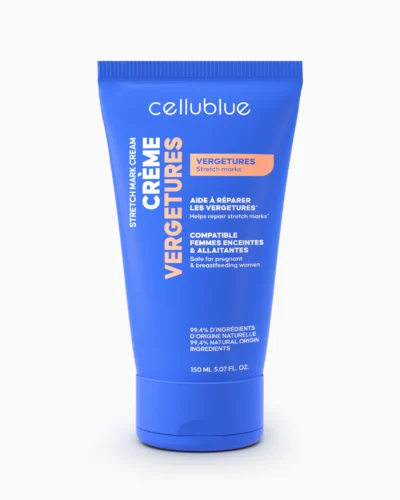
The cream that helps prevent the appearance of stretch marks* and improve how they look
*Consumer test on 22 volunteers over 3 weeks, based on participants' feedback.
- Helps prevent the appearance of stretch marks on the stomach, hips, thighs and bust. Apply morning and night
- Three plant oils: macadamia softens, sunflower soothes and coconut holds in hydration
- Velvety texture: it absorbs easily and calms feelings of tightness