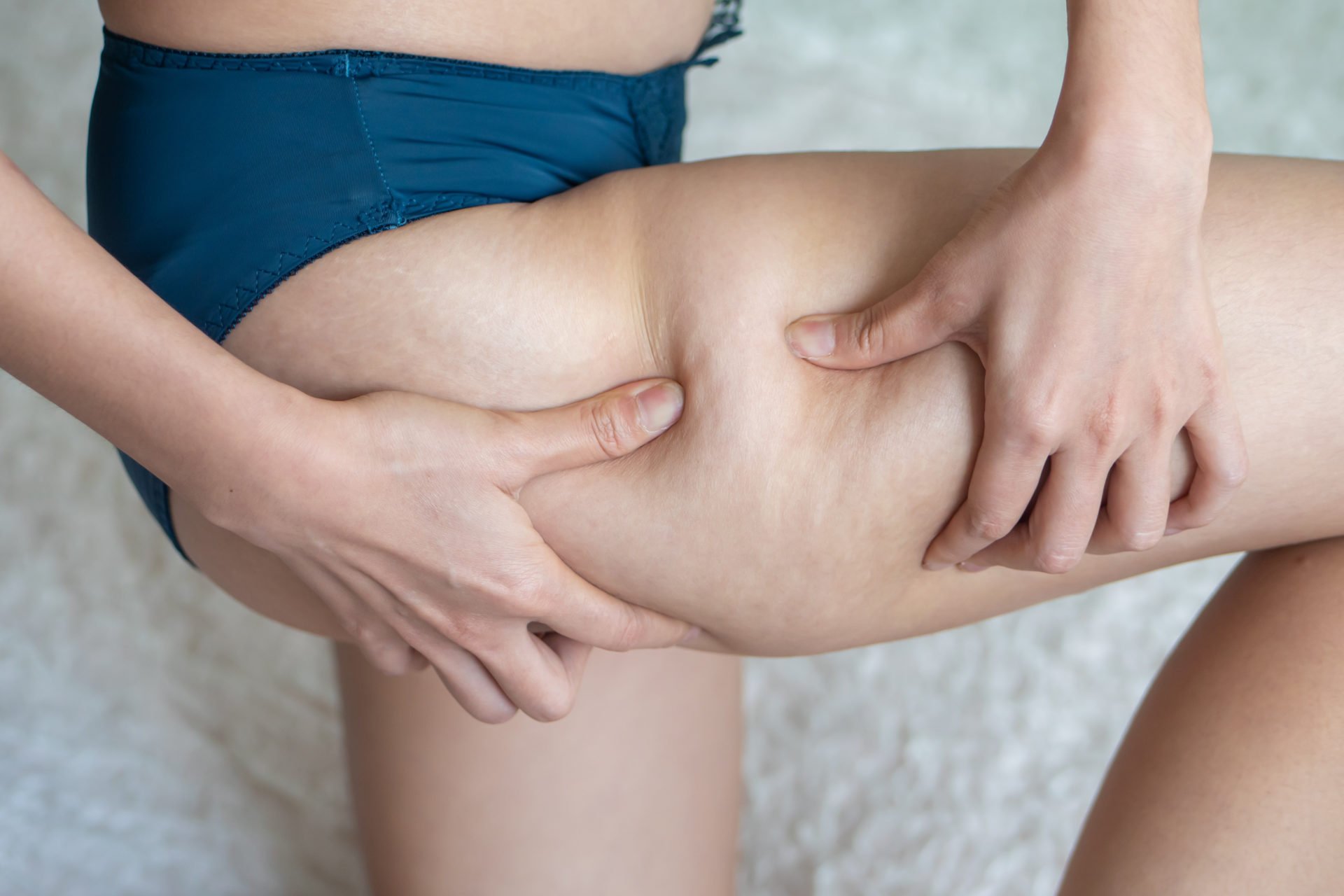
Your forties — the decade of serenity, or so they say… For some, turning 40 feels like an achievement: independent children, a stable personal and professional life. But for others, the forties bring an unwelcome sense of ageing. Fatigue, self-questioning and the first visible signs of time — including more pronounced cellulite. Don’t let orange-peel skin get you down!
Sommaire
Why Does Cellulite Appear at 40?
A Slower Metabolism
At 40, muscle loss accelerates and the body becomes more prone to storing fat. On top of that, caloric needs decrease with age (2,000 kcal at 18, versus 1,700 at 48). If you’re not careful, cellulite can creep up on you…
The Role of Hormonal Changes
Entering your forties triggers a significant hormonal shift: perimenopause. The body produces oestrogen (involved in fat storage and cellulite) in excess or in deficit, and these hormonal fluctuations lead to an overload of fat in the adipocytes. Cellulite then tends to appear on the hips, buttocks and thighs (excess oestrogen relative to progesterone) or the abdomen (oestrogen deficiency).
Worsening Veno-Lymphatic Insufficiency
By their forties, most women have been through at least one pregnancy. And if you’re prone to poor venous return, successive pregnancies only make things worse — leading to spider veins and… cellulite. Turning 40 doesn’t help either: veno-lymphatic tone naturally declines with age. Water retention increases — and that is the primary cause of aqueous cellulite.
Changes in Skin Quality
With age, the body produces less collagen, which is responsible for skin elasticity. There’s a silver lining: reduced collagen production means less fibrosis, which is the underlying cause of fibrous cellulite. The downside, however, is skin laxity — which makes the orange-peel effect more visible.
Repeated Dieting
Let’s be honest — chances are you’ve followed at least one diet in your life. Far from being beneficial, diets often trigger a yo-yo effect that takes a toll on the body, starting with the skin. The result: past 40, the body struggles more and more to break down stored fat, leading to a build-up of cellulite.
Stress and Cellulite
The forties can also bring heightened stress: a demanding job, teenagers to manage, ageing parents, an anxiety-inducing routine, a heavy mental load… Some women face chronic stress, with very real physical consequences. Cortisol — the stress hormone — raises insulin levels, which are directly linked to cellulite formation.
How to Limit Cellulite After 40?
Get Ahead of Your Slowing Metabolism
Start by taking stock of your physical health:
- Are you already experiencing perimenopause symptoms (hot flushes, irregular periods, water retention…)? A hormonal assessment with your gynaecologist or endocrinologist can help identify the right solutions for your symptoms — which may also have a direct impact on the onset or worsening of your cellulite.
- Also consider booking a consultation with a vascular specialist: oedema, heavy legs and/or cellulite build-up may well be the result of veno-lymphatic insufficiency, which can be addressed through simple lifestyle measures (walking, lymphatic drainage, compression garments…).
Rethink Your Diet
At 40, it’s recommended to:
- Take a closer look at your daily calorie intake: cut out empty calories hidden in sugary drinks, ready meals, fast food and processed snacks — they feed your cellulite directly. It’s not about deprivation, but about rebalancing your diet.
- Focus on the right foods to meet your evolving nutritional needs. Prioritise lean proteins (essential for muscle maintenance), as the body is often deficient in them. Stock up on vitamins (C, A, E, B3) and minerals (silica and selenium), which are key to vascular tone and skin elasticity.
- Detoxify — your body eliminates toxins less efficiently over time. Drink plenty of herbal teas, stay well hydrated, and consider draining solutions such as our cellulite capsules.
Keep Moving
- If you’re naturally active, keep it up! Exercise helps you stay toned, manage your weight, maintain muscle mass, strengthen bones and the vascular system, boost your mood and keep cellulite at bay. If you’re less sporty, build walking into your daily routine: an active lunch break, taking the stairs instead of the lift, regular strolls. Your body will thank you!
- Consider yoga, meditation or mindfulness to help manage stress.
Take Care of Your Skin
- After 40, skin tends to become drier. It’s important to maintain an intensive hydration routine to preserve skin firmness and prevent age-related sagging.
- Alongside hydration, anti-cellulite massages are essential — for example, using the pinch-and-roll technique. These massages help break down stubborn cellulite through suction of the dimpled tissue, while also draining excess water that can become trapped in the tissues. Our cupping device, which is incredibly easy to use, lets you perform a proper anti-cellulite massage at home.
What About Targeted Treatments to Reduce Cellulite After 40?
Despite your best efforts, your cellulite just won’t budge. You might think that turning 40 means saying goodbye to firm skin for good. Not so — with the right treatments, real results are within reach. Regular massages with our EMS cellulite cupping device could make all the difference! This high-performance device combines two actions: a LIPO function, which uses suction to target cellulite and break down fat deposits, and an EMS function, which harnesses electrostimulation technology to boost veno-lymphatic circulation. A 15-minute session every day for 21 days, followed by maintenance sessions 2 to 3 times a week, should help visibly reduce the orange-peel appearance of your skin.
