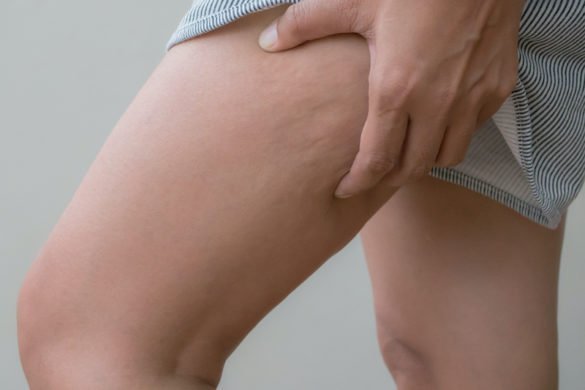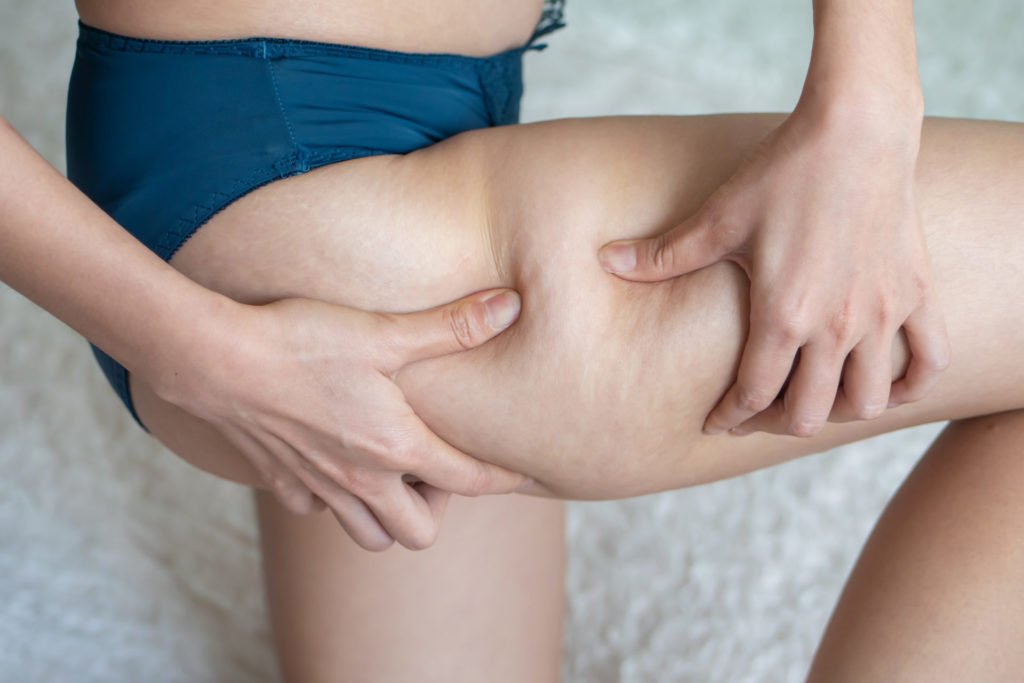
Your forties: the decade of serenity, or so they say… For some women, turning 40 feels like a milestone worth celebrating: children who are more independent, a settled love life and a stable career. For others, the forties bring an unwelcome sense of suddenly feeling older: tiredness, self-doubt and the first signs of ageing, including cellulite that seems more noticeable. So why does orange-peel skin often become more visible at 40? Below, we look at the likely factors (metabolism, hormones, skin changes, dieting and stress), followed by simple everyday habits and treatments you can add to your routine. Don’t let it get you down!
Why Does Cellulite Appear at 40?
A Slower Metabolism
At 40, muscle loss accelerates and the body becomes more prone to storing fat. On top of that, caloric needs decrease with age (2,000 kcal at 18, versus 1,700 at 48). If you’re not careful, cellulite can creep up on you…
The Role of Hormonal Changes
Reaching your forties often comes with a major hormonal shift: perimenopause. Oestrogen levels can fluctuate during this time. These hormones are often mentioned among the factors that influence fat distribution and the look of cellulite, although a direct link has not been established. Some hypotheses associate an excess of oestrogen relative to progesterone with the hips, buttocks and thighs, and a deficit more with the stomach, but they should be interpreted with caution.
Worsening Veno-Lymphatic Insufficiency
By 40, many women have been through one or more pregnancies. In women whose venous return is fragile, successive pregnancies are sometimes mentioned among the factors that can further weaken it, in some cases alongside spider veins. With age, veno-lymphatic tone can also decrease and water retention can increase. It is sometimes associated with what is called aqueous cellulite, although a direct link has not been established. If you have any questions about your legs, ask your doctor.
Changes in Skin Quality
With age, the body produces less collagen, which contributes to skin elasticity. It is sometimes suggested that this decline comes with a reduction in the fibrosis associated with fibrous cellulite, but there is no evidence to confirm this. What you notice more is skin laxity, which can accentuate the “orange peel” look.
Repeated Dieting
No point pretending… We know you have tried at least one in your life. Diets. Far from always being a good idea, the most restrictive ones often lead to a yo-yo effect. Many women feel that after 40, the body “seizes up” and their figure changes more easily. Cellulite is often mentioned in the same breath, although a direct link with past diets has not been established.
Stress and Cellulite
Your forties can also mean more stress: a demanding job, teenagers who are hard to handle, ageing parents, a stressful routine, a heavy mental load… Some women face chronic stress. It is often mentioned among the factors behind cellulite, notably through cortisol, the stress hormone, but a direct link with cellulite has not been established.
Cellulite and the Menopause: Is There a Link?
Perimenopause often begins in your forties, and every woman experiences this stage differently. If you have any questions about perimenopause or what you’re going through, ask your GP or gynaecologist for advice. As far as your routine goes, the tips below (diet, exercise and skincare) still apply during this time.
Can Cellulite Appear Before 40?
Yes, orange-peel skin doesn’t always wait until your forties. Several of the factors covered in this article aren’t only about age: repeated dieting and the yo-yo effect, chronic stress, or a diet high in empty calories. Whatever your age, the habits described below can fit into your daily life, so there’s no need to wait.
How to Limit Cellulite After 40?
Get Ahead of Your Slowing Metabolism
Start by taking stock of your physical health:
- Are you already experiencing perimenopause symptoms (hot flushes, irregular periods, water retention…)? A hormone check with your gynaecologist or endocrinologist can help you understand what’s going on and find solutions suited to your symptoms.
- You could also book an appointment with a vascular specialist, who can look into oedema, heavy legs and similar discomfort and suggest simple lifestyle measures (walking, lymphatic drainage, compression garments…).
Rethink Your Diet
At 40, it’s recommended to:
- Take a closer look at your daily calorie intake: cut back on empty calories hidden in fizzy drinks, ready meals, fast food and shop-bought cakes and biscuits. It’s not about going without, but about rebalancing your diet.
- Focus on the right foods to meet your nutritional needs, which change as you get older. Choose lean proteins. Stock up on vitamins (C, A, E, B3) and minerals (silica and selenium).
- Stay well hydrated: drink water regularly, and mix things up with herbal teas if you enjoy them. If you’d also like to take a food supplement, discover our cellulite capsules.
Keep Moving
- If you’re naturally sporty, keep it up! Regular exercise helps you stay active, feel good and look after your wellbeing. If you’re less sporty, build walking into your daily routine: an active lunch break, taking the stairs instead of the lift, regular strolls. Your body will thank you!
- Consider yoga, meditation or mindfulness to help manage stress.
Take Care of Your Skin
- After 40, skin tends to become drier. It’s helpful to maintain an intensive hydration routine to care for your skin in the face of age-related sagging.
- Alongside hydration, you can add massages — for example, using the pinch-and-roll technique. These massages are performed through gentle suction of the skin. Our cupping device, which is incredibly easy to use, lets you perform a proper pinch-and-roll massage at home.
What About Targeted Treatments to Limit the Appearance of Cellulite After 40?
Despite your best efforts, your cellulite just won’t budge. Do you think that turning 40 means giving up on looking after your skin? Not at all: you can still give your skin the right care. For example, regular massages with our electric cupping device could be a great addition to your routine! This device works by suction; it does not use electrostimulation. A session every day for 21 days, followed by maintenance sessions: that’s the recommended routine for caring for skin prone to an orange-peel appearance.
Professional anti-cellulite technology at home
- Designed to smooth the look of dimpling & tone the skin in depth
- Visibly smooths the appearance of orange-peel skin
Frequently asked questions
How can I get rid of cellulite after 40?
No single habit can promise to make it disappear. However, several simple habits can fit into your daily routine: a balanced diet, regular exercise such as walking, moisturising your skin and massage, for example using the pinch-and-roll technique. Above all, these habits are a way of looking after your skin.
Why does cellulite seem more noticeable at 40?
Several factors linked to this stage of life can play a part: age, the hormonal changes of your forties, changes in your skin, repeated dieting and stress. Everyone’s situation is different. If you have a question about your own situation, speak to your GP.
What can I do if I’m not sporty?
Start by building walking into your daily routine: an active lunch break, taking the stairs instead of the lift, regular strolls. Yoga, meditation or mindfulness can also help you manage stress. The key is to find an activity you enjoy and can stick with over time.
Who should I see about heavy legs or hot flushes?
These symptoms call for medical advice. Talk to your GP, your gynaecologist or a vascular specialist. They can assess your situation with you and point you towards the right solutions for your needs.
Related articles
- 10 Vegetable Oils Against Cellulite and How to Use Them
- Hemp oil: composition and uses in cooking and beauty
- Hydromassage: what if water were our anti-cellulite ally?
Useful categories: Anti-Cellulite Tips.