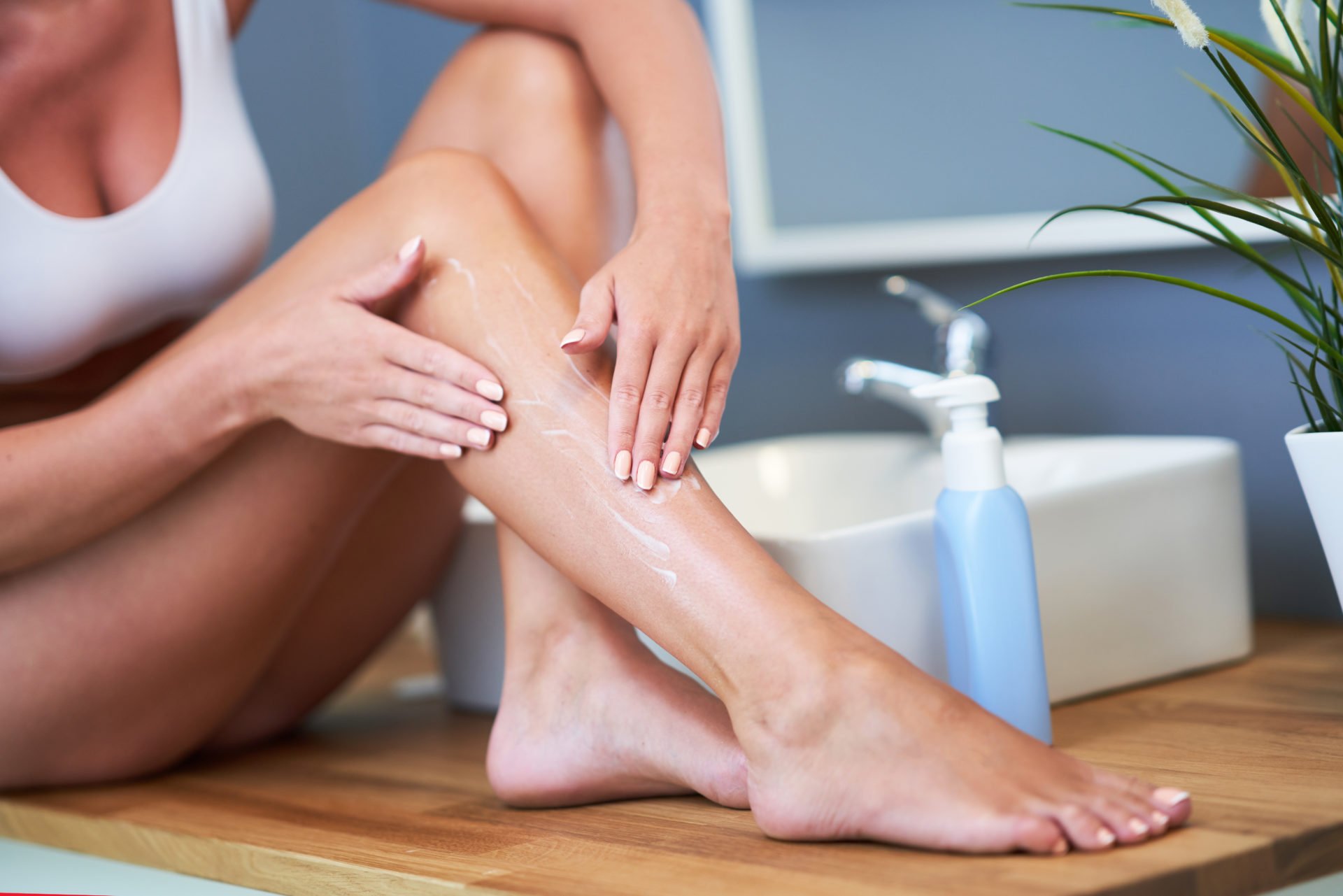
The arrival of warmer days brings mixed feelings: you look forward to sunny afternoons and long summer evenings, but far less to showing off your legs. The reason? Your calves are covered in stretch marks. So you avoid wearing shorts or skirts altogether. Time to stop hiding — there are solutions!
Why do I have stretch marks on my calves?
Stretch marksstretch marks, those reddish or white streaks that appear on the skin of most of us, are caused by the breakdown of collagen fibres in the dermis. They can develop at any age and affect both women (80 to 90%) and men (40%). They typically appear on the chest, stomach, hips and thighs — but some people also develop them on the lower back, arms and calves.
Several factors can trigger the appearance of stretch marks. In general, they result from rapid weight gain or loss. When the skin is subjected to a sudden change in shape, it simply doesn’t have time to “adapt”. In certain areas, its natural elasticity breaks down and micro-tears form — these are the stretch marks we know so well. Puberty, sudden weight gain, pregnancy, muscle hypertrophy, excess cortisol production (caused by stress or illness) or the use of certain medications (contraceptives, corticosteroids) can all trigger abrupt weight fluctuations and, as a result, skin damage.
When it comes specifically to the calves, two types of stretch marks are commonly seen. Horizontal stretch marks are caused by rapid leg growth — a natural part of the growth process during adolescence. Vertical stretch marks, on the other hand, result from an increase in calf volume, most likely due to intense physical activity (weight training, cycling) or rapid weight gain.
How can I prevent stretch marks on my calves?
Preventing stretch marks is no easy task. Some weight fluctuations are simply beyond our control — think puberty or necessary medical treatments. That said, by avoiding significant weight changes and keeping your skin well hydrated, you can help limit the appearance of stretch marks on your calves. Here are a few tips:
- Take a closer look at your diet, favouring foods that are healthy and beneficial for your skin. Make room for vitamin C (legumes, citrus fruits, peppers), copper (soy), silicon (tomatoes, carrots), vitamin B5 (dairy products), zinc (dried fruits, seeds) and vitamin E (avocado)!
- Stay hydrated — stretch marks thrive on dehydrated skin!
- Try low-impact sports (such as water sports) to keep your calves toned. Strong muscles help prevent stretch marks from forming.
- Treat your calves to ultra-gentle exfoliation and nourish your skin with natural actives such as plant-based oils (olive, sweet almond, argan, castor…).
How can I reduce the appearance of stretch marks on my calves?
Stretch marks are a permanent feature of the skin. With that in mind, the first step is to accept them — they are a completely natural occurrence. Your beauty is not defined by a few marks on your legs ! That said, you can absolutely improve the appearance of stretch marks on your calves.
Technical solutions
Many techniques have been developed in recent years to reduce the uneven texture of stretch marks on the calves. These aim to address collagen deficiency (plasma injections, carboxytherapy), regenerate the dermis (microneedling, laser, LED, radiofrequency) and/or smooth the skin (peeling, cosmetic surgery). More or less costly, they all require consultations with a qualified professional.
The camouflage solution
Here, the goal isn’t to fade the stretch marks on your calves, but simply to conceal them! You can apply a tinted cream or self-tanner to your legs to even out your skin tone and disguise the marks. Keep in mind, however, that this is a short-term fix with no lasting fading effect.
The skincare and hydration solution
Finally, you can adopt a targeted skincare routine from Cellublue specifically for stretch marks on your calves. Regular use of products formulated with plant and essential oils has been shown to help protect the skin, support its natural regeneration and soothe inflammation. Gentle exfoliation, daily moisturising and regular massage will undoubtedly have a positive effect on the appearance of stretch marks on your calves.
