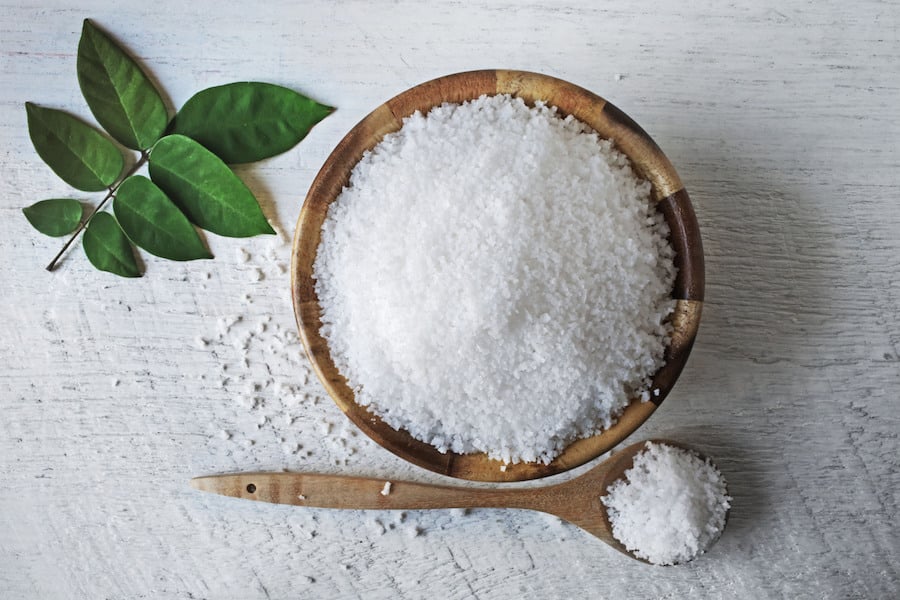
“For your health, avoid eating too much fat, sugar, or salt.” You’ve heard that one before, right ladies? We already know why fat and sugar are bad for our health (and our figure!), but we sometimes forget that salt is just as much of an enemy… A quick reminder about salt and its harmful effects, particularly on cellulite.
Sommaire
Our salt intake
Numerous studies have shown that people tend to consume far too much salt. In fact, the average adult takes in around 9 g of salt per day, instead of the recommended 5 g! Those 9 grams of salt come not only from the food we eat, but also from the salt we add to our meals.
Most of the salt we consume comes from bread, cheese, deli meats, ready-made meals, high-calorie dishes (pizzas, quiches…) and even pre-packaged soups! Watch out for “hidden” salt too! Did you know, for example, that your breakfast cereals or afternoon biscuits contain salt? Salt is a flavour enhancer, so food manufacturers don’t hesitate to add it to make their products taste better.
Our tip: always check the labels on the products you buy to find out their salt content.
The consequences of too much salt
 Consuming more than 5 grams of salt per day can have serious effects on your health: high blood pressure, cardiovascular disease, stomach problems, weakened bones…
But in the short term, salt is also your enemy in the fight against cellulite and water retention! It encourages your body to store fat and disrupts the proper functioning of our blood and lymphatic systems. Toxins and fats build up in the cells, creating the dreaded orange-peel skin. So there’s no smooth, firm skin without cutting back on salt!
Salt is also responsible for premature skin ageing, as it tends to dry out the skin’s tissues.
What can you replace salt with to reduce cellulite?
 The first step is to stop salting our food before we’ve even tasted it — that bad habit is our body’s worst enemy, ladies! Also make sure to read nutritional labels carefully to avoid any unpleasant surprises.
Fortunately, there are plenty of healthier alternatives to replace salt when preparing your meals. You’ll soon realise you can get along just fine without it!
Lemon juice
Did you know? You can easily use lemon juice in your recipes instead of salt. It’s an excellent fat-burner with well-known detox and anti-cellulite properties. Try boiling your pasta in lemon-infused water, adding lemon juice to your salad dressing, or serving your fish with a light lemon sauce!
Spices
This is one of the most popular ways to replace salt! Spices let you add colour and flavour to your dishes in a much healthier way: soups, meat, fish, vegetables, pasta… Some spices even have a fat-burning effect, such as cinnamon, chilli, turmeric and ginger. Use them as freely as you like!
Herbs as a salt substitute
Parsley, coriander, basil, thyme, rosemary… The choice is yours! You’ll add so much more flavour to your dishes — all without a pinch of salt. You can even grow them at home in small pots for guaranteed freshness. Use fresh herbs in your soups, salads, quiches, omelettes, white meats, and more.
Apple cider vinegar
The apple cider vinegar is great for your health and for fighting cellulite. Its flavour also has a similar edge to salt! Used in the right quantities, it can season your salads, raw vegetables, pasta or fish.
Nori seaweed
Seaweed instead of salt? It works! This type of seaweed is sold in sheets or flakes. A great way to boost your protein intake! It can be eaten raw (red in colour) with your salads or fish, or cooked (green or black) in soups, gratins or pasta. And with it, no need for salt.
Sea salt
Sea salt is still a salt, but unlike table salt, it doesn’t contain only sodium chloride. It’s rich in trace elements and minerals that are essential for staying healthy. You can use it in place of fine salt, but still keep a light hand!
As you can see, ladies, cutting back on salt is key to avoiding water retention, cellulite and a host of other health concerns.
To tackle cellulite, there’s one winning trio you can’t do without:
- a healthy diet
- regular physical activity
- cupping massage with your Cellublue Cup
But for even better results, try a 14-day anti-cellulite programme with the Drainer. Thanks to its 6 powerful anti-cellulite active ingredients, you’ll achieve smoother skin, reduce water retention and support fat elimination, all in just 14 days! Find out more right here.