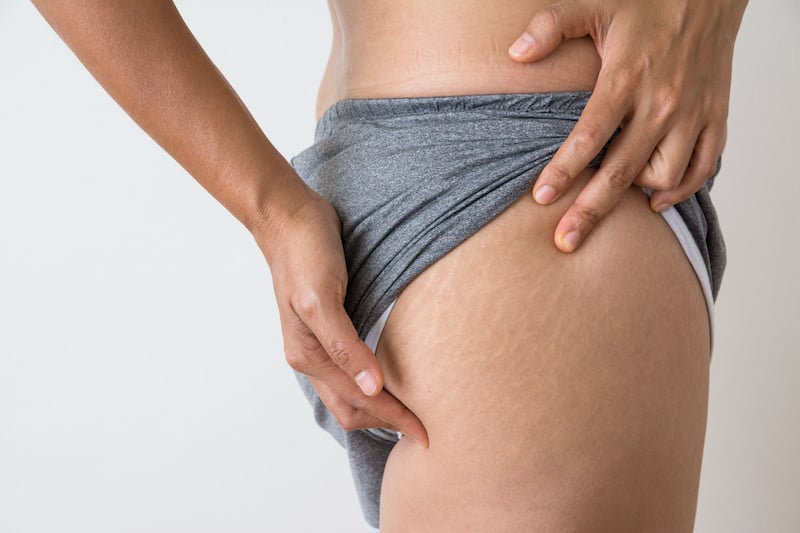
The reasons stretch marks appear are many, but they are generally linked to factors that put tension on the skin, such as rapid weight gain or intensive strength training. The real issue, though, is the itching that comes with them! Why do stretch marks itch? We tell you everything!
Itchy Stretch Marks: What’s Behind the Itch? 🤔
Stretch marks are scars that appear in areas where the skin has been stretched beyond its elastic limits. When they first form in the dermis, they look like small streaks and tend to develop in areas with a high concentration of fat cells: buttocks, thighs, arms, stomach, breasts.
It is during this phase that the itching begins. Itchy stretch marks are those that are actively spreading. They are often red and itchy because the skin is being significantly stretched in that area, causing it to thin and begin to break down.
What causes the itch, more precisely, is the stress the skin undergoes as it is pulled apart, leading to skin dehydration, roughness, tightness and… itching.
This is also why, in the case of pregnant women with itchy stretch marks, the itching is felt mainly on the stomach — where the skin has stretched the most. The itching may feel even more intense if your skin is naturally prone to dryness.
What to Do About Itchy Stretch Marks? 🙅♀️
The best thing to start with is not scratching — as tempting as it is — since scratching can worsen symptoms and cause skin damage. But let’s be honest, who among us could resist when stretch marks are itching?
That said, be gentle. Keep your nails short to avoid breaking the skin when you scratch. Try to limit the urge as much as possible, and if you do scratch, use only the pads of your fingers to avoid creating an environment where bacteria can thrive.
To tackle itchy stretch marks, build a daily soothing skincare routine. Opt for lukewarm showers, which help calm skin inflammation caused by itching. The same applies if you prefer baths.
You can make your bath even more restorative for your skin by adding a little nourishing oil. That said, keep your shower time short. Staying under the water too long can dry out your skin due to the limescale in tap water.
Hydrate Your Skin Generously 💧
After your shower or bath, take the time to hydrate and deeply nourish your skin. There are many revitalising creams available, enriched with active ingredients such as silicon and vitamins A and E, valued for their emollient properties.
It can also be very beneficial to take a few minutes each day to massage these nourishing products into your skin. This involves gently kneading the skin for around 5 to 10 minutes daily, without causing any discomfort. This technique helps stimulate the production of the skin’s deeper fibres. Once regenerated, your skin barrier becomes more resilient — and you may find yourself enjoying wonderful comfort again!
You can also combine your moisturising routine with stretch mark treatments. These will help boost your collagen fibres, improve skin suppleness and ease the uncomfortable effects of itchy stretch marks. For parfaire ces soins, avoid wearing tight-fitting clothing or synthetic fabrics, which can be very irritating to the skin. Opt instead for natural fibres like cotton or linen, which are gentle on sensitive, irritated areas.
To tackle stretch marks and itching head-on, take a look at our Maxi Anti-Stretch Mark Pack 😏
With it, you’ll have the perfect routine to fight stretch marks. All the essential products you need to repair skin tissue and ease tightness.
