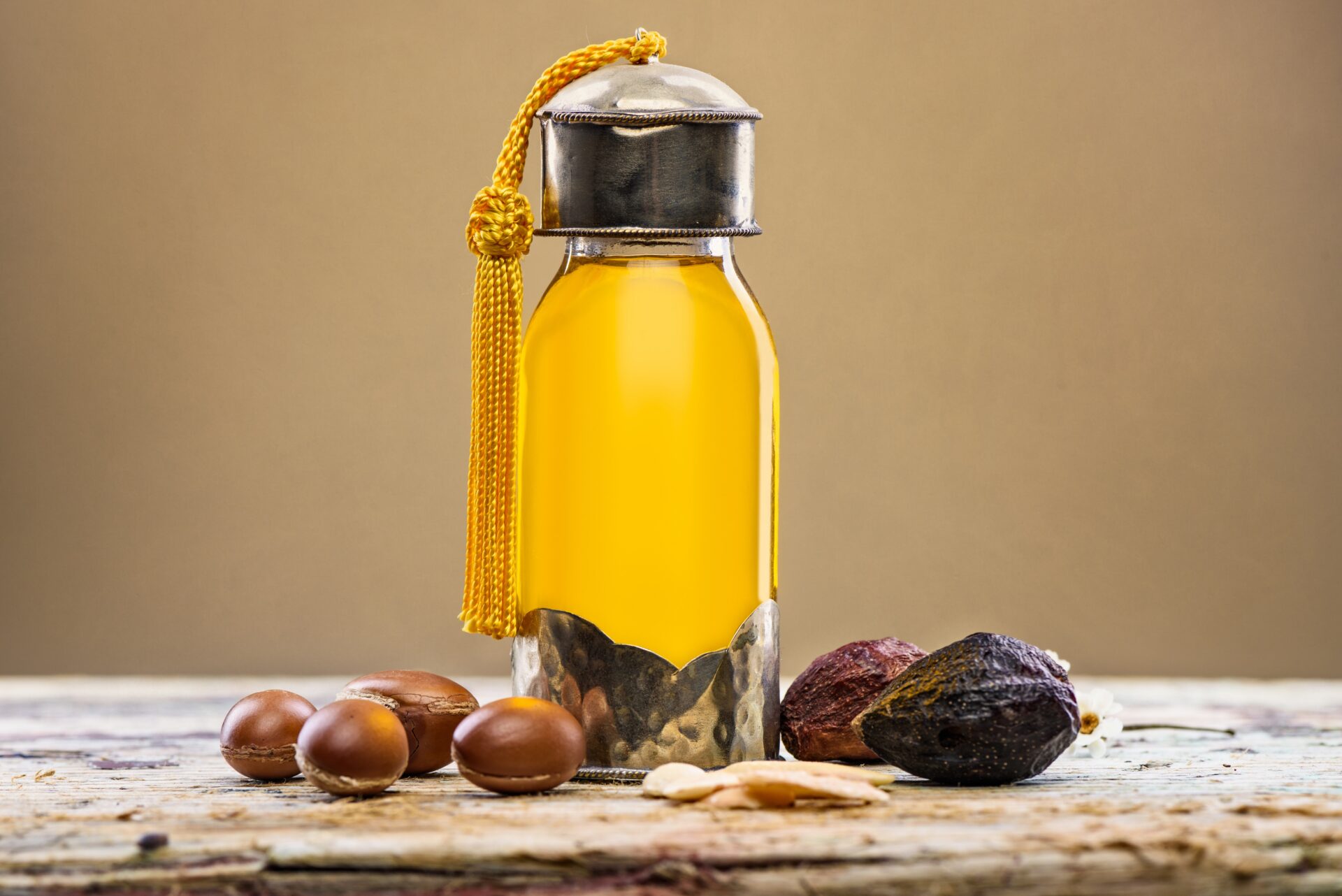
Do you struggle with stretch marks, or worry about them appearing on your stomach, thighs or buttocks? What if argan oil — used for centuries by Berber women — could be the answer? Let’s head to the foothills of the Atlas Mountains to discover argan, the small fruit everyone is talking about…
Sommaire
What is argan oil?
Argan oil is a plant-based oil extracted from the fruit of the argan tree — a tree with the remarkable distinction of growing in only one place on earth: Morocco. The word “argan” means “Berber almond” in Arabic, and Moroccan women have used argan oil since time immemorial, both in cooking and in skincare.
The process of making argan oil is relatively complex, as it is more delicate than other vegetable oils. The argan fruit — a kind of large berry — is harvested and sun-dried. Once the pulp has dried, the kernel is removed and cracked open to extract a small nut. The oil is then pressed from this nut. Sometimes the nuts are roasted, sometimes not. This is the key difference between culinary argan oil and the kind used in cosmetics.
- Culinary argan oil is made from roasted nuts. It is dark, with a rich, nutty flavour reminiscent of hazelnuts. It is used in a variety of preparations but is never heated to high temperatures. Highly nutritious, it lends dishes an unmistakable depth of flavour.
- Cosmetic argan oil (the one we care about most!) is lighter in colour. The nuts are not roasted — they are simply cold-pressed. The pressing must be done at low temperature, as argan oil is highly sensitive to heat. Above 60°, the oil loses most of its beneficial properties.
In summary: to choose a good argan oil, make sure it is 100% pure and natural (manufacturers often blend it with other vegetable or even mineral oils), cold-pressed, free from chemical processing or roasting, and of cosmetic grade. A quality argan oil will have a subtle scent (not deodorised), a pale yellow colour and a rich, nourishing feel.
Why is argan oil effective on stretch marks?
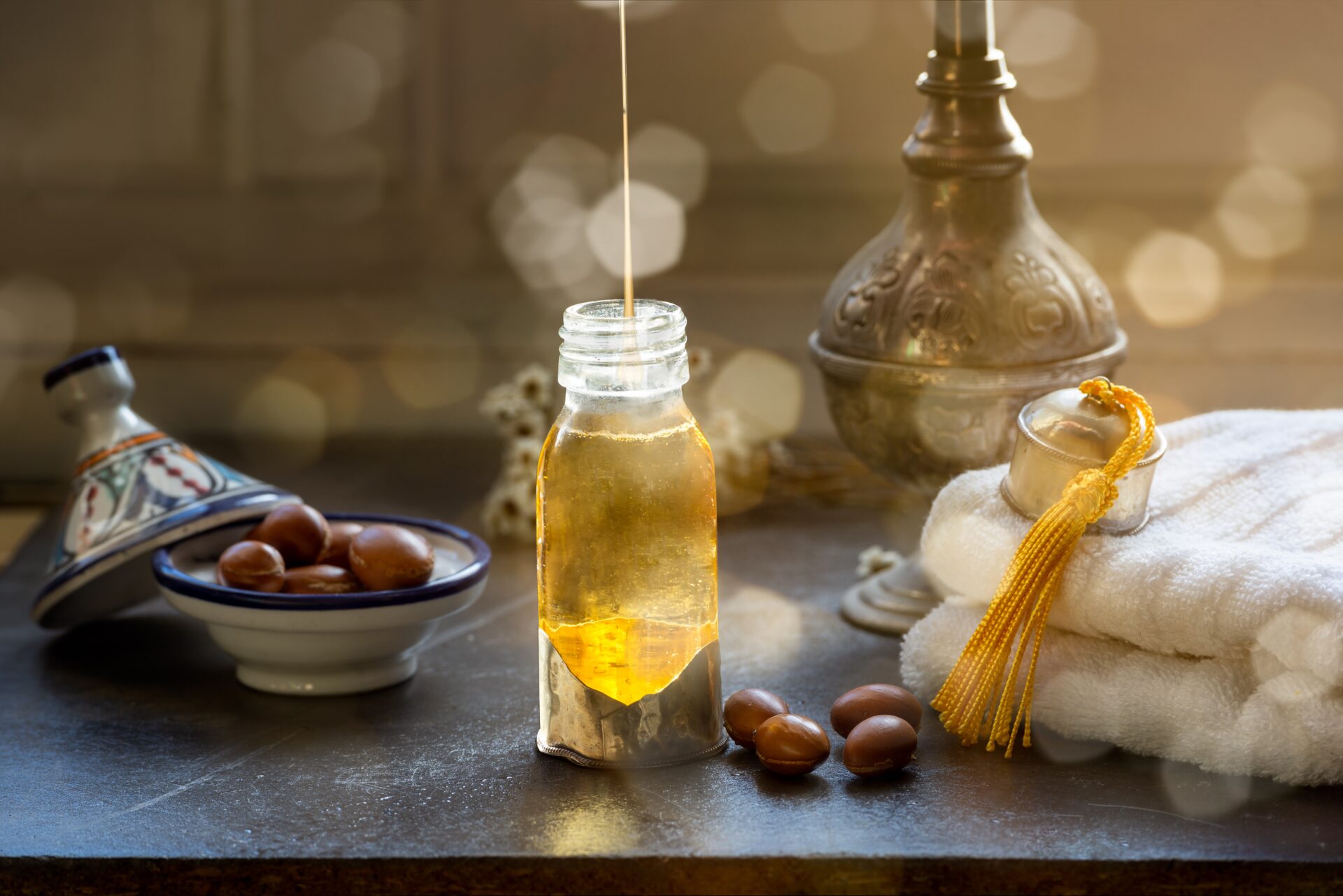
Argan oil is highly sought after not only because it is rare, but also because it contains numerous components that are exceptionally beneficial for skin and hair. Its anti-ageing properties are particularly celebrated, but it is also effective in preventing and addressing stretch marks. Let’s take a closer look at its composition to understand exactly why it is so remarkable for our skin.
1- Oleic acid
Virgin argan oil contains between 40 and 50% oleic acid, a monounsaturated fatty acid from the omega-9 family. This acid is the most abundant fatty acid in the human body, and is found in particularly high concentrations in sebum. Oleic acid helps maintain the skin’s protective hydrolipidic film. Applying argan oil therefore helps preserve the skin’s elasticity while also protecting and nourishing it. Recent research has also shown that oleic acid is more effective than other fatty acids at regenerating damaged skin. Argan oil may therefore have a dual effect on stretch marks: helping to prevent their appearance and supporting the healing of existing ones.
2- Linoleic acid
Argan oil contains another fatty acid that is essential to healthy skin: linoleic acid. This is an omega-6 essential fatty acid (meaning the body cannot produce it on its own). Linoleic acid helps nourish ceramides — molecules found in abundance in the epidermis. These ceramides form what is known as the skin’s intercellular cement, maintaining the cohesion of skin cells. When the skin receives enough omega-6, it stays supple and firm. But when it lacks this fatty acid, it dries out, becomes irritated… and turns into fertile ground for skin lesions such as psoriasis, eczema, atopic dermatitis or stretch marks. Regular use of an oil rich in linoleic acid, such as argan oil, helps keep skin healthy and prevent any deterioration.
3- Other components
Virgin argan oil also contains vitamin E (tocopherols), an antioxidant that is essential for the skin. Vitamin E helps protect skin cells from external aggressors. It also has anti-inflammatory properties, which are particularly valuable in addressing early-stage stretch marks (red or purple), which tend to be highly inflammatory. Finally, argan oil contains:
- Sterols: they improve the skin’s barrier function and microcirculation
- Triacylglycerides: they have softening and smoothing properties
- Triterpene alcohols: they have anti-inflammatory properties that support healthy skin regeneration
Virgin argan oil is truly a skin elixir: nourishing, protective, restorative and soothing. It can both prevent stretch marks from forming (during growth spurts, pregnancy, or any other physical change that may trigger them) and help fade existing stretch marks, whether old or recent.
How to use argan oil on stretch marks?
1- Combined with other plant oils
Virgin argan oil can absolutely be used on its own to treat stretch marks. However, its rich texture may feel heavy for some. To improve absorption, it can be blended with other natural vegetable oils, such as macadamia oil or sweet almond oil. This way, you combine the benefits of several oils for maximum effectiveness!
2- As an anti-stretch mark balm
You can combine the benefits of argan oil with the richness of a plant butter to create a homemade anti-stretch mark balm. To do so, you will need:
- 24 g of shea butter
- 3.5 g of coconut oil
- 11 ml of argan oil
- 10 ml of rosehip oil
- 1.5 g of plant-based hydronal (the vegan alternative to petroleum-derived vaseline or animal-derived lanolin)
Gently melt the shea butter, coconut oil (if solid) and hydronal together in a bain-marie over low heat. Do not exceed 60°, as higher temperatures will degrade the active ingredients. Once the mixture is liquid, remove from the heat and allow it to cool slightly without re-solidifying. Then add the argan and rosehip oils. Mix everything together and pour into a clean 50 ml jar. Store your anti-stretch mark balm in the fridge to keep its smooth, creamy texture.
3- Combined with essential oils
Virgin argan oil can also be used as a carrier oil for essential oils. Please note, however, that essential oils are strongly discouraged for pregnant and breastfeeding women. If this does not apply to you, here is a homemade anti-stretch mark oil recipe. You will need:
- 20 ml of rosehip vegetable oil
- 10 ml of argan oil
- 10 drops of Italian helichrysum essential oil
- 10 drops of rose geranium essential oil
- 10 drops of true lavender essential oil
- 10 drops of cistus ladanifer essential oil
Blend all the ingredients and pour into a bottle of your choice — ideally one with a 30 ml capacity. Massage your stretch marks regularly with this homemade oil for visible results.
What other solutions complement argan oil for treating stretch marks?

If you’d like to take your argan oil routine further, you can pair it perfectly with our Cellublue routine. The Stretch Mark Pack contains 3 highly effective products to prevent and address stretch marks of all kinds.
- The Stretch Mark Scrub, to be used 2 to 3 times a week on damp skin, gently exfoliates stretch mark-prone areas. It removes dead skin cells and smooths skin texture, making stretch marks appear less pronounced.
- The Stretch Mark Prevention Oil is a carefully crafted blend of 6 pure natural vegetable oils. Suitable for all skin types, young and mature alike, it helps prevent stretch marks from forming. It provides the skin with protection (jojoba oil), nourishment (soybean oil), hydration (sesame oil) and regeneration (avocado oil).
- The Stretch Mark Repair Cream soothes and restores all skin types, even the most damaged. Rich in provitamin B5 and natural actives (98%), it stimulates collagen production for visibly plumper skin and significantly faded stretch marks.

Alternating the Stretch Mark Pack products with your argan oil care routine is a winning combination: inflammatory stretch marks soothed, mature stretch marks faded, grooves visibly reduced… And skin that looks and feels its best!