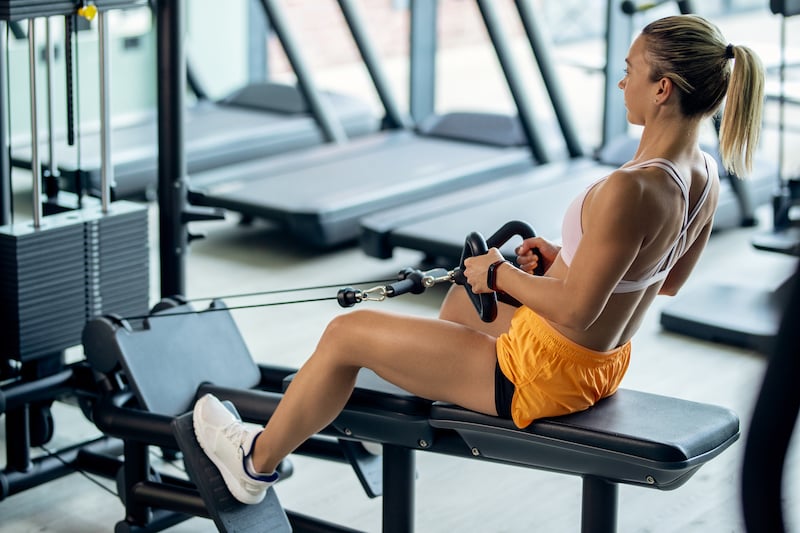
You’ve probably heard that rowing helps with weight loss. But is it really effective? With so many fitness machines out there, it’s easy to feel overwhelmed… Does the rowing machine deserve a place in a weight-loss programme? In this article, we explain why it can genuinely support fat loss, how long and how often to train, and most importantly how to get the most out of it to shape your figure.
Why is rowing so effective for losing weight?
Before diving into programmes or tips, it’s worth understanding what “losing weight” actually means. In reality, it’s not just about seeing a lower number on the scales — it’s about reducing body fat, meaning the amount of fat stored in the body. To achieve this, you need to create a calorie deficit — burning more energy than you take in through food.
This is where the rowing machine comes in: it’s an exceptionally effective cardio machine for burning calories. Depending on your weight, effort level and fitness, a 30-minute session can burn between 300 and 500 kcal, and up to 700 kcal in an hour. That’s as much as — or more than — running or cycling, with one key advantage: rowing engages almost the entire body, which significantly increases energy expenditure.
Another key point: by working multiple muscle groups (legs, glutes, back, core, arms…), rowing also stimulates muscle mass, which plays an essential role in weight loss. Why? Because the more muscle you have, the more calories you burn even at rest. Rowing is therefore doubly beneficial: it burns energy during exercise, and it boosts your metabolism over the long term.
The benefits of rowing for your figure
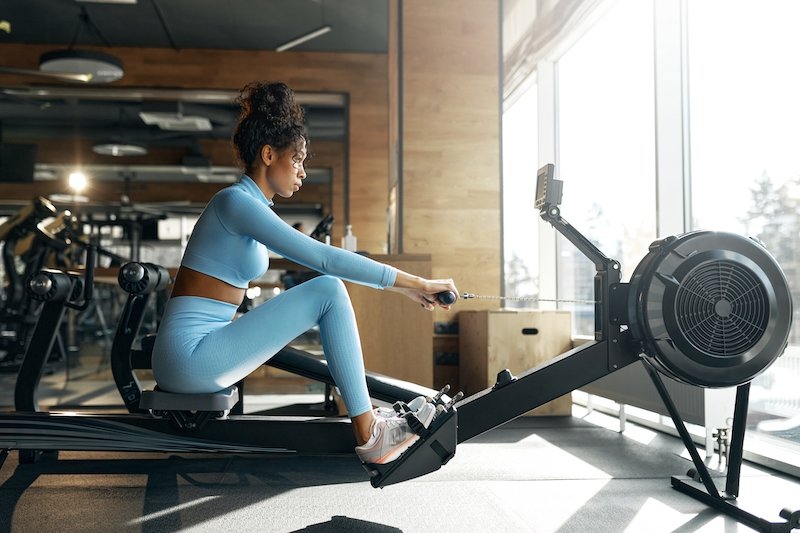 One of the greatest strengths of rowing is that it helps slim and sculpt your figure all over. Rowing works the whole body and helps tone your silhouette without adding bulk, making it an excellent ally for women who want to slim down without “bulking up”. Unlike targeted sports that only work the legs or upper body, rowing engages the whole body at once. The result: you not only burn fat, but you also tone your muscles deeply. That’s exactly what many women are looking for: a firmer figure, more toned, more balanced.
Many users also report a reduction in waist circumference, which is explained by the constant engagement of the core muscles throughout the rowing movement. While you can’t “choose” where you lose fat, rowing is remarkably effective for losing belly fat gradually and sustainably, alongside a balanced diet.
Another reassuring point: rowing is a low-impact exercise. Unlike running, it doesn’t put strain on the knees or back, provided you maintain good posture. It’s therefore perfectly suited to people who are overweight or returning to exercise after a long break.
How long should you row to lose weight?
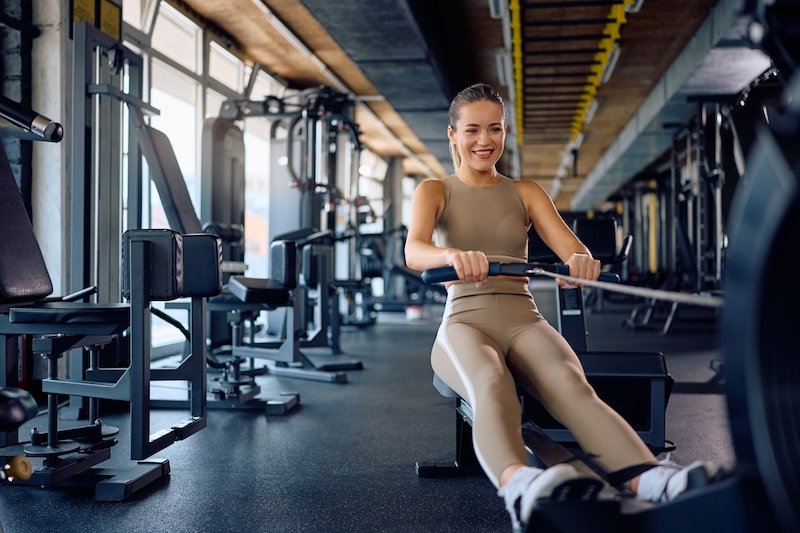 If you’re just starting out, there’s no need to aim for long or intense sessions straight away. To see real results, what matters most is consistency. Start with sessions of 20 to 30 minutes, 2 to 3 times a week. That’s already enough to kick-start weight loss, especially when combined with a balanced diet.
After two to three weeks, you can increase the duration and move up to 4 sessions per week of 30 to 45 minutes. The first visible results typically appear after 3 to 6 weeks, depending on your profile. Your legs become firmer, your stomach flatter, your breathing improves, and the scales start to move.
It’s also a good idea to vary your training formats. To maximise fat loss, alternate between steady-state cardio sessions (constant pace for 30 to 40 min) and HIIT sessions (interval training, for example 1 min fast / 2 min slow, for 20 to 25 min). HIIT is particularly effective for boosting fat burning and the “afterburn” effect — meaning calories continue to be burned even after your session.
To go further, you can alternate classic sessions with interval training, which is particularly effective against fat and cellulite.
Does rowing help you lose weight… even with a poor diet?
 This is THE question many people overlook. No matter how many sessions you do each week, if you consume more calories than you burn, you will not lose weight. Rowing is a fantastic tool, but it doesn’t work miracles. For it to be truly effective, it needs to be paired with a balanced diet, rich in protein, vegetables and fibre, with complex carbohydrates in reasonable amounts. Avoid fast sugars and processed foods, and make sure you stay well hydrated.