
Finding time to exercise is already an achievement in itself, given how busy our daily lives can be. But is there an optimal moment in the day to work out? A time when we’d have more energy, or a greater urge to get moving? We did a little digging!
A shared biological rhythm
Human beings are both very different and very alike. But one thing is certain: we all share a broadly similar biological rhythm. Our body is governed by a kind of internal clock, located in the brain, in the hypothalamus. This means our body runs on a 24-hour cycle, which includes several phases — the two most obvious being sleep and wakefulness. During these phases, the hypothalamus manages all vital functions according to the body’s needs, regulating organ activity, blood pressure, hormonal secretions, breathing rate, body temperature, and more.
In the morning, for example, body temperature gradually rises, along with blood pressure and breathing rate. The hypothalamus triggers the release of cortisol — a hormone that wakes us up and gives us the drive to get out of bed and start the day.
Conversely, in the evening, body temperature tends to drop and the pulse slows. The hypothalamus, acting as a master conductor, signals the release of melatonin, a hormone that promotes sleep.
This biological rhythm, which fluctuates throughout the day, is worth taking into account. It can help identify which moments are most favourable for physical activity (energy peaks, better endurance), and also determine the best type of exercise to do at any given time.
Early morning
Fans of morning routines, along with some scientists, champion the benefits of exercising right after waking up. Some studies suggest that working out between 6am and 10am may:
- Draw on the body’s reserves differently, especially when exercising on an empty stomach(1). How you feel and how your metabolism works may not be the same as at other times of day.
- Reduce appetite(2). Morning exercisers may tend to eat less throughout the rest of the day.
- Make it easier to adopt good habits(3). Habits formed in the morning may be easier to maintain over time.
- Take some time for yourself after a poor night’s sleep(4). Exercise can be that moment, even during a period of stress.
That said, some scientists and health professionals temper these conclusions:
- There is currently nothing to suggest that exercising on an empty stomach offers any particular benefit when it comes to looking after your figure(5).
- Upon waking, the body may need time to restart its vital functions, which slow down during sleep. It may therefore be wise to save intense, cardio-heavy activities for a later point in the day.
- Morning exercise isn’t necessarily better than afternoon exercise — it simply feels different, as the body doesn’t respond in the same way depending on the time of day. Muscles may metabolise fat and sugar more efficiently in the morning, while overall energy expenditure and the afterburn effect tend to be greater in the afternoon or evening(6).
With this in mind, it may be worth shifting endurance or HIIT sessions to a slightly later time in the morning. And for those who love a run first thing, it’s worth having a small bite before heading out — not necessarily a full breakfast, but a drink, a couple of hard-boiled eggs and a banana could do the trick!
Late morning and late afternoon

The windows between 10am–1pm and 4pm–7pm are thought to be among the best times to exercise, particularly for endurance activities. During these periods, insulin levels are said to be at their lowest, as the previous meal (breakfast or lunch) should have been digested. The body would therefore have enough energy to sustain a more intense effort and draw on its fat reserves.
As for physical performance, the research is again divided. Some studies suggest athletic performance is better when exercise takes place in the morning(7), while others indicate that peak physical performance — in terms of power, endurance and flexibility — occurs in the evening(8).
It’s worth bearing in mind, however, that endurance sports done too late in the day (after 7pm) could affect sleep quality. Exercise triggers a rise in endorphins and dopamine, which lift your mood, but it also prompts the release of adrenaline, which brings a burst of energy, a faster heart rate and higher blood pressure. In short, exercise relieves stress, but it also gets you fired up. Working out too close to bedtime could therefore make it harder to drift off.
So, what is the best time to exercise?
Quite simply, the best time is the one that works best for you! Of course, some moments are genuinely less suited to exercise:
- Right after a meal, during digestion. Chances are you won’t feel like exercising then anyway!
- Too close to bedtime, as explained above. If you do want to be active in the evening, opt for something more restorative — yoga, Pilates or gentle stretching are great options.
For everything else, let your body and your internal clock be your guide. You know better than anyone when you feel at your physical best and ready to push yourself. And remember: what matters most isn’t when you exercise, but how consistently you make physical activity part of your routine. The recommendations remain the same:
- 30 minutes of moderate physical activity every day — such as walking.
- More intense physical activity 2 to 3 times a week, in sessions of 45 minutes to 1 hour — cycling, running, cardio…
References
(1) 2013, Bhutani, Klempel, Kroeger, Trepanowski, Varady, Alternate day fasting and endurance exercise combine to reduce body weight and favorably alter plasma lipids in obese humans
(2) 2012, Hanlon, Larson, Bailey, LeCheminant, Neural response to pictures of food after exercise in normal-weight and obese women
(3) 2017, Fournier, d’Arripe-Longueville, Rovere, Easthope, Schwabe, Methni, Radel, Effects of circadian cortisol on the development of a health habit
(4) 2017, article from Time presenting the findings of the study: Exercise and Sleep Help Burn Off Work Stress
(5) 2017, Kormos, Are there any benefits to exercising on an empty stomach?
(6) 2019, Sato et al., Time of Exercise Specifies the Impact on Muscle Metabolic Pathways and Systemic Energy Homeostasis
(7) 2009, Hobson, Clapp, Watson, Maughan, Exercise capacity in the heat is greater in the morning than in the evening in man
(8) 2009, Lericollais, Gauthier, Bessot, Sesboüé, Davenne, Time-of-day effects on fatigue during a sustained anaerobic test in well-trained cyclists
Frequently asked questions
What is the best time of day to exercise?
It’s the time that suits you best and that you can stick to in the long run. Simply avoid exercising while you’re digesting a meal or too close to bedtime. Beyond that, listen to your body: you know better than anyone when you feel ready to push yourself.
What is the best hour to work out?
The 10am–1pm and 4pm–7pm windows are thought to be particularly well suited, especially for endurance activities, as the previous meal should have been digested. That said, studies are still divided on when we perform at our best: some point to the morning, others to the evening.
Is it OK to exercise first thing in the morning?
Yes, if that routine works for you. When you wake up, your body needs a little time to get going. It’s best to save intense sessions, such as HIIT, for later in the morning. Before an early run, remember to have a drink and a small bite to eat, such as a banana.
Is it a good idea to exercise in the evening?
After 7pm, endurance sports may make it harder to fall asleep, as exercise stimulates the body. If the evening is the only time you have free, go for something gentler, such as yoga, Pilates or stretching.
Does timing or consistency matter more?
Consistency matters more than timing. The usual recommendations are 30 minutes of moderate activity every day, such as walking, plus 2 to 3 more intense sessions a week lasting 45 minutes to 1 hour (cycling, running, cardio). Choose the time of day that helps you keep up this routine.
Related articles
- Cellulite: what time should you work out?
- How to Exercise During the Holidays?
- How to exercise during the school holidays?
Useful categories: Slimming Exercises, Fitness.
To go further, explore the Cellublue shop: our body care products.
 -26%
-26%The cordless massager: 2 900 rotations per minute to stimulate your skin
- A deep mechanical massage: rotations and vibrations, up to 2 900 turns per minute, knead the skin on your thighs, stomach, arms and bottom
- 2 complementary heads: the ball head kneads deep down, then the wave head smooths and tones the surface
- 5 intensity levels on a touchscreen, a blue light, cordless and quiet

The cooling gel that leaves the skin on your stomach firmer
- Arctic Algae, Prosveltyl® & Menthol, combined in a formula designed for the stomach and hips
- Sorbet texture: it absorbs faster and makes the fresh sensation last longer
- 🍃 98.3% natural-origin ingredients
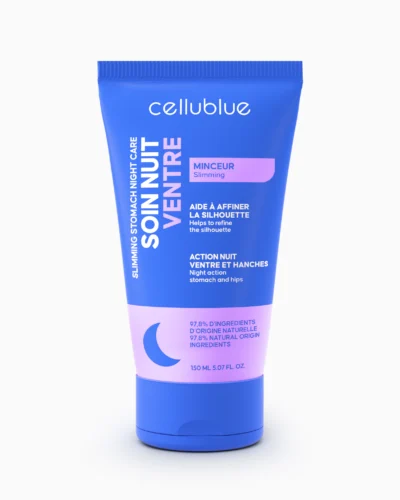
The evening treatment with Ginger & Slimsize® for the belly and hips
- Targeted night treatment for belly & hips, to massage in every evening before bed
- Ginger & Slimsize®, with a patented active ingredient at the heart of the formula
- Helps smooth and firm the skin