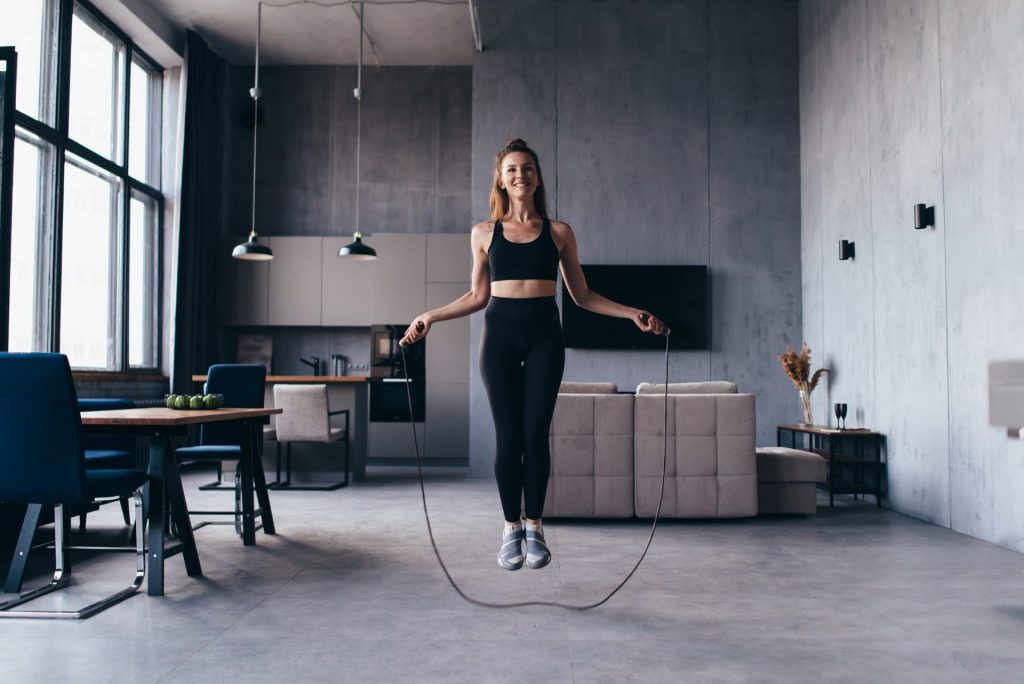
Take a trip down memory lane with the jump rope! Did you know that this playground favourite, known to many of us simply as skipping, is also a sport that works the whole body? There’s a reason it’s a staple of every boxer’s training routine. Here you’ll find its main advantages, the basic rules for getting started and several progressive exercises to try with your rope.
What are the benefits of jump rope?
Jumping rope offers a wealth of benefits as a form of exercise. It’s a genuine cardio workout, done while keeping things fun. Its playful nature may well win over even the most reluctant exercisers. Here’s what you need to know:
- Jump rope is an excellent way to work your heart, breathing and muscles in a sustained way. A jump rope session gets your body used to sustaining physical effort over a longer period. It can also be compared with running or swimming for engaging your heart, muscles and breathing.
- Jump rope also engages lots of muscle groups: legs and thighs to power each jump, arms and shoulders to stabilise, and your core to maintain proper posture.
- Jumping rope regularly also calls for a sustained effort. To find out more, read our article on energy expenditure. You can also browse our related articles on weight-related habits and maintaining a healthy weight.
- In short bursts, jump rope can be an excellent warm-up tool. So even if another sport is your main focus, a short session is a great way to get your body ready to go!
- Jump rope also calls on agility, balance and coordination. The movements require your whole body to work in sync. Once you’ve got the hang of it, you can mix up the exercises.
- Finally, jump rope can make exercise more enjoyable! This nod to childhood takes the edge off the “chore” of exercise – not for everyone, of course, just for those who find it hard to get motivated!
The main drawback concerns cellulite linked to venous or lymphatic insufficiency. If you have fragile veins, the repeated impact of jumping rope may add to your discomfort (heavy legs, water retention, varicose veins, water-retention cellulite). If that’s the case, ask your GP for advice and opt for water-based activities instead, which are far gentler. The same goes if you have knee, ankle or back pain: repeated jumping puts your joints to work.
How to jump rope properly
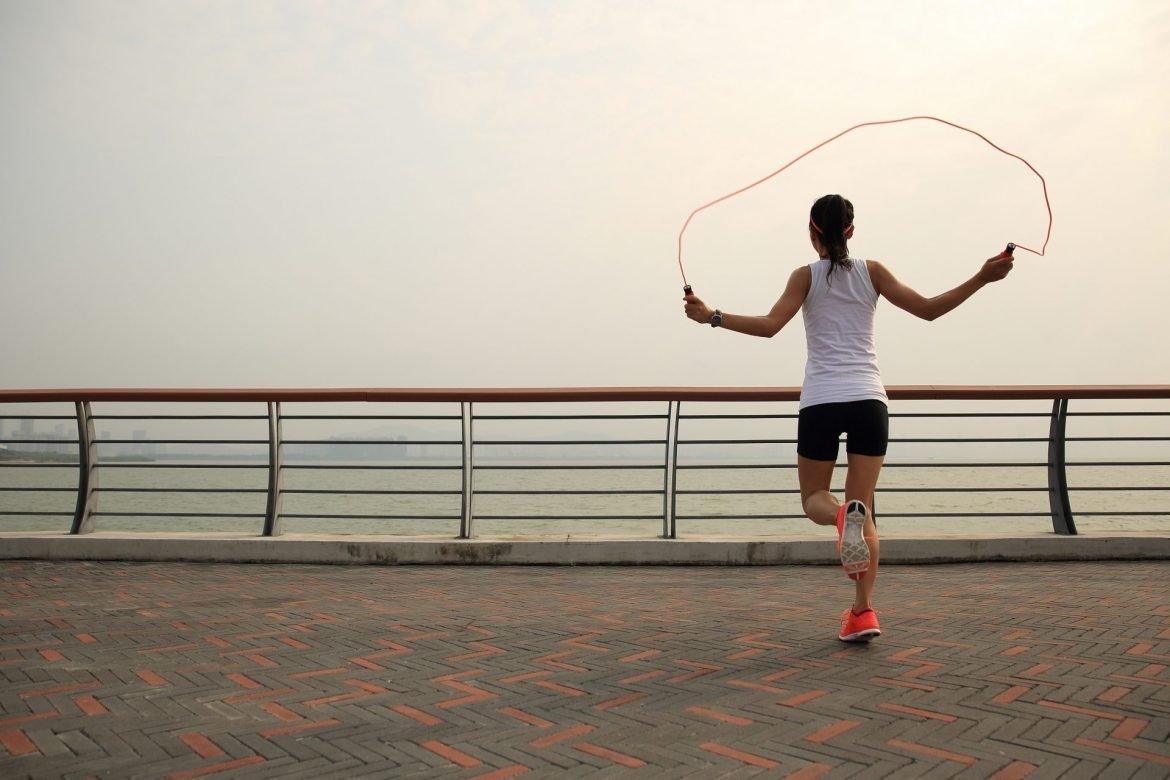
Ready to take the leap (pun intended)? To get the most out of jump rope, there are a few basic rules to follow:
- Choose a suitable jump rope. It should be well-made and durable. Length matters: stand on the middle of the rope and check where the handles reach. If they come up to your armpits, it’s the right size. As for the material, it’s worth considering too. Start with nylon, which is relatively lightweight. Once you’re more comfortable, you can move on to vinyl, leather or coated steel.
- Posture is equally important. Jump on the balls of your feet, with a slight bend in the knees. Your knees shouldn’t bend too deeply – repeated impact can be hard on the joints. Your core and hips should be engaged, with your back, neck and head held straight.
- The rotation of the rope should come entirely from your wrists! Your shoulders and arms should barely move, though they should remain engaged. Keep your elbows slightly bent and your wrists at hip height, a little away from your body.
- It’s essential to jump rope in proper footwear. Choose supportive trainers that hold your feet firmly in place. If your ankles are delicate, consider high-tops, like those worn by basketball players.
- Ladies, don’t forget about your chest! For comfort, wear a sports bra with enough support to keep everything in place during your sessions.
- Build up your jump rope practice gradually. Good advice for any sport! But because this activity is so enjoyable, you might be tempted to go all out from the start. Take it at your own pace and focus on breathing steadily.
- Finally, always jump rope on a flat surface. Make sure you have enough space around you and above your head.
What exercises can you do with a jump rope?
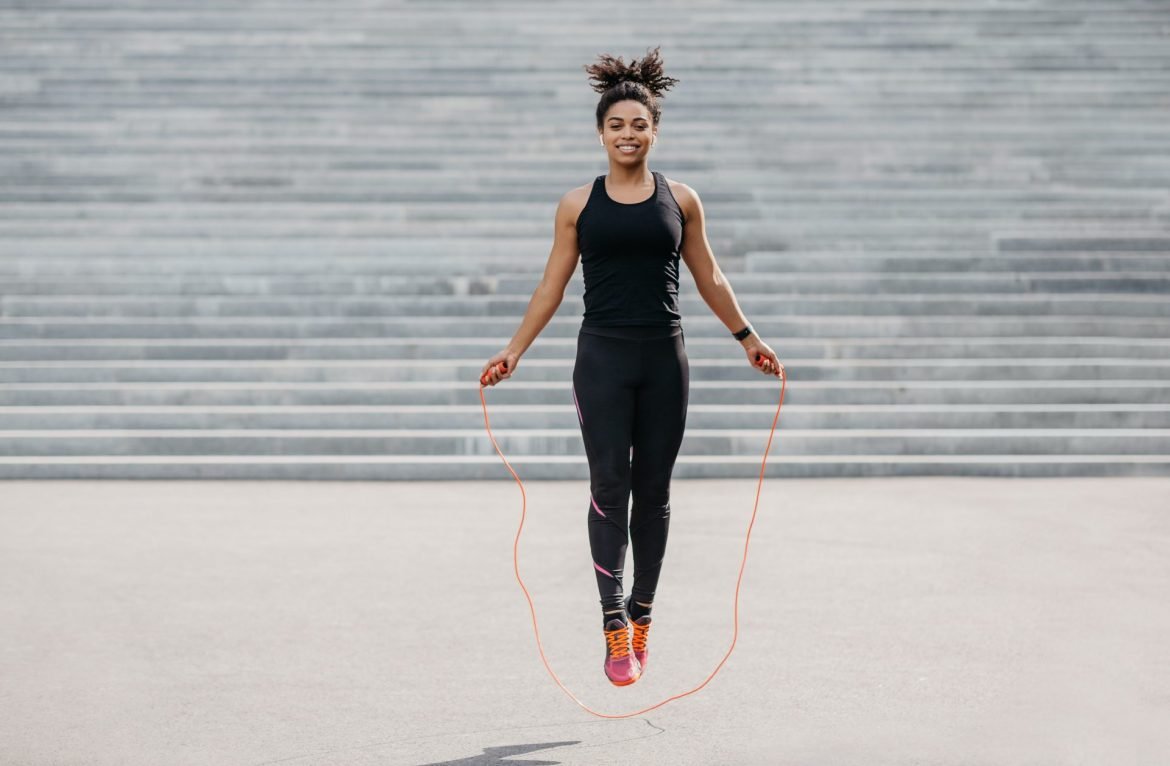
Jumping rope might seem straightforward, but as you can see, there’s a technique to master, a posture to maintain and a rhythm to find. It’s all about patience. Here are some progressive exercises to help you get comfortable with the jump rope.

The body cream that hydrates and helps firm the skin
- Kigeline & Fenugreek, two plant-based actives at the heart of the formula
- Hydrates the skin and helps strengthen its firmness on targeted areas
- Melting texture: it absorbs quickly, with no residue or greasy film
Exercise 1: Basic two-foot jump
This is the foundation of jump rope. The “Single Under” is almost child’s play!
- Start standing, holding the rope in each hand.
- Jump off the ground and swing the rope under your feet.
- Find your rhythm and keep jumping, bringing the rope under your feet each time.
Exercise 2: Running jump
Found your rhythm? Great. Here’s a simple variation that gets you moving a little more!
- Start standing in the posture described above, with one difference: your arms are held slightly further from your body.
- The running jump involves alternating feet with each rotation of the rope — essentially mimicking a running motion, rope included.
Exercise 3: Semi-twist jump
Another variation, this time working the hips a little more.
- Start standing in the classic position.
- Perform your first jump normally, as in the first exercise.
- On the second landing, rotate your hips slightly to the right and jump with feet together.
- The third jump is performed normally, facing forward.
- On the fourth landing, rotate your hips slightly to the left and jump with feet together.
- Repeat the pattern: centre, right, centre, left.
Exercise 4: Wide-narrow jump
Feeling confident with the rope? Try this fun variation, which works the inner thighs a little more.
- Start standing in the classic position.
- On your first jump, land with your feet slightly apart.
- On the second jump, bring your feet back together.
- Alternate between wide and narrow with each jump.
Looking for more jump rope exercises? Our 3-Month Body Transformation Programme includes plenty of jump rope variations in its coaching plan. Plus, the programme comes with our fitness accessory, designed for thigh and hip strengthening exercises!
Frequently asked questions
How long should you skip for as a beginner?
Start with just a few minutes, alternating short sets of jumps with breaks. Build up the time gradually as your breathing and coordination come along.
How do you choose the right skipping rope length?
Stand with one foot on the middle of the rope and pull it upwards: the handles should reach your armpits. If you’re just starting out, go for a lightweight nylon rope.
Is skipping suitable for everyone?
Not necessarily. The repeated impact puts your joints to work and can be uncomfortable if you have heavy legs or fragile veins. If that applies to you, ask your GP for advice and opt for water-based activities instead.
Related articles
Useful categories: Slimming Exercises, Fitness.
 -26%
-26%The cordless massager: 2 900 rotations per minute to stimulate your skin
- A deep mechanical massage: rotations and vibrations, up to 2 900 turns per minute, knead the skin on your thighs, stomach, arms and bottom
- 2 complementary heads: the ball head kneads deep down, then the wave head smooths and tones the surface
- 5 intensity levels on a touchscreen, a blue light, cordless and quiet

The cooling gel that leaves the skin on your stomach firmer
- Arctic Algae, Prosveltyl® & Menthol, combined in a formula designed for the stomach and hips
- Sorbet texture: it absorbs faster and makes the fresh sensation last longer
- 🍃 98.3% natural-origin ingredients