We’d all love to know which chocolate is the lowest in calories! Chocolate is something of a weakness for most of us, and with Easter just around the corner, it’s easy to overindulge… That’s why we’ve put together this guide to help. Below, you’ll find the different types of chocolate, what to look for when choosing a lighter bar, and a few tasty alternatives, so you can enjoy Easter without too much guilt.
What are the different types of chocolate?
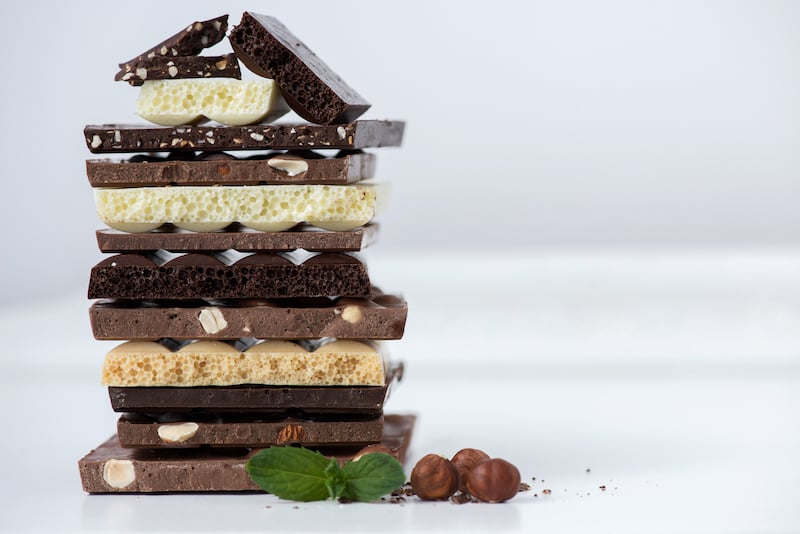
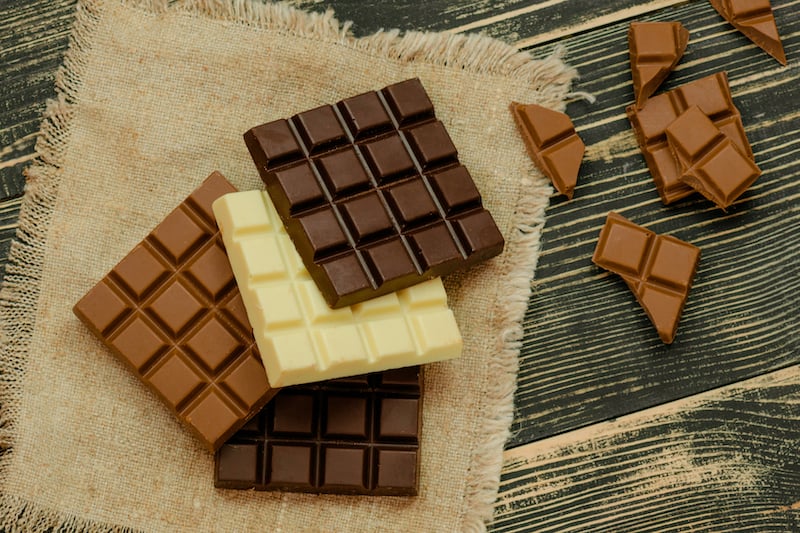
There are three main types of chocolate: dark, milk and white.
Dark chocolate is the most bitter and the richest in cocoa.
Milk chocolate is smoother and creamier, thanks to its milk content.
White chocolate, on the other hand, contains no cocoa solids — only cocoa butter — which gives it its melt-in-the-mouth texture.
From a nutritional standpoint, dark chocolate is often the preferred choice, as it generally contains less sugar than milk or white chocolate. That said, all types of chocolate are calorie-dense, so moderation is key.
Which chocolate is the most calorific?
No chocolate is ‘calorie-free’: dark, milk and white chocolate are all high in calories. What really sets them apart is what goes into them. Milk and white chocolate contain more sugar than dark chocolate. Some bars also include added oils, flavourings or emulsifiers, which make the recipe even richer.
What matters more than the type of chocolate is how much you eat and how often. A few squares enjoyed now and then are a far cry from a whole bar polished off in front of the telly. You’ll find tips on reading the labels just below.
How do you choose your chocolate?
When looking for a lower-calorie chocolate, there are a few criteria worth keeping in mind.
Cocoa percentage: opt for a chocolate with a cocoa content above 70%, as it will generally contain less added sugar.
Added sugar content: choose a chocolate with a sugar content below 30% to keep the calorie count in check.
Other ingredients: check for the presence of oils, artificial flavourings or emulsifiers, which can add calories and make the recipe less straightforward.
By choosing a chocolate made with a short list of simple ingredients, you can more easily see what’s in the bar you’re going for.
Which dark chocolate should you choose if you’re watching what you eat?
Dark chocolate generally contains less sugar than milk or white chocolate, but it’s still high in calories. If it’s your favourite, go for a bar that’s rich in cocoa and low in sugar, following the guidelines above. It should have a short ingredients list, with no added oils or artificial flavourings.
Like any chocolate, it’s best savoured slowly and in small amounts, rather than nibbled mindlessly. You’ll enjoy it all the more.
What are the alternatives to chocolate?
Dried fruit: Dried fruits such as raisins, dates or dried apricots can be a sweet and tasty alternative to chocolate. They also contain fibre, vitamins and minerals.
Fresh fruit: Fresh fruits like strawberries, raspberries or oranges are another delicious alternative to chocolate. They also contain fewer calories than chocolate.
Smoothies: Smoothies can make a great alternative to chocolate. By blending fresh fruit, leafy greens and almond milk, you can whip up something both fresh and delicious.
Homemade biscuits or cakes: If you’re craving something sweet, why not bake your own biscuits or homemade cakes using ingredients such as almond or coconut flour, honey or fresh fruit?
Energy bars: Energy bars can be a convenient alternative to chocolate. They often contain ingredients such as nuts, dried fruit and seeds, making them an easy snack to enjoy between meals.
Frequently asked questions
Which chocolate is the lowest in calories?
None of the three main types is consistently the lowest in calories: it varies from one recipe to another. The simplest way to find out is to compare the nutrition values shown on each packet.
Is there a chocolate that won’t make you put on weight?
No chocolate can honestly be described that way. At Easter, when there’s chocolate everywhere, sharing your eggs and treats with family or friends is a simple way to enjoy them together rather than keeping a stash all to yourself.
Which chocolate should you choose when you’re on a diet?
Chocolate can still have a small place in a balanced diet, as long as you keep it sensible. If you’re following a specific diet, ask your GP or another qualified professional for advice. For sweet cravings, the section ‘What are the alternatives to chocolate?’ offers a few other ideas.

 -16%
-16%