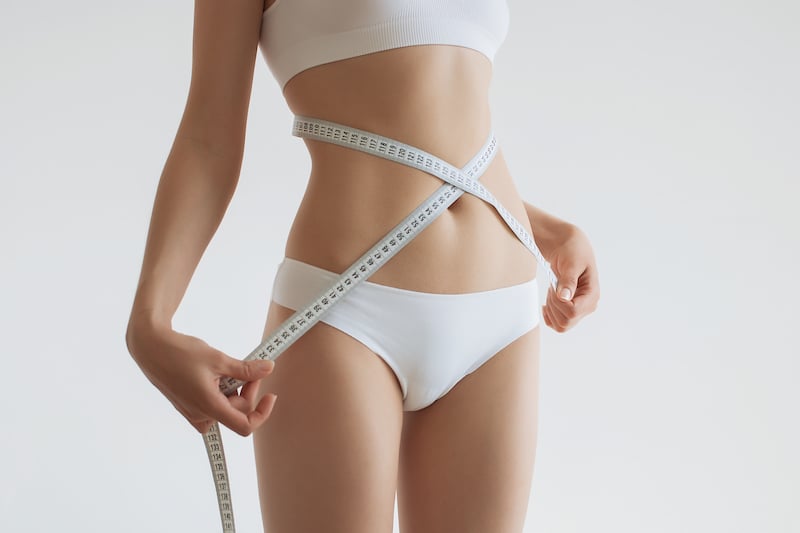
You may already have heard of lipolysis, but do you really know what it is? How can you activate lipolysis to burn more fat?
Sommaire
What exactly is lipolysis?
Lipolysis is a natural process in which adipose tissue is broken down, in other words, body fat. To give you an idea, these fat deposits are thought to represent between 15% and 25% of an individual’s total body weight (men and women combined). If these fat cells take up such a large place in our body, it is because they are necessary. In fact, these fats, also known as lipids, actually represent our emergency energy reserve. These are the reserves our body draws on when it does not receive enough energy intake.
It is worth knowing that when we lose weight, we do not actually lose fat mass. In fact, stored fat simply decreases in volume but does not disappear. That is why when we gain weight, these fat deposits grow and can even multiply. A study demonstrated this phenomenon and the fact that fat cells do not die but shrink or expand. (1)
How can you activate lipolysis naturally?
There are several ways to activate lipid elimination naturally:
Exercise
First of all, exercising is the best-known and most widely recognized method for helping the body naturally eliminate fat. Physical effort pushes the body to go beyond its limits and draw on its reserves for the energy it needs to function.
Fasting
Fasting from time to time can also help the body trigger lipolysis. Fat elimination by the body is encouraged by a lack of nutrient intake. The body then reacts by drawing on the excess lipids available to it.
Fat burners
In addition, fat burners are effective triggers that help support fat elimination. These include, for example, caffeine or green tea. Because they are stimulants, they help promote an increase in metabolism. The body then needs more energy to function and will draw directly from fat stores. As a result, this helps reduce fat storage in the body. Dietary supplements known as fat burners, made from plants or amino acids, work according to the same principle.
Different techniques to increase lipolysis
 Although lipolysis is a natural process that can be stimulated fairly easily using the techniques mentioned above, surgery can also be effective in increasing lipolytic activity. There are various surgical procedures, as alternatives to liposuction, used to reduce fat storage, target cellulite, and refine the silhouette.
Vibrating massage devices
Using slimming devices also helps promote fat elimination. Here, lipolysis is activated through the effect vibrations have on the skin. This high-speed rotating and vibrating action leads to fat breakdown. The rotations spread and the massage stimulates the elimination of deep fat deposits. The muscles contract up to 45 times per second, which increases fat burning!

Laser lipolysis
Laser lipolysis helps eliminate unwanted fat by heating fat cells through the action of a laser fiber placed under the skin. In addition, collagen fibers melt and renew themselves through the laser’s thermal action. This allows optimal skin tissue tightening. Its cost ranges between €1,000 and €1,500 (which remains less expensive than liposuction) for fairly effective results in most patients. This technique is used locally on very specific areas: the stomach, thighs, hips, knees, inner thighs, and arms. A study published in 2011 in The Journal of Clinical and Aesthetic Dermatology, confirms that the use of lasers in the fat-reduction process tends to promote liquefaction of fatty tissue and skin recovery. (2)
Injection lipolysis
Injection lipolysis involves injecting substances that are naturally present in the body in order to dissolve fat under the skin. Once released, this fat circulates in the bloodstream and is then naturally eliminated through urine. This is the most commonly used technique and it acts locally on areas of the body where unwanted bulges appear: thighs, stomach, chin, underarms…
The price generally ranges between €600 and €1,500. It is one of the most accessible solutions, although the cost still represents a real budget. Injections do not require hospitalization, they are not painful, and they involve minimal post-operative risk. Several sessions may be necessary.
Ultrasound lipolysis
Ultrasound lipolysis works thanks to plates placed on the patient’s skin that deliver ultrasound waves via a device. These waves affect the adipose tissue under the skin and help promote the drainage of fat cells. This technique is generally used in addition to another method. It also makes it possible to target fat mass locally: arms, hips, thighs, stomach… Its cost is generally between €1,500 and €4,500. A session lasts on average between 1 hour and 1 hour 30 minutes. Ultrasound treatment carries slightly more risks than other methods, and small burns may appear on the skin.
Cryolipolysis
The cryolipolysis is a technique combining cryogenics and lipolysis. This method consists of freezing fat cells, using a device that goes down to -5°C, to encourage their destruction. It allows localized reduction of subcutaneous fat deposits in order to reshape the patient’s silhouette. Indeed, by cooling the cells, they become subject to apoptosis (programmed cell death), which causes their slow and natural breakdown, becoming fully effective after around 60 to 90 days. The stomach, love handles, and even the back are areas treated by cryolipolysis. A session costs around €300 and lasts about 1 hour. This technique has demonstrated its effectiveness thanks to several medical scientific studies showing that selective cooling of cells allows a significant reduction in fat without risk to skin tissue (3). Cryolipolysis generally requires several sessions.
You can also use at home slimming treatments inspired by cryotherapy, which help reduce localized fat, as is the case with the Cold Slimming Gel for Stomach and Hips and the Cold Slimming Gel for Thighs and Buttocks from Cellublue.


Although these procedures are generally effective, they are costly. They are not all recommended for people who are overweight, pregnant, or have illnesses or medical conditions. The major drawback of these different procedures is that they focus only on small, specific areas and do not work in a generalized way, which can create uneven results.
Sources and references
(1) C. Girotti-Chanu, Thesis: Study of lipolysis and the synthesis of dermal compounds under the effect of cirsimarine, a flavone extracted from microtea debilis, 2006. http://theses.insa-lyon.fr/publication/2006ISAL0016/these.pdf
(2) McBean, Jason C and Bruce E Katz. “Laser lipolysis: an update” Journal of clinical and aesthetic dermatology vol. 4,7 (2011): 25-34. https://www.ncbi.nlm.nih.gov/pmc/articles/PMC3140909/
(3) http://www.cryolipolyse-marche.be/pages/etudes-sur-la-cryolipolyse.html