
An anti-cellulite routine shouldn’t be judged after three days, nor on the strength of one good or bad week. This guide helps you set a few simple benchmarks, spot the signs that really matter and know when to tweak your routine without jumping to conclusions.
Key benchmarks before judging a routine
Taking stock before judging a routine
The real challenge is telling a temporary fluctuation from a change that is starting to settle in. How long it takes varies with the area, how often you carry out each step and how consistent your overall plan is, not just with a single product or technique.
- Consistency in following the routine for at least three weeks.
- How often you actually carry out the steps each week.
- A consistent way of tracking it: photos, how your skin feels and how often you stick to the routine.
- Being able to adjust just one thing at a time.
Four steps to track your routine
- Step 1: choose three simple indicators before you start.
- Step 2: stick to a first 21-day cycle without changing half of your routine along the way.
- Step 3: take stock halfway through and adjust just one thing if needed.
- Step 4: then start a second, more targeted cycle rather than going back to square one.
From the outset, keep a few fixed indicators: the same photo set-up, the same area and the same time of day for each check.
A 2- to 4-week action plan
The idea isn’t to do everything at once. It’s about choosing a realistic order of steps, then sticking with that plan long enough to see what really helps.
- Set aside a weekly check-in of ten minutes at most.
- Compare photos taken in similar conditions.
- Note how easy the routine is to keep up, not just how things look.
- Link the timescale you observe back to the cellulite guide, the 7-day and 21-day routines, and the tools you’re using.
Tracking a Cellublue routine over several weeks
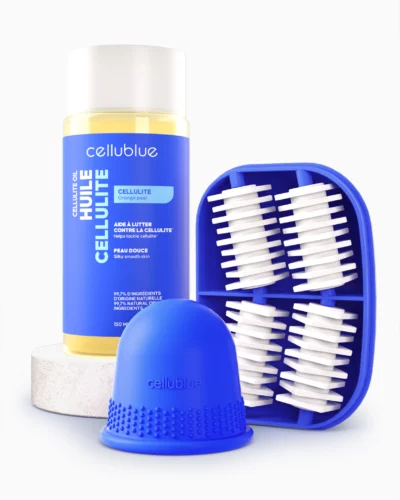
The same benchmarks apply if your routine includes Cellublue skincare or accessories, such as the Anti-Cellulite Cupping Cup: no tool should be judged in isolation. What you notice depends on how often you actually stick to the routine, how well you carry it out and your overall approach.
Try not to change several parts of your routine during a first 21-day cycle, as your observations will be easier to interpret. Then take stock using your comparable photos and your notes. If you’re torn between two methods, read Cupping vs palper-rouler massage: which method should you choose? to help you decide before starting your second cycle.
What you can do this week
If you’d like to turn what you’ve read into a practical plan, keep it simple: one main goal, two or three realistic time slots, a single tracking benchmark and a quick review at the end of the week. Keeping things minimal stops you from overcomplicating the whole thing.
- Pick just one question to settle over the week, not three at once.
- Check in at the same frequency so you don’t see differences that aren’t really there.
- Note what genuinely helps you stick with it, rather than relying on how motivated you feel that day.
- At the end of the week, decide whether to carry on with the same routine or try another approach that suits you better.
How to tell if you’re on the right track
With better tracking, you can finally judge your routine on a meaningful basis: consistency, how well you carry it out, how comfortable your skin feels and visible changes over several weeks. The sign to look for isn’t a dramatic transformation. It’s a routine that’s clearer, more comfortable and easier to keep up from one week to the next.
- A single main goal, measured against comparable criteria.
- A routine frequency you actually maintain, not just one you plan.
- Less back-and-forth between conflicting methods.
- A clearer idea of what to look into next, depending on your needs.
Before-and-after photos: comparing like for like
A before-and-after comparison is only meaningful if the conditions stay the same: the same area, the same time of day, the same lighting and the same pose. A photo taken after a long, busy day, or under different lighting, can suggest a setback or progress that isn’t really there.
Take a first set of photos before you start, then a new set at each weekly check-in. Put them side by side at the end of a 21-day cycle and compare them with how often you’ve actually kept up the routine and how your skin feels. One flattering photo isn’t enough to draw a conclusion.
Common mistakes to avoid
- Expecting a verdict after just a few days.
- Changing too many things at once.
- Mistaking a temporary change in how the skin looks for a lasting one.
- Giving up because you have no comparable benchmarks.
Frequently asked questions
When do the first changes usually become noticeable?
It’s generally worth allowing three to six weeks, provided the frequency, technique and overall routine have stayed stable enough to compare.
Should you carry on if nothing changes after a week?
Yes, a week is too short to draw any real conclusions about most routines.
Which indicator is the most reliable?
There isn’t just one: combine, at the very least, comparable photos, the frequency you’ve actually kept up and how your skin feels.
What should you do if the routine causes pain or discomfort?
If you experience pain, unusual discomfort or have any medical concerns, stop the routine and ask your GP or another qualified medical professional for advice before continuing.
Guides to read next
These guides take things further with a more comprehensive or more structured approach, depending on what you still want to explore.
- Cellulite: definition, types, causes and ways to reduce its appearance
- Anti-cellulite massage guide: methods, how to choose and how often
- Anti-cellulite techniques guide: comparison, cost and effectiveness
- Anti-cellulite exercise guide: routine, frequency and progression
Further reading
These articles round off this guide with a more practical or comparative angle, depending on what you’d like to clarify next.
- 7-day anti-cellulite routine: your morning and evening steps
- 21-day anti-cellulite routine: the complete plan
- Cupping vs palper-rouler massage: which method should you choose?
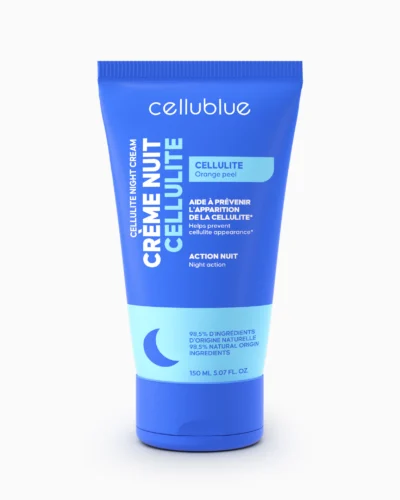
The cream that smooths the appearance of orange peel skin* and tones the skin
*Consumer test on 22 volunteers over 2 weeks, participants' self-assessment.
- Smooths the appearance of orange peel skin on the thighs, buttocks and stomach
- Caffeine & Green Coffee, the two benchmark active ingredients in body care
- Melting texture: absorbs in seconds and leaves the skin feeling comfortable

The scrub that leaves skin smooth and skin texture refined*
*User test on 21 volunteers over 4 weeks, based on participants' feedback.
- Olive & apricot kernels: these natural grains gently sweep away dead skin cells
- Caffeine & monoi scent, so your shower instantly smells like a holiday
- In the shower, two to three times a week, massaging your thighs, bottom and stomach