There is little doubt that after your pregnancy, cellulite has made its appearance on certain parts of your body.
Those stubborn dimples settled in gradually as you gained your pregnancy weight, before welcoming your little one into the world.
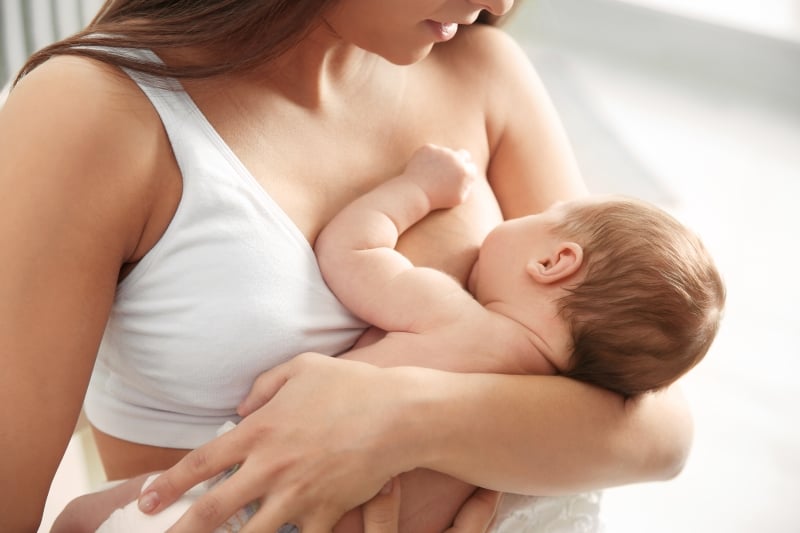
After giving birth, a choice presents itself: whether or not to breastfeed your baby. It’s possible that this decision comes with various considerations, including the idea that breastfeeding could help you shed those extra pounds and reduce cellulite.
But are you sure any of this is actually true?
What exactly is cellulite?
The word cellulite is one that many women wish they had never come across.
Often described as orange peel skin, cellulite typically appears on the thighs, buttocks, stomach, and arms in the form of small pockets of subcutaneous fat.
These tiny fat deposits become enlarged and give the skin that uneven, bumpy texture.
As adipocyte cells (fat cells) increase in volume — and during pregnancy, as the weight of the belly and baby grows — the lymphatic and blood vessels become compressed, losing their ability to drain the body’s waste products. The result: water and toxins accumulate beneath the skin.
There are three types of cellulite:
- Adipose cellulite, caused by excess dietary fat and sugar.
- Fibrous cellulite, which shares the characteristics of common cellulite but is also accompanied by fibrosis.
- Oedematous cellulite, stemming from water retention linked to poor blood circulation. This type tends to be hereditary.
The role of hormones in cellulite
Pregnancy brings with it a surge of intense hormonal activity. All those little discomforts endured over nine months — mood swings, fatigue, nausea, breakouts, and weight gain — are directly linked to the hormones that turn a woman’s body upside down.
For the sake of bringing a beautiful new life into the world, what wouldn’t we put up with? And yet, cellulite keeps creeping in, and it’s not entirely your fault.
Hormones play a key role in the development of cellulite. This is precisely why women are so much more affected by it than men.
While hormones don’t directly create cellulite, female hormones influence how fat is distributed throughout the body.
This is a type of fat known as gynoid fat, as it tends to settle in the lower half of a woman’s body.
Unfortunately, during pregnancy, we tend to be a little less mindful of what we eat, and small indulgences can have a greater impact.
These minor dietary excesses contribute to the formation of fat cells and fluid retention associated with cellulite.
But food choices aren’t the only thing to blame! Another hormone, produced specifically during pregnancy, also plays a role in encouraging cellulite to develop.
Prolactin and cellulite
Several hormones play a central role in milk production in a new mother’s body: oestrogen, progesterone, prolactin, and oxytocin.
During pregnancy, oestrogen and progesterone work to suppress milk secretion. After birth, oestrogen levels drop, which then encourages lactation.
Prolactin, meanwhile, rises steadily throughout pregnancy.
Its primary role is to trigger milk production and sustain it throughout the breastfeeding period.
And because the female body never does anything without reason, prolactin — which develops and increases during the conception of your baby — is also one of the contributors to the cellulite that forms on your body.
In preparation for the arrival of your newborn, prolactin encourages the body to store fat.
Why? Simply because your body is gearing up to become a source of nourishment and energy for your little one.
But don’t panic! This type of cellulite has only appeared over the past nine months, which means it will be far easier to shift than cellulite that has been building up for years.

Breastfeeding: a powerful ally against cellulite
According to a study (1) by Dewey, Heinig and Nommsen (1993), the weight and cellulite accumulated during pregnancy were significantly reduced in mothers who were able to choose breastfeeding for a minimum period of six months.
And for good reason: each time the baby feeds, prolactin is stimulated and draws on the energy reserves built up during pregnancy to fuel milk production.
The longer breastfeeding continues, the more those stored fat reserves are gradually depleted.
This is why you shouldn’t expect to see dramatic results in the very first month of breastfeeding. It’s a gradual process that unfolds over time.
A word of caution, however!
This doesn’t mean that diet plays no role. Breastfeeding is a helpful ally, not a miracle solution for weight loss and cellulite on its own.
It needs to be combined with a healthy, balanced diet. The old saying that you need to eat for two while breastfeeding because you’re feeding a baby is simply not true.
The quantity or quality of your milk is not affected by how much you eat.
Eating well, getting back into physical activity, and breastfeeding — that’s the winning combination for fully eliminating pregnancy cellulite and returning to your pre-pregnancy weight.
A few helpful habits
For even better results, you can incorporate some daily rituals targeting the areas where you’d like to reduce stubborn cellulite.
Using an anti-cellulite cream is not a bad idea, but it’s important to check the product’s ingredients carefully before applying it to your skin.
Always make sure that any products you apply are compatible with breastfeeding.
Also, simply applying the cream isn’t enough on its own. The real benefit of an anti-cellulite cream lies in the massage technique used during application.
The best approach is to massage the area with the cream for ten minutes, working upward from the bottom, kneading the skin gently but firmly.
Breastfeeding is, above all, a personal choice and a possibility. But if you were still on the fence about it, beyond the profound act of nourishing your child through your own body, you now have another reason to consider this feeding option for your baby.
It will be beneficial not only for your newborn, but for your body too.
If cellulite is something that significantly affects how you feel in your own skin, this natural approach may be all the more rewarding — requiring nothing more than a loving connection with your baby.
So, what are you waiting for?
Why do we get more cellulite during pregnancy?
Sources and references
*Maternal weight-loss patterns during prolonged lactation, Dewey KG; Heinig MJ; Nommsen LA (1993).