
Are you the energetic type who loves a good challenge? Then the Tabata method could be just the thing for you! This very intense style of training takes a lot of energy. But what exactly does it involve? And how can you fit it into your everyday workout routine? Discover where the Tabata method comes from, its benefits, how to do it and a few exercises to inspire you!
What is the Tabata Method?
The Tabata method, named after its creator, Japanese researcher Izumi Tabata, is a form of HIIT training, meaning it’s based on high-intensity interval work. It involves pushing hard for 20 seconds, resting for 10 seconds, and repeating this cycle 8 times in a row. In theory, the Tabata method offers a complete workout in just 4 minutes. For regular practice, the protocol can be repeated 2 to 3 times a week, with a recovery day between each high-intensity session.
The Tabata method is rooted in an experiment conducted by Professor Tabata in the 1990s(1). He divided cyclists into two groups. The first group cycled for one hour at 70% of their maximum aerobic capacity (VO2 Max), while the second group completed 7 to 8 rounds of 20 seconds at 170% of their VO2 Max, each followed by 10 seconds of rest. At the end of the experiment, Tabata observed a significantly greater improvement in VO2 Max in the second group. And so the Tabata method was born.
What Are the Benefits of the Tabata Method?
Since then, the Tabata method and, more broadly, high-intensity interval training techniques have been widely studied. Interval training is also often considered by people interested in burning calories and losing weight.
1 – A Highly Intense, Full-Body Effort
The Tabata method places enormous demands on the body. This type of training is extremely intense and demands a lot of energy in a short space of time. As a result, the body and its muscles are put to work – and more intensely than with traditional cardio sessions.
2 – The Afterburn Effect of the Tabata Method
HIIT methods like Tabata are also often associated with what’s called the “Afterburn Effect”. What does that mean? Simply put, it refers to the recovery phase that follows a Tabata session. Because the body is pushed to its limits during high-intensity interval training, the effort is particularly demanding. Having worked so hard, the body needs more time to settle back down. During this recovery time, the muscles rest and breathing gradually returns to its usual rhythm. That’s why it’s a good idea to allow a rest day between two sessions!
3 – What Does the Research Say?
Several studies have looked at HIIT and its different aspects:
- Some research has looked at how muscles use glycogen during HIIT-style training, such as the Tabata method (2).
- Other studies have examined the link between high-intensity interval training and abdominal fat and visceral fat (3).
- Some researchers have compared HIIT and conventional cardio, two very different ways of exercising (4).
- Others have looked at the Afterburn Effect of HIIT (and the Tabata method) and the recovery phase that follows exercise (5).
4 – Tabata and Calories: What to Expect
It’s hard to put an exact number of calories on a Tabata session. How much energy you use depends on how hard you really push during the 20 seconds of effort. It also depends on the exercise you choose (Jumping Jacks, squats, Mountain Climbers…) and on the individual. As a general rule, the closer you get to your maximum effort, the more energy your body needs. So it’s better to focus on consistency and the quality of your effort rather than on a number.
How to Practise the Tabata Method?
The Tabata method can be applied to a wide range of sports: running, cycling, swimming, rowing, jump rope, and even brisk walking. The key is to maintain the rhythm: 20 seconds of maximum effort followed by 10 seconds of rest, repeated 8 times. Of course, the Tabata method can be demanding for beginners. A few tips:
- Focus on your breathing throughout — both during effort and during rest.
- Avoid doing Tabata training every day; space sessions out by one or two days.
- If 8 rounds feel too challenging at first, start with 4 and build up gradually.
- The Tabata method isn’t complicated — it’s mostly a matter of willpower!
If you’re more of a fitness enthusiast, you’ll be pleased to know that Tabata translates perfectly to this discipline. Certain exercises lend themselves particularly well — anything explosive and rhythmic.
Jumping Jacks
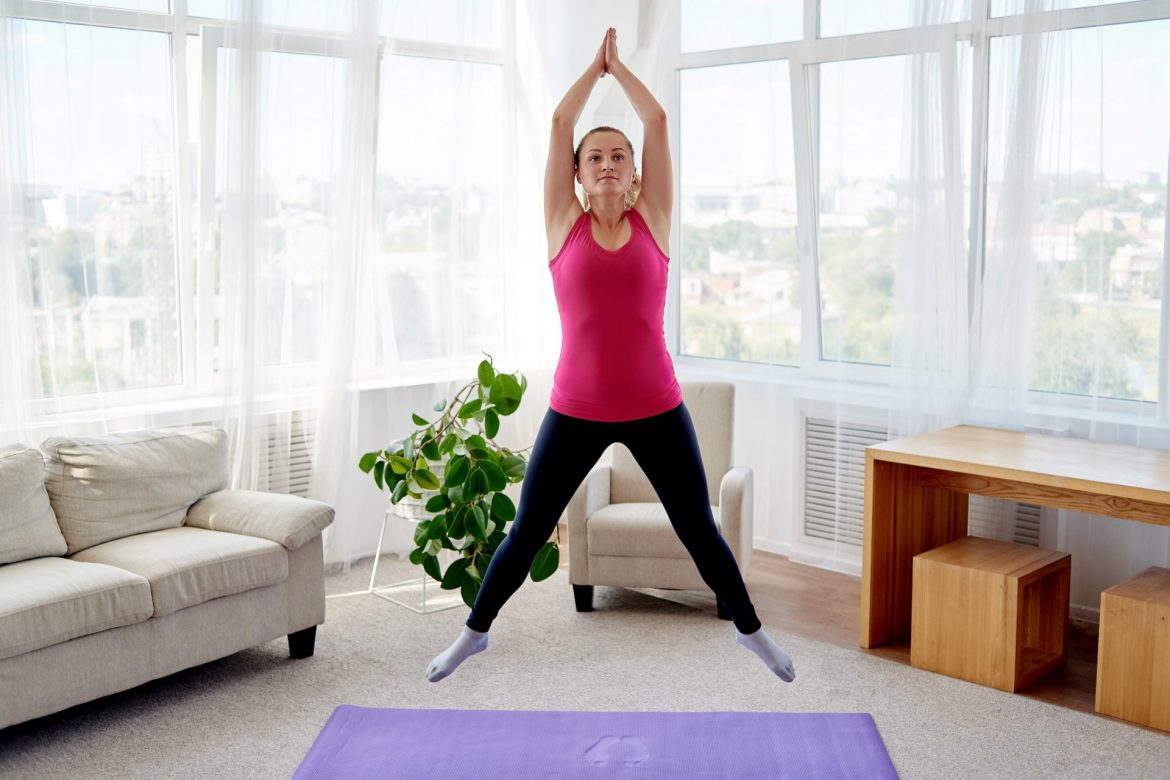
- Start standing with your feet together and arms at your sides.
- Jump, spreading your legs and raising your arms simultaneously. Your hands should meet above your head.
- Land in this position.
- Jump again, bringing your legs together and lowering your arms.
- Land with feet together and arms at your sides, back in the starting position.
- Keep going for 20 seconds as prescribed by the Tabata method, then rest for 10 seconds.
- Move on to a second exercise, or repeat the Jumping Jacks.
High Knees
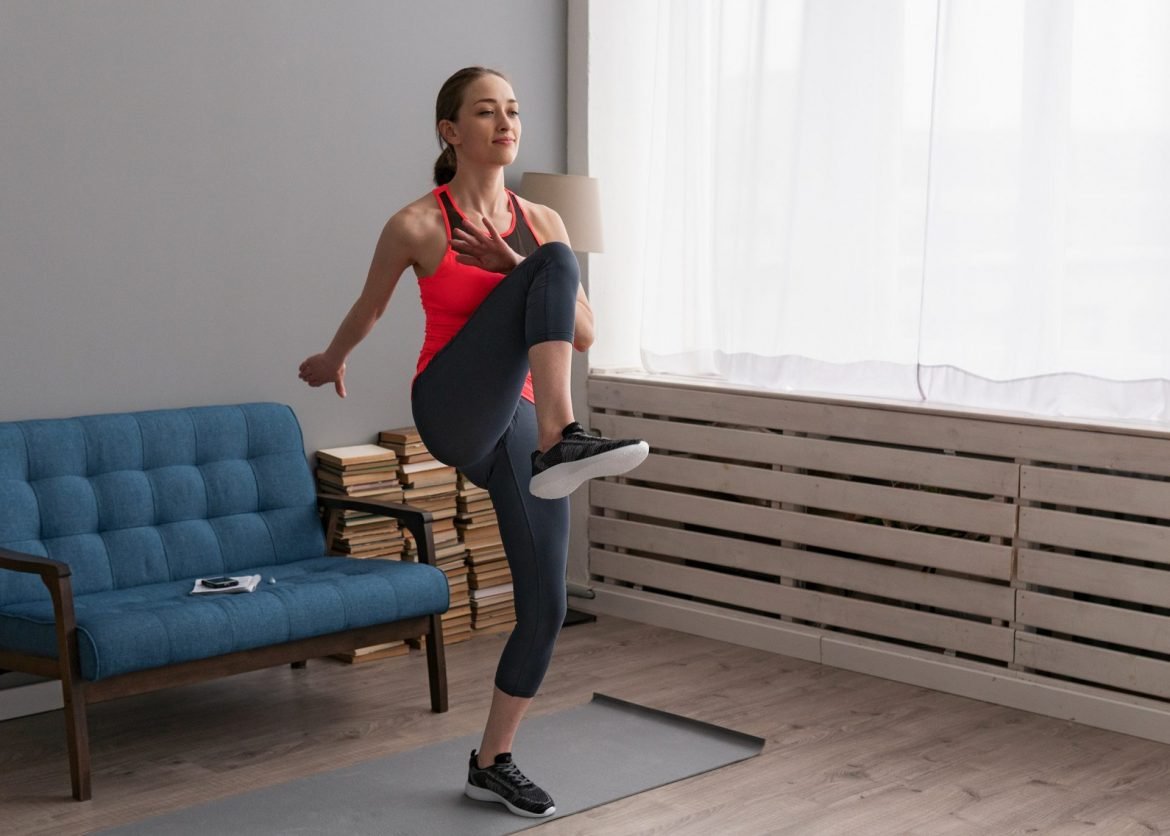
- Start standing tall with your back straight and arms at your sides.
- Begin running on the spot, driving one knee as high as possible. Keep your back straight. The arm opposite the raised knee lifts, elbow bent.
- Switch to the other knee, engaging your core and staying aligned throughout.
- Keep going for 20 seconds, then rest for 10 seconds.
Squats

- Start standing with your feet shoulder-width apart, toes turned slightly outward.
- Bend your knees and lower down as if sitting into a chair. Push your hips back slightly, keeping your lower back neutral.
- Lower until your thighs are parallel to the floor. Hold your hands clasped at eye level.
- Drive back up, engaging your thighs, glutes and core.
- Keep going for 20 seconds as recommended by the Tabata method, then rest for 10 seconds. Repeat or move on to another exercise.
Push-Ups

- Start in a plank position, face down, on your toes with arms fully extended.
- Lower yourself without touching the floor, bending your arms and engaging your muscles throughout.
- Push back up to the starting position.
- Keep going for 20 seconds, then rest for 10 seconds.
Mountain Climbers
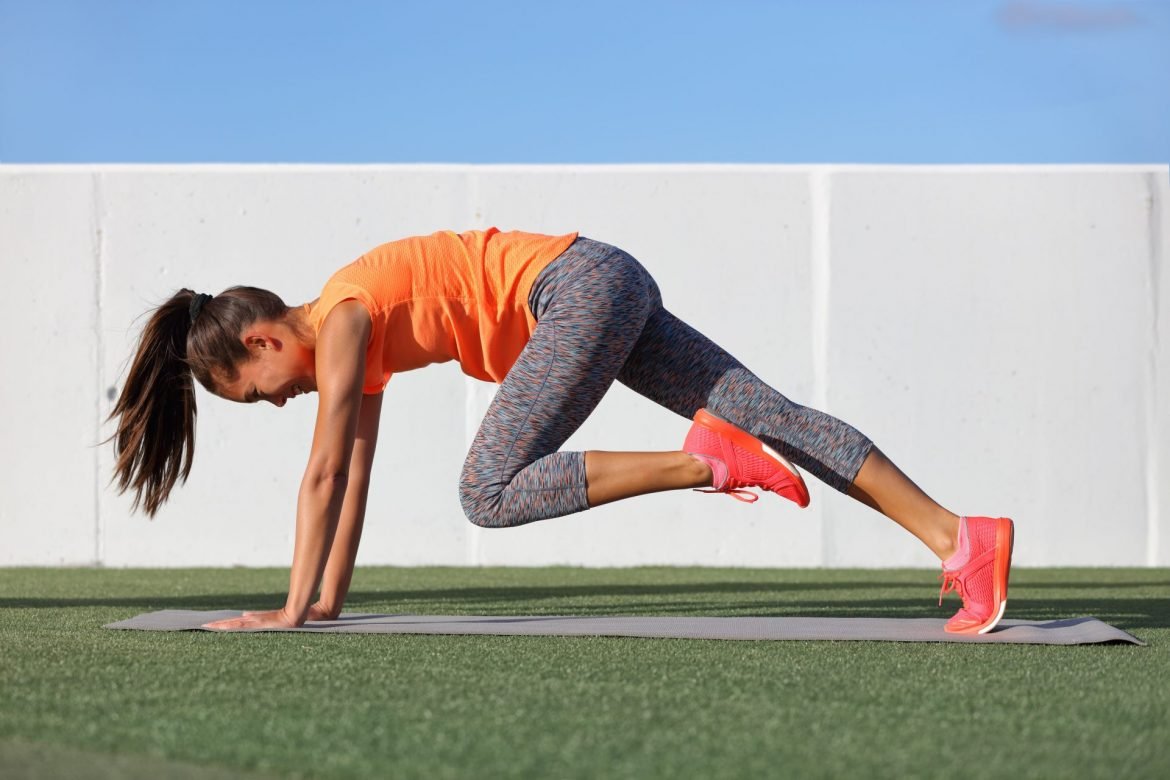
- Start face down, hands flat on the floor, legs extended behind you on your toes. Keep your shoulders down, chest lifted and arms straight.
- Alternate driving your knees toward your chest in a running motion.
- Go hard for 20 seconds, then pause for 10 seconds.
The secret to getting the most out of the Tabata method is to perform each exercise at high intensity. It’s this intensity that makes this type of training so distinctive!
The Tabata Method: What Precautions Should You Take?
The Tabata method pushes your body to its limits, so a little caution is called for. During the 20 seconds of effort, focus on the quality of your movements rather than speed at all costs. A well-executed squat, with no arching in your lower back, is better than a rushed set. Listen to your body and don’t hesitate to slow down if you need to. If you have a medical condition, are in pain, are pregnant or are getting back into exercise after a long break, speak to your GP before you get started.
References
(1) 1996, Tabata et al., Effects of moderate-intensity endurance and high-intensity intermittent training on anaerobic capacity and VO2max
(2) 2007, Talanian, Galloway, Heigenhauser, Bonen, Spriet, Two weeks of high-intensity aerobic interval training increases the capacity for fat oxidation during exercise in women
(3) 2018, Maillard, Pereira, Boisseau, Effect of High-Intensity Interval Training on Total, Abdominal and Visceral Fat Mass: A Meta-Analysis
(4) 1994, Tremblay, Simoneau, Bouchard, Impact of exercise intensity on body fatness and skeletal muscle metabolism
(5) 2001, King, “A Comparison of the Effects of Interval Training vs. Continuous Traini” by Jeffrey Warren King
Related articles
Useful categories: Fitness, Weight Management.
To go further, explore the Cellublue shop: our body care products.