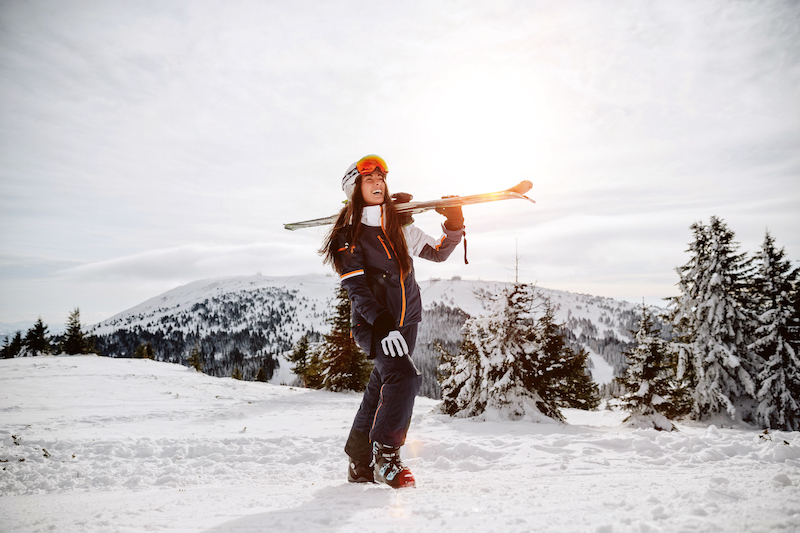
Heading to the mountains and wondering whether skiing can really help you slim down? Good news: skiing and weight loss are far from incompatible. Between the cold, the altitude and the muscular effort, your body burns far more energy than you might think.
But how many calories do you actually burn on the slopes? Which muscles are working? And above all, how can you make the most of your days on the mountain to lose weight more effectively? We explain everything.
Sommaire
How many calories do you actually burn skiing?
This is THE question you’re probably asking yourself: does skiing really help you lose weight?
On average, a woman burns:
- 350 to 500 calories per hour in alpine skiing
- Up to 600 calories per hour at a sustained pace
- Even more if you alternate dynamic runs with walking around the resort
Over a full day (4 to 5 hours of cumulative activity), you can easily reach 1,500 to 2,000 calories burned.
Why such a high energy expenditure?
- The cold forces your body to produce more heat.
- The altitude slightly increases energy expenditure.
- Ski runs place intense demands on your muscles.
- You are almost constantly in motion.
👉 Yes, skiing and weight loss can go hand in hand — as long as you don’t offset every run with an XXL tartiflette (more on that below).
Which muscles does alpine skiing work?
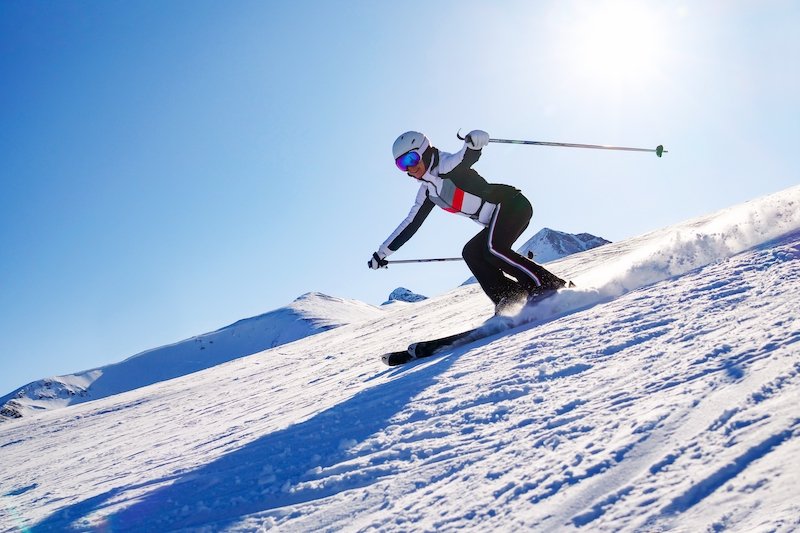
Alpine skiing is an incredibly complete sport. Even if it feels like mostly your legs are doing the work, your entire body is engaged.
The main muscles involved:
- Quadriceps: constantly active to absorb impact
- Hamstrings: to stabilise movements
- Glutes: heavily engaged through turns
- Calves: to maintain balance
- Core and back: for posture
- Arms and shoulders: for balance and pole work
In other words, skiing acts as a full-body strength workout.
And more muscle means a more active metabolism.
Why does the mountain environment support weight loss?
The mountains create a particularly favourable environment for losing weight:
1. Cold boosts calorie burning
Your body burns more calories to maintain its core temperature.
2. Interval-style effort
Skiing works like interval training:
- Intense phase (the descent)
- Recovery phase (riding the chairlift back up)
This type of effort is well recognised for promoting fat burning.
3. Sustained activity throughout the day
At a ski resort, you’re far more active than you realise. Between trips back and forth to your accommodation, carrying your skis, getting around at altitude and short walks to reach the lifts, your body stays in motion for a large part of the day. This “invisible” activity increases what is known as NEAT — your daily energy expenditure outside of structured exercise. The result: even between runs, you keep burning calories.
Why some people burn more calories than others on the slopes
Not all ski days are equal. The factors that matter:
- Your starting weight: the higher it is, the greater the calorie burn
- Your level: a beginner skier often burns more because she works harder to stay balanced
- The intensity of your runs
- Your actual time on the slopes
- Your diet: because yes, if you burn 1,800 calories but consume 2,500 at the mountain restaurant… you won’t lose weight — quite the opposite.
How to make the most of skiing for weight loss

If your goal is to slim down during your mountain stay, here are a few simple but effective tips:
Mix up your runs
- Alternate between red, blue and black slopes
- Include more technical descents
- Extend your sessions
Engage your posture
- Keep your core lightly engaged
- Sink a little lower into your stance
- Consciously activate your glutes through turns
This turns your ski day into a genuine strength-training session.
Stay active off the slopes too
- Walk instead of taking the shuttle when you can
- Try a snowshoeing session
- Take the stairs instead of the lift
Keep indulgent moments in check
Mountain holidays often mean:
- Raclette
- Fondue
- Tartiflette
- Mulled wine
Of course, you can treat yourself. But if you want to get the most out of skiing for weight loss, think about lightening up your winter meals by adjusting portions and sides. A protein-rich breakfast, a balanced lunch and staying well hydrated will make all the difference.
And after an intense day on the slopes followed by a heartier mountain dinner, think about giving your digestion a boost. A Detox Infusion in the evening can help you feel lighter.
