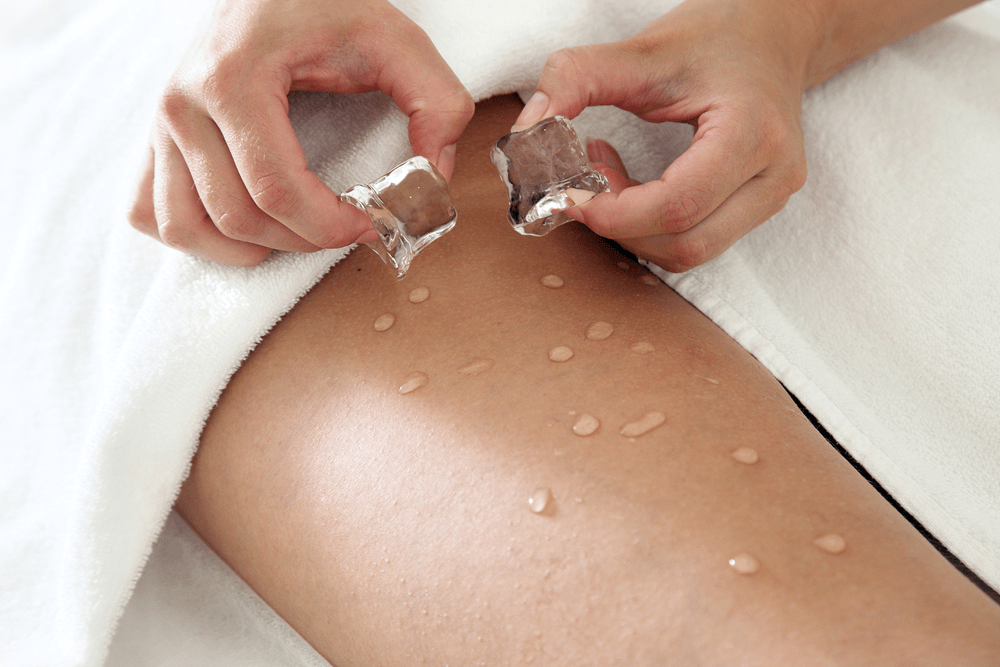
Cryotherapy is a method that helps, among other things, burn fat for a slimmer silhouette — and it does so through the power of cold. The term comes from the Greek « krùos » meaning « cold » and « therapéuô » meaning « to heal, to treat ». Cryotherapy is therefore a method of « treating with cold » — it is also commonly referred to as « cold therapy ».
Cryotherapy is used as a slimming treatment, but not exclusively. In this article, we explore the benefits of cryotherapy, how cold acts on the body, how aesthetic professionals use it, and who this method is suitable for.
What is cryotherapy and what is it used for?
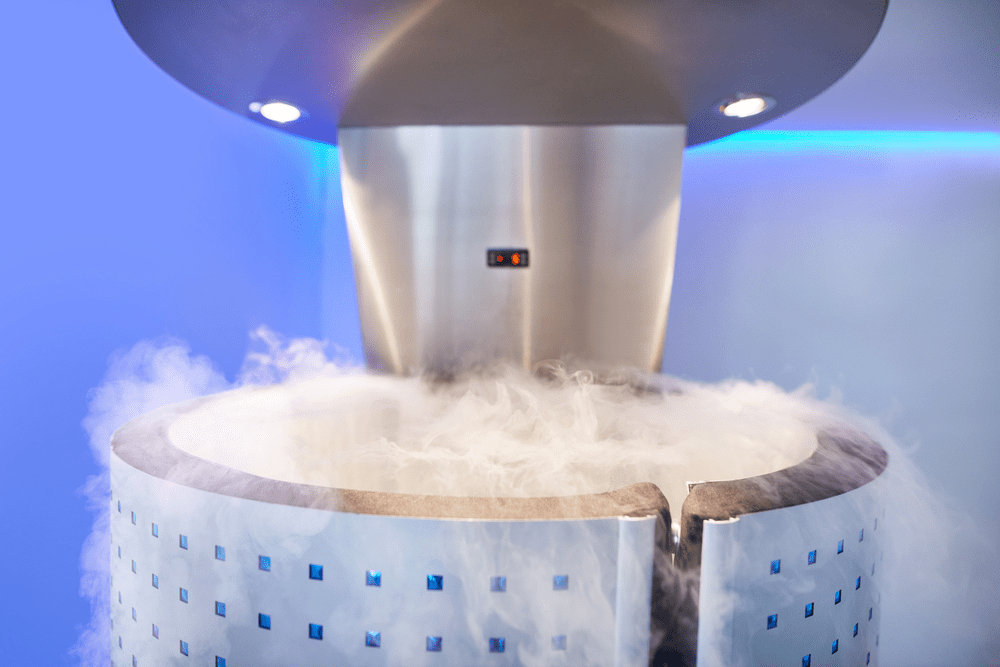 Cryotherapy is a treatment method that has been known since Antiquity. At that time, it was common practice to take very cold baths to enjoy their benefits and relieve pain. However, it was not until the 1970s that scientists began developing mechanical methods to make cryotherapy easy and effective to use. The first efficacy tests were carried out in Japan in 1978, when Dr Yamaguchi created a cryotherapy chamber reaching temperatures as low as -164°. It would take until 2011 for cryotherapy to be used with athletes, and until 2016 for the method to become widely available to the general public — notably for its slimming benefits.
Cryotherapy involves exposing the body to intense cold for a brief period, typically -110° for 3 minutes. Scientific research has identified a wide range of benefits to cryotherapy, the main ones being:
- Therapeutic indications, meaning the use of whole-body cryotherapy prescribed by a doctor to treat or reduce the symptoms of certain conditions (rheumatism, osteoarthritis, Parkinson’s disease, multiple sclerosis, depression, fibromyalgia, etc.).
- Sports indications, meaning the use of whole-body cryotherapy for high-level athletes. In these cases, cryotherapy is used to prepare for competition, speed up recovery, improve performance, or support rehabilitation.
- Aesthetic and wellness indications, which are more recent. Scientific studies have shown that « localised » cryotherapy, also known as « cryolipolysis », can help firm the skin, reduce cellulite, support weight loss, and also promote relaxation, stress relief and better sleep.
Cryolipolysis: the slimming branch of cryotherapy
In this article, we focus on the « slimming and wellness » branch of cryotherapy: cryolipolysis. Derived from cryotherapy, cryolipolysis has gained popularity in recent years — the first aesthetic clinics in France began offering this method in 2016. The term cryolipolysis comes from « cryo » meaning « cold » and « lipolysis ». Lipolysis is a natural process in the body — it is the phase during which the body draws on stored fat for the energy it needs to function. This stored fat is held in the form of lipids within fat cells called adipocytes. Cryolipolysis therefore works by triggering lipolysis through the application of cold.
This method was developed by Doctors Rox Anderson and Dieter Manstein[1], both heads of the dermatology department at Massachusetts General Hospital in Boston, USA. They built on an observation made in the 1880s, known as « cold panniculitis », which showed that women who rode horses in skirts during cold weather naturally lost fat in their thighs. Drawing on this historical finding and combining it with more recent studies, the two doctors discovered that cold had a direct effect on adipocytes and that this effect could be targeted to destroy fat cells in a localised area.
Researchers at Harvard Medical School then built on this data to develop the first machines for localised fat destruction using cold. After a great many successful clinical trials, modern cryolipolysis was born.
How does cold act on the body?
Cryolipolysis uses cold to destroy fat cells for aesthetic purposes. The method involves applying a device that generates a temperature of between -13° and -9° to a specific area of the body for 60 minutes. This temperature cools the adipocytes — the fat cells — sufficiently to trigger their death. This reaction is known as « apoptosis ». When adipocytes are exposed to cold, they contract, release the fats and toxins they contain, and undergo necrosis. These dead cells are then eliminated over the course of several weeks (3 to 8) by the body through its natural pathways, namely the lymphatic system.
This destruction of adipocytes reduces the thickness of the fat layer, thereby eliminating bulges and cellulite. Scientific research[2] has shown that only fat cells are affected by the cold — other cells present in the area, such as those making up blood vessels or nerves, are far less sensitive to low temperatures and are therefore not impacted by this method[3]. Only fat cells are destroyed, which is why this method is considered safe.
The first results appear between 15 and 45 days after the session, and continue to improve for up to 2 months afterwards. According to studies, cryolipolysis can reduce the volume of fatty tissue by 25 to 45% in the treated areas. Results vary depending on the patient’s dietary habits, metabolism and the resilience of their cells to cold.[4]
Fat cells destroyed by cold are gone permanently. This method is therefore effective in the long term. However, if a balanced lifestyle is not maintained, the body will create new fat cells over time.
What does a cryolipolysis session involve?
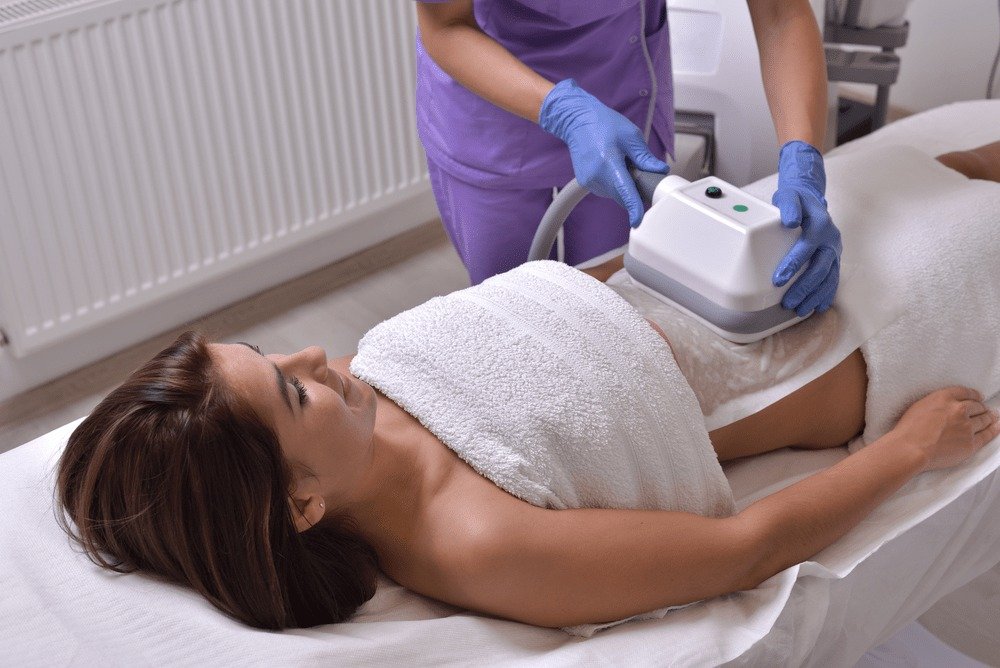 Cryolipolysis is a non-invasive fat reduction method — unlike liposuction, for example — and is both painless and quick. The technique can be performed by a doctor (dermatologist, cosmetic surgeon or plastic surgeon) or at an aesthetic clinic. The first step involves a patient assessment by the practitioner, who evaluates skin quality and the thickness of the fatty tissue. For the method to be effective, the fatty tissue must be approximately 4 cm thick.
Once this step is complete, the treatment can begin. A gel-coated membrane followed by an applicator — resembling a large suction cup — is applied to the target area for approximately 60 minutes, generating a temperature of between -9° and -13°. The applicator is then removed and the practitioner performs a brief massage to help restore healthy blood circulation.
The treatment is not painful; only sensations of skin stretching and cold may be felt at the start of the session. Once the applicator is removed, temporary redness, swelling or itching may occur.
As a general rule, one session per treatment area is sufficient, and results appear within 3 to 8 weeks of the session — the time the body needs to eliminate the destroyed fat cells through its natural pathways.
To support the results of cryolipolysis sessions, patients should, in the days that follow, drink plenty of water, walk for at least 30 minutes a day, avoid alcohol and coffee, and perform regular palpate-roll massages. After treatment, the body needs to eliminate dead fat cells via the lymphatic circuit, and these good habits help keep that circuit functioning at its best.
The cost of cryolipolysis treatment varies depending on the area being treated and the type of facility chosen. In France, the average price per session is estimated at €150 at a beauty institute and up to €600 when performed by a cosmetic surgeon.
It is also possible to recreate cryotherapy-inspired treatments at home. This is precisely the idea behind the Cellublue Cryo range, which helps reduce localised fat on the stomach, hips, thighs and buttocks.
Who is cryolipolysis suitable for?
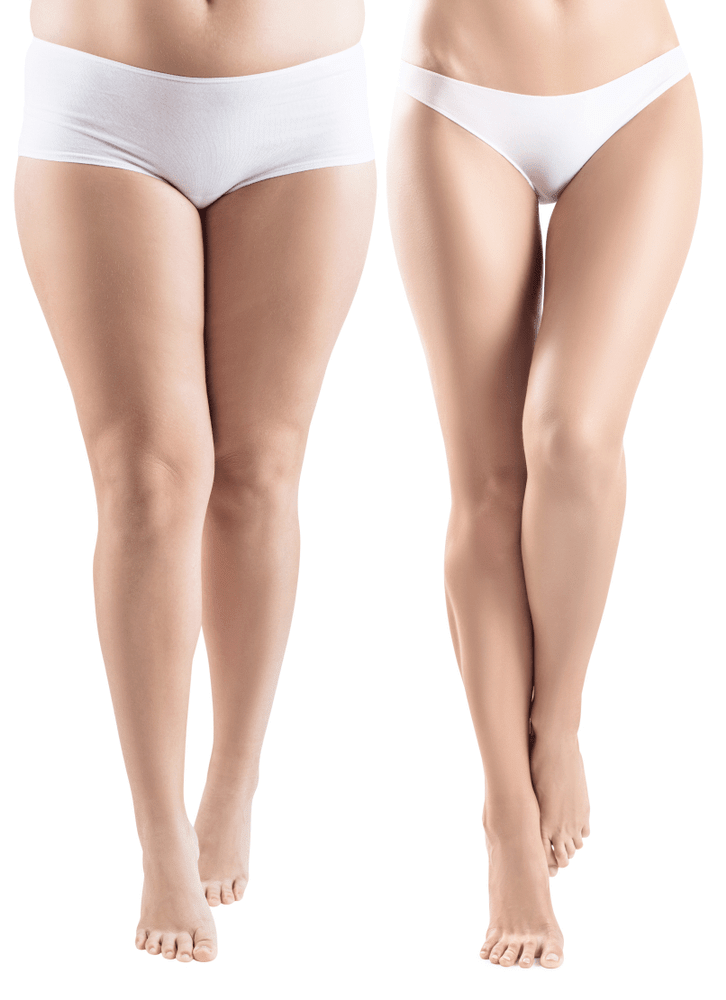 Cryolipolysis is not suitable for people who are obese or significantly overweight (BMI above 30), as their adipose tissue is too thick for the treatment to have more than a very limited, barely visible effect. Cryolipolysis is contraindicated for people with cryoglobulinaemia, cold urticaria, abdominal hernia, or those with an electronic device such as a pacemaker. This method is not available to pregnant or breastfeeding women.
Cryolipolysis is intended for people at a stable weight who wish to target stubborn fat in specific areas. The method can treat the following zones:
- The stomach
- The back
- The inner knees and inner thighs
- The saddlebags
- Rolls beneath the buttocks
- The inner arms
- The chin
It is also worth noting that cryolipolysis is effective against adipose and fibrous cellulite, but will not be effective on aqueous cellulite, which is linked to poor blood and lymphatic circulation and water retention.
In summary, cryolipolysis — the slimming branch of cryotherapy — is an effective method for destroying excess fat cells stored in the tissues, with cold being recognised for its ability to help the body eliminate fat naturally. That said, maintaining a healthy lifestyle (balanced diet and regular physical activity) is essential to preserve the results achieved.
Sources
[1] Cryolipolysis for noninvasive fat cell destruction – Manstein, D; Laubach, H; Watanabe, K; Farinelli, W; et al. (2008) : https://www.researchgate.net/scientific-contributions/79756314_Dieter_Manstein_MD
[2] Evaluation de la tolérance et de l’efficacité de la cryolipolyse – étude rétrospective sur 1 an par le Dr Michael Nouri : https://www.deleo.fr/images/White%20Paper%20Dr%20Naouri%20-%20Cristal.pdf
[3] Coleman, SR; Sachdeva, K; Egbert, BM; Preciado, J; et al. (2009). “Clinical efficacy of noninvasive cryolipolysis and its effects on peripheral nerves
[4] La cryolipolyse contre la cellulite – AFME Association Française de Médecine Esthétique et anti-âge : https://www.afme.org/actes-me/cellulite-actes-me/cryolipolyse-ou-lipocryolyse/