You’ve probably heard of collagen, the protein that’s essential for healthy skin. But what exactly is collagen, and what is it for? What role does it play in your skin and in the rest of your body? And why is it so closely linked to beautiful skin? Here’s a clear look at how it’s made, how it changes with age and the different forms it comes in.
What is collagen?
Before diving into the benefits of collagen, it’s important to understand what this remarkable protein actually is. Collagen is the most abundant protein in our body. It plays a vital role in the cohesion, elasticity and regeneration of skin tissue.
What is collagen in the skin?
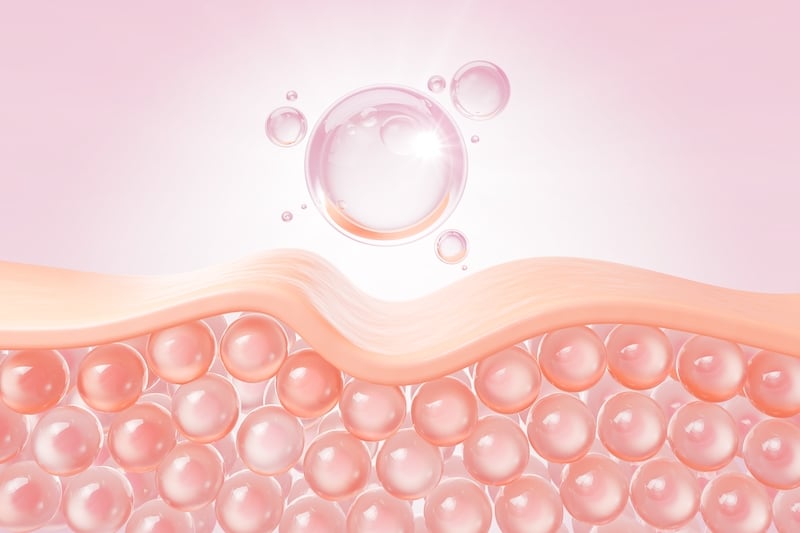
In the skin, collagen is produced by fibroblasts, a type of cell that acts as its main “production factory”. As the most abundant protein in our body, it contributes to the cohesion, elasticity and regeneration of skin tissue, and it is part of what helps skin retain moisture.
Our body makes collagen from a very early age, but production slowly declines over the years. That is why it’s worth understanding what collagen does and how you can support it.
What does collagen do for your skin and body?
- Preserving firmness and elasticity: Collagen contributes to your skin’s tension, that bounce, that little “snap” that helps it look youthful and fresh.
- Skin hydration: Think of it like watering your plants. Without water, they wilt. Collagen is part of what helps our skin retain moisture, so when levels drop, skin can look drier and duller.
- Joints: Collagen also plays a part in your joints, helping everything keep moving smoothly.
- Bones: Just as calcium is associated with bones, collagen also plays a part. It contributes to bone structure.
- Body tissue renewal: Collagen is involved in the renewal of tissues, which matters for skin that looks beautiful and healthy.
How does our body produce collagen?
- Cell synthesis: Fibroblasts, a type of cell found in our skin, are the main “production factories” for collagen. They create this protein using specific amino acids, which we obtain primarily through our diet.
- Vitamin C: Some foods contain vitamin C.
- Other nutrients: Beyond vitamin C, other nutrients also play an essential role in collagen production, such as the amino acid proline and minerals like copper and zinc.
How collagen changes with age
Our body starts producing collagen from a very early age and continues throughout our lifetime. However, there’s a catch…
-
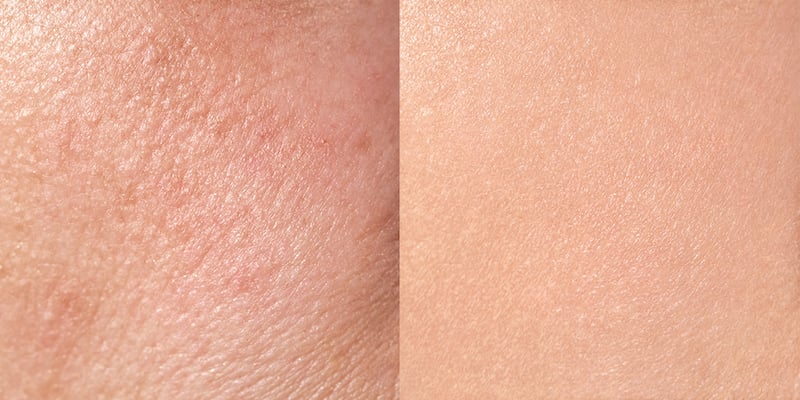
Youth and adolescence: At this stage, the body is in “full production mode”. Skin is plump, elastic and radiant thanks to the high levels of collagen being produced.
-
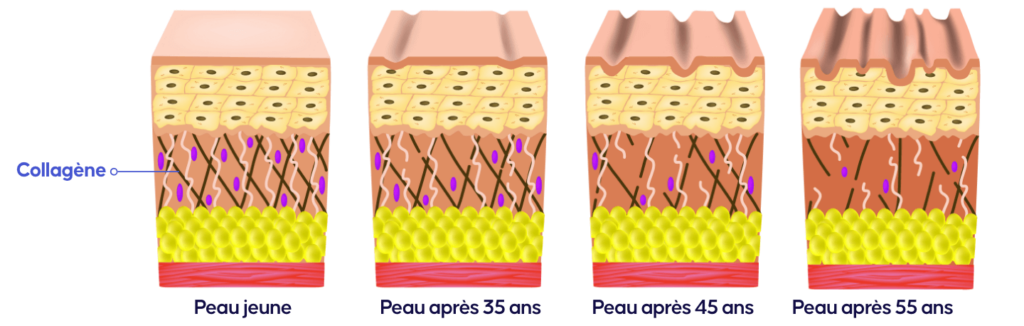
From your twenties onwards: Production slowly begins to decline. Around the age of 25, we can start losing approximately 1% of our collagen per year. It doesn’t sound like much, but over the years, it really adds up!
-
After menopause: For women, after menopause, this decline accelerates further due to hormonal changes.
-
Ageing: As we get older, collagen production continues to slow down, leading to the appearance of wrinkles, skin sagging and other signs of ageing.
But don’t worry! Even if natural collagen production decreases with age, skincare products are another option.
What forms of collagen can you take?
Collagen comes in several forms, from what you eat and drink to what you apply to your skin.

- Collagen powders (hydrolysed): These powders can be mixed into hot or cold drinks. You can easily add them to smoothies, coffee or soups.
- Collagen capsules: Convenient to take with a large glass of water, they are a practical option to fit into your daily routine.
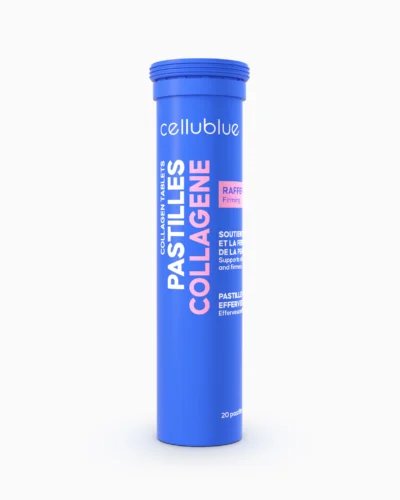
- Effervescent tablets: Such as our Cellublue Collagen Effervescent Tablets, a blend of marine collagen and vitamin C. With a delicious peach flavour, each tablet dissolves into a sparkling drink.
- Creams: Certain targeted creams contain active ingredients chosen to encourage the skin’s own collagen production, helping it look firmer and more elastic as the signs of ageing appear.
- Foods: Oily fish and seafood, for example, contain amino acids and omega-3s.
- Collagen injections: Used in aesthetic medicine to reduce the appearance of wrinkles.
At Cellublue, we understand how important collagen is for radiant, toned skin. That’s why we offer a complete range of firming body products, specially formulated to care for skin that is losing its firmness.
Also discover our Firming Programme, designed to support you in caring for skin that looks both firm and elastic.
Related articles
- DIY: prepare 3 natural body masks!
- DIY: 2 Natural Firming Treatments to Fight Cellulite!
- Sagging skin under the arms: how to firm it up?
Useful categories: Firming.
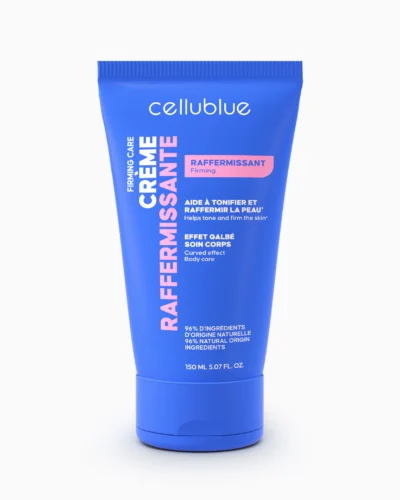
The body cream that hydrates and helps firm the skin
- Kigeline & Fenugreek, two plant-based actives at the heart of the formula
- Hydrates the skin and helps strengthen its firmness on targeted areas
- Melting texture: it absorbs quickly, with no residue or greasy film