Every woman who takes or has taken the pill has heard it at least once. That little phrase that passes for gospel truth: “You’re on the pill? You’re going to gain weight.” So, myth or reality? Is the contraceptive pill responsible for weight gain or the appearance of cellulite? It’s a controversial topic, and one well worth exploring. In this article, we look at what the hormones in the pill can do to your figure, why some women are more sensitive to them than others, and what options there are if you’d like to change your contraception or simply look after your skin day to day.
The pill’s unwanted effects on your figure
Oestrogens, found in contraceptive pills, are the hormones most often blamed for weight gain and the development of cellulite. Naturally produced by the female body, this hormone predisposes women to storing fat around the buttocks, hips and thighs. A perfectly normal phenomenon, and one that taking an oral contraceptive can accentuate in some women. Another possible downside: oestrogens can cause water and sodium retention, commonly known as water retention, in the tissues. This can lead to some swelling and cellulite in the lower body, as well as feelings of breast and pelvic tension.
Progesterone, another hormone, is found as a progestogen in certain pills (combined oral contraceptives, or the combined pill), where it works to counterbalance some of the effects of oestrogens. But here’s the catch: some combined pills can stimulate appetite in some women and slightly change the way the body handles sugar, which can trigger cravings for snacking. Bad news for cellulite on our thighs…
To sum up: if your pill’s dosage is poorly suited to your physiology, taking it can have an impact on your body, such as weight gain or more noticeable cellulite.
Does coming off the pill get rid of cellulite?
Many women wonder whether coming off the pill is enough to make cellulite disappear. The answer depends on each situation: cellulite is linked to several factors, and contraception is only one of them. If your pill wasn’t well suited to your physiology, stopping or switching may bring about some change, but it takes time and varies from one woman to the next.
Either way, it isn’t an on/off switch: established cellulite doesn’t vanish overnight. If you’re thinking about stopping or changing your contraception, talk to your GP, who can point you towards the option best suited to your situation.
What are the solutions?
First, an important reminder: we are all different. Some women gain weight easily, while others struggle to put on a few pounds. The same goes for venous-lymphatic insufficiency or water retention — some women are prone to it, others less so. The same applies to contraception: some women won’t gain an ounce on the pill, while others will develop stubborn cellulite.

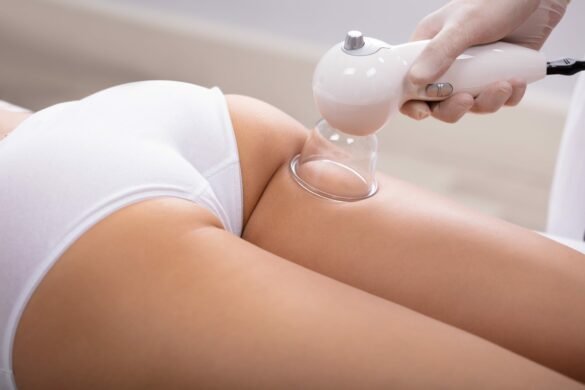
The cupping tool that replicates pinching and rolling, 3 minutes per zone
- The professionals' technique, at home: you lift, glide, and release, and the tool grips the skin fold like a manual pinching and rolling
- Soft silicone that fits thighs, buttocks, stomach, and arms
- 3 minutes per zone, every day, always with a massage oil so the tool glides
1- Switch your contraceptive pill
That said, until recently, women prone to water retention — and therefore to aqueous cellulite — who chose the pill as their contraceptive method (effective and convenient, it has to be said) had very few good options available to them. Either stop taking the pill, or submit to low-calorie diets that are harmful to the body, just to shed the extra weight and limit the appearance of cellulite.
Fortunately, new options have emerged. Some pills are lower-dose or formulated with other progestogens such as drospirenone, which some women tolerate better. Each one has its own contraindications, however: 3rd and 4th generation pills, for example, are associated with a higher risk of venous thrombosis. Alternatives to oral contraception, such as the intrauterine device (IUD), which comes in a copper version that releases no hormones, or the contraceptive patch, are also increasingly popular. A friendly piece of advice: speak to your doctor or gynaecologist and discuss your needs together.
What about newer pills?
New pills come onto the market regularly, and some are mentioned by women looking for contraception with fewer effects on their figure. Every pill has its own composition and dosage, and the way your body reacts to it is individual: what suits one woman won’t necessarily suit another.
If you’re wondering about a particular pill, the best thing to do is to discuss it with your GP or gynaecologist: they’re the only ones who can tell you whether it fits your profile, your medical history and your needs.
2- Adopt an anti-cellulite routine
If you switch contraceptive pills, bear in mind that it will take patience and consistency either way. To look after your skin through this transition, you might consider adopting an anti-cellulite skincare routine. A refreshing range with a cooling feel, designed to be massaged into the areas where dimples are most visible! The cellulite & slimming pack includes:
- A cellulite cream, perfect for applying all over the body
- A melting gel specially formulated for the stomach and hips, for an invigorating cooling feel
- A cooling jelly specially designed for the thighs, to massage into the areas where cellulite is most stubborn
Applied morning & evening with a massage, these products fit easily into your daily routine.
A regular routine with this glamorous trio can help care for your skin and the look of cellulite, alongside a contraception that is right for your body, chosen with your doctor.
Frequently asked questions
Is cellulite caused by the pill reversible?
There’s no single answer: cellulite depends on many factors, such as hormones, genetics, diet and physical activity. If your pill wasn’t right for you, changing your contraception may make a difference, but slowly and in a way that varies from woman to woman. Talk to your GP to find the contraception that suits you.
How long after coming off the pill can cellulite fade?
No timescale can be promised: the body generally takes several months to find its hormonal balance again, and the look of your skin changes slowly. In the meantime, regular exercise and massage can be part of your routine. Never stop your contraception without an alternative in place: ask your GP for advice.
Can a newer pill prevent cellulite?
No pill can ensure you won’t get cellulite, and every woman reacts differently to the same contraception. Some tolerate a lower-dose pill or a different progestogen better, others don’t. The choice should be made with your GP or gynaecologist, taking into account your medical history and any contraindications.
What should I do if my pill gives me heavy legs and cellulite?
If your legs feel heavy, swollen or painful while you’re on the pill, tell your GP promptly: this needs checking, as hormonal contraceptives increase the risk of thrombosis. They can also suggest a different pill or a hormone-free method. Alongside this, regular massage and suitable skincare can be part of your routine.
Related articles
- Tennis and cellulite: does it really help?
- Water retention and food supplements: what you should know
- Water retention in the belly: causes and tips
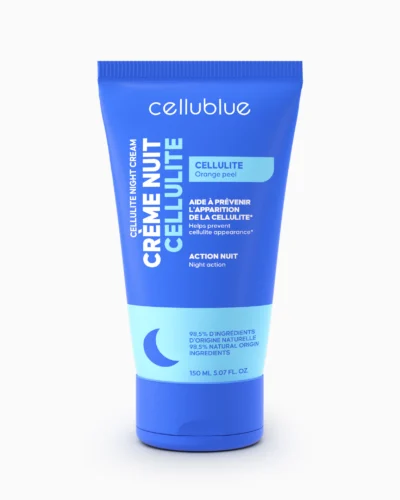
The cream that smooths the appearance of orange peel skin* and tones the skin
*Consumer test on 22 volunteers over 2 weeks, participants' self-assessment.
- Smooths the appearance of orange peel skin on the thighs, buttocks and stomach
- Caffeine & Green Coffee, the two benchmark active ingredients in body care
- Melting texture: absorbs in seconds and leaves the skin feeling comfortable


The scrub that leaves skin smooth and skin texture refined*
*User test on 21 volunteers over 4 weeks, based on participants' feedback.
- Olive & apricot kernels: these natural grains gently sweep away dead skin cells
- Caffeine & monoi scent, so your shower instantly smells like a holiday
- In the shower, two to three times a week, massaging your thighs, bottom and stomach