No. The percentage of a cosmetic ingredient does not, on its own, predict how effective a treatment will be. It tells you how much of something is present in the formula, provided you know exactly what the figure refers to. The result also depends on the ingredient’s form, the formula it is used in and the conditions of use. A higher figure does not automatically mean a better result.
What is the percentage actually referring to?
Before comparing two concentrations, check what is being measured: a clearly identified substance, an extract or a blend of several ingredients. The figures may look comparable while describing very different things. To review the basics, read our article on the role of a cosmetic active ingredient.
A substance and an extract are not equivalent
A clearly identified substance and a plant extract cannot be compared simply by looking at their percentages. An extract may contain several compounds as well as a carrier, such as water. The percentage of extract added to the treatment therefore does not necessarily correspond to the percentage of one particular compound.
Purely illustrative example: “5% of a complex” means that the complex represents the stated share of the formula. It does not mean that each of its components is present at 5%. Without details about the blend, you cannot infer the individual concentration of each component.
Natural origin answers a different question
A percentage of naturally derived ingredients describes where the ingredients come from, according to the calculation method used. It does not measure the quantity of targeted active ingredients or the intensity of their effect on the skin. A formula with a high percentage of naturally derived ingredients is therefore not, for that reason alone, more concentrated in active ingredients.
| Displayed figure | What it tells you | What it does not establish on its own |
|---|---|---|
| Percentage of an identified substance | Its stated concentration | The result of the complete treatment |
| Percentage of an extract or complex | The amount of the blend incorporated into the formula | The concentration of each component |
| Percentage of naturally derived ingredients | The share corresponding to that origin | The dose of active ingredients or the effectiveness |
The formula changes what the figure means
The vehicle is part of the treatment
The “vehicle” is the base in which an ingredient is formulated: a gel, cream or serum, for example. It contributes to the ingredient’s distribution, stability and availability when it comes into contact with the skin. Two treatments stating the same concentration can therefore behave differently.
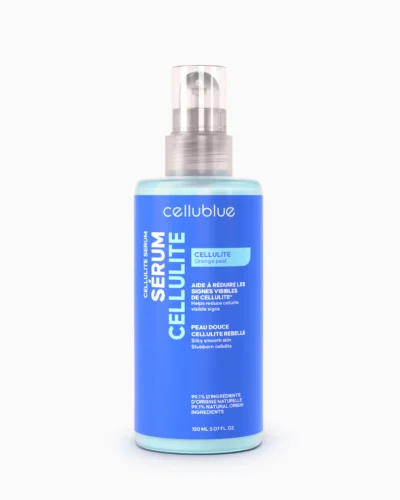
The ultra-light anti-cellulite serum, the first step of your routine
- Horse Chestnut & Sweet Chestnut Buds and red rice vinegar, three active ingredients in a serum texture
- Ultra-fluid texture: it absorbs in less than two minutes, leaving no film, and preps the skin for the products that follow
- Serum then cream, morning and evening: the duo regulars have adopted, with or without the suction cup
How the texture feels is not enough to establish effectiveness either. A treatment that spreads easily or seems to absorb quickly offers an application experience; that does not, in itself, measure what an ingredient does in the skin.
A rinsed-off product is used differently from a leave-on treatment
Comparing only the percentages in a rinsed-off product and a leave-on treatment overlooks how long they remain in contact with the skin. The contact time and the amount actually left on the area are different. A higher concentration in the first product therefore does not demonstrate a stronger action than the second.
The right comparison focuses on a specific benefit and a comparable use. For a particular ingredient, our article on caffeine and cellulite covers a separate topic: the presence or dosage of an ingredient does not replace information about the complete formula.
The result must relate to the finished product
A property studied for an ingredient does not automatically apply to the treatment containing it. The regulation on cosmetic claims states that this extrapolation must be supported by adequate and verifiable evidence, such as the ingredient being present at an effective concentration.
Dosage matters, but it is only one part of the whole picture. When choosing a product, focus on the benefit claimed for the finished product and the conditions associated with it. “Softer-feeling skin” and “a smoother appearance” describe cosmetic effects that are different from weight loss. Our article on what body creams promise explores these expectations.
Example: reading the figure for Cellulite Serum
The manufacturer’s product page for Cellulite Serum states that it contains 99.1% naturally derived ingredients. It specifically mentions red rice vinegar and an extract of horse chestnut and sweet chestnut buds called Prodhygem® Fit.
This is information provided by Cellublue about its formula. The product page does not state the concentration percentage of each active ingredient. The figure of 99.1% should therefore be read as an indication of ingredient origin, not as “99.1% active ingredients” or as a measure of the product’s anti-cellulite effect.
FAQ
Can applying more product make up for a low dosage?
Applying more does not establish a better result and may affect tolerance. Follow the product’s directions for use rather than trying to recalculate a dose.
Does the absence of a percentage mean that a treatment is ineffective?
No. It means that this information has not been provided. You can consider the stated benefit and the information supporting it without guessing the concentration.
Sources: Annex to Regulation (EU) No 655/2013 of 10 July 2013, particularly the criteria concerning truthfulness and evidence; public Cellulite Serum product page consulted on 2 October 2026.

The cupping tool that replicates pinching and rolling, 3 minutes per zone
- The professionals' technique, at home: you lift, glide, and release, and the tool grips the skin fold like a manual pinching and rolling
- Soft silicone that fits thighs, buttocks, stomach, and arms
- 3 minutes per zone, every day, always with a massage oil so the tool glides

The scrub that leaves skin smooth and skin texture refined*
*User test on 21 volunteers over 4 weeks, based on participants' feedback.
- Olive & apricot kernels: these natural grains gently sweep away dead skin cells
- Caffeine & monoi scent, so your shower instantly smells like a holiday
- In the shower, two to three times a week, massaging your thighs, bottom and stomach

Comments (0)