

When your size changes with the heat, the time of day, your cycle or how long you spend sitting still, it isn’t necessarily down to fat storage. This guide helps you tell water retention, temporary swelling and fat storage apart, so you can decide what to focus on first.
Water retention or fat: how to tell the difference
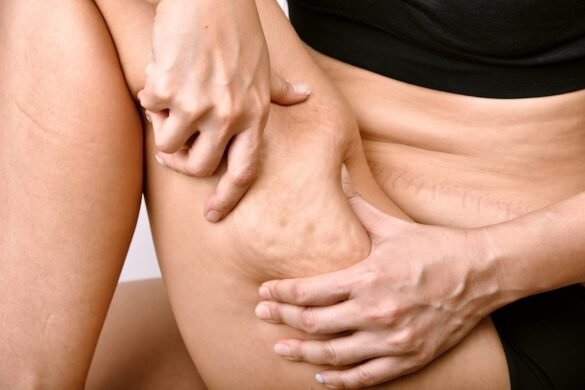
Water or fat? The two can exist side by side, and no single sign is enough to settle the question. The pointers below, based on how your shape changes over time, together with the tracking method we suggest, will help you see things more clearly.
Fat or water retention around the stomach
The same pointers apply to your stomach. If bloating in that area comes with pain or unusual discomfort, speak to your GP.
When this is worth looking into
This is worth sorting out if your size varies a lot with the time of day, the heat, your cycle or long periods of sitting, and you’re no longer sure whether to focus on massage, eating habits or movement.
Getting the reading right before you act
The confusion often comes from the fact that both can happen at the same time. So the real question isn’t simply ‘water or fat?’, but which one is dominant right now and what deserves to be tackled first. The most useful approach is to look at how your size changes over time and use the tracking method suggested below.
- Rapid changes between morning and evening.
- A feeling of swelling or marks left by clothing at the end of the day.
- Changes observed alongside heat, your cycle or time spent sitting.
- A slower, steadier change in size over several weeks.
A four-step approach to working it out
This approach helps you compare like-for-like weeks, keep a reliable measure of progress and see more clearly what suits you best.
Step 1
Track things for ten to fourteen days, keeping your water intake, meals and activity steady.
Step 2
Record day-to-day swelling separately from slower changes in your measurements.
Step 3
Test the most likely lever first: walking and keeping an eye on how your size varies if water retention seems to be the main issue, and structuring your meals if fat storage seems more central.
Step 4
Then reassess whether a second lever should be added, without changing everything at once.
Action plan over 2 to 4 weeks
The idea isn’t to do everything at once. It’s about choosing a realistic order of priorities, then sticking with that plan long enough to see what really helps.
- Walk every day and break up long periods of sitting.
- Keep your meals regular rather than launching into an overly restrictive plan.
- Take a comparable photo or measurement once a week, not ten times a day.
- Link your observations to the water retention guide and the slimming guide so you don’t have to start from scratch.
What you can do this week
If you want to turn what you’ve read into a practical plan, keep it simple: one main goal, two or three realistic time slots, a single tracking marker and a quick review at the end of the week. This simple format avoids unnecessary overcomplication.
- Pick just one question to answer this week, not three at once.
- Stick to the same observation frequency so you don’t see differences that aren’t really there.
- Note what genuinely helps you stick with it, rather than relying on how motivated you feel that day.
- At the end of the week, decide whether to carry on with the same approach or try another one that suits you better.
How to tell if you’re on the right track
When you read the signs more accurately, you avoid mistaking a temporary change in size for a lasting change in your figure, or, conversely, overlooking water retention because you’re focusing only on calories. The right sign isn’t a dramatic transformation. It’s a routine that’s clearer, easier to tolerate and easier to keep up from one week to the next.
- A single main goal, measured against comparable criteria.
- A frequency you can actually maintain, rather than merely plan.
- Less wavering between conflicting methods.
- A clearer idea of what to look into next, depending on your needs.
Common mistakes to avoid
- Judging your progress solely on how you look in the mirror on a given day.
- Cutting back sharply on food without first working out what role water retention plays.
- Expecting a single massage to make up for poorly structured eating.
- Ignoring sleep, stress and heat, even though they can affect your size.
Where to go from here
Once you have a clearer idea of the difference, it’s easier to choose what to read next: Water retention guide: causes, diagnosis and solutions if swelling is the main issue, Sustainable slimming guide: method, steps and realistic routine if you want to look at the question as part of your overall progress, and Flat stomach guide: digestion, stress, water retention and routine if your doubts are mainly about your stomach.
Frequently asked questions
Why does my size change between morning and evening?
This pattern is common when water retention, staying in one position for long periods or heat play a big part in your day.
Does the scale really help?
Only if you read it alongside other markers, because water can make your weight fluctuate very quickly.
Which lever should I try first?
When the changes happen quickly, it’s often best to start with walking, hydration and active breaks before concluding that it’s fat.
Guides to read next
These guides take things further, with a more in-depth or more structured approach depending on the question you still have.
- Water retention guide: causes, diagnosis and solutions
- Sustainable slimming guide: method, steps and realistic routine
- Lymphatic drainage guide: benefits, limits and routine
- Anti-cellulite diet guide: principles, menus and mistakes
Further reading
These articles add a more practical or more comparative angle, depending on what you want to explore next.
- Lymphatic drainage vs pressotherapy: which should you choose?
- 21-day anti-cellulite routine: the complete plan
- Stress, cortisol and abdominal cellulite: what’s the real link?
To go further, explore the Cellublue shop: our body care products.
 -16%
-16%Capsules made with chromium, which contributes to normal macronutrient metabolism
- Chromium contributes to normal macronutrient metabolism, meaning the sugars, fats and proteins in your meals
- It also contributes to the maintenance of normal blood glucose levels
- Dandelion, burdock and artichoke complete the formula




Comments (0)