If you’re used to giving everything during your workouts, you’re probably no stranger to muscle soreness! Good news — today we’re sharing a natural and easy way to help reduce soreness, muscle tension and cramps after exercise. Introducing our post-workout relaxing treatment: an essential oil massage blend that does all the work for you!
Contents
Why massage after exercise?

Massaging after a workout stimulates blood circulation and supports venous return — and it simply feels wonderful. It’s the perfect way to unwind and truly finish taking care of your body.
With the added power of essential oils, this moment becomes a genuine post-workout relaxing treatment. The result? Say goodbye to soreness, cramps and painful muscle tension!
Our post-workout relaxing treatment recipe

This recipe takes just 2 minutes to prepare, using a carrier oil and essential oils — organic if possible. Keeping it natural, ladies!
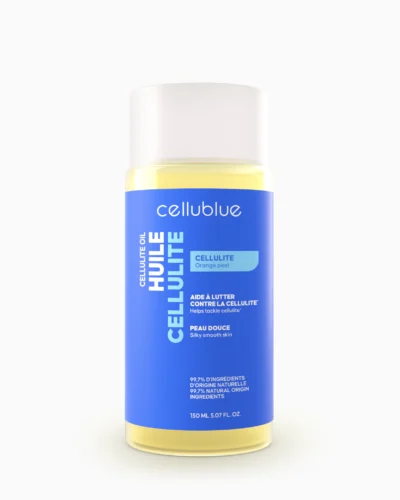
Ingredients:
You will need:
-
100 ml of neutral carrier oil (grapeseed, wheatgerm, sweet almond, etc.)
-
5 drops of Scots pine essential oil
-
10 drops of eucalyptus essential oil
-
10 drops of camphor rosemary essential oil
Method:
Pour everything into a small glass bottle, then shake vigorously to blend well.
To apply, start witha warm shower to begin relaxing your body. Then, using your oil blend, massage your arms, thighs and calves.Massage from the extremities towards the heart, applying gentle pressure for a deeper massage. And above all,let the scent wash over you — the perfect finishing touch to your relaxation ritual!
What really helps in practice
Say goodbye to muscle soreness with our post-workout relaxing treatment! becomes more useful when it is connected to a simple, repeatable routine. The practical approach is to start from a sustainable slimming routine and then check what you can actually sustain in real life.
In practice, a stable method repeated over several days works better than a string of contradictory experiments. That structure makes body signals easier to read and results easier to judge.
A simple way to get started
- Choose one main objective at a time.
- Keep a realistic rhythm over 7 to 21 days.
- Watch practical signals before chasing immediate results.
- Adjust one variable at a time so you can see what really helps.
Frequently asked questions
How do I know if I am moving in the right direction?
The most useful sign is the combination of consistency, comfort and visible or felt progress across several sessions.
Should I change everything at once?
No. Better progress usually comes from a simple base routine and gradual adjustments.
Read next
- Which gym exercises slim the waist?
- Hypopressive gym: the ultimate weapon for a flat stomach
- 10 minutes of exercise a day: what workouts can you do at home?
- Jump rope: what are the best exercises?
How to strengthen this article usefully
Say goodbye to muscle soreness with our post-workout relaxing treatment! becomes more valuable when it is tied to exercises you can repeat each week. The goal is not to stack random tips, but to clarify what to do, how often to do it and how to judge whether it is helping.
Short posts often miss application context. That missing context is what turns an isolated idea into something practical you can actually repeat.
For exercises you can repeat each week, start with one clear objective over a short period. That simple limit prevents too many changes at once and makes useful signals easier to spot.
Then keep the format stable: same moments in the week, same order and realistic intensity. Consistency usually does more than a dramatic one-off effort.
It also helps to track two or three concrete signals: comfort, ease of execution, skin response or overall body feeling. Without those reference points, people tend to switch methods too early.
If you need to adjust the routine, change only one variable at a time. That is the cleanest way to strengthen exercises you can repeat each week without losing clarity.
Short action plan
- Choose one priority for the next 7 days.
- Fold this advice into a simple repeatable routine.
- Watch practical signals before chasing instant results.
- Change only one variable if the base routine feels sustainable.
Useful questions to ask
How do I know if this advice fits me?
A good sign is that you can fit it into a normal week without creating unnecessary friction or confusion.
Should I expect a fast effect?
Not first. Better results usually come from a simple routine repeated over several days and refined gradually.
Read next
- Which gym exercises slim the waist?
- Hypopressive gym: the ultimate weapon for a flat stomach
- 10 minutes of exercise a day: what workouts can you do at home?
- Jump rope: what are the best exercises?
Useful content about exercises you can repeat each week should also explain what to avoid: switching methods too quickly, stacking contradictory tests or judging everything after one session. That extra precision makes the advice easier to use well.
To make this more concrete, keep a simple note for a few days with the date, duration, overall feeling and main signal you observed. That small layer of tracking is often enough to decide whether the routine deserves to continue.
If the base remains comfortable, you can move to a more ambitious step afterwards. But that progression only makes sense when the foundation around exercises you can repeat each week is already stable.
Related articles
- Want a home treatment after working out? Here are 2!
- How to create your anti-stretch mark and slimming treatment?
- Shock wave treatment for cellulite (for deep-seated, stubborn cellulite)
Useful categories : Slimming Exercises.