
Bulges, love handles, and extra kilos here and there bother women and men alike. This often leads us to view body fat as something rather negative. But what role does fat play in our body? How is it formed, and how can you eliminate fat?
Sommaire
Fat: what is it exactly?
Fat appeared over the course of human evolution. Humans developed adipose tissue to store energy. Thanks to this, they were able to adapt to new environments and new climate conditions, where food could be scarce. (1)
The presence of adipose tissue in the body is influenced by genetics as well as the environment. In addition, women have more body fat than men, and it tends to be stored around the buttocks. (2)
It is often thought that, to slim down, all body fat must be eliminated. But what is the reality? Fat is a tissue that stores energy in the body. This adipose tissue is made up of storage cells called adipocytes.
Adipocytes store excess energy as triglycerides (lipids) during food intake, in preparation for periods of food deprivation. When your weight starts to increase, adipocytes expand and multiply. When kilos are lost, these cells do not disappear. That is why it can seem easy to regain the weight that was lost.
There are white adipocytes and brown adipocytes, which we will detail below.
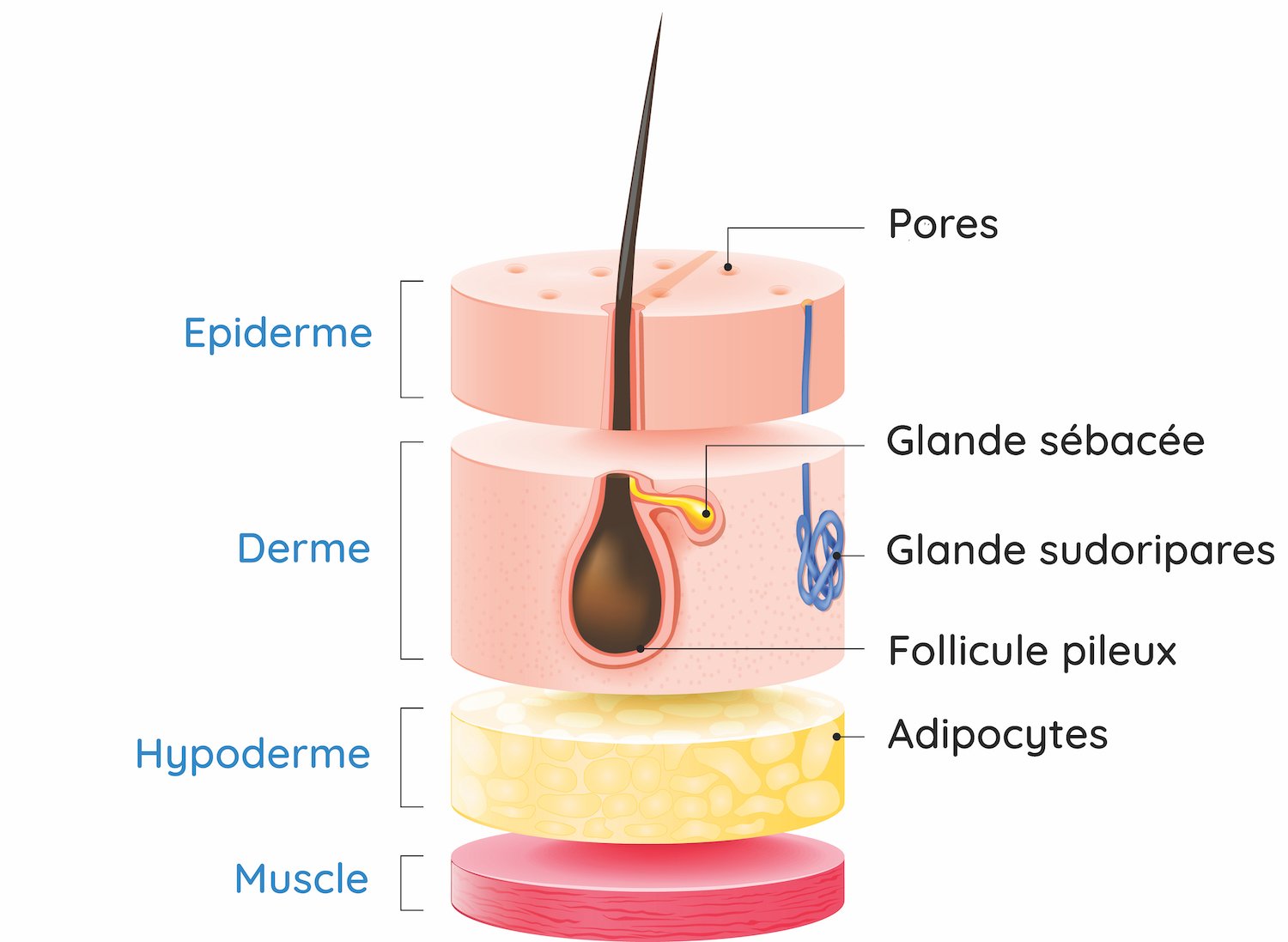
These fat-storage cells in the body are used to accumulate energy. When you face a situation that requires more energy, such as physical effort, your body draws on the energy reserves stored in adipocytes and releases fatty acids.
The visible adipose tissues are subcutaneous and internal fat.
What is fat used for in the body?
Fat makes up the body’s cell membranes. Cells are able to connect with one another thanks to fatty acids acting on membrane fluidity. The formation of certain hormones is impossible without fat. It also contributes to the production of the body’s defense cells. It also plays a part in the formation of neurotransmitters. When inflammation occurs, omega-3s help calm it. In addition, adipose tissue improves blood supply (3).
Adipose tissue has multiple essential functions for the body to work properly. It helps control metabolism and thermoregulation, can protect against shocks, and helps regulate satiety (4). Fat helps protect our vital organs. Adipocytes do not only serve to store fat. They also allow the body to store certain nutrients such as vitamins A, D, and E.
What is fat made of?
There is both brown fat and white fat in our body. Each has its own role. Beyond their color, the differences between white and brown fat are considerable.
White fat
White fat makes up most of the adipocytes in our body. White adipocytes store glucose in the form of triglycerides. When the body needs more energy, triglycerides break down into glycerol and fatty acids, which are then used by other organs: this is the process known as lipolysis. White fat therefore plays the role of an energy reservoir through fat storage.
Brown fat for slimming down
Brown fat, meanwhile, has a smaller diameter. Its role is linked to lipid oxidation and body temperature. Our ability to feel warmth is thanks to brown adipocytes, which burn calories and transform them: this is what is known as thermogenesis.
Brown adipose tissue influences sensitivity to cold and plays a role in weight regulation. It is smaller than white adipose tissue. Its main function is to produce heat. It also plays an important role in controlling body temperature. Brown adipocytes transform energy from food into heat.
How is fat formed?
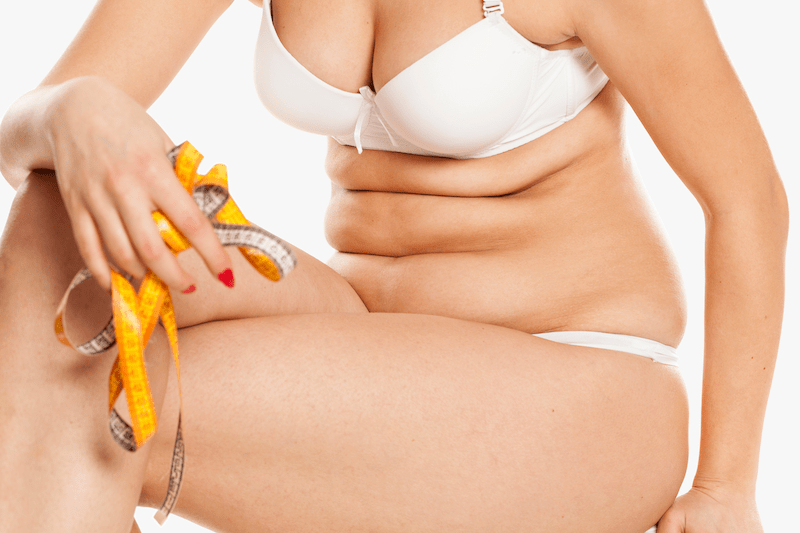
Sometimes, when putting on an old pair of trousers that no longer fastens, we wonder how those extra kilos built up. Some people no longer even dare step on the scale. One question then arises: how does fat form? A process called lipogenesis explains how fat is formed in the body.
First, you prepare a delicious meal and enjoy it. It is worth remembering that food is divided into 3 classes: lipids, proteins, and carbohydrates.
Meat, egg whites, and fish provide proteins. These are transformed into amino acids in the body.
Carbohydrates include fruit, vegetables, and beans… Once transformed, they become glucose.
Lipids are found in dairy products, oilseeds, egg yolks, and oils. They are converted into fatty acids.
These then join fat stores when present in excess. However, these fatty acids do not become fat on their own. They need glucose from starchy foods and sugar in order to be stored.
During digestion, the liver or adipose tissue captures excess fatty acids or glucose and stores them as fat in fat-storage cells called adipocytes. (1)
As we saw earlier, adipose tissue, made up of adipocytes, is an energy reservoir. It must maintain a balance between the body’s needs and the food consumed. If we eat too much, the body stores this surplus. The development of adipose tissue happens in 2 stages. First, fat cells multiply, then they increase in volume.
What causes fat storage?
Eating foods with a high glycemic index makes fat accumulation easier. The glycemic index is a food rating that quickly indicates whether it will have an impact on our figure or not. In fact, the higher a food’s glycemic index, the faster sugars are absorbed and stored in adipocytes as fat (if the body does not need them to function).
This is why poor eating habits often lead to the appearance of bulges. Fat mass storage then comes from the composition of your meals. With an excess of sugar and fatty acids, it becomes very likely that you will no longer fit into your clothes. In fact, lipids are digested and remain in adipocytes as fatty acids. These then become fat mass.
Where is fat stored, and why?
Many people gain belly fat or put on weight around the thighs and buttocks when they start accumulating kilos. Several factors explain why fat is stored in one area of the body rather than another.
Fat tends to remain around the hips, love handles, and saddlebags in women. This fat stored in the lower body gives women more energy for breastfeeding and pregnancy. In men, meanwhile, body fat tends to be stored around the belly.
This highlights a gender-related factor in fat storage. Where fat is stored also varies depending on eating habits. The hips and shoulders are the first areas to grow in people who enjoy sugary foods.
Hormones are also a major factor. A drop in testosterone can cause the chest area to enlarge in men. When estrogen increases, fat tends to settle around the thighs.
How is fat eliminated?
We often hear that adipose tissue turns into heat or energy. Some athletes also train thinking they can convert excess fat into muscle. However, according to physicists Ruben Meerman and Andrew Brown, Lavoisier’s law still holds true in the process of eliminating fat. As a reminder, it is the famous principle: “Nothing is lost, nothing is created, everything is transformed.” Fat is therefore turned into molecules in the body before being expelled. Brown and Meerman concluded in the Christmas 2014 British Medical Journal (5) that the lungs eliminate fat in the form of carbon dioxide.
To lose weight, the calories consumed must remain lower than the calories burned. According to the two scientists, the respiratory organs eliminate 84% of fat mass. The rest of the fat is eliminated through water via perspiration and urine. Several slimming methods can help reduce extra inches.
Lipolysis
Lipolysis is a natural process of releasing stored adipose tissue, in other words, fat. “Lipolysis” comes from two terms: “lipos,” meaning fat, and “lusis,” meaning rupture or dissolution. The term refers to the process by which body fat dissolves. In the tissue beneath the skin are fat cells. When certain hormones such as testosterone, adrenaline, or ghrelin stimulate enzymes, fatty acids are released. Lipids then break down, leading to the dissolution of fat.
The thermogenesis process
This term comes from thermos (heat) and genesis (creation). It corresponds to an increase in energy expenditure compared with the basal metabolic rate (6). Thermogenesis therefore refers to the rise in body temperature by stimulating the body. Fat in the cells is used to compensate for the energy produced. Dietary supplements such as caffeine, nicotine, and adrenaline promote thermogenesis.
Sources and references
(1) https://www6.inra.fr/productions-animales/content/download/4197/43018/version/1/file/Prod_Anim_1999_12_4_08.pdf
(2) Björntorp, P. (1991). Adipose tissue distribution and function. International journal of obesity, 15 Suppl 2, 67-81 .
(3) http://www.chups.jussieu.fr/polys/biochimie/REbioch/POLY.Chp.7.html
(4) Berry, Daniel C et al. “The developmental origins of adipose tissue.” Development (Cambridge, England) vol. 140,19 (2013): 3939-49. doi:10.1242/dev.080549
(5) When somebody loses weight, where does the fat go? (2014), BMJ, doi: https://doi.org/10.1136/bmj.g778
(6) Klaas R Westerterp, (2014). Diet induced thermogenesis, Nutrition & Metabolism. DOI: 10.1186/1743-7075-1-5