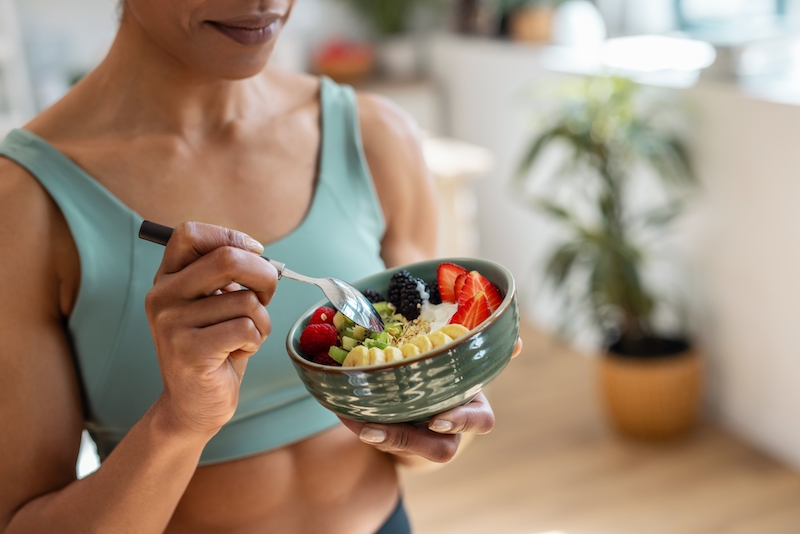
We’re constantly told that eating well means cutting back on fat, sugar and salt — and that’s true. But what’s less talked about, and easy to overlook, is that to maintain your figure and reduce cellulite, you also need to eat enough fibre. What exactly is fibre, what does it do, and where can you find it? We tell you everything in this article!
Sommaire
What is fibre?
Fibre is a natural component found in many foods. Although we eat it, it doesn’t directly nourish us and isn’t used by our bodies as energy. Once ingested, fibre isn’t digested — instead, it helps facilitate digestion. It’s also essential for staying in good health.
What does fibre do?
Fibre is essential for a balanced diet and staying in shape. It plays a key role in digestion by absorbing water and triggering a feeling of fullness. Fibre is therefore excellent for avoiding overeating and keeping your figure in check!
Soluble fibre also has an impact on cholesterol levels and blood sugar levels, which it helps regulate by absorbing some of the carbohydrates we eat.
How fibre acts on cellulite
Fibre-rich foods have the unique ability to trap fats we ingest and help eliminate them before they settle into unwanted bumps or cellulite. What’s more, foods high in fibre often have mild diuretic and detoxifying properties — so in addition to helping prevent cellulite from forming, they also contribute to reducing water retention and eliminating water-based cellulite.
If you want to reduce cellulite, manage your appetite, improve your digestion, get a flatter stomach and avoid cravings, start adding more fibre to your diet! To make the most of all its benefits, don’t forget to drink enough water every day.
Where can you find fibre?
To stay in shape, health professionals recommend consuming around 25g of fibre per day. Yet the average intake falls well short of that! To bridge the gap, discover the foods richest in fibre and don’t hesitate to add them to your plate…
- Legumes: lentils, broad beans, kidney beans, chickpeas… Legumes are among the richest sources of fibre and are excellent for your health — don’t leave them off your plate!
- Wholegrains: brown rice, whole wheat, oats, quinoa, millet, rye, oat bran… Always choose wholegrain starches over their “white” counterparts, which contain far less fibre and far more sugar!
- Fruits: among the fruits richest in fibre, raspberries, dried prunes, pears, blackberries, dates and papaya are particularly worth mentioning.
- Vegetables: delicious and essential for our health, certain vegetables are packed with fibre. Artichokes, aubergine, courgette, asparagus, leeks and potatoes should absolutely find their way into your recipes!
Good to know: fibre is highly concentrated in the skin of fruits and vegetables. To get the full benefit, opt for organic produce and wash it thoroughly so you can eat it unpeeled.
Our tips for eating more fibre
Choose fresh fruit
Fresh fruit — and ideally organic! Fibre is concentrated mainly in the skin, as with apples and pears, which are in season right now. As a general rule, eating fresh fruit gives you more fibre than opting for a smoothie, fruit juice or compote.
Eat more vegetables
Low in calories and satisfying, vegetables should be part of your daily diet. They should make up half your plate at lunch (alongside starches and protein) and in the evening (alongside protein). Go for courgette, asparagus, aubergine, leeks or carrots!
Choose wholegrains
Wholegrains are far richer in fibre. Get into the habit of eating wholegrain bread — ditch the white baguette and sliced white bread! Try wholegrain pasta for lunch or brown rice to boost your fibre intake and support better digestion.
Load up on fibre from breakfast
Getting your fibre fix can start easily at breakfast. Try making a bowl with oat bran — it contains over 15 grams of fibre per serving! Add some almond milk, then a handful of dried and dehydrated fruits. Almonds, figs, prunes, apricots…
And what about your main meals?
Adding fibre to your meals is easy with a few simple tricks. Try sprinkling your salads or soups with seeds or grains (quinoa, chia, oat bran, etc.). You can do the same with your yoghurts and fruit compotes for dessert, by adding a small handful of dried fruits such as walnuts.
Fibre is a powerful ally in the fight against cellulite — so make it a habit to include it in your diet!
But to truly tackle cellulite, a balanced diet alone isn’t enough — you absolutely need to incorporate regular palpate-roll massage sessions! And to keep fighting dimples effortlessly throughout the day, try the Shorty Expert Amincissant. This garment designed to target cellulite is infused with caffeine and shea butter. It works like a true slimming serum all day long!